
TL;DR · 30-second read
The Short Version
Trane, one of the world’s biggest makers of large air-conditioning systems, is buying Cancoil, a Canadian family company with more than 450 workers. Cancoil makes the metal coils inside cooling equipment.
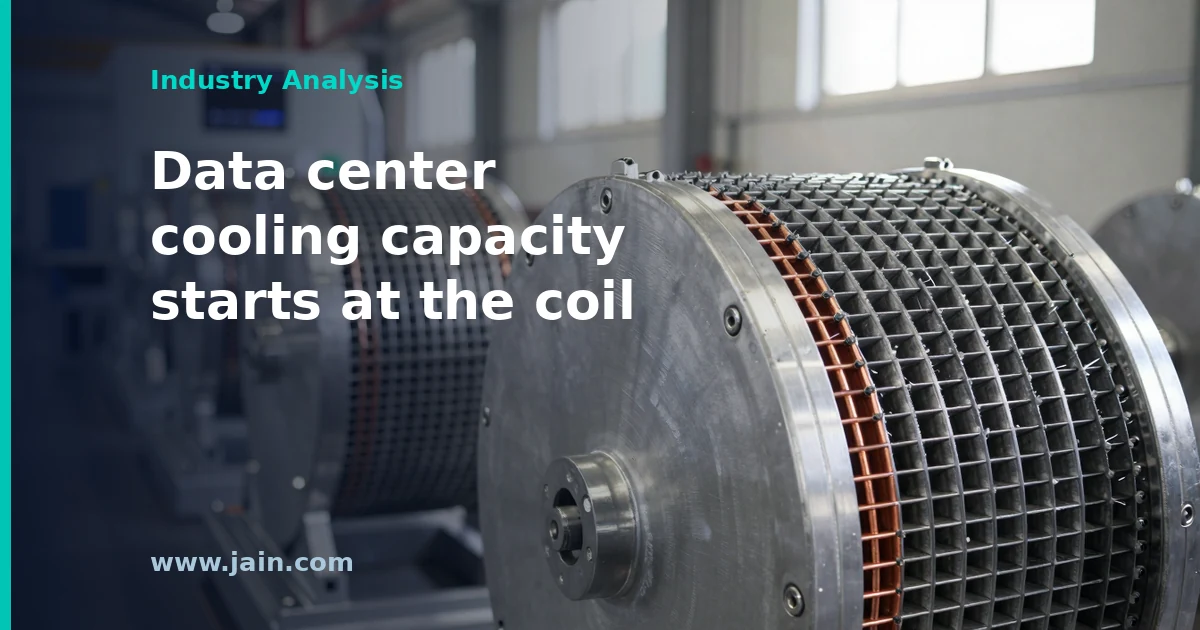
Coils are bundles of thin-finned tubes that carry heat away, a bit like the radiator in a car. Trane already buys coils from Cancoil. Now it will own the factories in Ontario and Texas.
Why it matters: data centers, the buildings full of computers behind the internet and artificial intelligence, buy this kind of cooling gear. That gear cannot be built without the coils.
Trane Technologies (NYSE: TT) has signed a definitive agreement to acquire Cancoil Thermal Corporation, a North American maker of heat-transfer products, Stock Titan reported on October 21, 2026, publishing Trane’s announcement. Cancoil is based in Ontario, Canada, and was founded in 1983 by Chander and Anju Datta. The deal covers Cancoil’s Ontario manufacturing facilities, its U.S. operations in Jacksonville, Texas, and more than 450 employees. A statement from the Datta family says Cancoil USA and Fin Aire Inc. are also joining Trane.
Cancoil already supplies Trane’s chiller and airside businesses. Trane expects the transaction to close before the end of 2026, subject to customary closing conditions and regulatory approval. Terms were not disclosed. Lazard advised Cancoil.
Executive Summary
Trane is buying one of its own suppliers. Cancoil makes fluid coolers, air-cooled condensers and custom finned-tube coils. These are the heat-exchange components that let cooling systems move heat out of a building and into the outside air. Its customers include data centers, food processors, refrigerated warehouses, supermarkets, schools and hospitals. Trane frames the deal around two goals: strengthening its heat-transfer expertise and making its supply chain more resilient.
Chief Operating Officer Donny Simmons called Cancoil “a critical capability at the right time for our business and our customers.” He cited speed, quality and reliability in “critical thermal management applications.” That is the language a manufacturer uses when it wants assured access to a component rather than a slot in a supplier’s queue.
The deal matters for data center buyers because the finished chiller is only as available as the parts inside it. Trane has been marketing directly to AI facilities: on September 30 it said it had demonstrated an 800-volt direct-current chiller for next-generation AI data centers. Buying the company that builds coils for its chiller line moves one upstream link of that supply chain under Trane’s own control.
Why the Coil, Not the Chiller, Is the Story
A chiller is a large machine that cools water, which is then piped through a building, or a data hall, to absorb heat from equipment. That heat has to go somewhere. Condensers, fluid coolers and coils carry it to the outside air. These devices are dense assemblies of tubes wrapped in thin metal fins, and much of the work of cooling happens across their surfaces. Cancoil makes exactly these parts: fluid coolers, air-cooled condensers and custom finned-tube coils. Trane says Cancoil supports “key applications across the company’s chiller and airside businesses.” Airside means the equipment that conditions and moves air.
That is the mechanism behind the headline. A cooling manufacturer can only ship finished units as fast as it can source the heat-exchange components inside them. Custom finned-tube coils are engineered to a specific job, so they are not interchangeable commodity parts. By acquiring Cancoil’s Ontario plants, its Jacksonville, Texas, operation and a workforce of more than 450, Trane turns a purchased input into owned capacity. Trane’s own phrase, “supply chain resiliency,” says the same thing in corporate language.
The evidence has limits. Trane does not say it has faced coil shortages, how much of its coil supply Cancoil provides, or how much of Cancoil’s output goes to data centers. “At the right time” signals urgency without quantifying it. The defensible reading is narrower than a shortage claim: Trane decided that controlling this component was worth an acquisition rather than a supply contract, and data center cooling is one of the markets that decision serves.
The Economics of Buying Your Supplier
Bringing a supplier in-house is called vertical integration. It offers a manufacturer several things. It gets first call on production when orders spike. It keeps the margin the supplier used to earn. And its engineers can co-design components with the products that use them, which matters when cooling systems are being redesigned for denser, hotter computing loads. The Texas operation, which Trane describes as “growing,” also gives the combined business manufacturing on both sides of the Canada-U.S. border.
The trade-off is fixed cost. A supplier’s factories are flexible capacity for a buyer, and that buyer can order less when demand cools. Once Trane owns those factories, it carries their costs through any slowdown. Cancoil’s spread of end markets offsets some of that risk. Supermarkets, hospitals, refrigerated warehouses and food processing do not move in lockstep with data center construction cycles.
What It Means for Cancoil’s Other Customers
Trane says “Cancoil will continue to serve customers as it does today.” That is a meaningful commitment for buyers who source coils and fluid coolers from Cancoil directly, including data center operators and equipment builders. It also raises the standard question every supplier acquisition raises. When capacity is tight, will the new parent’s internal orders take priority over outside customers?
The release does not say whether competing equipment makers buy from Cancoil today. Any that do will now be buying from a subsidiary of a rival. Buyers who depend on Cancoil for custom coils will want to see how “as it does today” holds up in pricing, lead times and allocation after the deal closes.
Background
Trane Technologies, headquartered in Swords, Ireland, describes itself as a global climate innovator. It sells heating, ventilation, air-conditioning and refrigeration equipment under its Trane and Thermo King brands, for buildings, homes and transportation. Its shares trade on the New York Stock Exchange under the ticker TT, with a market value of about $101.5 billion at a $461.42 close. In recent years data centers have become a prominent market for its large chillers, including equipment designed for AI facilities.
Cancoil was founded in 1983 by Chander and Anju Datta in Ontario, Canada. Over more than 40 years it built a business designing and manufacturing heat-transfer equipment tailored to specific customer needs. It later added U.S. manufacturing in Jacksonville, Texas. Chiller makers depend on heat-exchange components like Cancoil’s, and some manufacturers produce them in-house while others buy them from specialist suppliers. This deal moves a portion of Trane’s supply from the second model to the first. Source: Trane Technologies to Acquire Cancoil, Strengthening Supply Chain Resiliency and Thermal Management Expertise: Stock Titan’s publication of Trane’s October 21, 2026 announcement that it will acquire heat-transfer manufacturer Cancoil Thermal Corporation.Sources