Tag: Private Equity

  • Rexel Buys $1.1B-Revenue GCG, Betting Data Center Cable Is an Engineering Sale

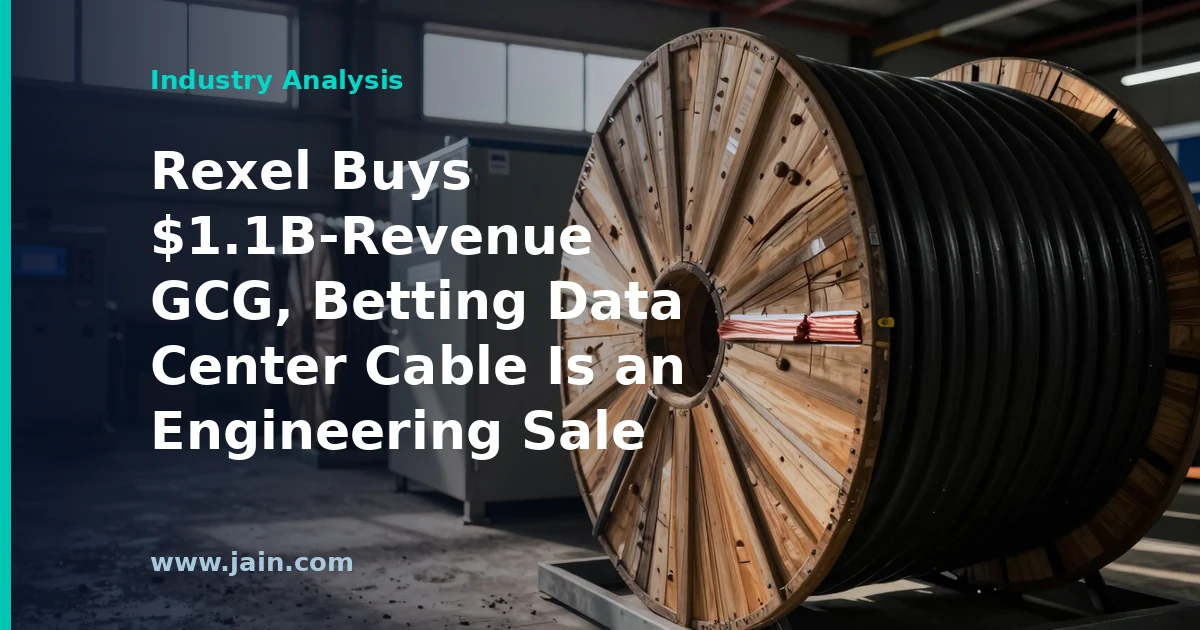
    Rexel Buys $1.1B-Revenue GCG, Betting Data Center Cable Is an Engineering Sale

    TL;DR · 30-second read

    The Short Version

    • Rexel, a giant European seller of electrical supplies, is buying GCG, a Chicago company that supplies specialized wire and cable.
    • GCG expects more than $1.1 billion in sales this year. Its customers include data centers, the warehouse-sized buildings full of computers that run the internet and artificial intelligence, plus power networks and the military.
    • What Rexel is really buying is expertise: GCG’s engineers design and prepare cable to order for demanding building projects.
    • The price has not been made public.

    GCG, a Chicago-based specialty wire and cable distributor, announced on September 25, 2026, in a release distributed by PR Newswire, that Rexel is acquiring it from Audax Private Equity. The transaction is expected to close by year end, subject to regulatory approvals and customary conditions. Financial terms were not disclosed.

    GCG operates in North America and Europe through 16 locations with more than 950 employees and expects to exceed $1.1 billion in revenue in 2026. Rexel, a publicly held distributor of energy-management products, reported €19.4 billion in 2025 sales across 1,876 branches in 17 countries.

    Executive Summary

    Rexel is buying a distributor whose selling point is not inventory but engineering. GCG runs two segments, Custom Engineered Solutions and Connectivity & Power Solutions, and describes its model as engineer-led, value-added distribution of wire, cable and connectivity products. Its customers span data centers, power infrastructure, defense, building systems, water, telecom and industrial markets.

    Rexel’s stated reasons are specific: to extend its presence in high-growth, mission-critical markets, naming data centers and power infrastructure first, and to bring GCG’s engineering-led model and proprietary product portfolio into its larger platform. That framing matters more than GCG’s size. At just over $1.1 billion in revenue against Rexel’s €19.4 billion, GCG is a targeted capability purchase rather than a transformational one.

    The central open question is price. Without a purchase figure, financing details or GCG’s profitability, outsiders cannot judge how much Rexel is paying for data center exposure versus the underlying distribution business.

    What Rexel Is Actually Buying: Engineers at the Cable Reel

    Electrical distribution is often a volume business: stock common products, run many branches, deliver fast. GCG looks different. It serves more than $1.1 billion in expected revenue from just 16 locations, while Rexel runs 1,876 branches. A small number of specialist sites generating that revenue points to a model built around project work, not counter sales. GCG’s own segment name, Custom Engineered Solutions, and its description of ‘engineer-led, value-added’ service say the same thing.

    In cable, value-added distribution typically means work done before the product ships: cutting to specified lengths, assembling or kitting components, and helping customers specify the right cable for a job. On large, mission-critical projects such as data centers and power facilities, cabling is specified to project requirements and delivered on construction schedules, so a distributor that can engineer and prepare it takes on work that would otherwise fall to contractors or manufacturers.

    That is the capability Rexel names in its rationale: GCG’s ‘engineering-led, value-added distribution model and proprietary product portfolio.’ Rexel is not describing a need for more warehouse space or more product lines. It is describing a need for engineering capacity attached to cable, aimed first at data center and power customers. The bet is that in those markets, the sale is won on specification and preparation, and that this capability can be scaled across Rexel’s much larger network.

    A Small Deal by Size, a Pointed One by Market

    GCG’s expected 2026 revenue is well under a tenth of Rexel’s 2025 sales, so this acquisition will not reshape Rexel’s overall results. Its significance lies in direction. When a distributor of Rexel’s scale names data centers and power infrastructure as the markets it wants more of, it signals where it expects demand growth to come from.

    That expectation is consistent with the broader construction cycle in data centers, much of it driven by cloud computing and artificial intelligence, which requires large quantities of power and connectivity cabling. The release, however, does not say how much of GCG’s revenue comes from data centers. GCG lists seven end markets, including defense, water and building systems, so its data center exposure could be substantial or modest. Readers should treat the deal as a bet on data center growth, not evidence of how large GCG’s share of that market already is.

    The Private Equity Roll-Up Behind the Deal

    GCG is the product of a classic buy-and-build strategy. Audax acquired it as a carve-out of Genuine Parts Company’s Electrical Specialties Group, then expanded it through acquisitions including United Wire & Cable, CableMaster, RWL, Paige and Allied Wire & Cable. GCG says it grew to more than $1.1 billion in revenue since 2019 through both organic growth and those add-ons.

    For Rexel, that history cuts two ways. GCG has experience integrating acquired businesses and operates through local brands, which suggests customer relationships that sit with those brands. But the release does not separate organic growth from acquired revenue, so the underlying growth rate of the business Rexel is buying is not visible. A roll-up that grew mainly through purchases carries different risks from one that grew mainly by winning customers.

    Who Gains, and What Could Go Wrong

    Contractors and developers building data centers and power sites could gain a single channel that combines GCG’s engineered cable services with Rexel’s scale, if integration goes as described. Cable manufacturers will see further consolidation among the distributors that sell their products, which can shift purchasing leverage toward larger buyers.

    The main risks are concentration and integration. A business positioned for data center growth is exposed to any slowdown in that construction cycle, and engineering-led operations depend on retaining the specialists who do the work. GCG’s CEO emphasized its people and culture in announcing the sale; keeping that capability intact inside a 26,306-employee group will determine whether Rexel gets what it is paying for.

    Background

    Rexel is a publicly held distributor of electrical and energy-management products serving residential, non-residential and industrial customers for construction, renovation, production and maintenance. It operates 1,876 branches in 17 countries with 26,306 employees and reported €19.4 billion in 2025 sales.

    GCG began as Genuine Parts Company’s Electrical Specialties Group before Audax Private Equity acquired it in a carve-out. Under Audax, it expanded through organic growth and a series of acquisitions into a specialty wire, cable and connectivity distributor with 16 locations in North America and Europe, more than 950 employees and expected 2026 revenue above $1.1 billion.

    Sources

    Source: Rexel to Acquire GCG, a Leading Specialty Wire & Cable Distribution Platform — GCG’s announcement, via PR Newswire, of its sale by Audax Private Equity to Rexel.

  • KKR Launches Helix, Tapping Ex-AWS CEO Adam Selipsky for AI Hyperscale Bet

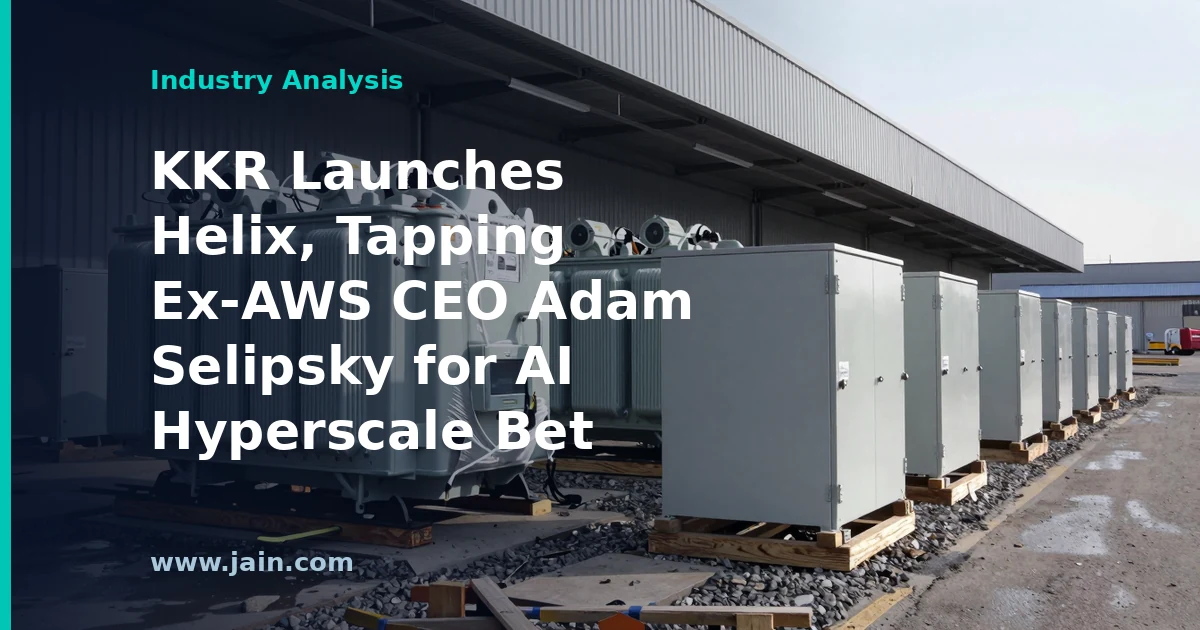
    KKR Launches Helix, Tapping Ex-AWS CEO Adam Selipsky for AI Hyperscale Bet

    Global investment firm KKR has launched Helix, a new venture aimed at building AI infrastructure at hyperscale, and has tapped former Amazon Web Services CEO Adam Selipsky to lead the effort. The announcement, reported June 16, 2026 by Data Center Frontier, frames Helix as an attempt to build a “new hyperscale model” — a cloud-scale computing platform purpose-built for artificial intelligence workloads — with a capital commitment coverage characterizes as running into the billions of dollars.

    Executive Summary

    The announcement pairs two things the AI infrastructure market watches closely: very large pools of private capital and proven hyperscale operating talent. KKR is one of the world’s largest alternative-asset managers and an established data center investor, while Selipsky ran AWS — the world’s largest cloud provider — from 2021 to 2024. Putting a former AWS chief executive at the head of a purpose-built AI infrastructure venture signals that KKR intends Helix to be an operating platform, not merely a real-estate or lending vehicle.

    Why it matters: AI demand has strained the traditional hyperscale playbook, in which a handful of cloud giants self-fund and self-build their own capacity. A wave of alternative models — specialized GPU clouds, build-to-suit developers, and now investor-led platforms — is competing to finance and operate the next generation of AI data centers. Helix is a bet that private capital can own more of that stack directly. That said, the launch coverage is light on specifics: no disclosed capital figure, sites, customers, or timeline accompany the framing, so the scale of the bet remains asserted rather than itemized.

    Why Private Capital Wants Its Own Hyperscaler

    For most of the cloud era, hyperscale infrastructure — the massive, standardized data center fleets run by Amazon, Microsoft, and Google — was financed from those companies’ own balance sheets. AI training and inference have changed the math: capacity needs are growing faster than even the largest corporate balance sheets comfortably absorb, and the industry has increasingly turned to infrastructure funds, private credit, and joint ventures to carry the cost. KKR has been on the supplying side of that shift for years, including its co-acquisition of data center operator CyrusOne in 2022.

    Helix, as framed, moves KKR up the stack — from landlord and financier toward operator. The economic logic is straightforward: the further up the stack you operate, the more of the AI value chain you capture, but the more operational and demand risk you take on. A firm that owns the facility, the compute platform, and the customer relationship earns more than one that only owns the shell — and loses more if utilization disappoints.

    The Selipsky Signal

    Leadership is the most concrete fact in this announcement, and it is a meaningful one. Adam Selipsky led AWS through 2021–2024, a period spanning the launch of the generative-AI boom, and before that built Tableau into a major software company as its CEO. Hiring an executive of that profile is a costly, credible signal: it suggests Helix aspires to hyperscale-grade engineering and go-to-market discipline rather than a pure asset-aggregation play.

    It is also a recruiting and customer-credibility asset. Enterprises and AI labs committing multi-year capacity contracts weigh whether a new platform will still exist — and perform — in five years. A founding CEO who has run the largest cloud in the world addresses that question more directly than a capital commitment alone. Still, a leader is not a product: the announcement does not describe what Helix will actually sell, to whom, or how it differs technically from the incumbents Selipsky used to compete for.

    What Could a “New Hyperscale Model” Mean?

    The phrase invites scrutiny because the field of would-be alternatives is already crowded. Specialized GPU cloud providers (sometimes called “neoclouds”) rent AI compute directly; build-to-suit developers construct campuses against long-term hyperscaler leases; sovereign and utility-linked ventures bundle power with compute. If Helix simply combines KKR capital with leased or built capacity, it joins an existing category rather than creating one. If it integrates power procurement, facility ownership, and a cloud-style software platform under one roof, it would be a genuinely different structure — closer to a privately held fourth hyperscaler.

    The winners-and-losers question follows from which version materializes. An operating hyperscaler backed by KKR would compete with the very cloud giants that are also KKR’s counterparties elsewhere, and with the neocloud cohort for GPUs, power, and talent. A financing-first version would compete mainly with other infrastructure funds. The launch materials, as reported, support the ambition but not yet the mechanism — a distinction buyers and investors should keep in view.

    Background

    KKR, founded in 1976, is one of the world’s largest alternative-asset managers and a major force in infrastructure investing. Its digital-infrastructure portfolio includes the 2022 co-acquisition of hyperscale data center operator CyrusOne, positioning the firm as landlord and financier to the cloud industry well before this launch. Adam Selipsky spent over a decade at AWS across two stints, led Tableau as CEO in between, and ran AWS from 2021 until stepping down in 2024 — giving him firsthand experience of both the strengths and the strains of the incumbent hyperscale model.

    The launch arrives amid a broader restructuring of how AI infrastructure gets financed. Surging demand for AI training and inference capacity has pulled infrastructure funds, private credit, and specialized GPU cloud providers into a market once dominated by three self-funding cloud giants, with capital commitments across the sector reaching historic scale.

    Source: KKR Bets Big on AI Infrastructure With Helix Launch, Tapping Former AWS CEO Adam Selipsky to Build a New Hyperscale Model — Data Center Frontier’s June 16, 2026 report on KKR’s launch of the Helix AI infrastructure venture.

  • Vista’s 50-Metro Inference Cloud Bets Enterprise AI Won’t Run on GPUs Alone

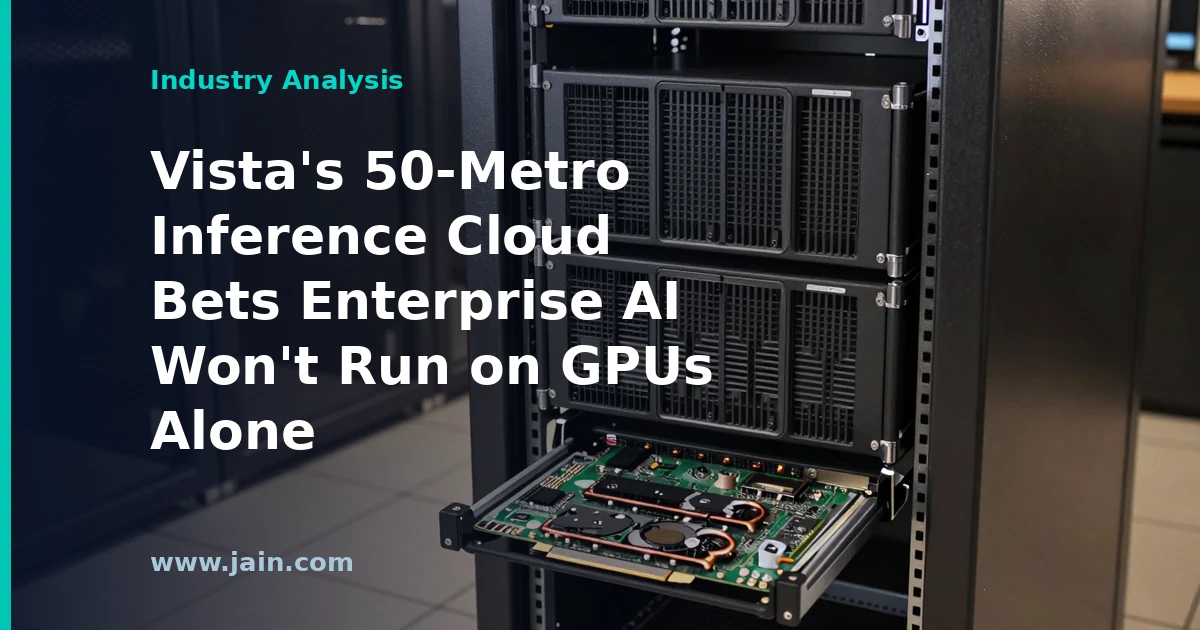
    Vista’s 50-Metro Inference Cloud Bets Enterprise AI Won’t Run on GPUs Alone

    TL;DR · 30-second read

    The Short Version

    Two investment firms, Vista Equity Partners and Cambian Capital, have opened a computing center in Los Angeles built for running AI tools day to day. That is the moment a chatbot answers or software sorts through data, as opposed to building new AI.

    They plan similar sites in more than 50 American cities. The twist: instead of relying only on Nvidia’s well-known graphics chips, they mix in chips from Intel and a smaller company, SambaNova. Their bet is that matching each job to the right chip makes AI cheaper to run.

    Vista Equity Partners and Cambian Capital have launched an enterprise inference cloud built for what they call disaggregated inference, with its first facility in Los Angeles, Fierce Network reported on June 3, 2026. The platform, called Vector Core Compute (VC2), combines three kinds of processors: Intel Xeon CPUs, Nvidia Blackwell GPUs and SambaNova RDUs.

    Additional sites are in development in Chicago, Seattle and Phoenix, and the companies say sites are planned across more than 50 U.S. metros. They describe the distributed model as designed to scale into strategic markets globally, with future regions shaped by strategic partners and customer demand.

    Executive Summary

    VC2 is a cloud for inference, the work of running already-trained AI models to answer queries, process data and carry out tasks. It is not a cloud for training new models. Its defining choice is architectural. Rather than standardizing on a single accelerator, it spreads work across general-purpose CPUs, Nvidia GPUs and SambaNova’s dataflow chips. Vista CEO Robert F. Smith framed the logic as cost: distributing workloads like “always-on monitoring, high-volume data processing, and complex multi-step orchestration across specialized hardware to reduce cost.”

    Two further features make this more than another GPU cloud launch. The first is the footprint: many smaller sites in metro areas rather than one giant campus, with a stated plan of more than 50 U.S. metros. The second is the demand source. Vista, one of the largest investors in enterprise software, is positioning the platform as early-access infrastructure for its own portfolio companies. If the cost argument holds, it strengthens the case that enterprise inference will be served by mixed fleets placed close to users, not only by GPU clusters in remote mega-campuses.

    Three Chip Families, One Cost Argument

    The headline claim of VC2 is that enterprise AI workloads do not all belong on a GPU. Disaggregated inference means breaking an AI job into its component steps and sending each step to the hardware best suited to it. The workloads Smith named show why that could matter. Always-on monitoring, high-volume data processing and multi-step orchestration are not single large model calls. They are long chains of control logic, data movement and retrieval, punctuated by bursts of heavy model math. An AI agent that checks a system, pulls records, decides what to do and then drafts a response spends much of its time on steps that do not need a top-tier accelerator.

    The hardware mix maps onto that pattern. Intel Xeon CPUs are general-purpose server processors, well suited to branching logic and data handling. Nvidia Blackwell GPUs, Nvidia’s current data center generation, excel at the massively parallel arithmetic at the heart of large models. SambaNova’s Reconfigurable Dataflow Units (RDUs) are a different accelerator design, which SambaNova positions as efficient at serving models. The implied economics are simple: stop paying GPU rates for work a cheaper processor can do, and reserve the most expensive silicon for the steps that need it.

    What the launch does not yet show is proof. No pricing, benchmarks or utilization figures accompanied it, so the claim that a mixed fleet undercuts a GPU-only deployment remains an assertion. Heterogeneity also carries its own costs: three vendor software stacks, three supply relationships, and a scheduling layer that must decide in real time where each step runs. In practice, VC2’s product is that orchestration layer. The chips are commodities that others can buy. Whether the savings survive the complexity is the thing to watch.

    Mixed Racks, Many Cities: The Facility Brief Changes

    For the people who build and operate data centers, a three-architecture inference cloud is a different tenant from a GPU cluster. CPU servers typically run in conventional air-cooled racks. Nvidia’s densest Blackwell rack systems are designed for liquid cooling and draw far more power per rack. A site hosting both, plus a third accelerator type, needs rooms that can handle uneven power density and mixed cooling side by side. The companies have not said which Blackwell configurations they deploy, but the design choice pushes toward facilities with flexible power distribution rather than uniform halls.

    The metro strategy multiplies that brief. One site is live, in Los Angeles. Three more are in development, in Chicago, Seattle and Phoenix. The 50-plus figure is a plan, not a footprint. Executing it would mean dozens of separate agreements for space, power and network connectivity, many of them in cities where grid capacity for new data center load is already contested. Colocation providers (companies that rent out space, power and cooling inside shared data centers) with available power in major and second-tier metros are the natural beneficiaries if the rollout proceeds. Each additional city is also an additional execution risk.

    A Portfolio as the First Customer

    Filling capacity is among the hardest problems for any new AI cloud. Hardware depreciates whether or not anyone rents it. Vista’s framing addresses that directly: early access for portfolio companies that, in Smith’s words, are “doing this work today.” A private equity owner with a large stable of enterprise software businesses can, in effect, supply a starting pool of demand. It also has a direct interest in lowering the AI running costs that now sit inside those companies’ cost of goods.

    That structure is a real advantage, but it also raises fair questions. Captive demand from sister companies does not by itself demonstrate a market among outside enterprises. How pricing and commitments work between Vista-owned software companies and a Vista-backed cloud has not been described. The model is best read as a test of whether an owner of software businesses can bring down those businesses’ AI costs by building the infrastructure itself rather than renting it from hyperscalers, the largest public cloud providers.

    Background

    Vista Equity Partners is a private equity firm that specializes in enterprise software, with a portfolio of software companies that increasingly embed AI features into their products. Those features must run somewhere, and the cost of running them, known as inference, has become a significant line item for software businesses. Cambian Capital is Vista’s partner in launching the VC2 platform.

    The AI infrastructure market has so far been dominated by large GPU clusters, many built in remote campuses sized for training ever-larger models. As AI moves into everyday business software, attention has shifted toward inference. Inference runs continuously, serves live users, and rewards low cost per task and proximity to customers. That shift has opened space for specialist clouds and for alternative chip designs, such as SambaNova’s, that compete with GPUs on serving efficiency.

    Sources

    Source: Vista Equity Partners, Cambian Capital light up new inference cloud in Los Angeles, Fierce Network’s report on the launch of the VC2 inference cloud and its first Los Angeles facility.

  • Ropes & Gray Maps 2026 Data-Center Capital Flows

    Ropes & Gray Maps 2026 Data-Center Capital Flows

    Law firm Ropes & Gray published a 2026 outlook on data-center investment, arguing that the sector’s trajectory is being set by three intersecting forces: surging AI compute demand, hard limits on grid power, and a wave of private-equity capital flowing into digital infrastructure. The note, dated May 21, 2026, is a legal-advisory perspective aimed at sponsors, lenders, and strategic investors, not a transaction announcement.

    Executive Summary

    The outlook is notable less for any single data point than for the framing: Ropes & Gray, a firm that advises on a meaningful share of large digital-infrastructure transactions, is telling its client base that AI, power, and private capital are now the master variables governing deal flow. That framing shapes how term sheets get drafted, how diligence is scoped, and where sponsors are willing to plant multi-hundred-megawatt bets.

    For a broader audience, the significance is that a legal advisor is publicly acknowledging what operators have been saying privately for two years: siting a data center is now a power-and-permitting problem first and a real-estate problem second. Capital is abundant; interconnection queues are not.

    AI Demand as the Underwriting Case

    The outlook positions AI as the demand engine underwriting new capacity. In practical terms, that means investment committees are being asked to approve builds whose economics depend on tenants — hyperscalers and large AI-native firms — signing long-dated leases at densities (kilowatts per rack) that would have looked exotic in 2022. That shift is real, but it concentrates counterparty risk: a handful of buyers now anchor a large share of pre-leased pipeline, and their capex plans can move quarter to quarter.

    For lenders, the underwriting question is whether an AI-training campus retains value if a specific hyperscaler pulls back. The answer depends on power interconnect, fiber, and land — assets that outlast any single tenant — but the note is measured rather than triumphant about that resilience.

    Power as the Binding Constraint

    The most useful contribution of the outlook is naming power, not capital or land, as the binding constraint on 2026 growth. Interconnection queues at major utilities now stretch multiple years; substation upgrades, transmission build, and generation additions all sit on longer clocks than data-center construction itself. That inverts the traditional development sequence, where power was assumed and site selection led.

    The economic consequence is a premium on shovel-ready sites with executed interconnection agreements, and a growing willingness among sponsors to co-invest in generation — behind-the-meter gas, on-site solar-plus-storage, and, in a smaller number of cases, small modular reactor offtake — to shortcut the queue. Each of those paths carries its own permitting and community-acceptance risk that the note flags without resolving.

    Private-Equity Capital Flows

    The third leg of the thesis is that private equity, infrastructure funds, and sovereign capital are increasingly the marginal buyer of data-center platforms, often through take-privates, minority stakes, or joint ventures with operating partners. The appeal is straightforward: contracted cash flows on twenty-year time horizons match liability profiles for pension and insurance capital better than most alternatives.

    The risk, which the outlook implies rather than states, is valuation. When capital chases a scarce input — in this case, powered land — entry prices can outrun the operating economics that justified the initial thesis. That is not a prediction of a correction; it is a caution that the same forces driving deal volume also compress future returns.

    Background

    Data centers evolved from enterprise back-office facilities into a distinct asset class over the last fifteen years, driven first by cloud computing and, since 2023, by generative AI. The sector now attracts dedicated infrastructure funds, sovereign wealth capital, and hyperscaler self-build alongside traditional colocation operators.

    Ropes & Gray is one of several major law firms — alongside peers such as Latham & Watkins, Kirkland & Ellis, and Simpson Thacher — that advise on the largest digital-infrastructure transactions. Periodic outlooks from these firms function as a barometer of where sponsor appetite and legal risk are converging.

    Source: Data Center Investment in 2026: AI Demand, Power Constraints, and Private Equity Trends – Ropes & Gray LLP, a legal-advisory outlook on the forces shaping 2026 data-center capital flows.

  • Blackstone’s $5B Google TPU Venture: Capital Moves Beyond GPU-Only AI Builds

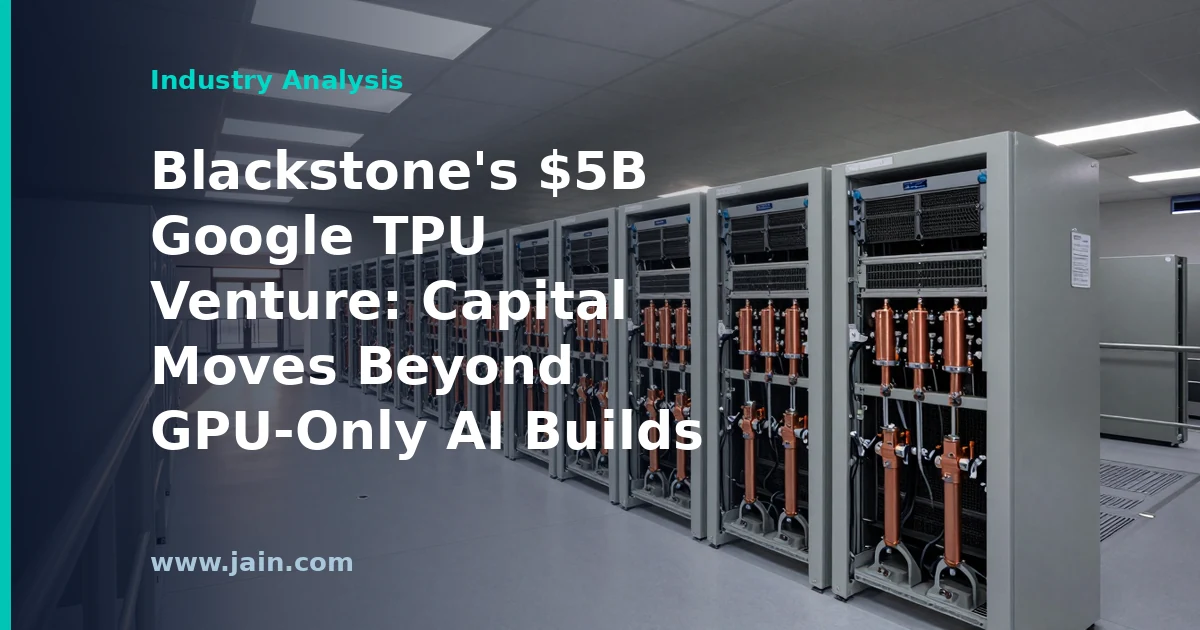
    Blackstone’s $5B Google TPU Venture: Capital Moves Beyond GPU-Only AI Builds

    Blackstone, the world’s largest alternative asset manager, will invest $5 billion in an AI infrastructure venture with Google, with the resulting capacity powered by Google’s Tensor Processing Units (TPUs) rather than the Nvidia graphics processing units (GPUs) that have dominated AI build-outs to date, according to a CNBC report published May 18, 2026.

    Executive Summary

    The announcement pairs one of the deepest pools of private capital with the only hyperscaler that designs and deploys its own AI accelerator at scale. Blackstone’s $5 billion commitment funds infrastructure — the data center capacity, power, and systems needed to run AI workloads — while Google contributes its TPU silicon, custom chips it has refined over roughly a decade to train and serve machine-learning models.

    Why it matters: nearly every headline AI infrastructure deal of the past three years has been, implicitly or explicitly, an Nvidia GPU deal. A marquee private-equity firm underwriting billions against TPU-based capacity is a meaningful vote of confidence that alternative accelerators can anchor institutional-grade infrastructure investment — and a signal that the financing market for AI compute is beginning to diversify beyond a single chip vendor.

    The First Big Check Written Against Non-Nvidia Silicon

    AI infrastructure finance has grown enormously, but it has grown narrowly: lenders and equity investors have overwhelmingly underwritten deals where the collateral and the revenue engine are Nvidia GPUs. That concentration has been rational — Nvidia’s CUDA software ecosystem and resale liquidity made its chips the safest asset to finance — but it has also made the entire capital stack a leveraged bet on one supplier. Blackstone committing $5 billion against TPU-powered capacity is the clearest sign yet that sophisticated capital now sees a second underwritable accelerator. TPUs are application-specific chips Google designed for the mathematics of neural networks; they lack the open resale market of GPUs, which is precisely why a partnership with Google — the designer, operator, and most likely demand backstop — is the structure that makes the risk financeable.

    For the broader market, the precedent may matter more than the dollars. If TPU capacity can attract institutional capital on infrastructure terms, similar structures become imaginable around other custom silicon. That would gradually loosen the financing chokepoint that has funneled most AI investment through a single vendor’s order book.

    Blackstone’s Compounding Digital Infrastructure Thesis

    This deal extends a strategy Blackstone has pursued aggressively since taking data center operator QTS private in 2021 in a transaction valued around $10 billion — then one of the largest data center acquisitions ever. Under Blackstone’s ownership, QTS became a vehicle for hyperscale expansion, and the firm has repeatedly identified AI infrastructure — data centers and the power to run them — as one of its highest-conviction themes. A venture with Google fits the pattern: Blackstone supplies capital at a scale few can match, and captures returns from the physical layer of AI regardless of which models or applications ultimately win.

    The economics of such ventures typically hinge on tenancy: infrastructure returns are attractive when long-term, creditworthy commitments stand behind the capacity. Google’s involvement suggests — though the report does not confirm — that Google itself or its cloud customers would utilize the TPU capacity, which would make this closer to a pre-leased infrastructure play than a speculative build. The announcement does not disclose the venture’s structure, so that remains an inference rather than a fact.

    Winners, Losers, and the Accelerator Question

    Google is an obvious beneficiary: external capital lets it scale TPU deployment faster than its own capital-expenditure budget alone would allow, and every TPU-anchored venture strengthens the case that its silicon is a genuine alternative for AI workloads, not just an internal cost-saver. For Nvidia, one $5 billion venture is immaterial to near-term demand — its chips remain heavily supply-constrained — but the directional message is unwelcome: the largest infrastructure investors are actively building expertise in financing non-Nvidia compute. Data center developers, power providers, and cooling vendors win either way; TPUs, like GPUs, are power-dense accelerators that need substantial electricity and advanced thermal management.

    The risks are real, too. TPU capacity is only as valuable as demand for TPU workloads, and that demand is concentrated in Google’s own ecosystem and a handful of large AI developers. If the software world remains standardized on Nvidia’s tooling, TPU infrastructure could face a narrower tenant pool than comparable GPU builds — a concentration risk any underwriter of this deal will have had to price.

    Background

    Google introduced TPUs in the mid-2010s to run its own machine-learning workloads more efficiently than off-the-shelf chips allowed, and has since iterated through multiple generations while making them available to outside customers through Google Cloud. TPUs are the most mature in-house AI accelerator program among the hyperscalers, all of whom have pursued custom silicon to reduce dependence on Nvidia. Blackstone, for its part, has spent the past half-decade positioning itself as a dominant financier of digital infrastructure — anchored by its roughly $10 billion take-private of QTS in 2021 — on the thesis that AI’s appetite for compute and power represents a generational infrastructure build-out.

    Source: Blackstone to invest $5 billion in AI infrastructure venture with Google, powered by TPU chips — CNBC report, May 18, 2026, on Blackstone’s planned $5 billion TPU-powered AI infrastructure venture with Google.