Tag: Lake Mariner

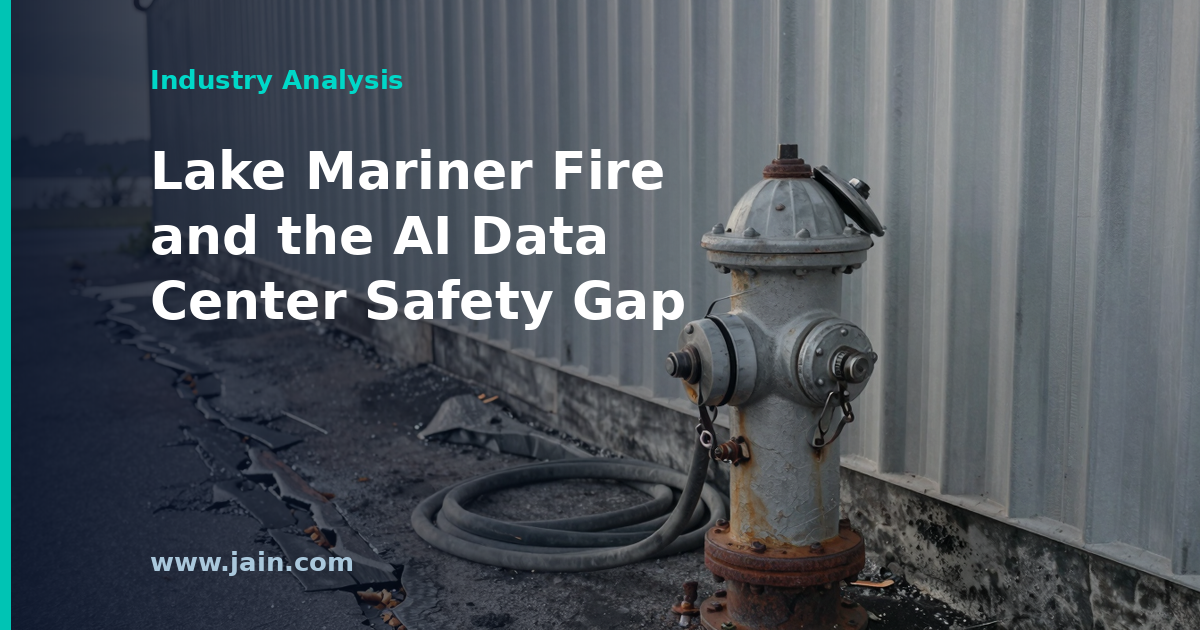
  • Fire at TeraWulf’s Lake Mariner Exposes AI Site Safety Gaps

    Fire at TeraWulf’s Lake Mariner Exposes AI Site Safety Gaps

    TL;DR · 30-second read

    The Short Version

    In early June, a building caught fire at a large computer facility in upstate New York, built on the site of a retired coal plant. Firefighters arrived to find no working fire alarm, no built-in system to put out flames, and three fire hydrants that did not work.

    The paperwork listing which chemicals were burning had, the owner said, burned in the fire itself. The fire chief said his crew went in blind.

    The site is being converted from mining digital currency to running artificial intelligence — the same conversion happening at dozens of sites nationwide.

    Crypto Briefing reported that firefighters from the Barker Fire Department responded in early June to a fire in an unfinished building at TeraWulf’s Lake Mariner campus in Somerset, New York, and found no functioning fire alarm, no suppression system and three hydrants that did not work. According to TeraWulf, the safety data sheets that would have identified the chemicals producing the heavy black smoke had burned up in the fire. Fire Chief Steve Matisz said his crew went into the building “kind of blind,” and that he was unsure what to make of the claim that the safety sheets had been destroyed. “It’s been a difficult situation,” Matisz said.

    Lake Mariner sits on the site of a retired coal plant that TeraWulf (Nasdaq: WULF) began operating in 2022 for Bitcoin mining and is now converting to artificial intelligence and high-performance computing workloads, targeting a combined 500 to 750 megawatts across several buildings by the end of 2026. Tenants include Core42 and Fluidstack. Post-incident discussions reportedly included plans for additional hydrants and improved storage of safety data sheets. No regulatory follow-up or investigative action has been publicly reported.

    Executive Summary

    The facts as reported are narrow — one fire, one building still under construction, one rural fire department — but they touch three things that matter across the AI build-out: whether life-safety systems are in service before a building is finished, whether a site’s water supply can actually deliver, and whether anyone outside the company checks. A megawatt is a unit of electrical demand; a campus rated at several hundred megawatts draws power on the scale of a small city, and it concentrates that energy inside a handful of buildings packed with electrical gear, batteries and, increasingly, liquid cooling.

    What makes Lake Mariner a useful case is not that TeraWulf is unusual. It is that TeraWulf is typical. A retired coal plant with an existing grid connection is among the most sought-after assets in the industry right now, because the interconnection queue — the waiting line to attach new load to the electrical grid — runs years long almost everywhere else. Buying speed by inheriting a brownfield site also means inheriting its fire mains, its hydrants and its water pressure.

    For tenants such as Core42 and Fluidstack, and for the customers behind them, the operational question raised here is not about one fire. It is about what construction-phase safety looks like at a campus racing toward 500 to 750 megawatts by the end of next year, and what an insurer, a lender or a lease counterparty is told when something goes wrong.

    Construction Is the Most Dangerous Phase of a Data Center’s Life

    A finished data center is one of the better-protected buildings in commercial real estate: detection on every ceiling, suppression plumbed and pressurised, and a fire alarm panel that is tested, certified and monitored before the first server is energised. A data center under construction is a different building entirely. Suppression piping is often installed but not charged. Detection is often wired but not commissioned. Combustible packaging, temporary power, insulation and hot work — welding, cutting, grinding — all sit in the same shell at once. That is why the industry treats the construction window as a distinct risk class with its own controls, rather than assuming a partly built facility is a slightly less protected finished one.

    The reported conditions at Lake Mariner map onto exactly that window: an unfinished building, no functioning alarm, no suppression. None of that is inherently a code violation — requirements phase in as construction progresses, and there is a legitimate period in any project when systems exist but are not yet live. What the account does not establish, and what would determine whether this was routine or a lapse, is which protections were required at that stage and which were merely absent. That is a question about the project’s fire-protection plan, and it is answerable only by the company and the authority having jurisdiction.

    Brownfield Speed Comes With Borrowed Plumbing

    The three dead hydrants are the detail with the longest reach. Converted industrial sites — retired coal, steel, paper, aluminium — are attractive because the heavy electrical infrastructure is already there and the grid connection already exists. But the fire-water infrastructure is inherited too, and it was engineered for the plant that used to be there, under a maintenance regime that ended when that plant did. Private hydrants on a large campus are the owner’s responsibility to flow-test and maintain, not the municipality’s. When three of them do not work, the failure is usually not the fire itself but everything that did not happen in the years before it.

    The response profile compounds this. Repurposed heavy-industrial land tends to be rural, which means the responding department may be small, volunteer or both, with tanker shuttles rather than an urban grid of reliable pressurised mains. The specific failure the chief described — going in without knowing what was burning, because the safety data sheets were reportedly inside the building that was on fire — is the one that pre-incident planning exists to prevent. Chemical inventories are meant to be duplicated off-site and shared with the responding department in advance, precisely so that a fire cannot destroy the document that explains itself. That the post-incident discussion reportedly turned to additional hydrants and better storage of those sheets suggests the gap was recognised.

    The Risk Is Priced Somewhere, Even If It Is Not Disclosed

    Fires during construction are covered by builder’s risk policies, and completed data centers are among the most heavily underwritten assets in the market — insurers inspect them, set conditions and price on the strength of protection systems. A loss during construction is not merely an expense; it becomes part of the underwriting file for the campus, and it can shape terms on renewal and on the buildings not yet built. Where a company is financing a rapid build-out, insurance terms and lender conditions are a real cost line, not a footnote.

    There is also a schedule dimension. TeraWulf is targeting 500 to 750 megawatts across several buildings at Lake Mariner by the end of 2026, with tenants already signed. Lease agreements in this market typically carry delivery dates, and a delivery date missed by construction damage is a commercial event as well as a safety one. Nothing in the reported account establishes that this fire affected the schedule, the tenants or the target — but those are the specific channels through which a construction-phase fire reaches investors, and they are the ones worth watching.

    Who Checks, and When

    The reported absence of publicly known regulatory follow-up is the part that generalises furthest beyond this one campus. Data center fire safety is enforced locally — by building departments, fire marshals and code officials — and the enforcement capacity of a small jurisdiction is not always matched to a multi-hundred-megawatt industrial conversion arriving inside a few years. That is a structural feature of how the AI build-out has distributed itself: toward places with cheap land, existing grid capacity and, often, modest municipal staffing.

    It is worth being precise about what can and cannot be concluded. That no follow-up has been publicly reported is not evidence that none occurred; investigations are frequently non-public until they conclude, and some are never announced at all. The fair reading is narrower and still useful: three months after an incident at a campus of this scale, the public record contains a fire chief’s account and little else. For a sector asking communities to host enormous new industrial loads, that asymmetry between the size of the facility and the visibility of its oversight is itself a thing to watch.

    Background

    TeraWulf (Nasdaq: WULF) started as a Bitcoin miner, a business whose economics turn almost entirely on the price of electricity. That pushed the industry toward the same places utilities and heavy industry once favoured: sites with large, already-permitted grid connections. Lake Mariner, on the grounds of a retired coal plant in Somerset, New York, is a textbook example, and TeraWulf has operated it since 2022.

    The rise of artificial intelligence turned those assets into something more valuable. Training and running large models requires dense clusters of specialised chips, and the binding constraint on building them is power — specifically, how quickly a site can attach hundreds of megawatts to the grid. Former mining campuses already have that, which is why so many miners are converting into landlords, leasing capacity to compute providers rather than mining coins themselves. TeraWulf’s Core42 and Fluidstack tenancies at Lake Mariner, alongside a target of 500 to 750 megawatts by the end of 2026, place it squarely in that transition. The conversion also changes the building: denser electrical gear, more batteries and increasingly liquid cooling, all of which raise the stakes on fire protection.

    Sources

    Source: TeraWulf’s Lake Mariner data center fire raises safety concerns — an account of the early-June fire at TeraWulf’s Somerset, New York campus, including Barker Fire Chief Steve Matisz’s description of the conditions his crew found on arrival.

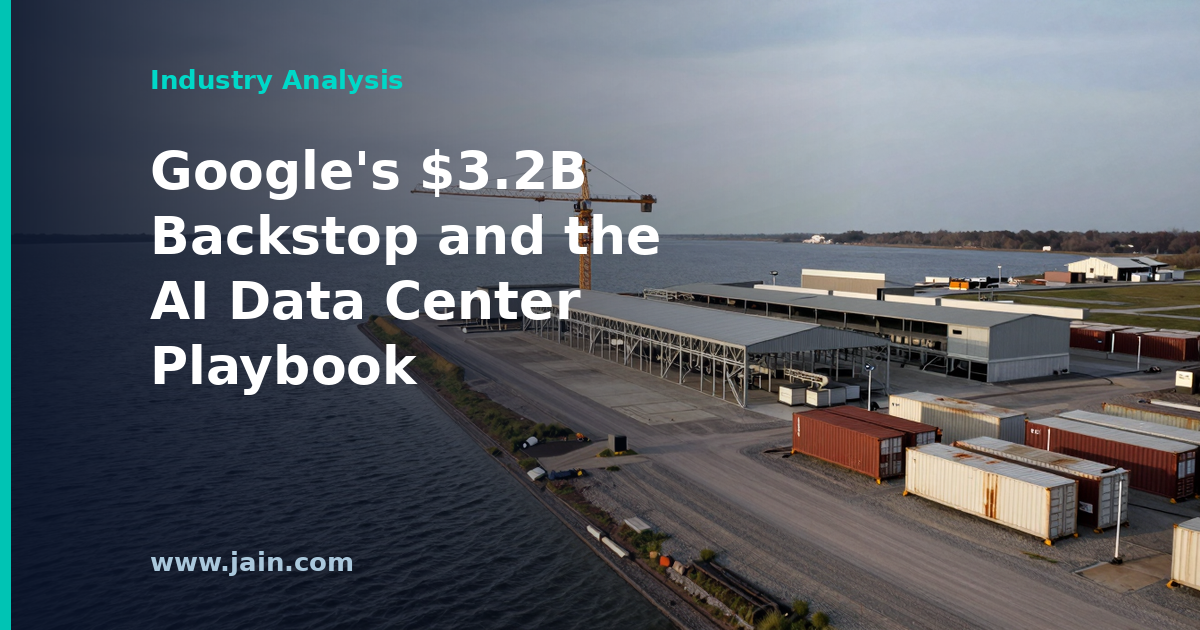
  • Google’s $3.2B TeraWulf Backstop: Who Really Funds AI Data Centers

    Google’s $3.2B TeraWulf Backstop: Who Really Funds AI Data Centers

    TL;DR · 30-second read

    The Short Version

    Google has promised to cover $3.2 billion of rent payments on a data center it will not own and will not occupy. The site is a retired coal plant near Buffalo, New York, run by a company that used to mine bitcoin.

    Without that promise, lenders would not fund the buildings. With it, construction can proceed. In return, Google holds rights to roughly 14 percent of the company.

    The borrowing stays off Google’s own books. So, largely, would the loss if the project failed.

    Startup Fortune reported that Google has backstopped $3.2 billion in lease obligations tied to TeraWulf’s AI data center campus at Lake Mariner in western New York, adding $1.4 billion in new support on top of earlier commitments. In exchange, warrants held by Google now represent roughly 14% of TeraWulf, up from about 8% months earlier.

    Google is not the tenant. Fluidstack, an AI cloud provider, holds two 10-year leases at the site covering more than 200 megawatts of critical IT load — the power available to servers themselves, excluding cooling and building overhead — expanded by a 160-megawatt building known as CB-5 to a contracted total of 360 megawatts. Those leases have been valued at $3.7 billion over the initial term and up to $8.7 billion if Fluidstack exercises its extension options. TeraWulf, a Maryland-based bitcoin miner, has spent roughly two years converting the former coal plant site outside Buffalo into an AI campus.

    Executive Summary

    The headline number is a guarantee, not a purchase. Google is not buying a data center, not leasing one, and not putting one on its books. It is standing behind someone else’s rent so that a third party’s lenders will fund construction. That single move is the reason CB-5 and the buildings behind it become financeable at all.

    The economics are straightforward once you strip out the jargon. TeraWulf cannot borrow billions against its own credit history; a former crypto miner’s balance sheet does not support project debt at that scale. Fluidstack’s ten-year lease payments can support it — but only if a lender believes those payments will arrive for a decade. Google’s backstop supplies that belief. TeraWulf gets a construction loan, Fluidstack gets capacity, and Google gets warrants, an expanding equity position, and access to compute without a capital expenditure line.

    This matters beyond one campus in New York. It is the same logic operating at far larger scale elsewhere in the sector, and it means the binding constraint on AI infrastructure is increasingly not land, turbines or chips. It is whose credit sits behind the lease.

    Credit Is the Scarce Input, Not Land

    The industry talks about AI capacity in megawatts, but megawatts are a downstream output. A developer with a permitted site, an interconnection position and a signed tenant still cannot pour concrete without several billion dollars of debt, and debt is priced against the weakest promise in the chain. TeraWulf’s site work at Lake Mariner is real; its balance sheet history is a bitcoin miner’s. Those two facts pull in opposite directions when a credit committee sits down.

    A backstop resolves the contradiction. In plain terms, Google has agreed to make the lease payments if the arrangement falls apart, which allows lenders to underwrite the loan against Google’s ability to pay rather than TeraWulf’s. The developer keeps the project, the operating risk and the upside. The hyperscaler takes on a contingent obligation — one that shows up as a commitment rather than as borrowed money — plus warrants, which are contracts giving the right to buy shares later at a fixed price. Those warrants moving Google from roughly 8% to roughly 14% of TeraWulf is the price of the credit enhancement, paid in equity instead of cash.

    For anyone tracking who builds AI capacity over the next three years, this reframes the competitive question. The winners are not necessarily the developers with the best sites. They are the developers who can attach an investment-grade counterparty to their lease stack.

    The Lease Is the Collateral

    Fluidstack’s 360 megawatts of contracted capacity at Lake Mariner is what the debt is actually secured against. A ten-year lease valued at $3.7 billion over its initial term, rising toward $8.7 billion with extensions, is a cash flow stream — and project finance exists to turn predictable cash flow streams into buildings. The tenant’s obligations, not the landlord’s assets, do the heavy lifting.

    That structure has an obvious sensitivity. The loan is sized to a tenant. If the tenant disappears, the campus is worth whatever the next tenant will pay, which in a softer market is not the same number. Google’s guarantee is the shock absorber, and its existence is a fair signal of how lenders assess a decade-long AI cloud commitment on its own: not sufficient without support. That is an observation about credit markets, not a judgment on Fluidstack’s business.

    It also explains why converted industrial sites keep winning. A retired coal plant near Buffalo already has transmission, substation land, water and a grid position that a greenfield site would spend years acquiring. Crypto miners bought many of those sites cheaply in a different cycle, which is why several of them are now landlords to AI tenants rather than operators of hash rate.

    Off the Balance Sheet, Not Out of the System

    TeraWulf’s structure is modest against the largest comparable. Meta’s Hyperion campus in Richland Parish, Louisiana — around 4 million square feet, expected to draw up to 5 gigawatts on completion in 2029 — was financed through a joint venture with funds managed by Blue Owl Capital, with Blue Owl holding 80% and Meta 20%. Morgan Stanley arranged $27 billion of debt and $2.5 billion of equity through a special purpose vehicle, a standalone company created to hold a single project’s assets and borrowings, with Pimco anchoring a bond sale rated A+ by S&P and maturing in 2049. Because Meta does not control the entity holding the debt, the debt does not appear on Meta’s balance sheet; the long lease is recorded as an operating cost instead.

    The aggregate is no longer marginal. A study cited by Forbes found the five largest US hyperscalers have moved more than $1.6 trillion in AI infrastructure debt into footnotes rather than balance sheets, and Moody’s separately estimates roughly $662 billion of hyperscaler lease commitments now sit outside reported debt — with more than $120 billion of that shift occurring in under two years. None of this is improper; lease and consolidation accounting is well-established, and the commitments are disclosed. But an investor reading only reported debt is reading a partial picture of sector leverage.

    Where the First Loss Actually Lands

    The structure relocates risk rather than eliminating it. At Lake Mariner, if the tenant walked, TeraWulf would hold a partially built campus with debt sized to a lease that no longer exists, and Google’s backstop would be the barrier between that debt and default. In the Louisiana model, private credit investors and bondholders hold the majority position and would absorb first losses, while the hyperscaler’s exposure is capped by a minority equity stake and its continuing rent obligation.

    That asymmetry is a feature, not an accident, and both sides enter it knowingly. Private credit funds are paid a spread precisely to hold decade-length demand risk that public equity investors would punish on a hyperscaler’s own books. The judgment being made across the sector is that AI compute demand holds up long enough to service twenty-plus-year paper. If it does, every party in the stack is paid as modeled. If it does not, the losses surface first in private credit vehicles and among warrant-holding partners, where they are less visible and slower to be marked than a write-down at a listed technology company would be.

    For enterprise buyers of AI capacity, there is a practical takeaway. When you sign with a neocloud or a converted-site operator, it is worth understanding who stands behind the building — because the entity on your contract may not be the entity whose credit made the building possible.

    Background

    TeraWulf is a Maryland-based company that built its business mining bitcoin — running warehouses of specialized computers that consume large amounts of electricity. When mining economics tightened, several operators discovered that their most valuable asset was not the hardware but the sites: power-rich industrial land with grid connections already in place. Over roughly two years, TeraWulf has been converting its Lake Mariner property, a retired coal plant site in western New York, into an AI data center campus leased to third parties.

    The financing model around it is newer than the buildout itself. AI campuses now routinely cost more than a mid-sized developer can borrow, so the industry has converged on project finance structures: a long lease from a creditworthy tenant, debt raised against that lease, and a special purpose vehicle or credit guarantee that keeps the borrowing separate from the hyperscaler’s own balance sheet. Meta’s Hyperion campus in Louisiana, financed through a joint venture majority-owned by Blue Owl Capital funds with bonds anchored by Pimco and rated A+ by S&P, is the largest example to date. Google’s TeraWulf backstop is a smaller variant of the same idea.

    Sources

    Source: Google’s $3.2 Billion TeraWulf Backstop Shows How AI Data Centers Get Built — reporting on Google’s lease guarantee for TeraWulf’s Lake Mariner campus, Fluidstack’s 360 megawatts of contracted capacity, and the off-balance-sheet financing structures behind large AI data center projects.

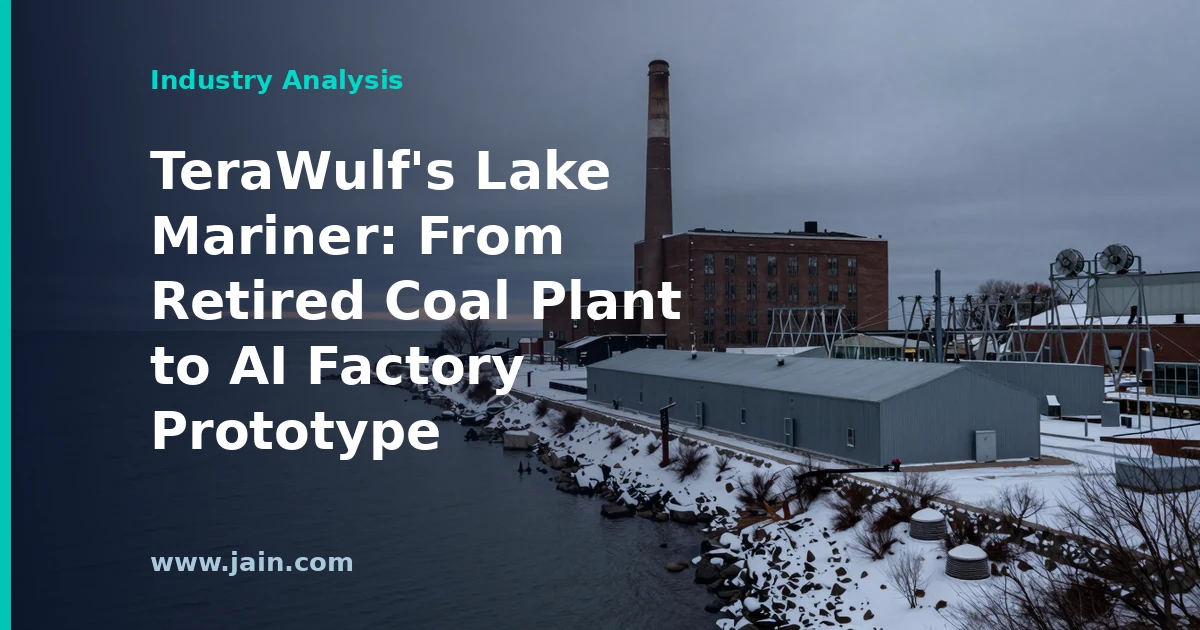
  • TeraWulf’s Lake Mariner: From Retired Coal Plant to AI Factory Prototype

    TeraWulf’s Lake Mariner: From Retired Coal Plant to AI Factory Prototype

    Data Center Frontier profiled TeraWulf’s Lake Mariner campus in Barker, New York, in a May 25, 2026 feature framing the site as a prototype for the “AI factory” — a large-scale data center purpose-built for artificial-intelligence computing. The campus occupies the site of the retired Somerset coal-fired power plant on the shore of Lake Ontario, and the piece traces how TeraWulf, a company that began as a bitcoin miner, has been converting that inherited industrial infrastructure into high-performance computing capacity.

    Executive Summary

    The core story is one of conversion twice over: a coal plant site converted to digital infrastructure, and a cryptocurrency-mining operator converting itself into an AI-infrastructure landlord. Lake Mariner’s appeal rests on assets that are nearly impossible to recreate quickly — an existing high-capacity grid interconnection built for a power station, access to abundant water for cooling, zoned industrial land, and a regional grid in upstate New York that draws heavily on zero-carbon hydroelectric generation.

    Why it matters: the binding constraint on AI data center construction has shifted from chips to power. Utilities in major markets are quoting multi-year waits for large new grid connections, so sites that already have them — like retired thermal power plants — jump the queue. If Lake Mariner works as a template, the industry gains a playbook for turning stranded fossil-fuel assets into AI campuses, with meaningful implications for former coal communities, grid planners, and the competitive map of the data center industry.

    The Interconnection Is the Asset

    A modern AI campus can require as much electricity as a small city, and the slowest step in delivering it is usually not construction but the grid interconnection — the physical and contractual link that lets a facility draw power from the transmission system. New requests in constrained markets can sit in utility study queues for years. A retired power plant inverts that problem: the wires, switchyard, and transmission rights were built to push hundreds of megawatts out, and much of that capacity can be repurposed to pull power in.

    That is the essence of the Lake Mariner thesis. TeraWulf did not have to win a greenfield site fight; it inherited the Somerset plant’s industrial footprint and grid position. The same logic explains a broader industry pattern — operators across the market have been scouting retired or retiring thermal plants precisely because the interconnection, land, and water rights are already in place. In that sense the “prototype” label is apt: the question the site tests is whether coal-to-compute conversion can be repeated at scale, not whether it can be done once.

    From Bitcoin Mine to AI Landlord

    TeraWulf built Lake Mariner as a bitcoin mining facility, and that history matters more than it might appear. Bitcoin mining taught the company to energize large amounts of power-dense compute quickly and cheaply — but mining revenue is volatile, tied to cryptocurrency prices and periodic “halving” events that cut miner rewards. High-performance computing (HPC) hosting for AI customers offers something mining never could: multi-year contracted revenue from creditworthy counterparties, which is the kind of cash flow lenders and infrastructure investors will finance.

    The catch is that the two businesses are less similar than the shared electrical infrastructure suggests. AI training clusters demand far higher reliability, denser cooling — increasingly liquid cooling delivered directly to the chips — and enterprise-grade operations that mining sheds never needed. The conversion is therefore a genuine re-engineering exercise, not a tenant swap, and execution on that transition is the fair test by which TeraWulf and its bitcoin-miner peers should be judged.

    The Zero-Carbon Power Angle

    Upstate New York’s grid is unusually clean by U.S. standards, anchored by large-scale hydroelectric generation. For AI customers under pressure to report the carbon footprint of their computing, siting workloads on a predominantly zero-carbon grid is a marketable advantage — and there is a certain narrative symmetry in AI compute replacing coal combustion on the same acreage.

    The claim deserves precision, though. A clean regional grid is not the same as dedicated clean power, and every large new load consumes headroom that grid planners had earmarked for other purposes. The substantive questions for any site making a sustainability case are how the incremental demand is matched with generation, and what the facility’s water and community impacts look like — questions that apply to Lake Mariner exactly as they apply to every competing campus.

    Winners, Losers, and the Watchlist Question

    If the coal-to-AI conversion model scales, the winners include former plant communities that regain a tax base and jobs, utilities that get to reuse stranded transmission assets, and early movers holding converted sites when capacity is scarce. The pressure lands on operators pursuing greenfield builds in queue-constrained markets, who must wait for infrastructure that conversion players already own.

    For investors treating TeraWulf as a watchlist company, the prototype framing cuts both ways. It signals genuine strategic differentiation — but prototypes, by definition, have not yet proven repeatability. The durable questions are contract quality (who the tenants are and for how long), financing cost for the heavy capital expenditure AI-grade buildings require, and whether the company can operate to the uptime standards hyperscale customers demand. A compelling site thesis is necessary but not sufficient.

    Background

    TeraWulf was founded to mine bitcoin using predominantly zero-carbon energy and developed Lake Mariner on the grounds of the retired Somerset coal plant in Barker, New York, drawing on the region’s hydro-heavy grid. As demand for AI computing surged and power became the industry’s binding constraint, TeraWulf — like several other large miners — began redeveloping its energized sites for high-performance computing tenants, betting that its grid position would be worth more serving AI than mining cryptocurrency.

    The broader market context is a structural shortage of grid-connected capacity: AI’s growth has pushed utilities in major data center markets to years-long interconnection queues, elevating any site with existing power infrastructure — especially former power plants — into strategic real estate.

    Source: TeraWulf’s Lake Mariner Campus: How a Retired Coal Plant Became an AI Factory Prototype (Data Center Frontier) — a site profile examining Lake Mariner’s conversion from coal plant grounds to AI data center campus.