
TL;DR · 30-second read
The Short Version
- An American company, NANO Nuclear Energy, is designing a very small nuclear reactor called KRONOS. Small reactors like it are one way people hope to power the huge computer centers behind artificial intelligence.
- It hired IMPSA, an Argentine factory company with rare nuclear safety certification, for three years of engineering help.
- The first job is a six-month check on whether the reactor’s thick steel tank, which holds the nuclear fuel, can actually be built.
- Nothing gets built yet. Any manufacturing needs new contracts and approval from regulators.
Energies Media reported that NANO Nuclear Energy has signed a three-year Engineering Services Master Agreement with the U.S. subsidiary of IMPSA, an Argentine heavy-manufacturing firm, to develop critical components for its KRONOS MMR micro modular reactor. The deal was announced October 21, 2026. IMPSA holds ASME N and N-Stamp nuclear certifications, which qualify it to engineer and fabricate Class 1 heavy nuclear components, the most safety-critical category of reactor hardware.
Work begins with a six-month, retainer-backed design review and manufacturability feasibility study centered on the reactor pressure vessel. Reactor cavity cooling, spent-fuel storage and transportation components are named as potential follow-on areas. The agreement is non-exclusive, and any actual fabrication would require additional work orders or definitive agreements, plus regulatory approval.
Executive Summary
NANO Nuclear Energy is bringing a certified nuclear fabricator into the KRONOS MMR design process before the design is frozen. Over six months, IMPSA will independently check KRONOS components against Section III of the ASME Boiler and Pressure Vessel Code, the American Society of Mechanical Engineers’ rulebook for nuclear-grade hardware. The aim is to surface fabrication, inspection, access and supply-chain problems while they are still cheap to fix.
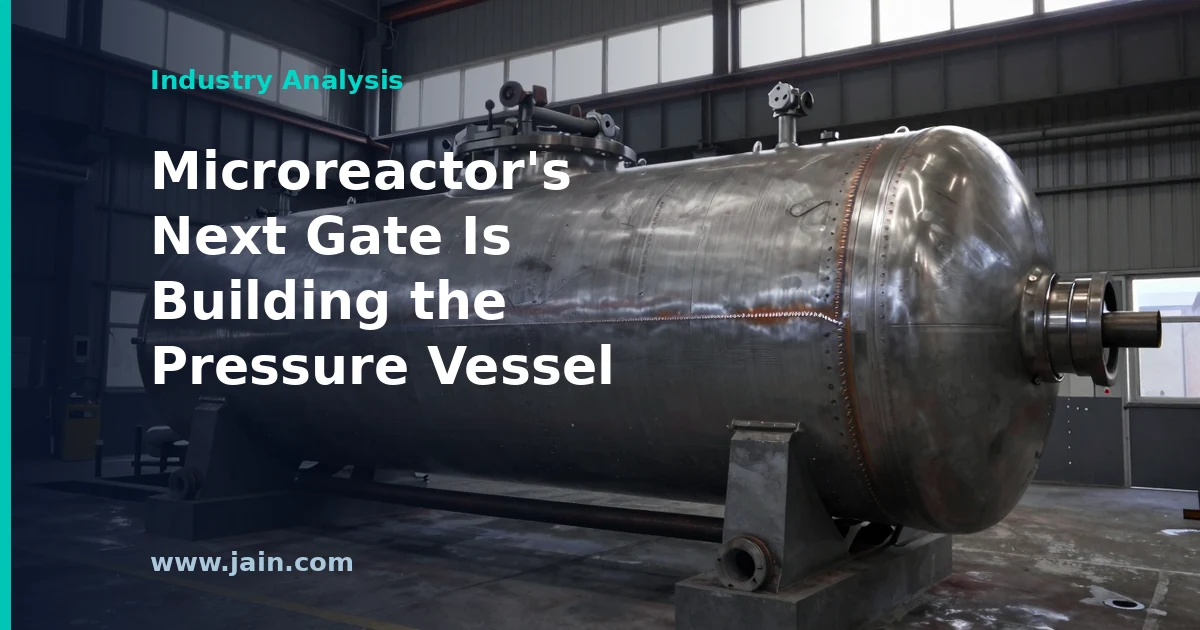
The move matters because a microreactor delivers no power, to a data center or anyone else, until its heaviest code-regulated parts can actually be built and inspected. The reactor pressure vessel, the steel container that holds the core under pressure, is the primary focus of this agreement. It is also the kind of component few manufacturers worldwide are certified to make.
The deal is a structured starting point, not a supply contract. It establishes a named, certified engineering partner for the pressure vessel. It does not commit either company to production, volumes or a delivery date.
Why the Pressure Vessel Is the Gate
In any reactor, the pressure vessel is among the largest and most demanding components to make. It forms part of the primary pressure boundary, which is what the Class 1 designation in ASME Section III refers to. Building one requires code-qualified welding, extensive non-destructive examination (inspecting welds and metal with methods such as ultrasound or radiography without damaging the part), and a quality-assurance program that regulators will accept. A small reactor needs these same disciplines. The parts are smaller, but the rules are not lighter.
That is why the agreement’s structure is telling. The reactor pressure vessel is the main component IMPSA will evaluate, and the six-month study is explicitly designed to find fabrication constraints, inspection limitations, accessibility issues and supply-chain risks. These are the problems that turn a workable design into one that cannot be built on schedule. The partner’s credentials are the scarce input: IMPSA holds both ASME N and N-Stamp certifications, described as uncommon globally and rare in Latin America. CEO James Walker said applying that knowledge now “is expected to identify constraints earlier, strengthen the design-for-manufacture process and build a much more direct pathway toward future component production.”
For anyone counting on microreactors to power AI-era loads, including developers, utilities and investors, this places the near-term risk in a specific spot. The open question for KRONOS is no longer only whether the physics and licensing case holds. It is also whether its most demanding component can be fabricated and inspected to code by a qualified shop. The six-month study is the first structured attempt to answer that, so its findings matter more than the three-year headline term.
What the Deal Commits, and What It Does Not
The agreement is careful about its limits. A retainer funds the initial study. Further deliverables, including detailed engineering and fabrication drawings, code-compliant calculations and 3D models, are possible “depending on what NANO Nuclear needs.” Any fabrication, regional projects or other commercial work depends on the engineering results and regulatory requirements, and would require new work orders or definitive agreements.
Non-exclusivity cuts both ways. NANO keeps the freedom to qualify other fabricators, which is sensible risk management for a scarce component. IMPSA keeps the freedom to sell the same capability to competing reactor developers. Neither company has said whether IMPSA’s certified capacity would be reserved for KRONOS if the program moves to production.
Microreactors and the AI Power Question
Small reactors are part of a broader conversation about firm, around-the-clock power for large computing campuses, where grid connections can take years. The appeal of a micro modular design is factory-style production of standardized units. That appeal depends entirely on a supply chain able to produce nuclear-grade components repeatedly. This agreement is an early, concrete step toward that supply chain. It is also a reminder that the step comes long before any electricity reaches a customer.
Founder and chairman Jay Jiang Yu framed the deal within NANO’s integrated model spanning reactor engineering, fuel, manufacturing, transportation and project execution. He said the partnership “can strengthen several of those areas at the same time while establishing an important industrial relationship between the United States and Argentina.” The listed collaboration areas support that claim in scope, covering cavity cooling, spent-fuel storage and transportation components. Whether that scope turns into contracted work is what the next six months will begin to show.
Background
NANO Nuclear Energy (ticker NNE) is developing micro modular reactors, compact nuclear units intended to be manufactured as standardized products, and describes its strategy as an integrated model spanning reactor engineering, fuel, manufacturing, transportation and project execution. KRONOS MMR is its flagship design. Like other advanced-reactor developers, it must move from design through licensing and into a qualified nuclear supply chain before any unit can operate.
Nuclear components in the United States are governed by Section III of the ASME Boiler and Pressure Vessel Code. Manufacturers that build these parts must hold specific ASME certifications, and only a limited number of shops worldwide are qualified for Class 1 heavy components such as reactor pressure vessels. IMPSA, an Argentine heavy manufacturer, has more than four decades of nuclear engineering and fabrication experience and holds those credentials. Source: NANO Nuclear Energy signs three-year engineering agreement with IMPSA to develop KRONOS MMR components: Energies Media’s report on the engineering services agreement and its initial six-month manufacturability study.Sources