Tag: Georgia

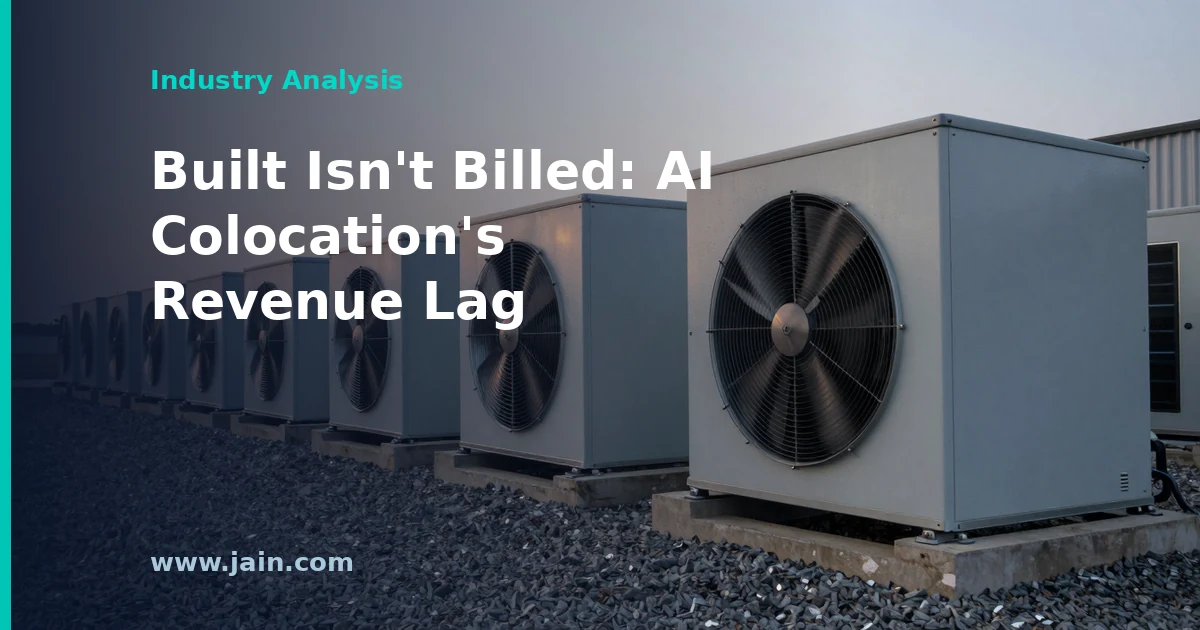
  • Delivered Isn’t Billed: Core Scientific’s 48 MW Dalton Step and the AI Revenue Lag

    Delivered Isn’t Billed: Core Scientific’s 48 MW Dalton Step and the AI Revenue Lag

    TL;DR · 30-second read

    The Short Version

    A company that used to mine bitcoin is turning its buildings into data centers for artificial intelligence. Core Scientific says it finished another 48 megawatts of capacity at its campus in Dalton, Georgia. That is enough electricity for tens of thousands of homes. The space is for CoreWeave, which rents computing power to artificial intelligence companies.

    The catch is that finishing a building is not the same as getting paid for it. In July, only about a sixth of the space rented out at Dalton was being billed. The company has not said when this new section starts earning money. Its November 5 earnings report should show.

    Mugglehead Investment Magazine reported that Core Scientific (Nasdaq: CORZ), the Miami-based bitcoin miner converting its facilities into high-density colocation data centers, said on October 19 that it had delivered another 48 megawatts (MW) at its Dalton, Georgia campus since its July update. The capacity belongs to Phase 2, which is being built for the campus’s first customer, AI cloud provider CoreWeave (Nasdaq: CRWV). Core Scientific did not say whether CoreWeave has accepted the new capacity, how much is now billing, or when revenue from it begins.

    Core Scientific’s July 28 earnings presentation showed about 30 MW billing at Dalton against roughly 175 MW leased, with CoreWeave’s buildout there targeted for completion in early 2027. The October update did not revise that date. Core Scientific shares closed up 1.85% at $13.73 on October 19, and CoreWeave closed down 0.44% at $61.12. Core Scientific reports third-quarter results before the market opens on November 5.

    Executive Summary

    The headline figure is construction progress: 48 MW of data center capacity handed over in Phase 2 at Dalton. In colocation, a tenant rents space, power and cooling in a facility and installs its own servers. Under that model, delivering capacity is only the first step. The landlord’s revenue usually starts once the tenant accepts the space and billing begins, and Core Scientific has not said whether either has happened for these 48 MW.

    That distinction matters because Dalton holds most of the unbilled capacity in Core Scientific’s CoreWeave portfolio. In July, roughly 145 MW at Dalton was leased but not yet billing. Chief executive Adam Sullivan put the remaining CoreWeave buildout at 150 MW across all five campuses, and the other four sites were complete or substantially complete. How quickly Dalton moves from delivered to billed therefore largely determines when the rest of the contracted revenue arrives.

    For investors and for other miners pursuing AI conversions, the lesson is that the size of a contract says little about timing. The CoreWeave relationship carries more than $10 billion of potential revenue over 12-year terms. What shows up in each quarter’s results depends on how many megawatts have crossed into billing, and the November 5 results are the next point at which that can be checked.

    The 145 MW Gap Between Leased and Billed

    The core mechanism is simple. A megawatt that is leased is a promise of future income. A megawatt that is delivered has been built. A megawatt that is billing is actually generating revenue. Core Scientific’s July presentation put Dalton at about 175 MW leased and about 30 MW billing, which left roughly 145 MW of contracted capacity outside the billing column. The October delivery of 48 MW sits somewhere in that gap. If every new megawatt had entered billing, Dalton would be near 78 MW, still well under half of its leased capacity. The company has not confirmed that it has.

    Core Scientific’s own figures give a rough sense of what the gap is worth. Its mid-July billing capacity of 437 MW corresponded to about $635 million of average annualized colocation revenue under standard accounting rules (GAAP). That is a companywide average of roughly $1.45 million per billed megawatt per year. The figure is a portfolio average and cannot be read as Dalton’s actual pricing, but it shows the scale involved. Each quarter that a large block of capacity sits delivered but unbilled is revenue that has been contracted but not yet earned.

    This is why delivery cadence, more than contract size, drives near-term results for converted miners. Revenue arrives in steps as each power block is energized, accepted and billed. A headline lease figure tells investors where the curve should end, but not how fast the company gets there.

    Capital Goes Out Before the Revenue Comes In

    The timing gap has a cash cost. Core Scientific reported second-quarter capital expenditures of $797.5 million, covering property, equipment, land and development rights. Liquidity at June 30 was $1.82 billion, a measure that combines cash and cash equivalents with digital assets such as bitcoin. Spending of that size goes into buildings and electrical gear months before the corresponding megawatts generate rent.

    Revenue is catching up. Colocation revenue rose to $136.7 million in the June quarter from $77.5 million in the March quarter, and billing capacity grew from 395 MW at June 30 to 437 MW by mid-July. The same quarter showed a net loss of $1,155.3 million. The company attributed most of that loss to changes in the fair value of its warrants, which are rights to buy shares at a set price and which become more costly on paper as the stock rises. That is an accounting effect rather than an operating cash outflow, but it means headline profit figures are a poor guide to how the conversion is progressing. Billed megawatts are a better guide.

    A Large, Concentrated Contract With Shared Risk

    The CoreWeave relationship began with a 16 MW lease at Core Scientific’s Austin campus in 2024. “Our agreement with CoreWeave began with a 16-megawatt lease at our Austin campus in 2024 and has since expanded to 590 megawatts of total contracted capacity,” Sullivan said in his July 28 prepared remarks. The July deck described 12-year terms with two five-year renewal options, no right for either party to terminate unilaterally, and about $850 million in average annualized revenue across the full relationship.

    Those terms provide durable revenue once capacity is billing. They also concentrate the outcome on one tenant and on one campus’s construction schedule. The deck said both parties share execution risk, and CoreWeave has its own version of the same gap. It reported 1.5 gigawatts of active power against about 3.7 gigawatts contracted across its business, which means its revenue also depends on capacity being energized on time. That is a company-wide figure and is separate from Dalton, but the incentives line up. Both companies benefit when Dalton megawatts move into service, and both are exposed when they slip.

    What November 5 Can Settle

    Core Scientific’s third-quarter results are the first point at which the October delivery can be compared with reported billing and revenue. The useful numbers will be billing capacity at Dalton specifically, any updated completion date for the CoreWeave buildout there, and whether the early-2027 target still holds. Because the October update gave no dates for deliveries between July and October, the 48 MW cannot yet be assigned to a single reporting quarter. That allocation is exactly what the results should clarify.

    Background

    Core Scientific built its business as one of the larger US bitcoin miners and has since been converting its sites into high-density colocation data centers for AI and high-performance computing. The company went through a Chapter 11 restructuring, a court-supervised reorganization of its debts. In March 2025 it named Jim Nygaard, a finance executive formerly of XMS Capital Partners and Morgan Stanley, as chief financial officer, succeeding Denise Sterling, who led the company through the restructuring and more than $1 billion of capital raising.

    Converting a mining site involves more than renting out space. AI servers draw far more power per rack and generate more heat than mining machines, so operators must rebuild electrical and cooling systems before a tenant can move in. Core Scientific’s CoreWeave relationship grew from a 16 MW Austin lease in 2024 to about 590 MW across five campuses. By July, four of those sites were complete or substantially complete, leaving Dalton as the main remaining build.

    Sources

    Source: Core Scientific reports another 48 MW delivered at Dalton campus, Mugglehead Investment Magazine’s report on the October 19 Dalton delivery update, with figures from Core Scientific’s July 28 results.

    Primary sources: Core Scientific Appoints Former Investment Banker as New CFO (CoinDesk, March 3, 2025).

  • Digital Realty’s $100M+ Cleanup of a $120M Army Dump Makes Site History a Build Cost

    Digital Realty’s $100M+ Cleanup of a $120M Army Dump Makes Site History a Build Cost

    TL;DR · 30-second read

    The Short Version

    Digital Realty, one of the world’s biggest owners of buildings that house internet servers, is building a $3 billion complex in Georgia on land the Army used as a dumping ground for about 40 years.

    Workers digging there found buried drums of white phosphorus, a chemical that bursts into flame and thick white smoke when it touches air. A police bomb squad was called, and work in that area stopped.

    The company expects to spend more than $100 million cleaning up the land. It paid $120 million for it.

    Hunterbrook Media reported on October 19 that construction crews at Digital Realty’s planned $3 billion data center on a 97-acre parcel of the former Fort Gillem Army base in Georgia dug up white phosphorus that “reacted when exposed to air and exhibited a dense white smoke.” That description comes from a letter sent to the Georgia Environmental Protection Division on Digital Realty’s behalf. Work in the area was halted immediately, local police sent a bomb squad, and specialists later removed five 30-gallon steel drums containing the material, a Digital Realty spokesperson said.

    Digital Realty bought the parcel for $120 million. Its project website says it expects to invest more than $100 million in site remediation. The contaminated area will sit directly beneath the planned building and, according to the environmental consultant’s letter, “will be encapsulated with a concrete building foundation.”

    Executive Summary

    One of the largest data center owners in the world is building a $3 billion campus on land the Army used from 1941 until around 1980 as an “indiscriminate burial” site for waste ranging from solvents to munitions. Unearthing white phosphorus, a substance that ignites on contact with air, stopped work in part of the site and brought out a bomb squad. Digital Realty says the five drums recovered were “far less than could have been encountered across the full area.”

    The episode matters beyond one project because of its numbers. A cleanup budget of more than $100 million on a $120 million parcel means the cost of dealing with the ground’s past is approaching the cost of the ground itself. For anyone who develops, finances or leases large data center campuses, that shows a former industrial or military site’s history is a cost and schedule item of its own, not a footnote to the land price.

    The company’s chosen remedy also has long-term implications. Sealing the affected area under the building’s concrete foundation, rather than removing everything, makes the structure itself part of the environmental control for as long as it stands.

    The Cleanup Bill Is Closing In on the Land Price

    Two figures from Digital Realty’s own materials frame the economics. The company paid $120 million for the parcel and expects to invest more than $100 million in remediation, meaning cleanup, according to its project website. The cleanup budget is therefore equal to more than four-fifths of the purchase price. Together, buying and preparing the ground accounts for at least $220 million, roughly 7% of the project’s $3 billion headline figure. The company has not said whether that $3 billion includes the land and remediation.

    Site-selection models typically treat land as a modest input next to buildings, electrical gear and cooling systems. This site shows how that assumption can break down. Environmental history adds a separate cost category and a separate schedule risk. The white phosphorus discovery set off a sequence of steps: stop work, call police, bring in a bomb squad, and have specialists excavate the drums. Every one of those steps has to finish before concrete can go into that part of the site. The people affected are developers modelling delivery dates, lenders underwriting construction timelines, and tenants waiting for capacity to come online.

    This is one project, and it does not by itself establish an industry trend. It does show a mechanism. Large, contiguous parcels of the size data center campuses need are hard to find near major metros. Former military and industrial land is one place they still exist in one piece, and that land comes with whatever was left in it.

    Encapsulation Makes the Foundation Part of the Remedy

    According to the consultant’s letter, the area where the munitions were found will sit directly beneath the planned data center and will be “encapsulated with a concrete building foundation.” Encapsulation means containing contamination in place under a barrier instead of digging all of it up and hauling it away. Compared with full excavation, it usually means less disturbance and a faster path to building.

    The trade-off is permanence. Once the slab is the barrier, the building and the remedy are tied together. Future work that cuts into the ground, such as new utility runs, expansions or eventual demolition decades from now, has to account for what lies underneath. That is a question for the owner, and also for tenants signing long leases, insurers pricing the asset, and any future buyer doing due diligence. Digital Realty has not described the regulatory conditions, monitoring or long-term obligations attached to the plan.

    A Known Risk, and Ample Capital to Address It

    The site’s condition was not a secret. In a 2025 meeting with county officials, a Digital Realty asset manager said, “There’s quite a bit of environmental issues with the site … Tons and tons and tons of — physical tons — of trash and environmental hazards.” The spokesperson’s comment that five drums were “far less than could have been encountered across the full area” can be read two ways. It reassures that the find was modest relative to what the company expected. It also acknowledges that more material could still be present across 97 acres.

    Money does not look like the binding constraint. In an 8-K filed October 9, Digital Realty disclosed that a finance subsidiary sold €1 billion of 5.125% guaranteed notes due 2036, for net proceeds of about €985.8 million. The company intends to allocate an amount equal to those proceeds to “Eligible Green Projects,” a category that includes pollution prevention and control and green buildings. The filing does not tie the proceeds to the Georgia site. It does show a company that can raise ten-year capital at scale. For this project, the more open variables are time and regulatory sign-off.

    The Neighbors’ Side of the Ledger

    Nearby residents have reported property damage from ongoing rock blasting at the site. Pamela Felder said blasting caused numerous cracks inside and outside her home. A Digital Realty spokesperson said that after evaluating the complaints, “it was determined that the damage claims were not the result of site activities.”

    Both positions leave fair questions. For the company: who conducted the evaluation, by what method, and was it independent? For claimants: what documentation exists of each home’s condition before blasting began? These disputes matter for schedules as well as reputations. Local goodwill shapes how smoothly permits, inspections and later phases proceed. Digital Realty’s stock closed Friday at $175.97, up 0.86% on the day and 13.74% year to date. That close came before the report was published, so it does not reflect any market reaction.

    Background

    Digital Realty Trust is one of the largest data center owners in the world. It is structured as a real estate investment trust, a company that owns income-producing property and pays out most of its earnings to shareholders. It builds and leases facilities where cloud providers, enterprises and network operators rent space, power and connectivity for their servers. Demand for that capacity, driven heavily by cloud computing and artificial intelligence, has pushed developers to seek large parcels that can host multi-building campuses.

    Fort Gillem is a former Army installation south of Atlanta. According to the report, the Army used the parcel Digital Realty bought as a waste burial site for roughly four decades, from 1941 until around 1980. Redeveloping land like this typically requires environmental investigation and cleanup under state oversight, which in Georgia falls to the Environmental Protection Division.

    Sources

    Source: Hunterbrook Report: Digital Realty’s $3 Billion Georgia Data Center Hits Toxic Roadblock After White Phosphorus Found At Former Army Dump — Benzinga’s account of Hunterbrook Media’s investigation into contamination at Digital Realty’s Fort Gillem site.

    Primary sources: Digital Realty Trust 8-K filed October 9, 2026 (€1 billion 5.125% Guaranteed Notes due 2036) — SEC EDGAR.

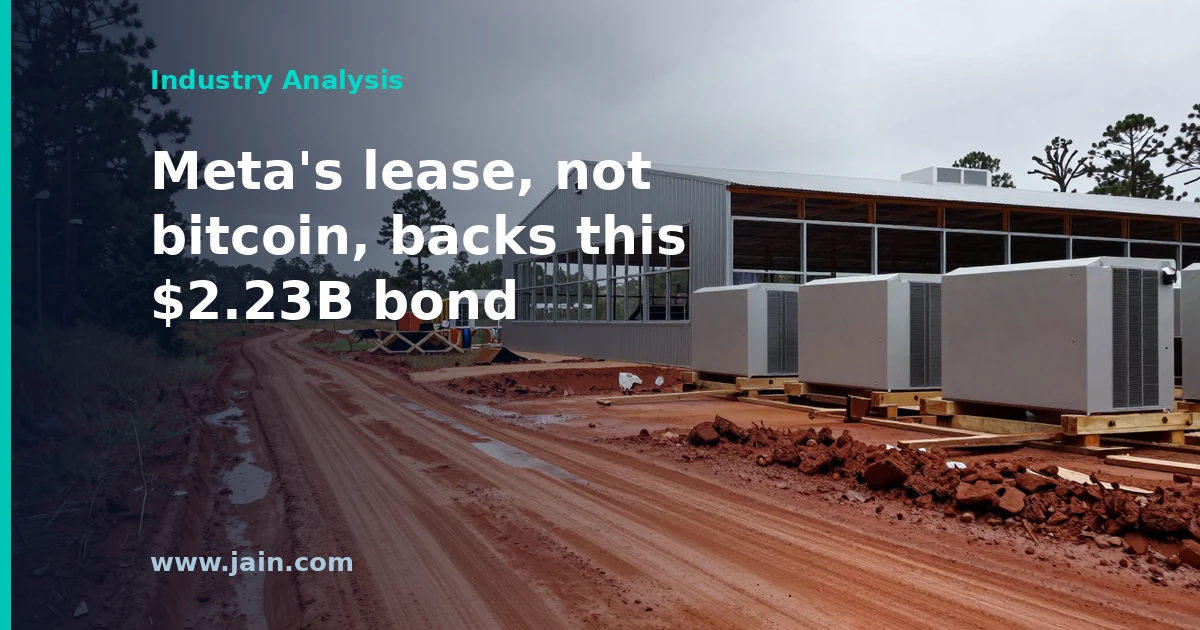
  • CleanSpark’s $2.23B AI Campus Bond Rests on Meta’s Lease, Not Bitcoin

    CleanSpark’s $2.23B AI Campus Bond Rests on Meta’s Lease, Not Bitcoin

    TL;DR · 30-second read

    The Short Version

    CleanSpark, a company best known for mining bitcoin, wants to borrow about $2.2 billion to finish a huge building full of computers for artificial intelligence in Sandersville, Georgia.

    Meta, the owner of Facebook and Instagram, has agreed to rent the building for 20 years and has promised the rent will be paid. That promise, not bitcoin, is what lenders are really betting on.

    The site is due to start earning rent in late 2027. Its computers are built to use as much electricity as well over 100,000 homes.

    On September 17, 2026, CleanSpark (Nasdaq: CLSK) said in an 8-K filing and accompanying press release that its wholly owned subsidiary CSDC Finance I, LLC intends to offer $2.227 billion of senior secured notes due 2031. The notes will be sold privately to large institutional investors under Rule 144A and to non-US investors under Regulation S. Proceeds will pay the remaining build-out cost of CleanSpark’s Sandersville, Georgia data center, reimburse CleanSpark for earlier equity it put into the project, and fund debt service reserves. The offering is subject to market conditions, and the interest rate has not yet been set.

    An investor presentation filed with the 8-K describes Sandersville as a 175-megawatt AI campus leased for 20 years to Anviran, LLC, a Meta subsidiary, with Meta guaranteeing rent and operating expenses. Several financial outlets characterized the deal as a junk, or high-yield, bond. Blockonomi reported that CleanSpark shares rose 4.73% on Thursday to close near $13.40.

    Executive Summary

    CleanSpark is raising $2.227 billion of debt against one building, not against the company. The notes sit in a special-purpose subsidiary, are secured by first-priority liens on that subsidiary’s assets and the Sandersville property company, and are backed by a 20-year lease whose rent Meta guarantees. According to the investor presentation, the lease carries about $6.6 billion of base-term contract value, a 3% annual rent escalator and roughly $330 million of average annual net operating income (rent left after operating costs).

    That structure matters because it lets a company whose core business is mining bitcoin borrow on the strength of a trillion-dollar tenant’s promise to pay rent. It also shows where the risk actually sits: before rent begins, which is targeted for the fourth quarter of 2027, lenders are exposed to construction, and CleanSpark’s completion guarantee is the backstop. After that, the main question becomes refinancing the notes in 2031, well before the lease ends.

    For the wider AI infrastructure market, the deal is a working example of how a miner with power and land can turn a signed hyperscale lease (a lease with one of the giant cloud and AI companies) into construction financing without issuing new shares.

    The Collateral Is Meta’s Rent Check, Not Bitcoin

    Read the 8-K and its exhibits together and the credit story is clear: bondholders are lending against a lease. The issuer, CSDC Finance I, is a ring-fenced subsidiary. The notes are guaranteed by CSRE Properties Sandersville, which holds the facility, and secured by first-priority liens on substantially all assets of both entities plus a pledge of the issuer’s equity held by its parent, CSDC Holdings I. The tenant, Anviran, LLC, is a wholly owned Meta subsidiary, and the investor presentation names Meta as guarantor of both rent and operating expenses. The lease is described as roughly 100% triple-net, meaning the tenant bears the building’s operating costs, so almost all rent flows through to the landlord.

    The numbers line up with that reading. The $2.227 billion of notes equals about a third of the roughly $6.6 billion of base-term contract value, and a little under seven times the roughly $330 million of average annual net operating income CleanSpark projects. Bitcoin’s price, mining difficulty and the halving cycle, which dominate CleanSpark’s mining economics, do not appear in that rent stream. For a high-yield investor, the relevant credit once the building is operating is Meta’s, which the presentation frames with a roughly $1.7 trillion market capitalization and $117 billion of first-half 2026 revenue.

    That is the sense in which the bond rests on the lease rather than the miner. It is an inference from the structure, not a rating: the filings disclose no credit rating or coupon, and those will determine how much credit investors actually give the Meta guarantee.

    The Risk Lenders Still Carry: Getting to Rent Day

    A lease guarantee only pays once there is something to lease. The presentation targets Phase I rent commencement in the fourth quarter of 2027, and its own cash-flow schedule shows negligible income before 2028. Until then, bondholders are exposed to exactly the risks the presentation lists: permitting and utility constraints, construction delays, cost overruns and supply-chain problems. The proceeds include debt service reserves, which cover interest payments during that gap.

    The backstop for construction is CleanSpark itself. The company will provide a customary completion guarantee, meaning it must fund the project if the note proceeds run short. During construction, then, the parent’s financial strength, which still depends heavily on bitcoin mining, matters to bondholders. The presentation cites a development cost of about $11.9 million per IT megawatt, which implies roughly $2.08 billion for 175 megawatts. The notes are sized above that because they also reimburse CleanSpark’s prior equity and fund reserves, so if the deal completes on these terms, much of the project’s cost ends up financed by debt and some of CleanSpark’s own cash comes back to the parent.

    A 2031 Maturity on a 20-Year Lease

    The notes mature in 2031, a little over three years after targeted rent commencement, while the base lease runs 20 years with two five-year extension options. That mismatch is common in construction-stage project financing: borrow while the asset is unproven, then refinance once it is built and paying rent. The trade-off is that CleanSpark will need to refinance about $2.2 billion around 2031, with interest rates and credit conditions at that time unknown.

    A stabilized, fully leased facility with roughly 16 years of Meta-guaranteed rent remaining should be a much easier asset to refinance than a construction site. But how easy depends on the delivery date holding and on markets in 2031, neither of which the offering can lock in today.

    A Template for Miners Turning Landlords

    CleanSpark now describes itself as a “market-leading data center developer” controlling more than 1.8 gigawatts of power, land and data centers. Sandersville, at 175 megawatts, is a small slice of that. The structure matters more than the site: sign a lease with a highly rated tenant, ring-fence the project, borrow against the lease, and recover equity for the next site. Because the notes are straight secured debt rather than convertible securities, the announced terms involve no new shares.

    One offering does not prove that high-yield markets will fund every miner’s move into AI. Few miners will bring a Meta-guaranteed lease to the table, and the pricing of this deal will show how much the tenant’s credit actually offsets the sponsor’s. For utilities, construction firms and other miners with power portfolios, the signal is narrower but concrete: the lease, not the megawatts, is what gets financed.

    Background

    CleanSpark, headquartered in Las Vegas, built its business mining bitcoin, using large amounts of cheap electricity to run specialized computers. It now calls itself a data center developer and says it controls more than 1.8 gigawatts of power, land and data centers across the United States. Blockonomi also reported that the company mined 593 bitcoin in August 2026 and held 13,703 bitcoin at month-end, so mining remains a large part of its business as it moves into AI hosting.

    Bitcoin miners have become candidates for AI data center development because they already hold what AI builders most need: large grid connections and land zoned for industrial power use. Hyperscalers such as Meta, which reports 3.56 billion daily active people across its apps, increasingly lease that capacity instead of building every site themselves, creating long-term leases that developers can finance.

    Sources

    Source: CleanSpark (CLSK) Stock Surges 5% on $2.2B Debt Offering for Georgia Data Center (Blockonomi) — coverage of CleanSpark’s proposed $2.227 billion notes offering for its Sandersville, Georgia data center.

    Primary sources: CleanSpark, Inc. Form 8-K filed September 17, 2026 (SEC EDGAR); Exhibit 99.1: Sandersville Investor Presentation, September 2026; Exhibit 99.2: CleanSpark, Inc. Announces Proposed Offering of $2.227 Billion of Senior Secured Notes.

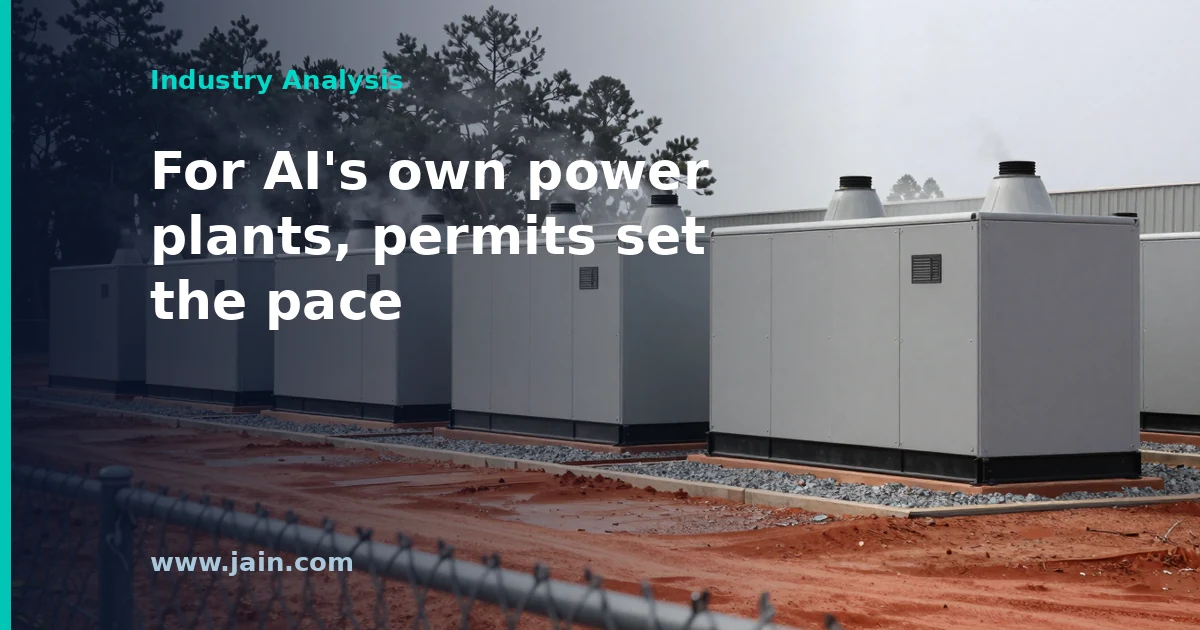
  • Georgia’s 33-Engine Data Center Case Shows Permits Pace AI’s Bring-Your-Own Power

    Georgia’s 33-Engine Data Center Case Shows Permits Pace AI’s Bring-Your-Own Power

    TL;DR · 30-second read

    The Short Version

    A company building a data center near Atlanta, a warehouse of computers of the kind that runs AI tools, planned its own small power plant next door. The plant uses 33 large engines burning diesel and natural gas.

    Environmental groups say the companies started building before Georgia approved the air-pollution permits. The state has now issued formal violation notices.

    Why it matters: building your own power is pitched as the fast way to get AI running. This case shows that government approval, not the equipment, decides how fast.

    The Georgia Environmental Protection Division (EPD) has issued notices of violation to microgrid company VoltaGrid and data center company Serverfarm over a planned data center and on-site power plant in Covington, southeast of Atlanta. WABE reported the notices on July 7, 2026, citing the Southern Environmental Law Center (SELC), which said the agency acted after inspecting the site.

    The companies have applied for state permits for a 33-engine “pop-up” power plant burning diesel and natural gas, plus backup generators for the data center. SELC, Altamaha Riverkeeper and Sustainable Newton allege construction began before those permits were issued and have asked EPD to halt it and assess penalties. VoltaGrid, Serverfarm and EPD did not reply to requests for comment.

    Executive Summary

    VoltaGrid’s permit application describes the Covington plant as “alternative, rapidly deployable prime power”: 33 internal-combustion engines supplying the data center directly rather than drawing from Georgia Power’s grid. It would be the first project of its kind in Georgia. The environmental groups say engines and emergency generators are already standing, some complete and some under construction, while the permit request is still in public comment.

    The significance reaches beyond one site. On-site, or “behind-the-meter,” generation has become a favored answer to the grid bottleneck facing AI data centers, and it has drawn interest from Georgia officials worried about who pays for utility expansion. The Covington dispute shows where that model’s speed advantage runs out: engines can arrive quickly, but air permits under Georgia law and the federal Clean Air Act still have to come first. A notice of violation is not a final penalty, and the companies have not responded publicly. Still, the first project of this type in the state is now under scrutiny, and that sets the tone for the next ones.

    Speed Is the Product, and the Permit Is the Clock

    The appeal of a pop-up power plant is time. A large data center waiting on a utility can face years of transmission upgrades and new generation. Georgia Power is adding 10 gigawatts of capacity, mostly for data centers. Modular engines like the 33 in VoltaGrid’s application can be shipped, set on pads and wired up in a fraction of that time. VoltaGrid’s own filing calls the power “rapidly deployable,” and that phrase is the business case.

    But 33 fuel-burning engines are a significant new source of air emissions. In Georgia they need a state air permit, which the groups say must be issued before construction starts. That permit process includes public comment, and residents have already used it to raise pollution concerns. So the deployment timeline is set by the permit, not by the equipment. The groups allege the companies tried to run both timelines at once. If EPD finds they did, the remedies the groups are requesting, a halt to “all prohibited construction activities” plus penalties, would turn any time saved into delay and legal exposure.

    The people affected are specific. Developers pitching bring-your-own power have to schedule around permit decisions, not delivery dates. Data center tenants and financiers counting on an early energization date carry the risk if a regulator stops work. And a stop-work demand on the state’s first such project will likely be read by every developer planning a second one.

    Why Bring-Your-Own Power Appeals in Georgia

    Georgia is one of the country’s hottest data center markets. Meta already operates a large facility near Covington and Amazon is building one. Georgia Power’s 10-gigawatt expansion has drawn pushback from customers and advocates, who worry that households and small businesses will end up covering part of the cost through rates or fuel charges.

    A self-supplied plant addresses that concern directly. If the data center generates its own electricity, there is no new utility infrastructure to recover from other ratepayers. That is why the idea has come up as the Georgia Public Service Commission and the legislature grapple with data center energy demand. The Covington case tests whether that policy preference survives contact with environmental permitting in practice.

    The Emissions Trade-Off Does Not Disappear

    Moving generation behind the meter changes who pays for power. It does not change what the power plant burns. The VoltaGrid engines would run on diesel and natural gas, and residents’ public comments focus on air pollution from those units, which would sit close to the community rather than at a distant central station. Carbon emissions remain a concern too.

    Cleaner options that suit an on-site model, such as the small nuclear reactors some tech companies are pursuing, are still years away. For now, bring-your-own power for AI data centers mostly means fossil-fueled engines or turbines. That makes air permits the main regulatory checkpoint, and it is why the permitting process draws this much attention.

    Weighing the Claims on Both Sides

    The groups’ case rests on aerial photographs they say show completed and partly built engines and generators, and on EPD’s notices of violation, which SELC says followed an inspection. The notices carry weight because they reflect the regulator’s own finding after a site visit, not only the advocates’ reading of photos. The terms of those notices, and what exactly EPD found, have not been made public by the agency. It is also open to question whether everything visible in the photos counts as prohibited construction rather than staged equipment. The companies are the ones best placed to answer that, and they have not.

    The opposition is also not framed as anti-data-center. Nancy Schulz of Sustainable Newton called Meta and Amazon good community partners and said the demand is simply to get permits before building. That framing makes the case about process compliance rather than whether data centers belong in Newton County. It is a narrower claim, and one that EPD’s eventual findings can settle.

    Background

    Metro Atlanta has become one of the largest data center markets in the United States, driven by demand for the computing that powers generative AI. Newton County, where Covington sits, already hosts a large Meta data center, and Amazon is building another. The boom has divided communities: some local officials welcome the investment and tax revenue, while residents and other leaders have opposed projects over electricity use, water consumption and pollution.

    To meet the demand, Georgia Power is adding 10 gigawatts of generation, mostly for data centers. That has fueled debate at the Georgia Public Service Commission and in the legislature about who pays. Having data centers bring their own power has emerged as one proposed answer, and the VoltaGrid–Serverfarm project would be the first power plant of its kind in the state.

    Sources

    Source: Atlanta-area data center, power plant accused of building generators without permit (WABE): Georgia EPD issues notices of violation to VoltaGrid and Serverfarm over a 33-engine power plant for a Covington data center.