Tag: Georgia Power

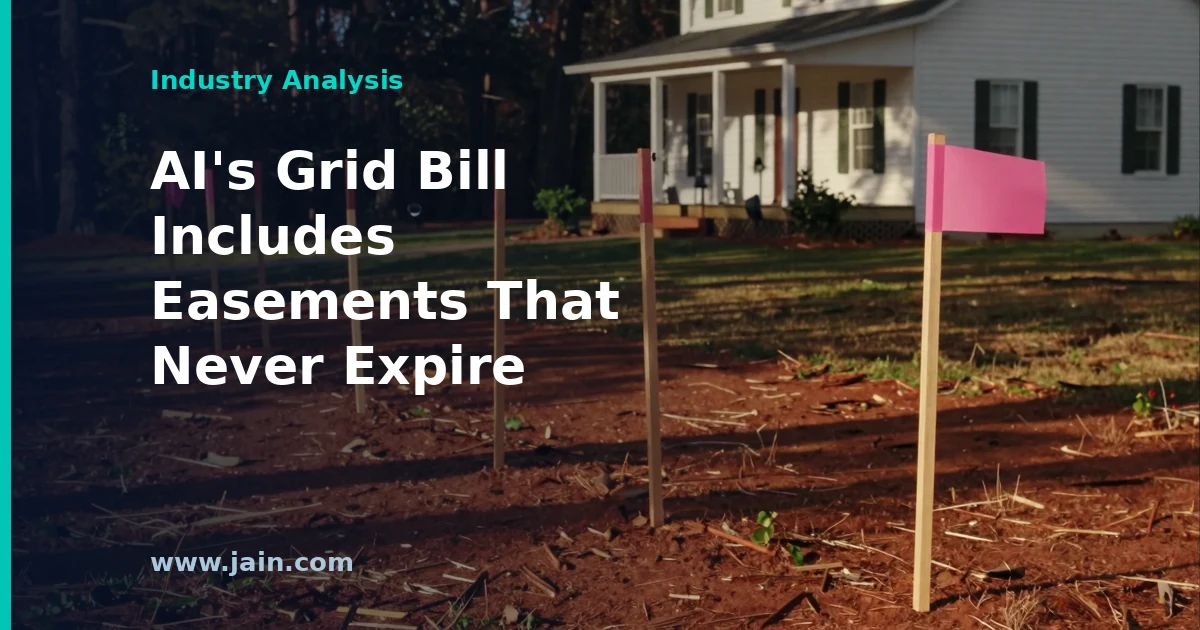
  • Georgia’s 1,000-Mile AI Grid Build Shows the Cost the Rate Math Misses: Easements

    Georgia’s 1,000-Mile AI Grid Build Shows the Cost the Rate Math Misses: Easements

    TL;DR · 30-second read

    The Short Version

    Georgia’s biggest power company is building more than 1,000 miles of new power lines, longer than the drive from Atlanta to New York City. About 80 percent of the new electricity it plans to add is expected to go to data centers, the giant warehouses of computers that run artificial intelligence.

    The lines must cross private land: more than 330 properties, including nearly 30 homes that will be torn down. The company starts its offers a quarter above a property’s appraised value and says it rarely forces a sale. But the right to run lines across land usually lasts forever, even after the owner sells.

    Fortune reported on July 26, 2026 that Georgia Power is contacting property owners along a 35-mile route through Fayette, Heard, Fulton and Coweta counties for the Ashley Park-Wansley Transmission Project, a new line between its Ashley Park Substation and its plant at Wansley. It is one of five projects that together make up more than 1,000 miles of new transmission in the utility’s plan. That plan spans more than 330 parcels of land and requires nearly 30 residential properties to be leveled.

    Georgia Power says land acquisition and easement negotiations are close to complete, with construction as early as 2027. It opens offers at 125% of appraised value and says eminent domain is used in fewer than 1% of its land transactions: five times in the past year, none on homes. The utility disputes describing the line as a data center project. The generation plan it agreed with the Georgia Public Service Commission in December 2025 says about 80% of nearly 10,000 new megawatts is expected to power data centers.

    Executive Summary

    Georgia Power is acquiring land and easements for one of five transmission projects that together add more than 1,000 miles of high-voltage lines to Georgia’s grid. Transmission lines are the long-distance wires that move bulk electricity from power plants to local substations. The buildout accompanies roughly 10 gigawatts of new generation that state regulators certified in December 2025, and about 80% of that generation is expected to power data centers.

    The story matters because it moves the cost of AI-era grid expansion out of abstract rate cases and onto specific parcels of land. Georgia Power argues that large data center customers will pay more, which it projects will cut residential bills by about $102 a year from 2029. That argument does not address the right-of-way. Nearly 30 homes are to be leveled, and permanent easements will cover hundreds of parcels.

    How utilities conduct those negotiations shapes how fast AI infrastructure can be powered and on what terms. So does how often they fall back on eminent domain, and how publicly they justify it.

    The Rate Math Counts Bills, Not Easements

    Georgia Power frames its public case for the buildout around electricity bills. The utility projects that the five transmission projects will save residential customers about $102 a year each starting in 2029. The mechanism is that large-load customers, meaning very big single users such as data centers, are required to pay more. Media Relations Manager Meredith Stone said those funds put “downward pressure on the rates for our residential customers.” That is a claim about tariffs, the prices customers pay, and it is the number the utility leads with.

    The land side of the same projects works differently. Delivering power over more than 1,000 miles of new line means securing rights across more than 330 parcels and leveling nearly 30 homes. Georgia Power says it opens negotiations at 125% of appraised value. Where owners grant an easement rather than sell outright, the utility gains a permanent right to use a strip of their land. David Needham, a Georgia attorney who has represented landowners in eminent domain cases for more than a decade, said those rights stay attached to the property after it is sold. They can prohibit permanent structures beneath the lines and can reserve broad rights for the utility to install additional infrastructure.

    The per-customer savings figure does not capture that cost. A bill saving is spread across the whole residential customer base and recurs every year. An easement is priced once, at the negotiating table, and its restrictions are carried indefinitely by whoever owns that particular piece of ground. For utilities and data center developers, the consequence is that AI-driven grid expansion depends on hundreds of individual land deals, not only on the generation plan regulators certified. Those deals determine how fast the expansion proceeds and how much public acceptance it wins.

    Condemnation Is Rare; the Room to Say No Is Narrow

    On the record, condemnation is uncommon. Georgia Power says eminent domain is a last resort that occurs in fewer than 1% of its land transactions. It says the power was used five times in the past year, none involving residential homes. Nothing disclosed contradicts those figures. The case that drew the most public attention also ended in a deal. It became widely known through social media posts by Ansley Brown and involved the office of U.S. Rep. Brian Jack, and Georgia Power said it reached an agreement with the family, without disclosing the terms.

    Residents’ description of the process is also consistent with how it works. “We don’t have a choice in this,” Brown said in one video. Once a route is chosen, a landowner’s options are a full sale or an easement, and keeping the line off the property is not one of them. Condemnation stands behind the negotiation as the alternative if talks fail. Needham called the resulting easement agreements “very much tilted in favor of the power company,” while noting that “there is compensation offered.” Both accounts can be accurate: forced takings are rare, and the bargaining position is uneven.

    Who the Line Serves Depends on Which Number You Read

    Georgia Power says it is “not in the data center business.” It says the Ashley Park-Wansley line will serve the broader needs of the communities and customers who rely on reliable service. CBS reported that 70% to 80% of the power from this particular line would go to AI data centers. A Georgia Power representative was unable to confirm that estimate.

    At the portfolio level the question is less open. In December 2025 the Public Service Commission and Georgia Power agreed to certify nearly 10,000 megawatts of new generation, and the agreement said approximately 80% of it is expected to power data centers. Transmission lines are shared assets, and the same wires feed homes, hospitals and server halls. The utility’s framing is therefore defensible for any single line. Still, the regulator-approved document says the new demand justifying this much new capacity comes mostly from data centers.

    The distinction matters because eminent domain rests on public use. The more visibly new corridors are tied to a small number of very large customers, the more utilities and regulators have to show the broader benefit. The $102 savings projection plays exactly that role.

    Georgia’s Welcome for Data Centers Is Getting Conditional

    Georgia hosts more than 200 operational data centers, nearly 170 of them in Atlanta, including facilities owned by Microsoft, Amazon and Google. A sales and use tax exemption dating to 2018 waives 100% of state and local sales and use taxes on equipment purchases for projects that meet a minimum investment of $100 million to $250 million. In 2024 lawmakers voted to suspend new exemptions, and Governor Brian Kemp vetoed the measure. A December 2025 evaluation by the University of Georgia’s Carl Vinson Institute of Government projected the exemption’s net fiscal impact at roughly negative $574 million.

    Georgia is now scrutinizing its tax incentives, charging large loads more, and facing land disputes in public view. The pattern for operators is that the state remains open to data centers but is pricing more of their wider costs explicitly. “The policy direction has clearly shifted,” said J. Thomas Perdue, a policy analyst at the Georgia Public Policy Foundation. For developers weighing sites, power in Georgia increasingly comes with public questions about who bears the cost of delivering it.

    Background

    Georgia Power is the state’s largest electric utility and a subsidiary of Southern Company. It plans its generation and transmission through an Integrated Resource Plan, a long-range forecast of demand and the resources needed to meet it. The plan requires approval from the Georgia Public Service Commission, the elected body that regulates the state’s utilities. The commission approved the 2025 plan, which cited continued power needs driven by AI investment. In December 2025 it certified nearly 10,000 megawatts of new generation. It also approved a formal process to evaluate grid-enhancing technologies that can squeeze more capacity from existing lines.

    Georgia has courted data centers since 2018 through sales and use tax exemptions and now hosts more than 200 operating facilities, most of them around Atlanta. Legislative support has cooled: a 2024 vote to suspend new exemptions was vetoed, and a 2025 state-commissioned evaluation found the incentive to be a net fiscal cost. Eminent domain, the power to take private property for public use with just compensation, is available to utilities building infrastructure. Georgia Power says it treats it as a last resort.

    Sources

    Source: ‘My childhood home is being taken’: Eminent domain for data centers targets properties across a thousand miles of grid expansion in Georgia (Fortune, July 26, 2026). The article reports on Georgia Power’s land acquisition for the Ashley Park-Wansley line and its broader 1,000-mile transmission plan.

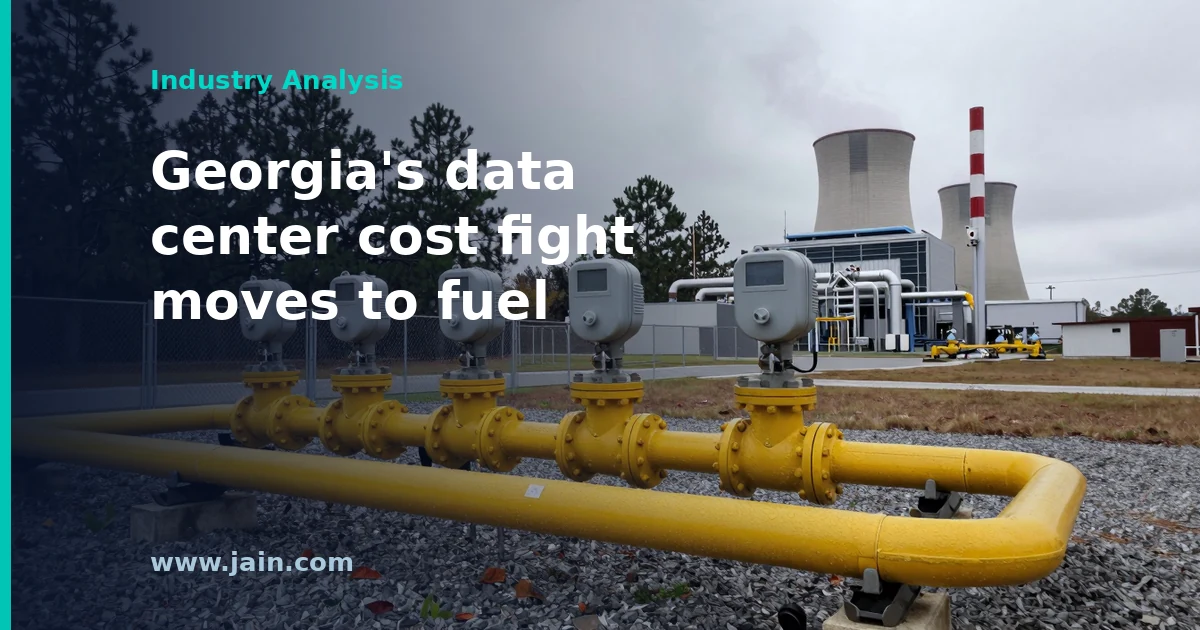
  • Georgia’s 10 GW Data Center Build Shows the Next Who-Pays Fight Is Over Fuel

    Georgia’s 10 GW Data Center Build Shows the Next Who-Pays Fight Is Over Fuel

    TL;DR · 30-second read

    The Short Version

    Georgia’s utility regulators are investigating whether giant data centers, the warehouse-sized computer buildings behind artificial intelligence tools, pay their fair share of the cost of fuel for power plants.

    The state has already approved new power plants with nearly five times the output of its two newest nuclear reactors, mostly to serve data centers. Consumer groups say ordinary households may be paying to get fuel to those plants, even though they are only being expanded because of data centers.

    Hearings start in September. The answer could show up on Georgia power bills.

    WABE reported on July 8, 2026, that the Georgia Public Service Commission has opened an investigation into how Georgia Power’s largest customers, including data centers, pay for the fuel that runs the utility’s power plants. The probe examines the Real-Time Pricing (RTP) methodology used to bill those customers for fuel. Its first round of hearings is scheduled for September.

    The investigation grew out of this year’s fuel-rate proceedings for residential and small-business customers. Those proceedings ended in an agreement that lowered the fuel rate and called for a review of RTP. The probe covers Georgia Power only, not the state’s other utilities. Advocacy groups, including Georgia Conservation Voters Education Fund, welcomed the move.

    Executive Summary

    Georgia’s utility regulator has formally opened a question it had so far left aside in its data center policy: who pays for fuel. The commission has already approved about ten gigawatts of new generating capacity, mostly for forecast data center demand. It has also approved contract terms meant to make large customers pay for infrastructure built to serve them. The new investigation turns to operating costs, and specifically to the cost of getting fuel to newly expanded power plants.

    The mechanism at issue is billing. Residential and small-business customers pay a fuel rate. Data centers and other large users pay for fuel under Real-Time Pricing. Consumer advocates argue that this split leaves other Georgians carrying costs that exist only because of data center growth. The commission will now test that argument in hearings beginning in September.

    The outcome matters beyond one tariff. Georgia is one of the country’s fastest-growing markets for hyperscale data center load. How it allocates fuel costs will affect the long-run energy price data center developers face there, and the bills of the households and small businesses that share the same grid.

    Georgia Already Priced the Plants. Fuel Is the Open Line.

    The commission’s recent data center decisions have focused on capacity: the power plants and grid equipment needed to meet future demand. Late in 2025 it approved about ten gigawatts of new capacity to serve the higher demand Georgia Power is predicting, mostly from data centers. A gigawatt is roughly the output of a large power plant, and the approved total is nearly five times the capacity of the new nuclear reactors at Plant Vogtle. Earlier in 2025 the commission approved contract terms to help ensure that data centers and other large customers pay for infrastructure built to serve them. Georgia Power has also said it will cover costs if the predicted data center demand does not materialize.

    Those measures address who pays to build. The new investigation addresses who pays to run the plants, and in particular the cost of delivering fuel to newly expanded ones. Critics raised that cost during this year’s fuel hearings as the one slipping through the cracks, and it now has a formal proceeding of its own. This is the sense in which the next who-pays fight is over fuel. The capital side of the ten-gigawatt build already has a cost-allocation framework, however contested. The fuel side is where the allocation rules are now being reopened.

    The shift changes what each party has to argue about. Capacity disputes turn on demand forecasts and contract terms signed before a facility is energized. Fuel disputes turn on tariff design and cost accounting that play out over the years a plant runs. For a developer planning load in Georgia, the connection terms were the headline risk. The lifetime price of energy is now also under review. For households, fuel charges are generally passed through to customers at cost, so any shift in allocation reaches monthly bills directly. That direct link is why the issue surfaced in the residential fuel-rate case.

    How Real-Time Pricing Can Split the Fuel Bill

    Georgia Power’s residential and small-business customers pay for fuel through a fuel rate set in periodic proceedings before the commission. Large customers such as data centers pay for fuel under Real-Time Pricing. In general, real-time pricing tariffs charge a price that tracks the utility’s cost of producing electricity hour by hour, instead of a flat, averaged fuel charge.

    Consumer advocates argue that this arrangement leaves other Georgians paying for fuel infrastructure that is being built only because of data center demand. Their reasoning runs as follows. Getting fuel to an expanded plant carries costs of its own, and those costs can be committed in advance whether or not the fuel is burned in a given hour. Suppose those costs land in the averaged fuel rate, while the largest new users pay for fuel under a methodology that does not carry them the same way. Then the customers on the averaged rate absorb them. Whether Georgia’s RTP methodology actually works this way is what the investigation is meant to establish.

    The stakes grow with the buildout. The larger the share of new demand billed through RTP, the more its treatment of fuel-delivery costs matters to everyone else on the system. With roughly ten gigawatts approved largely on the strength of data center forecasts, the question stops being a narrow tariff detail. It becomes a material cost-allocation issue.

    What Each Side Still Has to Show

    The advocates’ concern is coherent on its mechanics. The September hearings are where it needs a figure: how much fuel-delivery cost is attributable to data center-driven expansion, and how much of that RTP customers already cover. As Ja’Mae Rooks of Georgia Conservation Voters Education Fund put it, “Georgians deserve to understand exactly who is paying for the massive growth in electricity demand from data centers, and who isn’t.” That standard applies in both directions. Establishing who is not paying requires the same cost data as establishing who is.

    The burden also falls on the utility and its large customers. If RTP already recovers these costs, the hearings are the place to show it with numbers. Georgia Power’s pledge to cover costs if data center demand fails to materialize addresses a different risk: infrastructure left underused. On its face, that pledge says nothing about ongoing fuel costs when the demand does arrive.

    The political setting raises the proceeding’s profile. Commission seats are on the 2026 ballot, and recent races have been framed around power bill increases. The result, though, will turn on the cost record the parties put before the commission, not on the campaign.

    A Test Case Worth Watching, Not Yet a Trend

    Georgia’s sequence gives other regulators a view of where cost questions surface after the first round of protections is in place. The order was capacity approvals, then contract protections for infrastructure, then a review of fuel methodology. Operating-cost allocation is harder to fix in a contract signed before a data center goes live, because it depends on how plants run and what fuel costs over many years.

    This is still one utility in one state, and the investigation has reached no finding. It is too early to say that fuel allocation will become a standard battleground wherever hyperscale load is growing. What Georgia does establish is that a utility can put infrastructure cost protections in place and still leave operating-cost allocation open for review.

    Background

    Georgia Power, a subsidiary of Southern Company, is Georgia’s largest electric utility. It is regulated by the Georgia Public Service Commission, whose elected commissioners set the rates the utility charges. In recent years the utility completed two new nuclear reactors at Plant Vogtle, and it has since forecast large demand growth driven mostly by data centers, including hyperscale facilities used for generative AI.

    To meet that forecast, the commission approved about ten gigawatts of new capacity in late 2025. Earlier that year it approved contract terms intended to make large customers pay for infrastructure built to serve them. Power costs have become a political issue in the state, with commission elections in 2026 framed around recent bill increases.

    Sources

    Source: Georgia regulators to investigate data center energy costs (WABE). The article reports on the Georgia Public Service Commission’s probe into how data centers and other large Georgia Power customers pay for fuel.

  • Southern Co.’s 42% Data Center Growth Makes Utilities the AI Boom’s Quiet Winners

    Southern Co.’s 42% Data Center Growth Makes Utilities the AI Boom’s Quiet Winners

    Southern Company, the Atlanta-based utility holding company whose subsidiaries include Georgia Power, Alabama Power, and Mississippi Power, reported soaring electricity sales driven by 42% growth in its data center segment, according to a May 1, 2026 report from Utility Dive. The figure stands out because it converts years of talked-about AI demand projections into a number showing up in an actual utility’s actual sales.

    Executive Summary

    For two years, the electricity industry has debated whether the enormous data center load forecasts attached to the AI build-out would materialize or evaporate. Southern Company’s reported 42% growth in data center electricity sales is one of the clearest signals yet that, at least in the Southeast, the demand is real, metered, and being billed. Electricity sales — as opposed to interconnection requests or load forecasts — represent power actually delivered to operating facilities.

    The announcement matters beyond Southern’s own territory. Utilities have quietly become one of the most durable beneficiaries of the AI infrastructure cycle: unlike chipmakers or cloud providers, they sell a regulated, contracted product to customers who cannot easily relocate once a facility is energized. A 42% jump in one demand segment, if sustained, reshapes how regulators, investors, and data center developers should read utility growth plans across the Sun Belt.

    From Forecast to Booked Revenue

    The data center power story has been dogged by a credibility gap: interconnection queues across the United States are stuffed with speculative and duplicate requests, as developers file with multiple utilities for the same project. Skeptics have reasonably asked how much of the forecast load is real. Sales figures cut through that noise. When a utility reports 42% growth in data center electricity sales, it is describing megawatt-hours delivered to energized buildings and invoiced to customers — not letters of intent.

    That distinction matters for how the market prices the AI build-out. Forecasts can be revised down quietly; delivered sales cannot. Southern’s number suggests that in its Southeast footprint, the pipeline of announced hyperscale and colocation projects is converting into operating load at pace. It also implies that the facilities energized in recent quarters are ramping utilization, since sales growth reflects consumption, not just connection.

    Why Utilities Are the AI Build-Out’s Quiet Winners

    The AI investment narrative has centered on GPU vendors and hyperscalers, but the utility position in the value chain is structurally attractive in a different way. Data centers are among the most creditworthy, longest-duration customers a utility can sign, and once built they are effectively immobile — a facility with hundreds of millions of dollars in the ground does not switch power providers. For a vertically integrated, rate-regulated utility like Southern’s subsidiaries, growing load also supports the case for new generation and transmission investment, on which regulated utilities earn an authorized return.

    Southern is also unusually well positioned on supply. Its Georgia Power subsidiary completed Vogtle Units 3 and 4 — the first newly constructed nuclear reactors in the U.S. in decades — giving it firm, carbon-free baseload capacity precisely as large-load customers began demanding both reliability and clean-energy attributes. The Southeast’s combination of available land, water, fiber routes, and historically constructive regulation has made Georgia in particular one of the fastest-growing data center markets in the country.

    The Ratepayer and Capacity Question

    Rapid large-load growth is not an unalloyed good, and regulators know it. The central policy question is cost allocation: who pays for the new generation and grid capacity that data centers require? If a hyperscaler’s load justifies a new gas plant or transmission line and that customer later scales back, ordinary households and small businesses could be left carrying the cost. Several states, including Georgia, have been developing special rate structures and minimum-take contract terms for very large customers to insulate other ratepayers from exactly this risk.

    There is also a physical question. A 42% growth rate in any demand segment tests reserve margins — the cushion of spare generating capacity utilities maintain for peak conditions. Sustained growth at anything like this pace forces choices among new gas capacity, renewables paired with storage, nuclear uprates, and demand flexibility, each with different cost, carbon, and timeline profiles. How Southern and its regulators sequence that build will determine whether today’s sales growth becomes tomorrow’s reliability headline.

    What It Signals for the Data Center Market

    For data center developers and tenants, the signal is double-edged. Confirmation that Southeast load is materializing validates the region’s status as a top-tier market — but it also means the easy capacity is being absorbed. As delivered load climbs, utilities gain leverage: expect longer interconnection timelines for new requests, stricter contract terms, larger upfront commitments, and less tolerance for speculative reservations. Power availability, not land or fiber, remains the binding constraint on where the next wave of AI capacity gets built.

    For investors, the takeaway is that utility exposure to AI is no longer hypothetical. The sector’s traditional appeal was stability rather than growth; a demand segment compounding at double-digit rates changes that math for the handful of utilities sitting under major data center clusters — while raising the stakes on execution, since regulated returns depend on building capacity on time and on budget.

    Background

    Southern Company traces its roots to the early twentieth-century electrification of the American Southeast and today ranks among the largest U.S. utility holding companies, operating primarily through state-regulated subsidiaries Georgia Power, Alabama Power, and Mississippi Power. Its highest-profile recent undertaking was the expansion of Plant Vogtle in Georgia, where Units 3 and 4 — the first newly constructed nuclear reactors completed in the United States in a generation — entered service after years of delays and cost overruns, ultimately giving the company scarce firm, carbon-free capacity.

    That capacity arrived just as the generative-AI boom transformed electricity demand. After roughly two decades of flat U.S. load growth, utilities began reporting surging interconnection requests from hyperscale data center developers around 2023, with Georgia emerging as a leading destination. The open question has been how much of that forecast demand would become real consumption — which is what makes delivered-sales figures like this one significant.

    Source: Southern Co. electricity sales soar on 42% data center growth — Utility Dive’s May 1, 2026 report on Southern Company’s data-center-driven electricity sales growth.