Tag: GE Vernova

  • HVDC, Not Chips: The Grid Is Now AI’s Binding Constraint

    HVDC, Not Chips: The Grid Is Now AI’s Binding Constraint

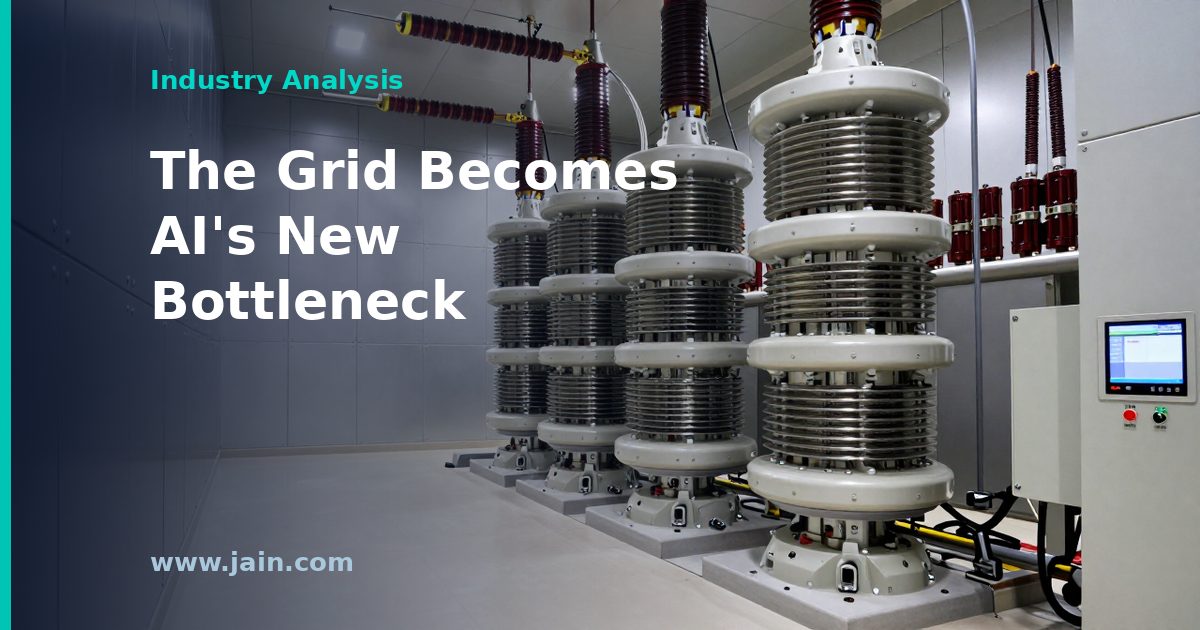
    Four strands of coverage circulating in late August 2026 point at the same bottleneck. MarketScale reports that GE Vernova is adding HVDC (high-voltage direct current) capacity as grids work to serve data center demand. The Motley Fool notes that GE Vernova’s electrification revenue jumped 68% in a single quarter on data center deals, then asks why the stock sold off anyway. Benzinga frames a federal grid-security executive order as a reason to watch power-equipment ETFs, naming Eaton among the exposures. Yahoo Finance argues that Equinix’s AI power-grid push may reshape the investment case for the colocation operator.

    None of these are primary company announcements. The material available here is headline-and-summary level aggregation, so specifics such as project sites, contract values, capital commitments and delivery dates are not established. The 68% electrification figure and the existence of the grid-security order are the two concrete claims carried by the reporting.

    Executive Summary

    Taken together, the four items describe a shift in where AI capacity is actually rationed. For three years the scarce input was the accelerator chip. The reporting here suggests the scarce input is now the ability to energize a site: transmission capacity, interconnection approval, transformers, switchgear and the long-lead grid hardware that sits between a substation and a server hall.

    That matters commercially because the two constraints run on different clocks. Silicon supply responds to fab allocation and can loosen in quarters. Transmission responds to permitting, right-of-way acquisition, utility study queues and heavy-equipment manufacturing, which run in years. A market that can buy chips faster than it can buy amperes will reprice both — upward for anyone holding secured power, downward for anyone holding only land and capital.

    The caveat is equally important. A 68% revenue jump paired with a share-price decline is a reminder that a demand narrative and a shareholder return are separate things. Growth priced in advance is not growth delivered, and a policy order is not a purchase order.

    Why HVDC Suddenly Belongs in a Data Center Conversation

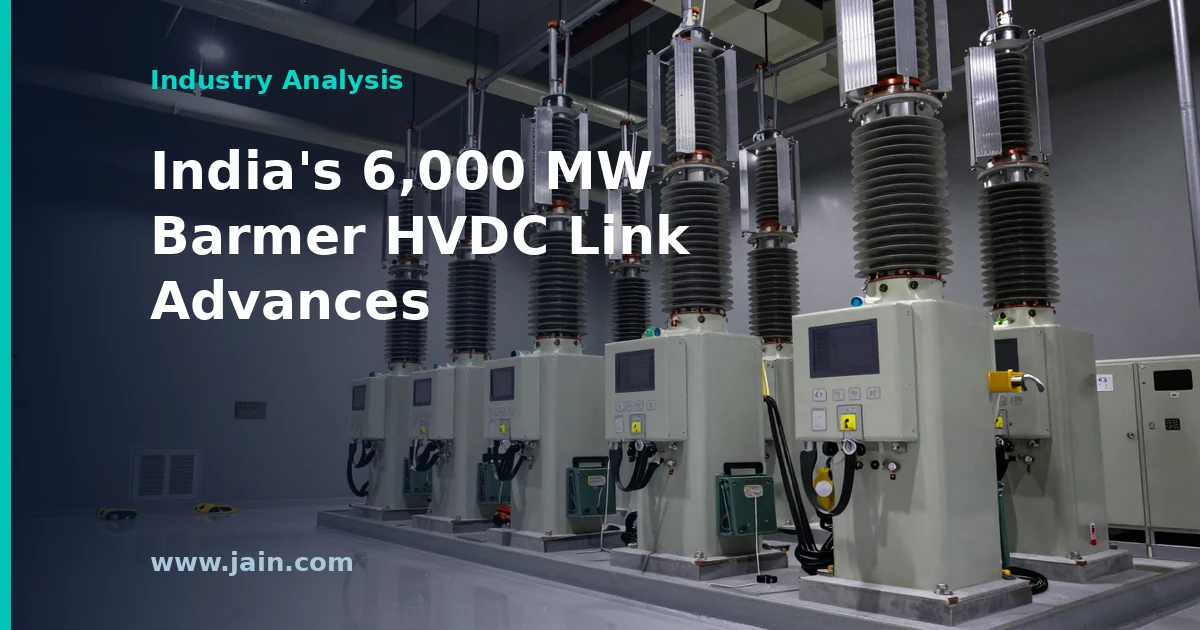
    High-voltage direct current is unglamorous infrastructure that most data center buyers have never had to think about. Conventional grids move alternating current, which is easy to step up and down in voltage but loses meaningful energy over long distances and struggles to link grids that are not synchronized. HVDC converts power to direct current for the long haul, moves it with lower losses, and converts it back at the far end. The converter stations are expensive; the line is efficient. That trade-off only pays when you need to move a large block of power a long way.

    AI campuses have made that trade-off pay more often. The cheapest and most available generation is frequently not where the fiber, the land and the tax abatements are. When local grid headroom is already committed, the choice narrows to building generation on site, waiting in an interconnection queue, or importing power from somewhere with surplus. HVDC is the third option’s enabling technology, which is why a grid-equipment vendor’s converter capacity has become a data center story rather than a utility-engineering story.

    The reporting does not tell us how much capacity GE Vernova is adding, where, or on what schedule. Readers should hold that gap open. Announced capacity in heavy electrical manufacturing is a multi-year commitment, and the difference between a stated expansion and a commissioned production line is the part that determines whether 2028 projects get energized on time.

    A 68% Jump and a Stock That Fell

    The most quantified claim in the set is the 68% single-quarter increase in GE Vernova’s electrification revenue, attributed to data center deals. That is a large number for a business selling physical grid hardware, and it is the clearest available evidence that AI demand has genuinely reached the equipment layer rather than remaining a slide in a keynote.

    The share-price reaction is the more instructive part. Equity markets price the delta against expectations, not the absolute level, so a headline growth rate can coexist with disappointment on gross margin, order intake, backlog conversion, guidance or free cash flow. Heavy electrical equipment is a business where revenue recognized today reflects orders taken years ago, and where growth funded by capacity expansion consumes cash before it produces it. A selloff on a strong revenue print is a legitimate signal that investors are asking about the quality and durability of that growth, not merely its speed.

    The even-handed read is that the coverage poses the question and does not resolve it. Without segment margin, book-to-bill and guidance detail, neither the bullish framing (structural demand shift) nor the bearish framing (peak expectations) is settled by what is on the page.

    Equinix and the Move From Grid Customer to Grid Participant

    The Equinix item describes a colocation operator pushing further up the power stack. Colocation providers have historically bought power as an input and sold space, cooling and interconnection as a product. If power access becomes the genuinely scarce good, then procurement strategy, grid relationships and the ability to bring energized megawatts to market become the differentiator rather than a back-office function.

    That is a plausible strategic logic, and the Yahoo Finance framing is appropriately conditional about it. It also cuts both ways for investors. Moving upstream raises capital intensity, lengthens payback, and imports execution risk from a domain — utility-scale power development — with a different risk profile than leasing cabinets. A REIT-like cash flow profile and a developer-like capital profile are not the same investment, and shifting between them deserves scrutiny rather than applause.

    For enterprise buyers, the practical implication is simpler and more immediate. If your provider is competing on secured power, then power terms belong in the contract discussion alongside space, cross-connects and SLAs.

    Policy as a Demand Signal, Not a Booked Order

    The Benzinga piece reads a federal grid-security executive order as a reason to watch power-equipment ETFs, with Eaton cited among the exposures. Policy attention to grid security is a reasonable thing for the sector to track: reliability and security mandates historically pull forward spending on protection, monitoring, transformers and switchgear, and they can shift permitting posture.

    The claim deserves the same scrutiny as any vendor claim. An executive order sets direction; it does not by itself appropriate money, complete a rate case, or sign a contract. Utility capital spending is approved by regulators on multi-year cycles, and equipment revenue follows funded, permitted projects. The gap between a policy signal and a delivered order is measured in quarters at best. We have not reviewed the order’s text here, so its scope, funding mechanism and enforceability remain unverified in this analysis.

    Framed carefully, the four items are consistent with a real structural story — grid capacity is the gating factor on AI buildout — while none of them individually establishes its magnitude. That distinction is worth preserving as the narrative gets repeated.

    Background

    GE Vernova was separated from General Electric in 2024 as a standalone energy company covering power generation, wind and electrification equipment. Its electrification segment sells the physical apparatus of the grid: transformers, switchgear, protection systems and HVDC converter technology. HVDC itself is decades-old utility technology, long used for subsea links and cross-region transfers, and supplied globally by a small group of manufacturers. What is new is the demand source. Grid hardware has historically tracked slow-moving utility capital cycles rather than the compressed schedules of technology buildouts.

    Equinix is one of the world’s largest colocation and interconnection operators, running data centers where enterprises, cloud providers and networks exchange traffic. Its traditional business sells space, power, cooling and connections between tenants. As AI training and inference clusters have pushed campus power requirements upward, the industry’s binding constraint has migrated from real estate and fiber toward electricity delivery, which is why colocation operators, equipment vendors and policymakers now appear in the same story.

    Source: GE Vernova is adding HVDC capacity as grids scramble to serve data centers — MarketScale reporting on GE Vernova’s HVDC expansion, read here alongside related coverage from The Motley Fool, Benzinga and Yahoo Finance.

  • GE Vernova’s Medium-Voltage UPS Targets the AI Data Center Power-Density Wall

    GE Vernova’s Medium-Voltage UPS Targets the AI Data Center Power-Density Wall

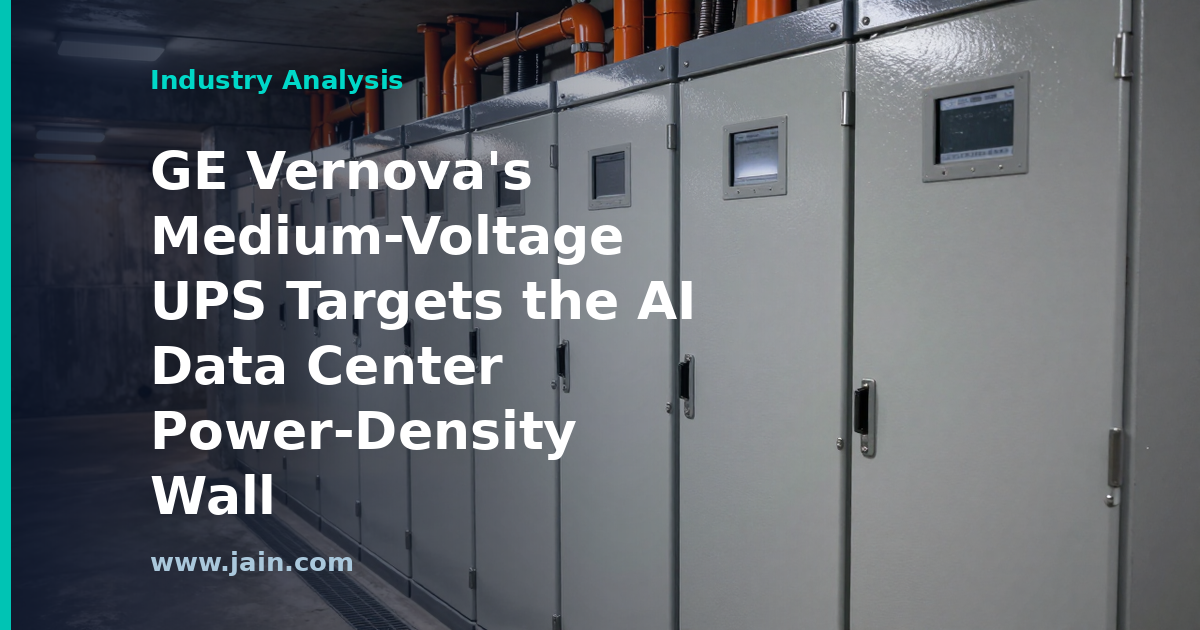
    GE Vernova, the energy-equipment company spun off from General Electric in 2024, has introduced a medium-voltage uninterruptible power supply (UPS) aimed at AI data centers and other energy-intensive industries, according to coverage by ARC Advisory Group in August 2026. A UPS is the equipment that keeps critical loads powered during the seconds-to-minutes gap between a grid failure and backup generators taking over.

    The significance is architectural: UPS systems for data centers have traditionally operated at low voltage (below 1,000 volts), and moving that protection layer up to medium voltage — typically the 1kV–35kV range — signals that vendors now see AI campuses as too large for the conventional approach to scale gracefully.

    Executive Summary

    The announcement positions GE Vernova’s Electrification business in one of the fastest-growing corners of the power-equipment market: backup power for AI data centers. Training clusters have pushed individual racks toward and past 100kW, and hyperscale and neocloud operators are now planning campuses measured in the hundreds of megawatts. At that scale, the traditional pattern — dozens or hundreds of paralleled low-voltage UPS modules, each protecting a slice of the load — multiplies floor space, copper, conversion losses, and points of failure.

    A medium-voltage UPS protects the load higher up the electrical distribution chain, where the same power flows at higher voltage and therefore lower current. Fewer, larger protection blocks can replace fleets of smaller ones. GE Vernova is not alone in reading the market this way, but a product launch from one of the largest grid-equipment manufacturers is a meaningful signal that medium-voltage protection is moving from niche to mainstream consideration.

    Readers should note the limits of what has been disclosed: the source material available to us is headline-level, and we could not verify power ratings, topology, efficiency figures, availability dates, or customer commitments. Our analysis below addresses the strategy; the specification questions remain open.

    Why Backup Power Is Hitting a Voltage Ceiling

    Power equals voltage times current, so delivering more power at a fixed low voltage means proportionally more current — and current is what sizes conductors, breakers, and busway. A conventional data center UPS operates around 400–480 volts, and at that voltage a single system is practically limited to a few megawatts. Protecting a 100MW campus this way requires very large fleets of paralleled units, each with its own batteries, switchgear, cabling, and maintenance schedule.

    AI has broken the assumptions this architecture was built on. When racks drew 5–15kW, carving a facility into small low-voltage protection zones was sensible. With accelerated-computing racks drawing many times that, and single buildings approaching the load of a small city, the low-voltage approach consumes an increasing share of the floor area, capital budget, and construction timeline. Copper procurement alone has become a visible constraint on data center schedules.

    Moving the UPS to medium voltage — the tier utilities and campuses use for distribution, roughly 1kV to 35kV — cuts current by an order of magnitude for the same power. That means fewer conversion stages between the utility feed and the protected bus, less conductor mass, and protection blocks sized in tens of megawatts rather than single digits.

    The Trade-offs: Fewer, Bigger Blocks Cut Both Ways

    The efficiency and footprint logic is genuine, but consolidation concentrates risk. A campus protected by a handful of large medium-voltage blocks has fewer failure points, yet each failure affects more load — so redundancy design, fault isolation, and maintainability become the make-or-break engineering questions. The release headline does not tell us how GE Vernova’s design addresses concurrent maintainability or fault ride-through, and those answers will matter more to buyers than the voltage class itself.

    Operations change too. Medium-voltage equipment demands different technician qualifications, arc-flash procedures, and service ecosystems than the low-voltage gear most data center facilities teams know. Medium-voltage rotary UPS systems — machines that store energy in a spinning mass rather than batteries — have existed for years from specialist vendors, and they earned a reputation as robust but operationally distinct. Whether GE Vernova’s offering is static (power-electronics-based) or rotary is not stated in the material we reviewed, and it materially changes the competitive comparison.

    There is also a granularity cost. Small modular UPS units let operators grow capacity with demand; large blocks force bigger capital steps. For hyperscalers building entire campuses at once that is a fair trade. For enterprises and smaller colocation operators, it may not be — which suggests this product aims squarely at the top of the market.

    GE Vernova’s Position in a Crowding Field

    Since its April 2024 spin-off from General Electric, GE Vernova has ridden two demand waves: grid modernization and data center electrification. Its Electrification segment sells the transformers, switchgear, and power-conversion equipment that AI campuses consume in bulk, and the company already has relationships with the utilities and hyperscalers making these purchasing decisions. A medium-voltage UPS extends that portfolio one layer closer to the IT load — territory historically held by Schneider Electric, Vertiv, Eaton, and ABB in low-voltage UPS, and by specialist rotary vendors at medium voltage.

    The strategic logic favors integrated suppliers: an operator buying medium-voltage switchgear, transformers, and backup protection from one vendor simplifies interface engineering and accountability. But incumbency in grid equipment does not automatically translate to credibility in mission-critical backup power, where buyers weight field-proven reliability data heavily. The burden of proof — reference deployments, third-party certification, demonstrated availability numbers — sits with any new entrant to this layer, regardless of parent-company scale.

    Background

    GE Vernova was created in April 2024 when General Electric completed its three-way split, separating its energy businesses from aerospace and healthcare. The company spans gas and wind power generation, nuclear technology, and an Electrification segment covering grid solutions and power conversion — the segment most directly leveraged to data center construction. Demand for transformers, switchgear, and backup power has surged with AI buildouts, producing extended lead times across the industry.

    The data center UPS market, meanwhile, has been dominated for decades by low-voltage static systems that convert utility power through batteries via power electronics. As individual AI campuses have grown from tens to hundreds of megawatts, the industry has begun rethinking the entire power chain — higher distribution voltages, direct-current architectures, and now medium-voltage protection — to reduce losses, copper use, and construction time. ARC Advisory Group, which covered this announcement, is an industry-analyst firm focused on industrial and infrastructure technology.

    Source: GE Vernova Introduces Medium-Voltage UPS for AI Data Centers and Energy-Intensive Industries — ARC Advisory Group coverage of GE Vernova’s product introduction, August 2026.

  • GE Vernova’s AI Order Surge Signals Power and Cooling Are the New AI Bottleneck

    GE Vernova’s AI Order Surge Signals Power and Cooling Are the New AI Bottleneck

    Financial media reports in August 2026 highlight that GE Vernova’s orders for AI data-center equipment in the first half of the year have already doubled the total it booked in all of 2025, according to coverage from The Motley Fool syndicated across Yahoo Finance and The Globe and Mail. In parallel, Yahoo Finance analysis asks whether Eaton Corporation and Trane Technologies — suppliers of electrical distribution gear and cooling systems, respectively — can emerge as major winners from the same AI data-center boom.

    None of the items is a company press release; they are investor-focused analyses built around the order-growth headline. But taken together, they point at a consistent industry story: the equipment that powers and cools AI facilities, not the chips inside them, is where demand is now outrunning supply.

    Executive Summary

    The headline claim is striking: in one half-year, GE Vernova — the energy-equipment company spun out of General Electric — booked more AI data-center orders than in the entire previous year. The coverage frames this as evidence that hyperscalers and data-center developers are racing to lock in turbines, grid equipment, and electrical infrastructure years ahead of need. The companion piece extends the thesis to Eaton, which makes the switchgear, transformers, and power-distribution systems inside data centers, and Trane, whose chillers and thermal-management systems remove the enormous heat that AI server racks generate.

    Why it matters: for the past two years, the constraint on AI capacity was widely assumed to be GPU supply. These reports suggest the constraint is migrating downstream — to megawatts and cooling tons. A data center without secured power generation, electrical distribution, and heat rejection cannot deploy a single chip, no matter how many accelerators its owner has purchased. If order books at the equipment makers are filling this fast, delivery lead times become a strategic variable for everyone building AI infrastructure.

    A caveat up front: the source material is investment commentary, not audited disclosure. The doubling claim originates in stock-analysis coverage, and the articles supply no dollar figures, customer names, or delivery schedules that we can independently verify from the release text alone. The direction of the signal is consistent across outlets; the precision of it is not something this coverage establishes.

    The Bottleneck Has Moved Downstream from Chips to Electrons

    Every AI data center is, functionally, a machine for converting electricity into computation and heat. The industry spent 2023–2025 focused on the computation side — who could get GPUs, and how many. But GPUs are a fast-cycle product: fabs can expand output on a timescale of quarters. Heavy electrical equipment is not. Gas turbines, large power transformers, and high-capacity switchgear are engineered-to-order products with lead times measured in years, built in a small number of factories worldwide. When demand doubles, capacity cannot.

    That asymmetry is what makes the reported GE Vernova order surge significant beyond one company’s income statement. If AI data-center orders in six months exceeded all of last year’s, buyers are effectively queueing — paying now for delivery slots later. In infrastructure markets, a lengthening queue is the classic signature of a bottleneck: the constraint on how fast the AI buildout can proceed stops being capital or chips and becomes the physical delivery calendar of the equipment supply chain.

    Three Companies, Three Layers of the Same Stack

    The coverage bundles GE Vernova, Eaton, and Trane together for a reason: they occupy successive layers of the same value chain. GE Vernova sits upstream, supplying power generation and grid-scale equipment — the megawatts themselves. Eaton sits in the middle, making the electrical distribution gear — switchgear, uninterruptible power supplies, transformers — that moves power safely from the substation to the server rack. Trane sits at the end of the energy journey, providing the chillers and cooling systems that reject the heat those racks produce. In a conventional data center, cooling can consume a substantial share of total power; AI racks, which run far denser than traditional IT loads, intensify that thermal problem.

    The strategic implication is that AI demand does not create one winner but a chain of them — and a chain of potential choke points. An operator who secures generation but not switchgear, or switchgear but not chillers, still cannot open. That is why the market is asking the Trane-and-Eaton question at all: if the upstream layer (GE Vernova) is visibly capacity-constrained, the same dynamic plausibly applies to the layers behind it. Plausibly — the coverage poses the question about Eaton and Trane rather than documenting equivalent order data for them, and that distinction matters.

    Reading Order Books Honestly: Signal, Not Revenue

    Orders are a forward indicator, not money in the bank. An order becomes backlog, backlog becomes revenue only upon delivery, and the coverage here does not disclose the dollar value of the orders, their delivery timeline, cancellation terms, or margin profile. History counsels some humility: capital-equipment cycles have seen order books swell during booms and thin out when customers re-time projects. If AI capital spending decelerates — because model economics disappoint, power prices spike, or financing tightens — equipment orders placed years ahead of need are among the first things large buyers revisit.

    There is also a framing question worth noting even-handedly. All three source articles are investor commentary keyed to stock tickers, published across financial outlets asking “is the stock still a buy?” That genre rewards dramatic framing of growth statistics. The underlying fact pattern — surging demand for power and cooling equipment from AI builders — is consistent with what the broader industry has been experiencing, and nothing in the coverage appears contrived. But readers should distinguish between the well-supported directional claim (demand is heavily outrunning historical levels) and the precise multiples in headlines, which the articles as syndicated do not source to specific filings in the material available here.

    What This Means for Anyone Building or Buying Capacity

    For data-center operators and enterprise buyers, the practical takeaway is that procurement of electrical and thermal equipment has become a competitive discipline, not a back-office function. When lead times stretch, operators who ordered early hold an asset — a delivery slot — that late movers cannot buy at any price in the short run. Expect that advantage to show up in which projects actually energize on schedule, and in the pricing power of colocation providers who already hold contracted power and installed cooling.

    For the equipment makers, the boom is an opportunity wrapped in a capacity-planning dilemma: expand factories aggressively and risk overcapacity if AI spending normalizes, or expand cautiously and cede share. How GE Vernova, Eaton, and Trane each answer that question — none of which this coverage addresses — will shape the supply side of the AI buildout for the rest of the decade.

    Background

    GE Vernova became an independent company in 2024 when General Electric split into separate aviation, healthcare, and energy businesses, giving the energy unit a standalone identity spanning power generation, wind, and grid electrification. Eaton is a long-established power-management company whose electrical segment supplies the distribution and backup-power equipment inside commercial facilities and data centers. Trane Technologies, formed from the 2020 separation of Ingersoll-Rand’s climate businesses, is one of the world’s largest suppliers of commercial HVAC and chiller systems.

    The market context is the AI infrastructure buildout that accelerated from 2023 onward, as hyperscale cloud providers and specialized developers began constructing data centers of unprecedented power density to train and run large AI models. That expansion has pushed demand for generation capacity, grid interconnection, electrical gear, and industrial cooling well beyond historical data-center norms — turning previously unglamorous equipment categories into strategically contested supply.

    Source: Can Trane Technologies plc (TT) and Eaton Corporation, PLC (ETN) Become Major Winners from the AI Data Center Boom? — Yahoo Finance analysis, alongside syndicated Motley Fool coverage reporting that GE Vernova’s first-half AI data-center orders doubled its full-2025 total.

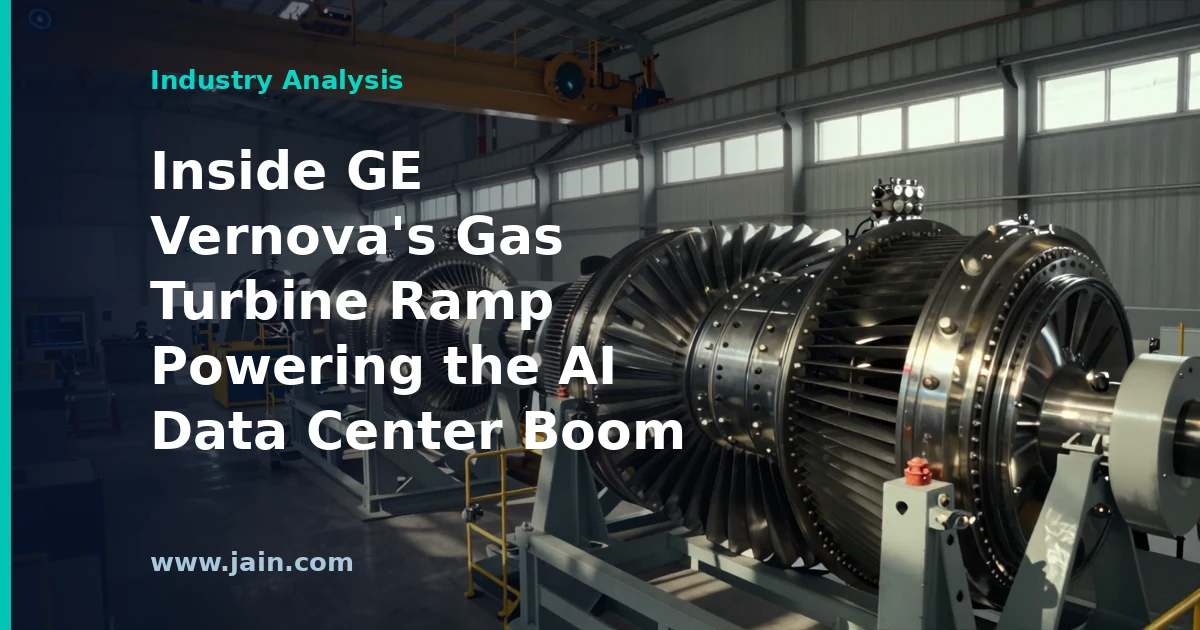
  • Inside GE Vernova’s Gas Turbine Ramp Powering the AI Data Center Boom

    Inside GE Vernova’s Gas Turbine Ramp Powering the AI Data Center Boom

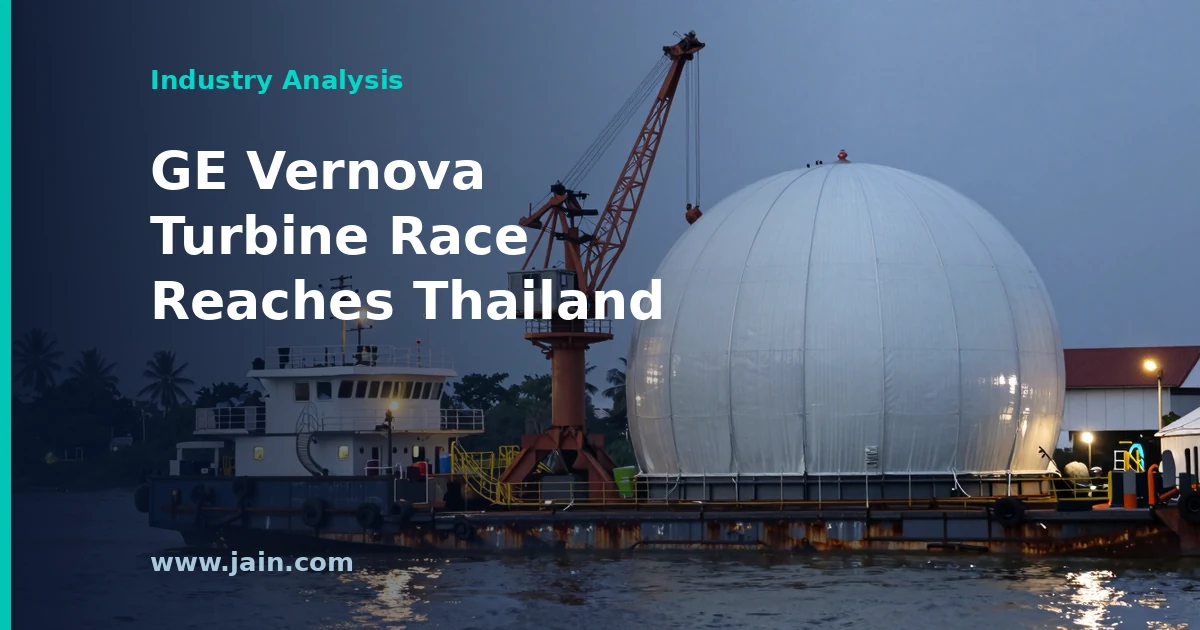
    CNBC published a feature on June 28, 2026 examining how GE Vernova builds its massive heavy-duty gas turbines — the machines increasingly ordered to supply electricity for AI data centers. The piece spotlights the manufacturer at the center of one of the power industry’s sharpest demand upswings, as hyperscalers and data center developers scramble for generation capacity that the grid alone cannot deliver on their timelines.

    Executive Summary

    The story here is less a single announcement than a snapshot of a structural shift: gas turbines — large rotating machines that burn natural gas to spin a generator — have moved from a mature, slow-growth product line to some of the most sought-after industrial hardware in the world, and GE Vernova is one of a small handful of companies that can build the largest ones. CNBC’s look inside the company’s manufacturing operation underscores how AI data center demand has redrawn the order books of the turbine industry.

    Why it matters: AI training and inference clusters need firm, around-the-clock power at scales measured in hundreds of megawatts per campus. Interconnection queues — the waiting lines to plug new loads and generators into the transmission grid — stretch for years in many U.S. markets. That mismatch has pushed utilities and data center developers toward dedicated gas-fired generation, and the turbines themselves have become the bottleneck. Whoever controls turbine manufacturing slots now holds real leverage over where and when AI capacity gets built.

    The Turbine Is the New Bottleneck

    For most of the past decade, the constraint on building a data center was land, fiber, or chips. In 2025 and 2026 it has increasingly been electricity — and behind electricity, the physical equipment that generates and delivers it. Heavy-duty gas turbines sit at the top of that equipment stack: they are enormous precision machines, built in specialized factories by a global oligopoly of manufacturers, and they cannot be scaled up quickly. Casting, machining, and testing the hot-section components that survive combustion temperatures is skilled, capital-intensive work with deep supplier chains.

    That is why a factory tour of a turbine plant is now business news. When manufacturing slots for major power equipment are scarce, the production line itself becomes strategic infrastructure. Data center developers who once treated power generation as someone else’s problem — the utility’s — are now tracking turbine lead times the way they track GPU allocations.

    Why Gas, and Why Now

    Gas turbines occupy a specific niche in the AI power story: they are dispatchable (they run when you need them, unlike weather-dependent wind and solar), they can be sited close to load, and they can be permitted and built faster than nuclear. For hyperscalers facing multi-year grid interconnection queues, gas-fired plants — whether utility-built or behind-the-meter on the data center campus itself — are often the only firm-power option available on an AI-relevant timeline. Combined-cycle configurations, which recycle exhaust heat to generate additional electricity, improve the economics for facilities that run flat-out around the clock, which is exactly the load profile of an AI campus.

    The trade-offs are real. Gas plants lock in decades of fuel exposure and carbon emissions at the same moment many data center operators carry public net-zero commitments. Expect continued tension between the near-term physics of AI power demand and long-term decarbonization pledges — and expect operators to pair gas with renewable procurement, carbon-capture ambitions, or framing gas as a “bridge” technology. Readers should evaluate those framings project by project rather than accepting or dismissing them wholesale.

    Winners, Losers, and the Queue

    The clearest winners in a turbine-constrained market are the manufacturers — GE Vernova and its few global peers — along with their component suppliers and the engineering-and-construction firms that install the machines. Utilities in data center-heavy regions gain a growth story they have not had in decades. On the other side of the ledger, smaller data center developers and enterprises without hyperscaler purchasing power risk being priced or queued out of firm generation capacity, which could concentrate AI infrastructure further among the largest players.

    There is also a cyclical risk worth naming evenly: the gas turbine industry has been through boom-and-bust before, most notably when a late-1990s ordering surge was followed by a painful capacity glut. Manufacturers appear to be expanding cautiously partly because of that memory. If AI power demand forecasts prove overstated — a live debate — today’s scarcity could look different in five years. If the forecasts hold, the constraint persists and lead times stay long. Either way, the ordering decisions being made now will shape the power landscape well into the 2030s.

    Background

    GE Vernova became an independent public company in April 2024, when General Electric completed its split into three businesses and placed its energy operations — gas power, wind, nuclear services, and grid electrification — under the new name. The gas turbine franchise it inherited is one of the oldest and largest in the world, with an installed fleet spanning utilities and industrial operators across the globe.

    The company’s independence coincided almost exactly with the generative AI infrastructure boom, which transformed electricity demand forecasts that had been flat in the U.S. for roughly two decades. That timing turned a business once viewed as a mature, declining fossil-fuel franchise into a strategic asset at the center of the AI build-out — the shift CNBC’s factory-floor feature captures.

    Source: How GE Vernova builds the massive gas turbines powering the AI data center boom — CNBC feature (June 28, 2026) on the manufacturing operation behind the turbines supplying power for AI data centers.