Tag: gas turbines

  • GE Vernova and B.Grimm Power Turbine Deals Take the Supply Race to Thailand

    GE Vernova and B.Grimm Power Turbine Deals Take the Supply Race to Thailand

    TL;DR · 30-second read

    The Short Version

    GE Vernova, an American company that builds some of the world’s biggest power-plant machinery, has agreed to supply gas turbines to B.Grimm Power, a Thai electricity company.

    Gas turbines are giant spinning machines that burn natural gas to make electricity. Right now they are hard to get. Tech companies building huge computer warehouses for artificial intelligence have been lining up for them.

    This deal shows that buyers in Southeast Asia are joining that same line. That matters for how quickly the region can add the power its factories, cities and computer centers need.

    GE Vernova, the US energy equipment maker spun off from General Electric in 2024, and Thailand’s B.Grimm Power have signed agreements for the supply of gas turbines, Reuters reported. B.Grimm Power is one of Thailand’s established private electricity producers.

    The companies have not publicly detailed the number of turbines, their generating capacity, the contract value, delivery dates or the specific power plants the equipment will serve.

    Executive Summary

    The agreement pairs one of the world’s three dominant makers of large gas turbines with a Thai power producer. It lands at a moment when turbines have become one of the tightest bottlenecks in energy infrastructure. In the United States, electricity demand from data centers, the large buildings full of servers that run cloud services and artificial intelligence, has helped fill manufacturers’ order books and lengthen wait times for new units.

    The deal matters less for its size, which has not been disclosed, than for where it is. Securing turbine supply from a manufacturer in high demand shows that Southeast Asian generators are competing for the same limited factory output as American utilities and data center developers. For buyers of power across the region, including industrial parks and the digital infrastructure companies expanding there, the pace at which firms like B.Grimm can get equipment will shape how quickly new capacity can come online.

    For GE Vernova, international orders spread its exposure beyond the US data center boom. They also typically bring decades of follow-on service work, because turbines need regular maintenance and upgrades across their operating lives.

    The Turbine Queue Has No Borders

    Large gas turbines, the jet-engine-like machines at the heart of most modern gas power plants, come mainly from three manufacturers: GE Vernova, Siemens Energy and Mitsubishi Power. Their factories cannot expand quickly. Turbine components need specialized castings, high-temperature alloys and skilled labor, so production capacity has lagged the jump in orders driven by electrification, manufacturing growth and data centers.

    That scarcity turns every order into a claim on a finite production schedule. A utility in Texas, a data center developer in Virginia and a power producer in Thailand are in effect bidding for the same manufacturing slots. The B.Grimm agreements show that Asian buyers are not waiting for the US rush to cool before securing equipment. They are locking in supply alongside American customers.

    The practical consequence is that the AI-driven demand story is no longer only a US grid issue. When one region absorbs a large share of global turbine output, lead times and pricing pressure spread to every other market that depends on the same suppliers.

    Why Gas, and Why Thailand

    Thailand generates the largest share of its electricity from natural gas, and B.Grimm Power built its business on gas-fired plants that sell electricity and steam to industrial estates, alongside a growing renewables portfolio. For a producer with that model, reliable turbine supply is core to growth and to replacing or upgrading aging units.

    Southeast Asia has also become a destination for data center construction and for manufacturers diversifying their supply chains. Both need electricity that is available around the clock. Solar and wind are expanding across the region, but gas plants remain the main source of firm, dispatchable power, meaning output that operators can switch on when demand requires it. The companies have not said whether any of this turbine supply is tied to data center or other specific customers, so the link to digital infrastructure demand is a market context, not a disclosed purpose of the deal.

    Gas also carries risks for Thailand. As domestic gas fields mature, the country leans more on imported liquefied natural gas, whose prices can swing sharply. New gas capacity is typically expected to run for decades, which raises questions about fuel cost exposure and about fit with long-term decarbonization goals.

    What It Signals for GE Vernova and Its Rivals

    For GE Vernova, orders from Asian independent power producers diversify a gas business whose recent momentum has been closely associated with US demand. The sale of a turbine is often only the start of the revenue. Long-term service agreements, which cover inspections, parts and performance upgrades, can generate income for the life of the plant and are frequently more profitable than the equipment itself. The companies have not said whether such service terms are part of these agreements.

    In a seller’s market, manufacturers generally gain leverage over price, delivery terms and contract structure. Buyers that commit early may secure better positions in the queue, while those that hesitate risk longer waits. Competitors Siemens Energy and Mitsubishi Power face the same capacity constraints, which limits how much buyers can gain by shopping around.

    Background

    GE Vernova was formed from General Electric’s power, wind and electrification businesses and began trading as a standalone company in April 2024. Its gas power unit has been a major beneficiary of rising electricity demand, as utilities and developers order new plants to serve data centers, manufacturing and the broader shift toward electrification. Along with Siemens Energy and Mitsubishi Power, it is one of a small number of manufacturers capable of building large, utility-scale gas turbines.

    B.Grimm Power is a Thai independent power producer and part of the B.Grimm group, a business with roots in Thailand dating to the 19th century. The company grew by building gas-fired cogeneration plants, which produce both electricity and steam, for customers in industrial estates, selling power to industrial users and to Thailand’s state grid operator. It has since expanded into renewable energy and projects in neighboring countries.

    Sources

    Source: US-based GE Vernova, Thailand’s B.Grimm Power sign deals for gas turbine supply (Reuters), a report on gas turbine supply agreements between GE Vernova and B.Grimm Power.

  • Shanghai Electric Lands First Overseas Gas Turbine Order in Malaysia

    Shanghai Electric Lands First Overseas Gas Turbine Order in Malaysia

    TL;DR · 30-second read

    The Short Version

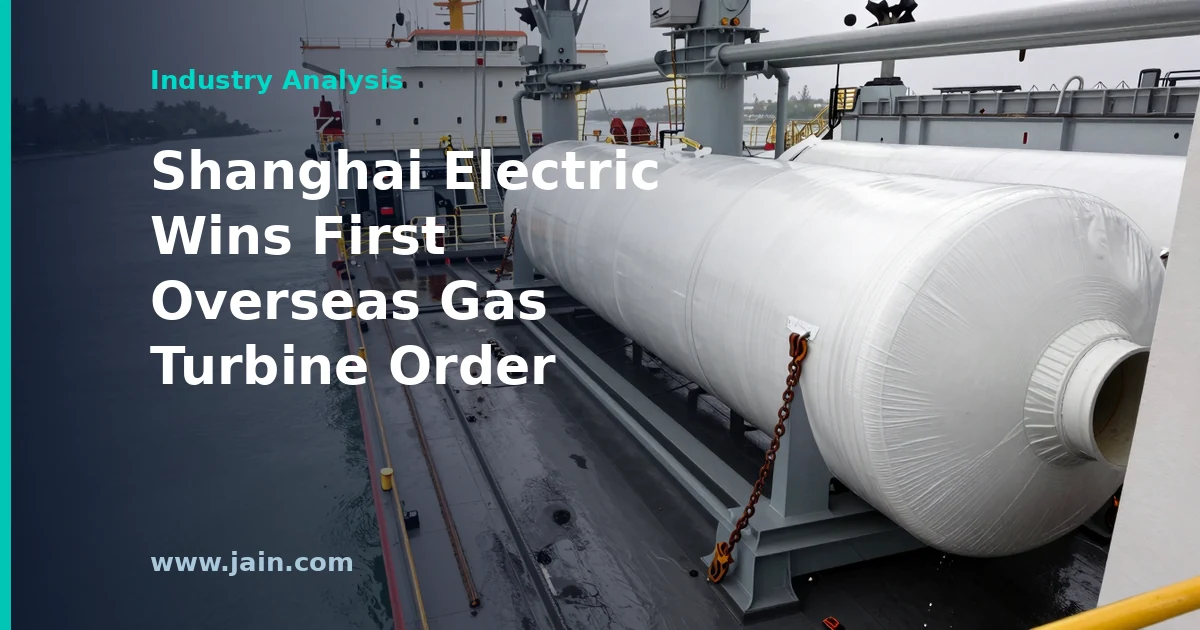
    Shanghai Electric, a large Chinese engineering company, has won its first order outside China for the giant gas-burning engines that drive power station generators. They will go into a new power plant in Malaysia.

    Why it matters: the few American, European and Japanese firms that dominate this business have waiting lists stretching years, partly because artificial intelligence needs so much electricity. A new supplier promising machines from 2028 could give power-hungry countries another option, if its equipment proves itself abroad.

    Shanghai Electric (SEHK: 02727, SSE: 601727) announced in a press release on September 14, 2026 that it has won the contract for Unit 3 of the Sarawak Samalaju Combined Cycle Gas Turbine (CCGT) Project in Malaysia, which the company describes as a 500 MW project. It is the Chinese manufacturer’s first overseas order for heavy-duty gas turbines, the large industrial machines used in utility-scale power plants.

    The company will deliver the plant on an EPC (engineering, procurement and construction) turnkey basis and provide a 25-year long-term service agreement covering all major equipment. The customer is identified only as a Malaysian energy developer, and no contract value was given.

    Executive Summary

    The deal is broader than a turbine sale. Shanghai Electric says it will build the whole gas-fired plant and manufacture every core component itself: the gas turbines, the steam turbines, the generators, the heat recovery steam generators (boilers that capture hot turbine exhaust to make steam) and the air-cooled systems. It will also be the sole maintenance and service provider for 25 years, a bundle the company says puts it on par with the established leaders in heavy-duty gas turbines.

    The timing matters. Demand for gas-fired generation has surged, driven in part by electricity-hungry AI data centers, and the dominant turbine makers, GE Vernova, Siemens Energy and Mitsubishi Heavy Industries, are working through backlogs that push new deliveries years out. Shanghai Electric says it can deliver new units as early as 2028 and that developers in Indonesia, Thailand, the Philippines and Vietnam have expressed strong interest. If that interest turns into orders, Chinese manufacturers could become a real alternative in a market with few suppliers.

    For now this is one contract with an unnamed customer and undisclosed terms. It is a meaningful first step abroad, not yet proof of international competitiveness at scale.

    A Seller’s Market Opens a Door

    Heavy-duty gas turbines are among the hardest machines in the energy industry to make. They run at extreme temperatures, need advanced materials and cooling designs, and have to operate reliably for decades. Only a handful of companies build them at utility scale, which gives buyers little leverage when demand rises. Demand has risen sharply: utilities are replacing coal, balancing intermittent renewables and, increasingly, supplying power to large data center campuses. The incumbents have responded with fuller order books and longer waits for new units.

    That is the opening Shanghai Electric is aiming at. Its claim that new units could ship as early as 2028 is its most commercially pointed statement, because developers who cannot secure turbines cannot build plants. For a buyer facing a multi-year wait, an earlier delivery slot can outweigh a supplier’s shorter international track record. The release does not say, however, how many 2028 slots exist or whether the Malaysian project will use one of them.

    The likely early winners are developers in markets where cost and schedule matter most and where Chinese engineering and financing are already familiar. The established manufacturers are unlikely to feel much effect in the near term; one contract does not change a global order book. The bigger question is whether a credible alternative supplier eventually eases pricing power in a market that has run tight.

    The Turnkey Bet: Building It and Keeping It Running

    A combined cycle plant burns natural gas in a gas turbine, then uses the turbine’s hot exhaust to raise steam for a second turbine, getting more electricity from the same fuel. Shanghai Electric’s decision to make all the core parts in-house and wrap them in an EPC contract means the customer deals with a single counterparty for design, equipment, construction and integration. That simplifies coordination and puts responsibility for performance in one place.

    The 25-year service agreement may be the most important piece economically. Across the industry, long-term service contracts covering inspections, replacement parts and overhauls are a large and steady source of revenue for turbine makers over a plant’s life, often more durable than the original equipment sale. Securing one on its first overseas heavy-duty project gives Shanghai Electric a recurring revenue stream and, just as valuable, a site outside China where its equipment will build an operating record.

    For the customer, the trade-off cuts both ways. Single-source responsibility is simpler, but it concentrates risk: if the equipment underperforms or parts supply is disrupted, there is no second vendor to turn to for major components during the service term. The strength of that arrangement will depend on performance guarantees and penalty clauses, which have not been disclosed.

    What the Track Record Does and Does Not Show

    Shanghai Electric cites 103 heavy-duty units delivered, more than 21,000 MW of installed capacity from commissioned projects, and more than 1.3 million operating hours on units under its long-term service programs. For scale, a single turbine running around the clock accumulates about 8,760 hours a year, so 1.3 million hours is a substantial fleet history. Its current lineup has two principal models, rated at 300 MW and 78 MW.

    Because this is the company’s first overseas heavy-duty order, that record appears to have been built mainly in its home market. Domestic experience is real engineering evidence, but international buyers and lenders typically also look at availability rates, efficiency, emissions performance and how well a supplier supports equipment far from its home base. The release gives no figures on any of those, so the claim of parity with global leaders is the company’s own assessment for now.

    Southeast Asia as the Proving Ground

    Southeast Asia is a logical first market. Economies across the region are growing, electricity demand is rising, and several countries are adding gas-fired capacity as they move away from coal. Malaysia has also become a major destination for data center investment, adding to pressure on its power system, although nothing in the announcement ties the Samalaju plant to data center load.

    Shanghai Electric’s statement that developers in Indonesia, Thailand, the Philippines and Vietnam have shown strong interest should be read carefully: expressions of interest are not orders. Still, it points to a sales strategy of winning a reference project nearby and using it to win the next one. How smoothly Samalaju Unit 3 is built and runs will likely do more for that pipeline than any announcement.

    Background

    Shanghai Electric is a Chinese industrial group listed in Hong Kong (02727) and Shanghai (601727) that makes power generation equipment, including steam turbines, generators and gas turbines. Its heavy-duty gas turbine business has built a fleet of more than 100 units, mainly in its home market, and the Samalaju contract is its first heavy-duty gas turbine order outside China.

    The heavy-duty gas turbine market has long been dominated by GE Vernova, Siemens Energy and Mitsubishi Heavy Industries, whose order books have lengthened as demand for gas-fired generation has grown. Samalaju is an industrial area in the Malaysian state of Sarawak on the island of Borneo, where electricity demand from industry has driven power development.

    Sources

    Source: Shanghai Electric Secures First Overseas Heavy-Duty Gas Turbine Order for 500 MW Malaysian Project, Shanghai Electric’s announcement of its contract for Unit 3 of the Sarawak Samalaju combined cycle gas turbine project in Malaysia.

  • Vantage’s 95-Ton NOx Permit Shows AI Self-Power Is Judged by Ceiling, Not Output

    Vantage’s 95-Ton NOx Permit Shows AI Self-Power Is Judged by Ceiling, Not Output

    TL;DR · 30-second read

    The Short Version

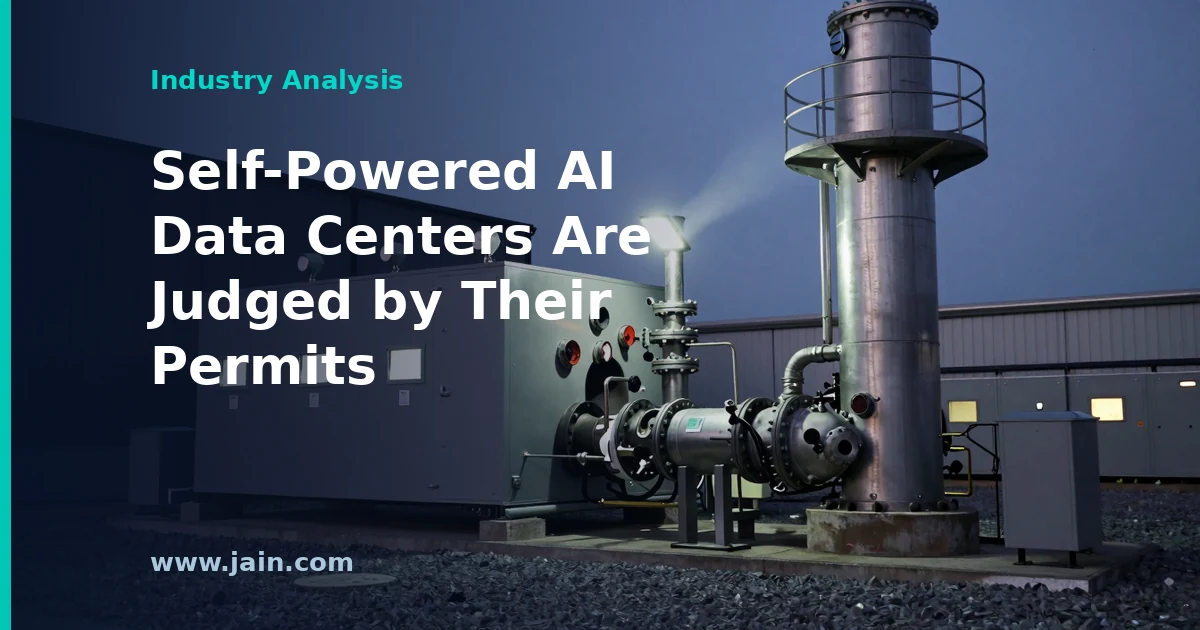
    A data center in Virginia makes its own electricity with eight gas-burning turbines, each about the size of a bus, close to people’s homes.

    A Harvard researcher estimated its air pollution could cause tens of millions of dollars a year in health harm. Virginia’s environmental regulator moved quickly to challenge that estimate, even though one of its own experts said judging health effects was outside his training.

    Why it matters: more of the buildings that run artificial intelligence want their own power plants, and fights like this one will decide where they can be built.

    Politico reported on July 25 that internal emails, obtained through a public records request, show Virginia’s Department of Environmental Quality (DEQ) organized a rebuttal to a health analysis of Vantage Data Centers’ self-powered facility in Sterling, Loudoun County, before that analysis was published. DEQ Director Michael Rolband forwarded the Piedmont Environmental Council’s report to seven air-permitting staff within five minutes of receiving it in early March. He asked for “a defensible critique that will stand the test of public and critical review.”

    The Piedmont-commissioned study estimated that soot from the facility’s eight natural gas turbines could cause $53 million to $99 million a year in health costs, and 3.4 to 6.5 premature deaths, if the site emitted the maximum its permit allows. DEQ’s own report, released in late April, said actual emissions were 28 to 69 percent of permitted levels. The agency has said its staff “did not collaborate with PEC, Vantage or any other external participants” in its assessment.

    Executive Summary

    This dispute centers on the only data center in Virginia that generates its own electricity. Its on-site power system combines eight bus-sized natural gas turbines with dozens of backup diesel generators, and it sits in a residential area. DEQ’s 2023 permits allow up to 95 tons a year of nitrogen oxides (gases that help form smog) and more than 56 tons of soot, meaning fine particles that lodge in the lungs. Both pollutants are linked to asthma and heart attacks. Those limits are typical for a minor pollution source. The dispute arose because of where the facility sits, not because of how large the limits are.

    It matters beyond one building because self-generation is becoming the industry’s answer to grid congestion. Dominion Energy disclosed in February that it receives about 10 new connection requests a month from large-load customers. It also disclosed that dozens of projects requesting a combined 70 gigawatts are waiting to connect, three times the utility’s all-time peak load. Vantage itself described its turbines to DEQ as “a temporary solution given the current power constraints of the grid.”

    The episode shows how the health case against on-site generation gets built. Critics model the legal ceiling in the permit, not the meter reading. Even when actual emissions come in well below that ceiling, the permit keeps the higher figure in play.

    The Permit Ceiling Is the Number That Gets Modeled

    Michael Cork, a biostatistics research fellow at Harvard’s T.H. Chan School of Public Health, did not have Vantage’s operating data when Piedmont hired him. He used the only public figures available, which were the permitted maximums. That produced the headline range of $53 million to $99 million in annual health costs. Vantage objected that this was a “worst case scenario,” and DEQ’s report made the same point: measured emissions of soot, volatile organic compounds and nitrogen oxides ran at 28 to 69 percent of what the permit allows.

    The correction lowered the estimate but did not end the argument. Cork reran his model with DEQ’s actual-emissions figures and arrived at $33 million to $63 million a year and two to four premature deaths. He also noted that nothing in the permit prevents the facility from increasing output back toward its ceiling. That is the mechanism the headline refers to. A permit is a legal right to emit, so outside analysts can reasonably treat it as the facility’s potential footprint, whatever the current meter shows.

    This matters for developers planning on-site generation. Operators often seek permit headroom so they can run harder when the grid is strained or when load grows. That headroom has operational value. It is also, in effect, a published number that critics can model. A project that wants its real-world performance to count in public debate may need to make that performance binding, through enforceable limits closer to expected output or regular public reporting of actual emissions, rather than relying on a regulator to vouch for it after the fact.

    Why Self-Power Keeps Spreading Anyway

    The economics pushing data centers toward their own power plants are not easing. A 70-gigawatt connection backlog at a single utility means many projects face long waits for grid power. On-site gas turbines offer a way to start operating sooner. They also answer the political charge that data centers raise household electricity bills. The federal government has encouraged the model too: President Donald Trump promoted a wave of power plants for new data centers at a White House meeting with technology companies in early March.

    The Vantage case shows the trade-off. Self-generation moves the power question off the utility’s books and onto the local air-permit docket. The cost stops appearing in rate cases and starts appearing in health-damage estimates for the neighborhood downwind. The more facilities follow this path, the more often permitting agencies will be asked to rule on disputes that go beyond their traditional remit.

    A Regulator’s Rebuttal Is Not a Health Finding

    The emails show disagreement inside DEQ about how far the agency should go. Michael Kiss, a manager in the Office of Air Quality Assessments, wrote that the magnitude of impacts was “relatively low” and not surprising. He also said he had “absolutely no comments on the health study” because “we aren’t qualified to do that review.” Robert Burnley, who led DEQ from 2002 to 2006, said the conventional defense of a permit is narrower: that the emissions do not cause a violation of air quality standards.

    Several claims in DEQ’s final report are open to challenge on their own terms. The report said health impacts were “unlikely” because Loudoun County soot levels are below EPA standards. Health experts, including former EPA air quality official Michael Koerber, said soot can harm health even at EPA-approved levels, and the World Health Organization’s guideline is nearly half the EPA figure. The report also cited 2023 state health data, collected before Vantage began operating, to describe Loudoun as one of Virginia’s healthiest localities. That data says little about the facility’s effect.

    For the industry, the lesson is practical rather than partisan. The Data Center Coalition circulated DEQ’s report to reporters and lawmakers as evidence that the Piedmont analysis was wrong. A rebuttal whose health reasoning is contested gives less protection than it appears to. The most useful thing DEQ published was arguably the actual-emissions data. It narrowed the dispute to a real number, even though that number still produced a substantial estimate.

    Siting Near Homes Is Where the Costs Land

    DEQ’s permits for Vantage are in line with other minor-source permits in the state. The concern stems from the facility’s location in a residential area. Neighbors report constant noise as well as air pollution. Vantage says it has taken steps to reduce the noise. Health-cost models of the kind Cork used scale with the number of people in a plume’s path, so the same turbines sited away from housing would generate a very different estimate.

    Virginia has more than 600 data centers, and many future self-powered sites will compete for land in areas that are already developed. Where generation sits relative to homes is likely to be as consequential for permitting risk as how many tons it is allowed to emit.

    Background

    Northern Virginia, and Loudoun County in particular, hosts the world’s largest concentration of data centers, and Virginia is home to more than 600 of them. Dominion Energy, the region’s largest utility, has struggled to keep pace with demand. Large projects now wait in a queue that is far larger than anything the utility has ever served. In response, developers have begun planning facilities that generate their own electricity on site, usually with natural gas turbines.

    Vantage Data Centers’ Sterling facility came before that trend. DEQ issued its air permits in 2023. The Piedmont Environmental Council, a Virginia conservation group, has been active on data center land-use and environmental impacts. The Data Center Coalition is the industry’s trade group.

    Sources

    Source: Emails show how Virginia regulators downplayed data center health concerns — Politico’s report on internal DEQ emails concerning Vantage’s self-powered Loudoun County data center.

  • Inside GE Vernova’s Gas Turbine Ramp Powering the AI Data Center Boom

    Inside GE Vernova’s Gas Turbine Ramp Powering the AI Data Center Boom

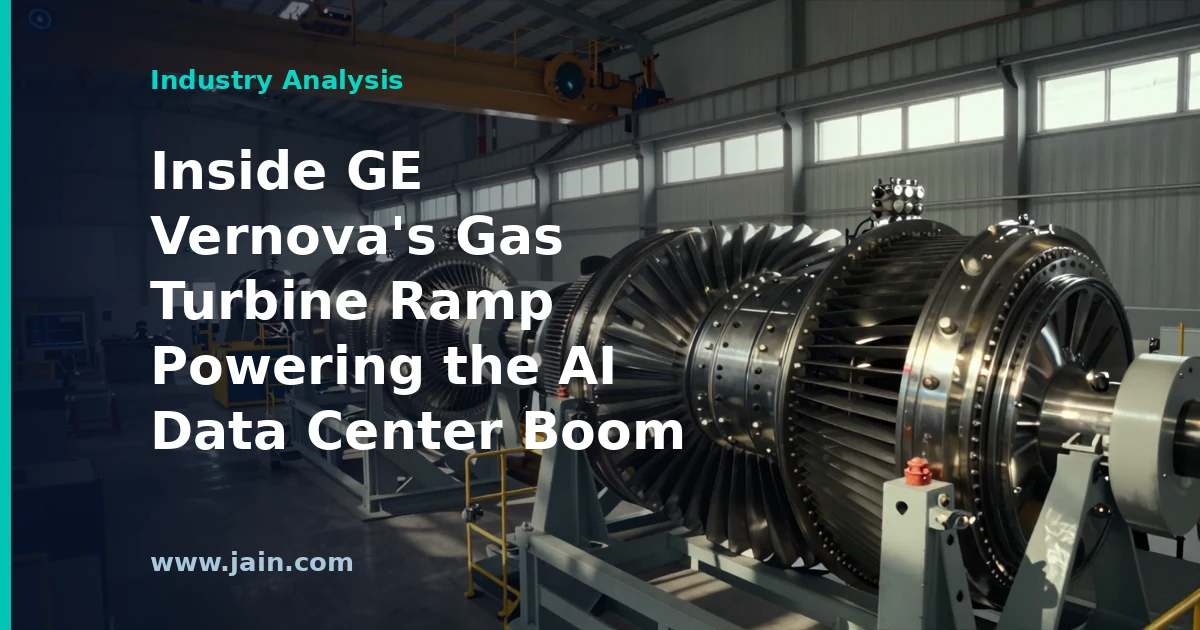
    CNBC published a feature on June 28, 2026 examining how GE Vernova builds its massive heavy-duty gas turbines — the machines increasingly ordered to supply electricity for AI data centers. The piece spotlights the manufacturer at the center of one of the power industry’s sharpest demand upswings, as hyperscalers and data center developers scramble for generation capacity that the grid alone cannot deliver on their timelines.

    Executive Summary

    The story here is less a single announcement than a snapshot of a structural shift: gas turbines — large rotating machines that burn natural gas to spin a generator — have moved from a mature, slow-growth product line to some of the most sought-after industrial hardware in the world, and GE Vernova is one of a small handful of companies that can build the largest ones. CNBC’s look inside the company’s manufacturing operation underscores how AI data center demand has redrawn the order books of the turbine industry.

    Why it matters: AI training and inference clusters need firm, around-the-clock power at scales measured in hundreds of megawatts per campus. Interconnection queues — the waiting lines to plug new loads and generators into the transmission grid — stretch for years in many U.S. markets. That mismatch has pushed utilities and data center developers toward dedicated gas-fired generation, and the turbines themselves have become the bottleneck. Whoever controls turbine manufacturing slots now holds real leverage over where and when AI capacity gets built.

    The Turbine Is the New Bottleneck

    For most of the past decade, the constraint on building a data center was land, fiber, or chips. In 2025 and 2026 it has increasingly been electricity — and behind electricity, the physical equipment that generates and delivers it. Heavy-duty gas turbines sit at the top of that equipment stack: they are enormous precision machines, built in specialized factories by a global oligopoly of manufacturers, and they cannot be scaled up quickly. Casting, machining, and testing the hot-section components that survive combustion temperatures is skilled, capital-intensive work with deep supplier chains.

    That is why a factory tour of a turbine plant is now business news. When manufacturing slots for major power equipment are scarce, the production line itself becomes strategic infrastructure. Data center developers who once treated power generation as someone else’s problem — the utility’s — are now tracking turbine lead times the way they track GPU allocations.

    Why Gas, and Why Now

    Gas turbines occupy a specific niche in the AI power story: they are dispatchable (they run when you need them, unlike weather-dependent wind and solar), they can be sited close to load, and they can be permitted and built faster than nuclear. For hyperscalers facing multi-year grid interconnection queues, gas-fired plants — whether utility-built or behind-the-meter on the data center campus itself — are often the only firm-power option available on an AI-relevant timeline. Combined-cycle configurations, which recycle exhaust heat to generate additional electricity, improve the economics for facilities that run flat-out around the clock, which is exactly the load profile of an AI campus.

    The trade-offs are real. Gas plants lock in decades of fuel exposure and carbon emissions at the same moment many data center operators carry public net-zero commitments. Expect continued tension between the near-term physics of AI power demand and long-term decarbonization pledges — and expect operators to pair gas with renewable procurement, carbon-capture ambitions, or framing gas as a “bridge” technology. Readers should evaluate those framings project by project rather than accepting or dismissing them wholesale.

    Winners, Losers, and the Queue

    The clearest winners in a turbine-constrained market are the manufacturers — GE Vernova and its few global peers — along with their component suppliers and the engineering-and-construction firms that install the machines. Utilities in data center-heavy regions gain a growth story they have not had in decades. On the other side of the ledger, smaller data center developers and enterprises without hyperscaler purchasing power risk being priced or queued out of firm generation capacity, which could concentrate AI infrastructure further among the largest players.

    There is also a cyclical risk worth naming evenly: the gas turbine industry has been through boom-and-bust before, most notably when a late-1990s ordering surge was followed by a painful capacity glut. Manufacturers appear to be expanding cautiously partly because of that memory. If AI power demand forecasts prove overstated — a live debate — today’s scarcity could look different in five years. If the forecasts hold, the constraint persists and lead times stay long. Either way, the ordering decisions being made now will shape the power landscape well into the 2030s.

    Background

    GE Vernova became an independent public company in April 2024, when General Electric completed its split into three businesses and placed its energy operations — gas power, wind, nuclear services, and grid electrification — under the new name. The gas turbine franchise it inherited is one of the oldest and largest in the world, with an installed fleet spanning utilities and industrial operators across the globe.

    The company’s independence coincided almost exactly with the generative AI infrastructure boom, which transformed electricity demand forecasts that had been flat in the U.S. for roughly two decades. That timing turned a business once viewed as a mature, declining fossil-fuel franchise into a strategic asset at the center of the AI build-out — the shift CNBC’s factory-floor feature captures.

    Source: How GE Vernova builds the massive gas turbines powering the AI data center boom — CNBC feature (June 28, 2026) on the manufacturing operation behind the turbines supplying power for AI data centers.

  • EPA’s AI Data Center Exit: 57 Disputed Turbines Show Where Permit Risk Lands

    EPA’s AI Data Center Exit: 57 Disputed Turbines Show Where Permit Risk Lands

    TL;DR · 30-second read

    The Short Version

    The federal government’s main pollution regulator said on June 10 that it will not write national environmental rules for the giant computer warehouses that run artificial intelligence. States and local towns will decide instead.

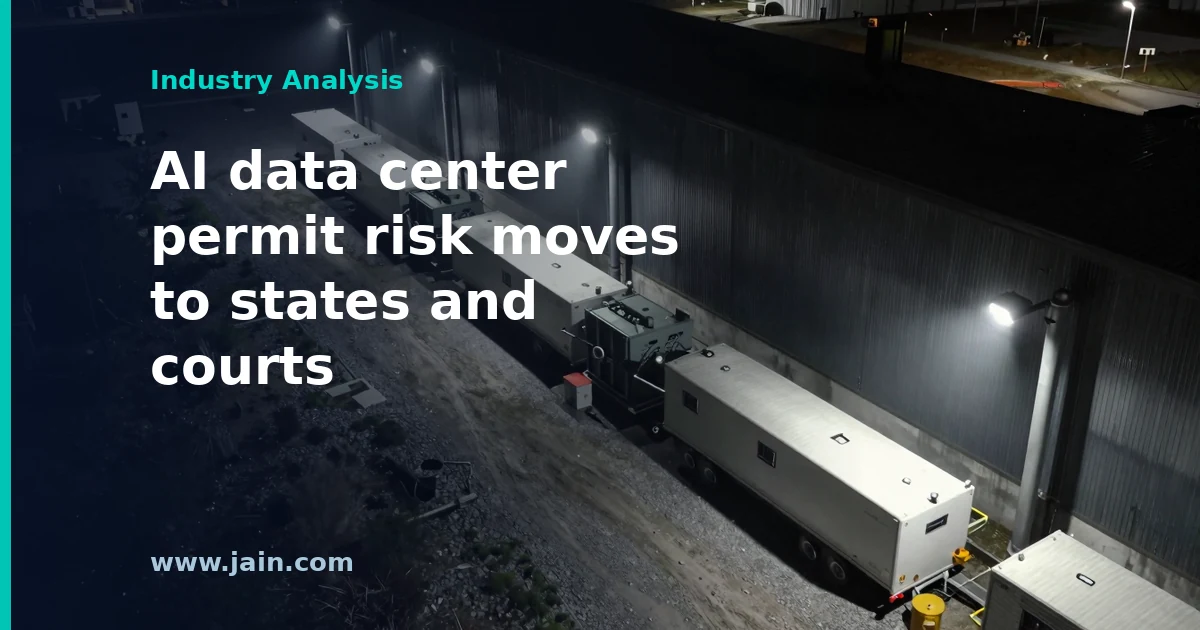
    That does not mean fewer fights. Some of these sites burn natural gas on their own property to get electricity quickly. In April, civil rights and environmental groups sued the company xAI, saying it ran 57 gas-fired generators near Memphis without the pollution permits the law requires. How that case ends will decide who gets to challenge these projects in court.

    US Environmental Protection Agency (EPA) Administrator Lee Zeldin said at the Politico Energy Summit on June 10, 2026, that the agency will not pursue any nationwide environmental requirements or recommendations aimed at the AI industry, Crowell & Moring reported. Zeldin acknowledged that technologies exist to reduce data centers’ water consumption and air pollution, but said deciding the right practices for each facility is a matter for states and local communities, not EPA.

    The announcement follows a year of EPA actions easing permitting for power generation and data centers, and it lands amid active litigation: an April 14 Clean Air Act citizen suit by the NAACP, the Southern Environmental Law Center and Earthjustice alleging that xAI and its subsidiary MZX Tech operated 57 unpermitted portable methane gas turbines to power the Colossus 2 data center in South Memphis, and a June 16 Department of Justice motion to intervene and have that suit dismissed.

    Executive Summary

    EPA has taken itself out of the business of writing AI-specific environmental rules. There will be no national standard for data center water use, air emissions or cooling practices, and no federal list of recommended best practices. That removes a layer of regulation developers had reason to expect, but it does not suspend the Clean Air Act or the Clean Water Act, and it does not change the fact that most day-to-day permitting decisions sit with state and local agencies.

    The practical effect is to relocate risk rather than remove it. The part of an AI campus most exposed is on-site combustion — gas turbines and backup engines that make electricity on the property — because that equipment is what triggers air permits. With no federal template, those permits will be judged against differing state and local standards, and enforcement increasingly runs through private lawsuits, as the xAI case shows.

    Whether that private enforcement route stays open is now itself in question. The Department of Justice has argued that private groups cannot pursue Clean Air Act suits over the federal government’s objection. The outcome of that argument will shape the legal risk attached to fast-tracked on-site power across the industry.

    Stepping Back Is Not the Same as Fewer Permits

    Zeldin’s June 10 statement rules out new federal requirements and recommendations aimed at AI. It does not rewrite existing law. Data centers that burn fuel on site still fall under the Clean Air Act, and those that discharge water still fall under the Clean Water Act. New Source Review (NSR) — the Clean Air Act program requiring a permit before a large new pollution source is built — still applies. Until EPA finalizes the rule it proposed in May 2026, a major NSR permit is still required before any construction begins.

    Read in sequence, EPA’s recent actions share a pattern. In May 2025 it issued guidance allowing certain emergency engines to run up to 50 hours a year in non-emergency conditions to support grid reliability for data centers. In September 2025 it gave developers flexibility to start non-emissions-related building work before obtaining a Clean Air Act permit. In May 2026 it proposed redefining when construction legally ‘begins’ so non-emitting structures can go up earlier. Each step lets the concrete and steel move faster. None of them exempts the equipment that actually emits.

    Why 57 Turbines Mark Where the Risk Now Sits

    The server halls of an AI campus do not need an air permit; the generators feeding them can. That is the mechanism behind the title’s claim. When grid connections lag behind construction schedules, some developers bridge the gap with on-site gas generation, and that generation is precisely where Clean Air Act obligations bite. The citizen suit filed April 14 alleges that xAI and MZX Tech ran 57 portable methane gas turbines without required air permits to power Colossus 2 — a fleet the complaint treats as the data center’s power supply, not an ancillary backup. The allegations have not been proven in court, and the plaintiffs seek substantial penalties and cite health risks for families in South Memphis and North Mississippi.

    With EPA declining to set a national standard, the questions that decide cases like this — whether equipment crosses major source thresholds (the emissions levels above which a facility needs the most demanding permits), what controls are required, how long ‘temporary’ generation may run — are answered by state air agencies and local boards, and tested by private plaintiffs in federal court. A citizen suit is a lawsuit a private party can bring to enforce a federal environmental law after giving 60 days’ notice. The people most affected are developers using on-site generation to beat grid timelines, the lenders and customers relying on those schedules, and the communities living next to the equipment.

    The Justice Department’s Intervention Is the Swing Variable

    On June 16, the Department of Justice moved to intervene in the xAI case and have it dismissed. Its filing argues that the suit threatens national security by seeking to cut power to AI infrastructure that supports the Department of War’s operations, and, more broadly, that the executive branch holds exclusive authority to enforce federal law, so private parties cannot pursue Clean Air Act citizen suits over the government’s objection.

    If a court accepted that theory, it would sharply narrow a private right of action Congress wrote into the statute and raise separation-of-powers questions, since the executive branch would effectively decide which cases reach a judge. Crowell & Moring’s attorneys consider it unlikely the court will accept the argument. Either way, the ruling matters well beyond Memphis: it will tell developers whether federal non-enforcement actually lowers their exposure, or whether private enforcement fills the space EPA has left.

    A Patchwork Rewards Early Paperwork

    Without a national baseline, requirements will diverge by state and locality, and a multi-state developer will face different rules for the same turbine or cooling design. That favors operators who secure permits before breaking ground, audit whether their generation crosses major source thresholds, and treat compliance with federal law as protection against both citizen suits and a future administration that enforces more aggressively.

    Zeldin’s own acknowledgment that pollution- and water-reducing technologies exist points to a hedge: voluntary adoption of measures such as closed-loop cooling, which recirculates water rather than evaporating it, may reduce the odds of state action and local opposition. The competitive edge in this environment belongs less to whoever builds fastest than to whoever can show a regulator, a neighbor or a judge that the power plant behind the data center was permitted from day one.

    Background

    The US Environmental Protection Agency sets national rules under laws such as the Clean Air Act and Clean Water Act, but state and local agencies issue and enforce many of the permits that apply to individual facilities. The rapid growth of AI data centers — and the electricity they need — has drawn activity from Congress, the executive branch, federal agencies and the courts, without yet producing a cohesive regulatory framework.

    Since May 2025, EPA has issued a string of actions aimed at speeding data center and power plant construction, and in January 2026 it held a roundtable with the Data Center Coalition, the industry’s trade association. xAI’s Colossus 2 in South Memphis has become the most visible test of how environmental law applies to AI campuses that generate their own power on site.

    Sources

    Source: EPA Steps Back from AI Data Center Regulation: What Developers Must Know Now – Crowell & Moring LLP — EPA’s June 10, 2026 decision not to set national environmental standards for AI data centers, and the Clean Air Act litigation over xAI’s Colossus 2 turbines.