Tag: data centers

  • SIA: Semiconductors Make Up 95% of an AI Server Rack’s Value

    SIA: Semiconductors Make Up 95% of an AI Server Rack’s Value

    The Semiconductor Industry Association (SIA) published a report finding that semiconductors account for roughly 95% of the value of an AI data server rack, announced May 31, 2026. The figure is not limited to headline AI accelerators: it encompasses the full stack of chip technologies inside a rack — processors, memory, networking, power management and supporting silicon.

    Executive Summary

    The SIA — the trade association representing the U.S. semiconductor industry — says that when you total up what an AI server rack is worth, about 95 cents of every dollar is silicon. A rack, the refrigerator-sized cabinet that holds stacked servers in a data center, has traditionally been valued as a mix of metal, boards, drives, cabling and chips. The report’s claim is that in the AI era, nearly everything else has become rounding error.

    Why it matters: the finding reframes AI data centers as, economically speaking, chip-delivery vehicles. For operators, investors and policymakers, it concentrates attention — and risk — on the semiconductor supply chain. If 95% of rack value is silicon, then chip pricing, chip availability and chip export policy effectively set the cost curve for the entire AI buildout.

    The Rack Is Now a Chassis for Silicon

    The most useful part of the SIA’s framing is the phrase “full stack of chip technologies.” Public attention fixates on GPUs — the graphics-derived accelerators that do AI’s heavy math — but an AI rack is dense with other semiconductors: CPUs that orchestrate work, high-bandwidth memory stacked next to the accelerators, networking chips that lash thousands of processors into one machine, and power-management silicon that converts and conditions the enormous electrical loads involved. Counting all of that, a 95% share implies the sheet metal, boards, cabling and mechanical components that once defined “server hardware” now carry almost none of the value.

    That inversion matters for anyone modeling AI infrastructure costs. In a conventional enterprise server, silicon was one line item among many. In an AI rack, the SIA’s figure suggests everything else — chassis, rails, fans, distribution — is a thin wrapper. The practical consequence: rack-level cost forecasting is essentially chip-price forecasting.

    Concentration of Value Means Concentration of Risk

    If nearly all rack value is semiconductors, then the risks that matter are semiconductor risks: fabrication capacity concentrated in a small number of foundries and regions, advanced-memory supply that has repeatedly run tight, and export-control regimes that can reprice or block hardware across borders. A data center operator can second-source steel and switchgear; it cannot easily second-source leading-edge accelerators or the memory bonded to them.

    There is also a depreciation angle. Buildings depreciate over decades; chips depreciate on silicon product cycles, which in AI have been running fast. When 95% of a rack’s value sits in the component category with the shortest useful life, the refresh economics of an AI facility look less like real estate and more like a rolling fleet of rapidly aging assets. That affects how lenders, insurers and investors should think about collateral value in AI infrastructure deals.

    Read the Messenger Along With the Message

    The SIA is a trade association, and it is fair to note that this finding serves its members’ interests: a report showing semiconductors as the overwhelming source of AI value strengthens the industry’s case for policy support, incentives and favorable treatment in trade debates. That does not make the number wrong — the direction of the claim is consistent with what the market can observe, namely that AI systems are priced overwhelmingly by their compute and memory content. But readers should treat the precise 95% as an association-produced estimate until the methodology is examined: what rack configuration was assumed, whose prices were used, and whether “value” means bill-of-materials cost, market price, or something else.

    The same scrutiny cuts the other way. Critics of AI-infrastructure spending sometimes describe the buildout as overpriced real estate; a full-stack accounting like this one, if its methodology holds up, is a substantive counterpoint — the money is going into the most technologically dense components, not the shell around them.

    Background

    The Semiconductor Industry Association has represented U.S. chipmakers since the industry’s early decades and regularly publishes data on semiconductor sales, manufacturing and policy. Its research gained a wider audience as governments moved to subsidize domestic chip manufacturing and as AI demand made semiconductor supply a mainstream economic concern.

    The report lands amid a historic buildout of AI data centers, in which hyperscalers and specialized operators are deploying racks of accelerator-dense servers at unprecedented scale. Understanding where the money in that buildout actually goes — construction, power equipment, or chips — has become a live question for investors, utilities and policymakers alike.

    Source: New Report Finds Semiconductors Account for 95% of an AI Data Server Rack’s Value, Encompassing the Full Stack of Chip Technologies — Semiconductor Industry Association announcement, May 31, 2026.

  • Bitdeer Sells Its Bitcoin Stack as Mining Margins Compress

    Bitdeer Sells Its Bitcoin Stack as Mining Margins Compress

    Bitdeer, a publicly traded bitcoin mining company, has sold off its entire corporate bitcoin treasury, according to a CCN.com report dated 30 May 2026. The disclosure lands in a year when mining economics have tightened following the last halving and rising network difficulty.

    The report frames the sale as a possible bellwether for peers, including TeraWulf (WULF) and Riot Platforms (RIOT), that have been evaluating pivots toward artificial intelligence and high-performance computing (HPC) hosting.

    Executive Summary

    A public miner draining its own bitcoin balance sheet is more than a treasury adjustment. It signals that at least one operator judges cash — or reinvestment into infrastructure — as more valuable than continuing to hold the asset the business exists to produce.

    The move matters because the same physical footprint that mines bitcoin (megawatts of power, cooling, land, and grid interconnects) is precisely what AI training and inference workloads need. If Bitdeer’s liquidation is being redeployed toward that pivot, it validates a thesis that several rivals have been publicly courting. If it is simply to shore up operating cash, it says something quieter but no less important about margin pressure in mining today.

    Either way, investors, hyperscaler procurement teams, and utilities watching miner load are likely to read this as a data point on where the sector’s capital is heading in 2026.

    Why A Miner Would Sell Its Own Product

    Bitcoin miners have historically treated retained coin as both a strategic reserve and a leveraged bet on the price of the asset they produce. Holding coin lets a miner participate in upside without additional hashrate; selling it converts that optionality into cash. A full liquidation is therefore a directional statement: the company either needs the cash now, sees better uses for it than holding bitcoin, or both. Without disclosed proceeds or use-of-funds, outside observers cannot yet tell which mix applies to Bitdeer.

    The backdrop is well understood in the industry. The 2024 halving cut block subsidies in half, network difficulty has continued to climb, and energy costs in several key jurisdictions have not fallen in step. That combination compresses gross margin per terahash and rewards operators with cheaper power, newer machines, or additional revenue lines beyond block rewards.

    The AI And HPC Pivot Thesis

    Several public miners have spent the last two years marketing a pivot toward AI and HPC hosting. The logic is straightforward: a bitcoin mining site is, at its core, a large power contract wrapped in a building with cooling. Convert the racks from ASICs to GPUs, upgrade the cooling to handle higher rack densities, add low-latency networking and tier-appropriate redundancy, and the same megawatts can earn hosting revenue from AI customers rather than block rewards.

    The catch is that the conversion is not free. AI-grade halls typically need redundant power paths, liquid cooling, denser fiber, and service-level commitments that a mining shed does not. Not every mining site will make that transition economically, and the customers writing those hosting checks — hyperscalers, GPU cloud specialists, and large model developers — are selective about power quality, location, and counterparty. A miner freeing capital by selling coin can, in principle, fund that upgrade; whether Bitdeer has actually earmarked proceeds for it remains unstated in the source material.

    What This Means For WULF, RIOT, And The Field

    TeraWulf and Riot Platforms have been named in the framing question, but the broader field of listed miners — including Core Scientific, Marathon Digital, CleanSpark, and Iris Energy — faces the same choice architecture. Each has to decide, quarter by quarter, whether to hold coin, sell coin to fund growth, add hashrate, or reallocate capacity to AI and HPC hosting. Bitdeer’s disclosure adds one more data point suggesting the balance is tipping toward monetization and redeployment rather than accumulation.

    For infrastructure buyers, the read-through is that additional AI-capable capacity may come online from operators pivoting out of mining, potentially at unconventional grid locations that hyperscalers had not previously mapped. For utilities and grid operators, a shift from interruptible mining load to firmer AI hosting demand changes the interconnection conversation and, in some cases, the ratepayer politics around large loads.

    Background

    Public bitcoin miners emerged as a distinct category in the last cycle, listing shares to fund large power contracts and ASIC purchases. Their economics hinge on three variables: the bitcoin price, network difficulty, and the delivered cost of electricity. When any one moves against them, the pressure on margins is immediate and visible in quarterly filings.

    Since 2023, several of these companies have marketed a strategic option to convert some or all of their footprint to AI and HPC hosting, arguing that the true asset is the power interconnect rather than the mining rig on top of it. That thesis is being tested in 2026 as post-halving economics collide with unprecedented demand for AI compute capacity.

    Source: Bitdeer Liquidates Entire Bitcoin Treasury as Mining Margins Tighten — Will Other Crypto Miners Follow in 2026? — CCN.com report, 30 May 2026, on Bitdeer’s treasury liquidation and its implications for peer miners.

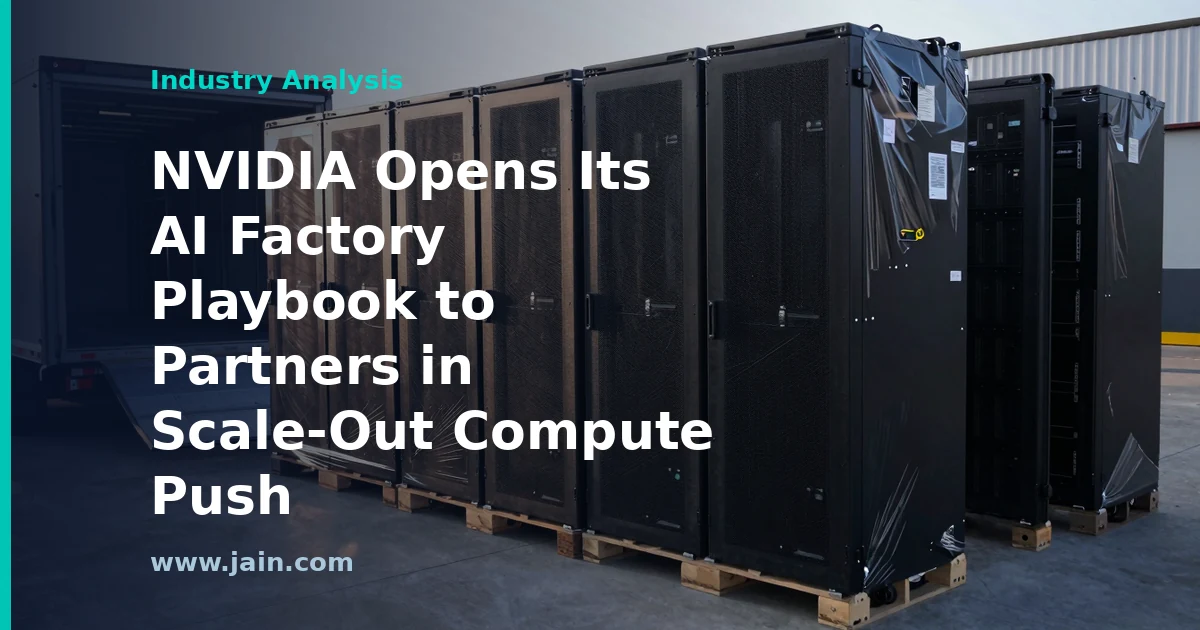
  • NVIDIA’s ‘AI Factory’ Framing: New Category or New Label?

    NVIDIA’s ‘AI Factory’ Framing: New Category or New Label?

    On May 28, 2026, NVIDIA published a blog post titled AI Factories: The New Infrastructure of Intelligence, arguing that facilities purpose-built to train and serve large AI models constitute a new class of infrastructure rather than an extension of the traditional data center.

    The post is a positioning piece, not an announcement of a specific project, customer, or product SKU. It reinforces a term NVIDIA executives have used with increasing frequency over the past two years as hyperscalers and neoclouds stand up gigawatt-scale GPU campuses.

    Executive Summary

    NVIDIA’s message is straightforward: buildings full of GPUs that ingest data and output tokens, weights, and inference responses look and behave differently enough from general-purpose data centers to deserve their own name. The company’s implicit argument is that treating these sites as ordinary colocation halls understates the electrical, thermal, network, and financial redesign they require.

    Why it matters: language shapes procurement. If buyers, financiers, and regulators accept ‘AI factory’ as a distinct category, it changes how sites are permitted, how power contracts are written, how depreciation is modeled, and which vendors are considered incumbents. NVIDIA benefits when the category is defined around dense GPU clusters, high-bandwidth fabrics, and liquid cooling — all areas where its stack is already assumed.

    For operators and enterprise buyers, the practical question is whether the label describes something genuinely new or repackages a trajectory the industry was already on: higher rack densities, direct-to-chip liquid cooling, campus-scale power procurement, and tighter compute-storage-network integration.

    Why NVIDIA Wants a New Category

    Categories are strategic. When cloud computing was rebranded from ‘hosted servers,’ it justified a decade of premium pricing and shifted procurement out of IT and into finance and operations. NVIDIA has commercial reasons to define AI infrastructure in terms that center accelerated compute — the more the industry treats an ‘AI factory’ as fundamentally GPU-shaped, the harder it is for CPU-first, ASIC-first, or non-NVIDIA-accelerator architectures to be considered the default. This is not dishonest; it is positioning, and buyers should read it as such.

    The framing also helps NVIDIA’s customers. Hyperscalers and specialized GPU cloud providers raising tens of billions in debt and equity benefit from a narrative that these are not commodity data centers competing on price per kilowatt, but capital assets producing a scarce good — intelligence — at industrial scale. Factories, unlike data centers, are supposed to have output curves, unit economics, and productive capacity that justifies their capex.

    What Is Actually Different — And What Is Not

    The technical case for a distinct category rests on real changes. Training clusters routinely exceed 100 kilowatts per rack, versus roughly 10-20 kW for a typical enterprise hall, forcing liquid cooling rather than air. Network topology is dominated by east-west traffic between GPUs on high-bandwidth fabrics, not north-south client traffic. Power draw is spiky and correlated across thousands of chips, which strains grid interconnections in ways general-purpose workloads do not. Site selection is increasingly driven by available generation capacity rather than proximity to users, since training is latency-tolerant.

    What is not obviously new is the underlying building. A well-run modern data center campus with high-density zones, on-site substations, and liquid loops can host these workloads, and many do. The ‘factory’ language risks obscuring a continuum: most operators are retrofitting and expanding existing sites rather than inventing a new asset class from scratch. Whether that continuum deserves a new noun is more a marketing question than an engineering one.

    Winners, Losers, and Who Is Watching

    Beneficiaries of the framing include NVIDIA and its close ecosystem — networking silicon, liquid cooling vendors, and reference-design integrators — plus GPU cloud specialists whose entire pitch is that they are purpose-built rather than repurposed. Incumbent colocation providers face a subtler pressure: they must show that their halls can be reconfigured to the same density and efficiency, or accept being characterized as legacy.

    Regulators, utilities, and communities are the audience that matters most for the label’s staying power. Calling a facility a factory invites questions about industrial siting, emissions accounting, job creation per megawatt, and grid impact that data centers have historically been able to sidestep. NVIDIA’s category may prove more consequential in permitting hearings than in procurement meetings.

    Background

    NVIDIA is the dominant supplier of GPUs and associated networking used to train and serve large AI models, and over the past three years its executives have repeatedly framed AI infrastructure as a new industrial category. The ‘AI factory’ language has appeared in keynotes, investor communications, and partner announcements, and this blog post consolidates that framing.

    The backdrop is a global build-out of purpose-built AI campuses by hyperscalers, sovereign AI initiatives, and specialized GPU cloud providers, funded by tens of billions in equity and debt. Site selection has increasingly shifted toward regions with available power generation, and the industry is in the middle of a transition from air to liquid cooling and from ethernet-centric to specialized high-bandwidth network fabrics.

    Source: AI Factories: The New Infrastructure of Intelligence – NVIDIA Blog — a positioning post arguing that purpose-built AI compute campuses constitute a distinct infrastructure category rather than a variant of the traditional data center.

  • Inference Economy Rewrites the AI Chip Rulebook

    Inference Economy Rewrites the AI Chip Rulebook

    Market research firm TrendForce declared in late May 2026 that the AI chip industry has entered an “inference economy,” a phase in which the economics of running trained AI models at scale — rather than training them — increasingly dictate silicon design, purchasing decisions, and data center architecture.

    Executive Summary

    For roughly three years, the AI hardware conversation has been dominated by training: the compute-hungry, capital-intensive process of teaching very large models. TrendForce’s framing signals what many operators have quietly observed: inference — the act of serving those models to end users — is now the workload that pays the bills and shapes procurement.

    The distinction matters because training and inference reward different chip characteristics. Training prizes raw floating-point throughput and massive high-bandwidth memory. Inference is more sensitive to latency, memory bandwidth per dollar, power efficiency, and the ability to serve many concurrent users cheaply. If TrendForce is right that the balance has tipped, expect the competitive field for AI silicon to widen and pricing power to shift.

    Why Inference Changes the Math

    Training a frontier model is a one-time-ish capital event; inference is an operating cost that recurs every time a user asks a question. At web scale, the aggregate compute burned on inference eventually dwarfs training, and each token served must be priced against a competitive market for AI features. That pressure forces buyers to optimize for cost-per-query rather than peak FLOPS, which favors chips tuned for memory bandwidth, batching efficiency, and low idle power over the largest possible training clusters.

    This is why hyperscalers have invested in custom accelerators and why merchant-silicon challengers keep finding oxygen. Inference workloads are more heterogeneous — from small classifier models to large language model chat — and no single architecture wins every slice.

    Winners, Losers, and the Widening Field

    An inference-led market is structurally less concentrated than a training-led one. Training rewards whoever has the biggest, most tightly coupled cluster; inference rewards whoever can serve tokens at the lowest total cost of ownership in the geography where users live. That opens room for alternatives to the incumbent GPU leader — AMD accelerators, custom ASICs from cloud providers, and a growing set of inference-specialist startups — without any of them needing to match training-class performance.

    The corollary is pricing pressure. As inference silicon proliferates and model efficiency improves, the per-token cost of serving AI should keep falling, which is good for application builders but complicates the return-on-investment math for operators that placed very large bets on training-optimized fleets.

    The Data Center Consequences

    Inference reshapes the building, not just the board. Because inference is latency-sensitive and geographically distributed, it pushes capacity toward more, smaller sites closer to users — a different footprint than the gigawatt training campuses that have dominated recent headlines. Power density remains high, but the cooling, networking, and interconnect requirements diverge: inference clusters often need less exotic east-west fabric and can tolerate more conventional rack designs.

    For infrastructure operators, that suggests a two-track future. A handful of very large training campuses will continue to anchor the frontier, while a broader fleet of inference-oriented facilities scales out in metro markets. Both are real businesses, but they have different customers, different economics, and different build-out timelines.

    Background

    AI accelerators — specialized chips optimized for the linear algebra that powers modern machine learning — became the defining semiconductor category of the 2020s, with Nvidia’s data center GPUs capturing an outsized share of a market that grew from niche to central to the entire technology industry in roughly three years. Most of the early demand was tied to training ever-larger foundation models, a workload that rewarded the biggest, most tightly interconnected clusters money could buy.

    As generative AI moved from research demos into consumer and enterprise products, the workload mix began to shift. Serving trained models — inference — became a larger share of compute cycles, and buyers started asking sharper questions about cost per query, power efficiency, and geographic latency. TrendForce’s 2026 note formalizes what practitioners had already begun to price in.

    Source: The Inference Economy Arrives: AI Chip Rules Are Being Rewritten – TrendForce — market research note arguing that inference workloads now dominate AI silicon economics.

  • I Squared Commits $1 Billion to US AI Inference and Edge Colocation Platform

    I Squared Commits $1 Billion to US AI Inference and Edge Colocation Platform

    Infrastructure investment firm I Squared Capital announced on May 26, 2026 the launch of a new United States data center platform focused on AI inference and edge colocation, backed by a $1 billion capital commitment. The announcement, distributed via Business Wire, positions the platform to serve the fast-growing market for running trained AI models close to users, rather than the massive centralized campuses where those models are built.

    Executive Summary

    I Squared Capital, a global infrastructure investor with a track record of building digital-infrastructure platforms from the ground up, is committing $1 billion to a US platform aimed at two intertwined markets: AI inference — the compute that answers queries after a model is trained — and edge colocation, meaning smaller data centers positioned in or near population centers where enterprises can rent space and power.

    The bet matters because it stakes real capital on a specific view of where the AI buildout goes next. Most headline-grabbing investment to date has chased hyperscale training campuses measured in hundreds of megawatts, sited wherever cheap power exists. An inference-and-edge thesis argues the next wave of demand is distributed: many smaller facilities, closer to users, optimized for low latency and steady utilization rather than raw scale. If that view is right, data-center value will spread across many US metros instead of concentrating in a handful of power-rich regions.

    Inference Is a Different Business Than Training

    Training a large AI model is a batch job: it can run anywhere power is cheap, and users never interact with it directly. Inference is a service: every chatbot reply, search summary, and copilot suggestion is an inference call, and its economics are governed by latency (how fast a response travels to the user), utilization, and cost per query. That pushes inference capacity toward network-dense locations near people — the historic strength of colocation and edge facilities rather than remote gigawatt campuses.

    By naming inference and edge together, I Squared is effectively arguing that the AI market is maturing from build-the-model to serve-the-model. Industry observers have long noted that if AI adoption follows the path of earlier computing waves, ongoing inference spending should eventually dwarf one-time training spending. A platform purpose-built for that phase is a bet on the durable, recurring part of the AI stack.

    A Contrarian Read on Data-Center Geography

    The prevailing US buildout has concentrated in a few power-abundant corridors — the kind of places where a utility can pledge hundreds of megawatts. Edge colocation inverts that logic: smaller footprints, more sites, and proximity to enterprises and consumers in secondary metros. The trade-off is that edge sites face urban land costs, tighter permitting, and constrained grid connections, but they can command premium pricing for low-latency capacity and are less exposed to the single-market risks of mega-campuses.

    For enterprise buyers, a credible national inference-and-edge platform would offer an alternative to shipping every AI workload to a distant hyperscale region — relevant for latency-sensitive applications, data-residency requirements, and hybrid architectures that keep proprietary data close to home. For incumbent colocation providers, it signals a well-capitalized new competitor targeting exactly the niche where regional operators have historically differentiated.

    What $1 Billion Buys — and What It Doesn’t

    A $1 billion commitment is serious money and, at the same time, a measured entry. In today’s market, a single large hyperscale campus can absorb several billion dollars, so this commitment points toward a portfolio of smaller facilities rather than one flagship — consistent with the edge thesis. Infrastructure funds also routinely amplify equity commitments with project-level debt, so the platform’s ultimate buildout capacity could be a multiple of the headline figure, though the release itself does not say so.

    I Squared has used the platform playbook before in digital infrastructure, assembling operating companies around a thesis and scaling them through acquisition and greenfield development. The open question is execution: inference-optimized facilities still need power, cooling for dense GPU racks, and — most importantly — tenants. The announcement describes a commitment and a strategy; converting that into leased, revenue-generating megawatts is a multi-year undertaking in a market where skilled operators, grid interconnection queues, and equipment lead times are all under strain.

    Risks: The Edge-Inference Thesis Is Not Yet Settled

    It is worth stating plainly that the distributed-inference future this platform anticipates is a forecast, not a fact. Today, a large share of inference still runs in the same hyperscale regions as training, because cloud providers concentrate their GPU fleets there and many applications tolerate tens of milliseconds of extra latency. If model efficiency improves faster than demand grows, or if hyperscalers simply extend their own regions closer to users, the addressable market for independent edge inference capacity could prove smaller than proponents expect.

    None of that makes the bet unreasonable — infrastructure investing is precisely about positioning capital ahead of demand. But buyers and competitors evaluating this announcement should weigh that the release, as reported, substantiates a commitment and a strategy rather than contracted customers or operating assets.

    Background

    I Squared Capital is an independent infrastructure investment firm founded in 2012 and headquartered in Miami, managing capital across energy, utilities, transport, and digital infrastructure worldwide. In digital infrastructure specifically, the firm has favored a platform model — creating or acquiring an operating company around an investment thesis, then scaling it through greenfield development and bolt-on acquisitions, including prior edge data-center investments in Europe.

    The announcement lands amid an unprecedented US data-center expansion driven by AI. Most capital to date has flowed to hyperscale training campuses in power-rich regions, but a growing school of thought holds that as AI applications reach mass adoption, the serving side — inference — will demand distributed, network-proximate capacity, reviving the strategic value of edge and metro colocation.

    Source: I Squared Capital Launches U.S. AI Inference and Edge Colocation Data Center Platform With $1BN Commitment — Business Wire press release announcing the platform, May 26, 2026.

  • Schneider Electric: India Data Center Growth Now Outpaces Its Core Business

    Schneider Electric: India Data Center Growth Now Outpaces Its Core Business

    Reuters reported on May 24, 2026 that Schneider Electric — the French energy-management and industrial-automation group — says its data center business in India is now growing faster than its core business, propelled by the country’s AI-driven data center buildout. The comment positions India as one of the standout markets in a global surge of demand for the electrical equipment that powers AI computing.

    Executive Summary

    The substance of the report is a growth signal, not a contract or a capacity announcement: Schneider Electric, one of the world’s largest suppliers of the switchgear, uninterruptible power supplies (UPS — the battery-backed systems that keep servers running through grid disturbances), and power-distribution equipment that data centers depend on, says demand from India’s data center sector is expanding faster than the rest of its business there.

    That matters for two reasons. First, it is a read on where the AI infrastructure wave is spreading: hyperscale-style demand is no longer confined to the United States and a handful of established hubs. Second, it comes from the supply side. Data center operators announce ambitions; equipment vendors see purchase orders. When a major electrical supplier says one segment is outgrowing everything else it does in a market, that is a comparatively hard signal that capital is actually being spent.

    The caveat is proportionality: “outpacing core growth” describes a rate, not a size, and the report as available does not quantify either. A fast-growing segment can still be a small one.

    The AI Boom Is Really an Electrical Equipment Boom

    Every AI data center is, underneath the servers, an electrical engineering project. Racks of AI accelerators draw several times the power of conventional servers, and that power has to be received from the grid, transformed, distributed, conditioned, and backed up — all with equipment from a fairly short list of global vendors, of which Schneider Electric is one of the largest alongside the likes of ABB, Siemens, Eaton, and Vertiv. This is why the AI cycle has been felt so strongly by electrical suppliers: compute demand converts almost directly into orders for switchgear, transformers, UPS systems, busway, and cooling infrastructure.

    Schneider’s India comment extends a pattern the industry has watched for two years in the US and Europe: the constraint on AI capacity is increasingly power delivery, not chips alone. When equipment vendors describe data centers as their fastest-growing segment in a new geography, it signals that the buildout — and potentially the associated equipment lead-time pressure — is going global.

    Why India Is the Market to Watch

    India combines several ingredients that data center investors look for: a very large and growing base of internet users, data-localization rules that encourage storing Indian data in-country, comparatively low construction costs, and government interest in domestic AI capability. Global cloud providers and regional operators have all announced Indian expansion in recent years, concentrated around hubs such as Mumbai, Chennai, and Hyderabad.

    For an equipment vendor, India offers something else: Schneider Electric has a long-established manufacturing and commercial presence there, so local data center demand can be served substantially from local operations. If AI-driven orders are now growing faster than the company’s traditional Indian business — which spans buildings, industry, and grid infrastructure — it suggests the data center segment is becoming a structural growth pillar rather than a side market.

    Supply-Side Signals Deserve Attention — and Context

    It is worth being precise about what this report does and does not establish. A vendor saying a segment is “outpacing core growth” is a directional claim about relative growth rates. As reported, it does not disclose the segment’s revenue, its share of Schneider’s India business, order backlog, or a forecast horizon. Growth from a small base can outpace a large core for years without changing the overall business mix, so the claim is credible but not yet quantified in the material available.

    It is also a statement any vendor has an interest in making during an AI investment cycle: data center exposure is currently rewarded by investors. That does not make the claim wrong — Schneider’s global results through this cycle have consistently shown genuine data center strength — but buyers and investors should look for the numbers behind the narrative when the company next reports segment detail. For data center operators, the practical takeaway is less about Schneider specifically and more about the market it describes: if India’s buildout is accelerating, competition for equipment, grid connections, and skilled electrical contractors in that market will accelerate with it.

    Background

    Schneider Electric traces its roots to 1836 in France and has evolved from heavy industry into a global leader in energy management and automation. Its data center relevance deepened with the 2007 acquisition of APC, a leading UPS maker, and the company now supplies integrated power, cooling, and management systems to hyperscale and colocation operators worldwide. Throughout the current AI investment cycle, data centers have been among the strongest demand drivers across the electrical equipment industry.

    India’s data center market has expanded rapidly since the country’s 2020s push on data localization and digital infrastructure, attracting investment from global cloud providers and domestic operators alike. The AI wave has added a second demand layer on top of that cloud-driven growth, with power availability widely viewed as the buildout’s key constraint.

    Source: Schneider Electric sees India data center business outpacing core growth on AI boom — Reuters, reporting the company’s comments on AI-driven data center demand in India, May 24, 2026.

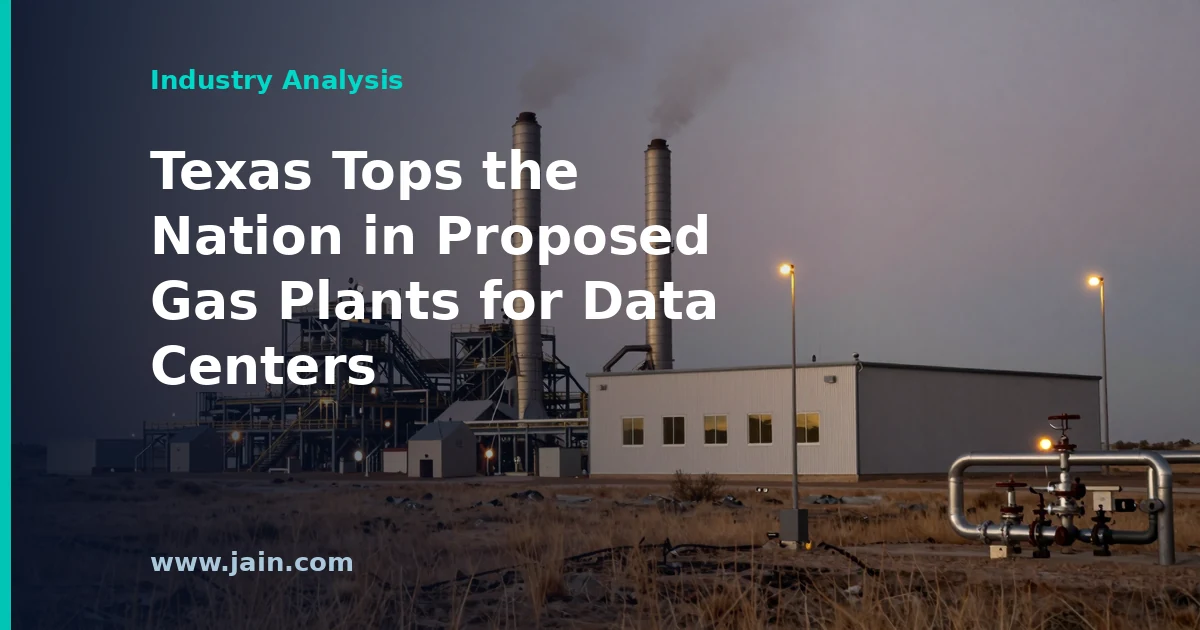
  • Gas Plants as AI’s Bridge Fuel: Researchers Weigh Fast-Build Power for Data Centers

    Gas Plants as AI’s Bridge Fuel: Researchers Weigh Fast-Build Power for Data Centers

    RTO Insider reported on May 24, 2026 that grid researchers are examining the long-term future of natural gas plants built quickly to serve data centers — the generation category that has become the default answer to AI-driven electricity demand across U.S. power markets. The piece frames a question now central to utility and grid-operator planning: what happens to a fleet of fast-build gas plants over the decades after the immediate data-center crunch they were built to solve?

    Executive Summary

    The report, published by RTO Insider — a trade outlet covering regional transmission organizations (RTOs), the entities that run wholesale electricity markets and the high-voltage grid across much of the United States — captures a debate that has moved from the margins to the center of power-sector planning. Data-center developers facing multi-year waits for grid interconnection have increasingly turned to natural gas generation, often sited at or near the data center itself, because gas turbines can be permitted and installed faster than almost any other firm, dispatchable power source at comparable scale.

    That researchers are now asking what becomes of these plants matters because the answer shapes who bears the cost. A gas plant is a decades-long asset being built to serve a demand surge whose duration nobody can guarantee. Whether these units become permanent baseload, transition into backup and peaking roles as cleaner firm power arrives, or end up underused, will determine outcomes for utilities, ratepayers, data-center operators, and the emissions trajectory of the AI build-out. The syndicated version of the article available to us carries only the headline, so the specific researchers, markets, and findings involved are not detailed here — but the question itself is well documented across the industry, and it deserves examination on its own terms.

    Speed to Power Is the Whole Ballgame

    The reason gas keeps winning data-center deals is not ideology or even, primarily, fuel economics — it is time. In several major U.S. markets, connecting a large new load or generator to the grid can take years of interconnection study and transmission upgrades. A hyperscale AI campus that needs hundreds of megawatts cannot wait that long when the competitive race in AI is measured in quarters. Gas turbines, including smaller aeroderivative and reciprocating-engine units, can often be deployed in a fraction of the time, sometimes ‘behind the meter’ — meaning on the customer’s side of the utility connection, serving the facility directly rather than flowing through the shared grid.

    Nuclear cannot be built quickly; new large hydro is essentially unavailable; wind and solar are fast but intermittent, and pairing them with enough storage to run a 24/7 AI facility remains expensive at gigawatt scale. That leaves gas as the pragmatic default — which is precisely why researchers are scrutinizing what the industry is committing itself to by default rather than by design.

    A Bridge Needs a Far Shore

    Calling gas a ‘bridge fuel’ — a transitional energy source used until cleaner firm power scales up — embeds an assumption: that something is on the other side of the bridge. Candidates include advanced nuclear (including small modular reactors), enhanced geothermal, long-duration storage, and gas units retrofitted for carbon capture or hydrogen blending. All are promising; none is deployable today at the pace and price the AI build-out demands. If those technologies mature on schedule, fast-build gas plants can gracefully shift from running constantly to running occasionally, as peakers and reliability backstops. If they do not, the ‘bridge’ quietly becomes the destination, with the associated locked-in emissions and fuel-price exposure.

    The honest answer — and likely part of why researchers are ‘pondering’ rather than concluding — is that both outcomes are live possibilities, and the difference is worth billions of dollars and a meaningful slice of U.S. emissions.

    Who Holds the Asset Risk?

    The economics hinge on who owns the plant and who pays if demand disappoints. When a data-center developer builds its own on-site generation, the stranded-asset risk — the danger of an expensive asset losing its economic purpose before it is paid off — sits largely with a private company that chose it. When a regulated utility builds gas capacity into its rate base to serve forecast data-center load, ordinary ratepayers can end up carrying the cost if AI demand forecasts prove inflated or if a customer leaves. Grid operators and state regulators are actively developing large-load tariffs, minimum-take contracts, and exit fees to allocate that risk more explicitly, and the research attention RTO Insider describes feeds directly into those proceedings.

    Supply chains add another wrinkle: demand for heavy-duty gas turbines has surged worldwide, and lead times for new orders have stretched to several years. That erodes some of gas’s core speed advantage and pushes developers toward smaller, modular units — machines that are, conveniently, also easier to redeploy or run flexibly if the long-term role of these plants shrinks.

    What It Means for the Data-Center Industry

    For data-center operators and their customers, the takeaway is that power strategy is now inseparable from business strategy. Facilities powered by fast-build gas gain schedule certainty today but inherit questions about fuel-cost volatility, future emissions regulation, and the sustainability commitments of the tenants they serve — many large technology companies maintain public carbon-free-energy targets that on-site gas complicates. Operators that pair near-term gas with credible contracts for cleaner firm power, or that site where grid capacity genuinely exists, will have an easier story to tell enterprise customers, regulators, and communities. The infrastructure sector should welcome the scrutiny: a clear-eyed answer to ‘what happens to these plants in 2040?’ is better arrived at before the concrete is poured than after.

    Background

    After roughly two decades of flat U.S. electricity demand, the AI data-center build-out has triggered the fastest load-growth forecasts utilities have issued in a generation, with individual campuses now requesting hundreds of megawatts — and some multi-gigawatt projects proposed. Grid interconnection queues, transmission construction timelines, and generator retirements have collided with that surge, making ‘speed to power’ the defining constraint of the data-center industry. Natural gas, which already supplies the largest share of U.S. electricity generation, has emerged as the default fast answer, spawning a wave of proposed on-site and utility-scale gas projects. RTO Insider, the outlet behind this report, covers the regional transmission organizations and regulatory proceedings where the resulting cost, reliability, and emissions questions are being fought out.

    Source: Researchers Ponder Future of Gas Plants that Quickly Power Data Centers — RTO Insider report, May 24, 2026, on grid researchers’ analysis of fast-build gas generation serving data-center load.

  • Lake Tahoe’s 49,000-Resident Power Scare Signals AI’s Grid Reliability Problem

    Lake Tahoe’s 49,000-Resident Power Scare Signals AI’s Grid Reliability Problem

    A report surfaced via Yahoo Finance on May 23, 2026 says roughly 49,000 residents in the Lake Tahoe area fear losing electric power as data center growth strains regional grids, with experts quoted as seeing a broader electricity crisis ahead. The story frames household reliability — not just wholesale prices or emissions — as the newest casualty of surging computing demand.

    Executive Summary

    The claim at the center of the report is simple and unsettling: ordinary households near Lake Tahoe worry that the lights may go out because large computing facilities are absorbing the region’s available electric capacity. The figure of 49,000 residents puts a concrete community behind what has mostly been an abstract national debate about artificial intelligence and energy.

    Why it matters: for years the data center power conversation played out in interconnection queues, utility rate cases, and investor decks. When it shows up as outage fear in a specific residential community, the politics change. Reliability concerns mobilize regulators, county commissions, and voters far faster than megawatt statistics do — and the industry’s social license to build depends on answering them credibly. The available source is brief, however, and the underlying evidence for both the fear and the reassurances deserves scrutiny, which we take up below.

    When Grid Strain Becomes a Neighborhood Story

    Grid “strain” is shorthand for a resource-adequacy problem: at moments of peak demand, the generation and transmission serving an area may not comfortably cover the load, forcing utilities to curtail service or lean on emergency imports. Data centers change this math because they add large, around-the-clock demand — a single big AI campus can draw on the order of a mid-size city — and because they arrive faster than power plants and transmission lines can be permitted and built.

    What is new in this report is the framing. The affected parties are not industrial ratepayers or grid operators but 49,000 residents of a well-known mountain community. That framing tends to travel: local reliability fears have already reshaped data center siting debates in Northern Virginia, Georgia, and Ireland, producing moratoriums, connection pauses, and stricter tariffs. If Tahoe-area residents formally raise outage concerns with their utility or state regulators, developers in the region should expect the same escalation path.

    The Evidence Question — For Every Side

    Fear of an outage is not the same as a documented outage risk, and a headline is not a reliability study. The fair questions run in every direction. To those raising the alarm: is there a utility resource-adequacy filing, a grid operator assessment, or an outage record that quantifies the risk to these households, or is the fear inferred from regional growth trends? Which specific facilities, and what load, are actually driving it? To utilities and data center developers: what firm capacity backs the new load, what do interconnection studies show for the local system, and can they demonstrate — not merely assert — that residential service will not be degraded?

    The report as available to us is thin, so we cannot verify which claims rest on filings and which on sentiment. That cuts both ways: the concern should not be dismissed as anti-development noise, and the industry’s standard reassurances should not be accepted without the studies to back them. The productive next step for any of the parties is publishing the load numbers and adequacy analyses that would settle the question.

    Who Pays, and Who Adapts

    Beneath the reliability fear sits an economics fight. Serving large new loads requires substations, transmission, and generation, and someone funds them: the developer through special tariffs, or all ratepayers through general rates. Several states have moved toward large-load tariff classes that require data centers to underwrite their own grid impact precisely to prevent the cost-shifting and reliability spillover this story describes. Where such tariffs do not exist, residential customers have a legitimate complaint — and utilities have a regulatory exposure.

    The likely winners in this environment are operators who bring their own answer: on-site generation, long-term power purchase agreements that add new supply rather than absorbing existing capacity, batteries, and demand-response commitments that let a facility shed load during regional peaks. Developers who show up asking a constrained grid to simply stretch further will find approvals slower, tariffs stiffer, and communities — like the one in this report — organized against them.

    Background

    After roughly two decades of flat U.S. electricity demand, load growth has returned sharply, driven by data centers — especially AI training and inference facilities — alongside electrification of transport and industry. Utilities and grid operators across the country have raised resource-adequacy warnings as interconnection requests from large computing loads outpace the construction of new generation and transmission.

    The Lake Tahoe area sits near one of the West’s fast-growing data center corridors in northern Nevada, where large campuses have clustered east of Reno over the past decade. That regional context makes the residents’ concern plausible on its face, but the report available to us does not tie the fear to specific facilities, load figures, or utility studies — which is precisely the evidence this debate now needs.

    Source: 49,000 Lake Tahoe residents fear they’ll lose power as data centers strain grids. Experts see electricity crisis ahead — report published via Yahoo Finance, May 23, 2026, on data center load growth and household grid reliability in the Lake Tahoe region.

  • Google Pairs $15B Missouri Data Center Push With Ratepayer Protections

    Google Pairs $15B Missouri Data Center Push With Ratepayer Protections

    Google has announced a $15 billion data center expansion in Missouri, and — notably — the company is pairing the buildout with explicit power commitments and protections for utility ratepayers, according to a May 22, 2026 report by POWER Magazine. The pledge positions one of the world’s largest cloud and AI operators as a partner in managing the grid impact of its own growth, rather than simply a very large new electricity customer.

    Executive Summary

    The headline number is striking on its own: $15 billion is a top-tier hyperscale commitment, the kind of figure that historically flowed to established data center markets like Northern Virginia or central Ohio. Directing it to Missouri continues a broader migration of AI-era infrastructure toward interior states with available land, power, and political goodwill.

    But the more consequential part of the announcement may be the framing. By foregrounding power commitments and ratepayer protections, Google is acknowledging the central tension of the AI infrastructure boom: data centers are now large enough to move electricity prices and strain grid planning, and communities have noticed. Structuring a megaproject so that existing utility customers are shielded from its costs — at least as pledged — is emerging as the price of admission for hyperscale development, and this deal reads as a template for that era.

    Ratepayer Protection Is Becoming the Price of Admission

    For most of the data center industry’s history, electricity was a procurement detail. That changed as AI training and inference pushed individual campuses toward the power draw of small cities. Utilities must build generation and transmission to serve that load, and under traditional regulated-utility economics, those costs can be spread across all customers — meaning households could subsidize infrastructure built primarily for a trillion-dollar technology company. Regulators, consumer advocates, and legislatures in several states have pushed back, demanding special tariff classes, minimum-payment contracts, and cost-allocation guarantees for large loads.

    Google publicly committing to ratepayer protections up front, rather than having them imposed in a contested rate case, is therefore strategically significant. It shortens the approval path, lowers political risk, and sets a benchmark competitors will likely be measured against. The caveat: a headline pledge is not a tariff. What ‘ratepayer protection’ means in practice depends on binding terms filed with regulators, and the report available to us does not detail those terms.

    Why Missouri, and Why Now

    Missouri is not a legacy data center hub, and that is increasingly the point. The traditional markets are constrained — grid interconnection queues stretch for years, land prices have soared, and local opposition has hardened. Interior states offer buildable land, room on the transmission system, fiber routes crossing the middle of the country, and governments eager for capital investment and construction activity. A $15 billion commitment would instantly place Missouri among the more significant AI infrastructure destinations in the region.

    For the state, the bargain is jobs, tax base, and relevance in the AI economy, weighed against long-lived demands on power and, typically, water for cooling. The durability of that bargain depends heavily on the details this announcement previews but does not fully disclose: how much generation gets built, who owns it, and how firmly the cost shield for existing customers is written.

    The Economics of Pledging Power, Not Just Buying It

    An explicit ‘power commitment’ from a hyperscaler can take several forms: funding or contracting for new generation, paying for transmission upgrades, guaranteeing minimum offtake so utilities can finance construction without stranding costs on other customers, or bringing dedicated supply behind the meter. Each shifts risk from the public to the developer in a different way, and each has different implications for how fast capacity actually arrives. Hyperscalers have learned that power availability — not chips, not concrete — is now the binding constraint on AI growth, so paying to expand supply is self-interested as much as civic-minded.

    For the wider industry, deals like this raise the bar. Smaller operators and colocation providers cannot underwrite generation the way an Alphabet can, which could bifurcate the market: hyperscalers who bring their own power solutions, and everyone else competing for whatever grid headroom remains. Utilities, meanwhile, gain a rare growth story — if regulators can verify that growth genuinely pays its own way.

    Background

    Google has spent more than two decades building one of the world’s largest data center footprints, and the generative-AI boom that began in late 2022 pushed its infrastructure spending — like that of Microsoft, Amazon, and Meta — to unprecedented levels. As easy grid capacity in traditional hubs ran short, hyperscalers fanned out across interior states, turning electricity availability into the industry’s defining constraint.

    That expansion has collided with utility economics. In multiple states, regulators and consumer groups have questioned whether households end up subsidizing grid buildouts made for tech giants, prompting special large-load tariffs and contract protections. Google’s Missouri announcement lands squarely in that debate, presenting itself as the cooperative model: hyperscale growth that pledges to pay its own way.

    Source: Google Pledges Power, Ratepayer Protections in $15B Missouri Data Center Expansion — POWER Magazine’s May 22, 2026 report on Google’s Missouri investment announcement.

  • Data Center Slowdown Eases Summer Grid Risk — But the Reprieve Looks Temporary

    Data Center Slowdown Eases Summer Grid Risk — But the Reprieve Looks Temporary

    E&E News by POLITICO reported on May 21, 2026, that a slowdown in data center buildout is easing reliability risks for the U.S. electric grid heading into the summer of 2026 — the season when air-conditioning load pushes power systems closest to their limits. The report’s headline carries a caveat as important as its good news: “trouble looms.”

    In plain terms: fewer new server farms plugging in right now means less new demand competing for scarce megawatts this summer, but the underlying collision between surging electricity demand and a slow-moving power supply chain has not been resolved — only postponed.

    Executive Summary

    The report frames a rare piece of breathing room for grid planners. For the past several years, utilities and reliability watchdogs have warned that data centers — especially those built for artificial intelligence workloads — were adding demand to the grid faster than new power plants and transmission lines could be built. A pause or deceleration in that buildout, as E&E News describes, mechanically reduces the risk that supply falls short of demand during summer heat waves.

    Why it matters: summer reliability is the acid test of the U.S. power system. When a regional grid runs short, the consequences are emergency alerts, rolling blackouts, and price spikes that land on every ratepayer, not just data center customers. A slower buildout shifts near-term risk down without requiring a single new power plant.

    The equally important message is the second half of the headline. A construction slowdown changes the timing of demand, not the trajectory. The structural drivers — AI computing growth, electrification, aging generators retiring, and multi-year waits to connect new supply — remain in place, which is why the report characterizes the relief as temporary rather than a turning point.

    Why Slower Buildout Translates Directly Into Grid Relief

    Grid reliability is a math problem: expected peak demand versus available supply, with a safety margin on top. Data centers are unusual demand because they arrive in very large blocks — a single campus can require as much power as a small city — and because they run around the clock, including during the late-afternoon summer peak when the grid is most stressed. When projects slip, pause, or get canceled, the demand side of that equation drops immediately, while the supply side (power plants and transmission already under construction) keeps arriving on schedule. That asymmetry is why even a modest deceleration in data center construction shows up quickly in seasonal reliability outlooks.

    For grid operators, the near-term effect is wider reserve margins — the buffer between what the system can generate and what customers demand on the hottest day. Wider margins mean fewer emergency conservation calls and less reliance on aging plants being pushed past their planned retirement dates to keep the lights on.

    Why the Reprieve Is Temporary, Not a Trend Change

    The forces that created the crunch have not gone away. AI training and inference workloads continue to grow, and hyperscale operators have signaled sustained infrastructure investment even as individual projects get re-timed. Meanwhile, the supply side moves on decade-scale clocks: new gas turbines face multi-year equipment backlogs, transmission lines routinely take seven to ten years from planning to energization, and interconnection queues — the waiting lines where new power plants apply to plug into the grid — remain congested across most regions. A demand slowdown measured in quarters cannot offset a supply problem measured in decades.

    There is also a rebound dynamic worth watching. If the slowdown reflects developers pausing to renegotiate power availability, tariffs on equipment, or financing terms rather than abandoning projects, the deferred demand returns — potentially in a more concentrated wave. Grid planners who treat this summer’s relief as a new baseline risk being caught out when re-timed projects come back into the queue.

    Winners, Losers, and the Signal to Watch

    In the near term, ratepayers and grid operators benefit: less emergency procurement, less upward pressure on capacity prices, and a summer with more margin for error. Utilities that raced to justify new generation on the back of data center forecasts face harder questions — regulators were already probing how much projected load is real versus speculative, and a visible slowdown strengthens the skeptics’ hand. For data center developers themselves, a cooler market has a silver lining: sites with secured power become more valuable relative to speculative announcements, rewarding operators who did the unglamorous work of locking in interconnection and substation capacity early.

    The signal to watch is whether the slowdown shows up in canceled interconnection requests (a genuine demand reduction) or merely in slower construction starts (a deferral). The first would meaningfully rewrite load forecasts; the second only reschedules the crunch that reliability authorities have been warning about.

    Background

    Since the generative-AI boom began in late 2022, forecasts of U.S. electricity demand have swung sharply upward after roughly two decades of flat consumption, driven largely by planned data center campuses alongside manufacturing growth and electrification. Reliability authorities and regional grid operators have repeatedly flagged the resulting squeeze: enormous new loads seeking connection while older coal and gas plants retire and replacement generation and transmission crawl through permitting and interconnection processes.

    That mismatch made every seasonal reliability assessment a referendum on data center growth, and it made the pace of buildout — not just its ultimate size — a first-order variable for grid planners. The May 2026 E&E News report lands in that context: the first widely noted moment when the demand side of the equation, rather than the supply side, moved in the grid’s favor.

    Source: Data center slowdown eases risks to summer grid — but trouble looms — E&E News by POLITICO report, May 21, 2026, on how decelerating data center construction is easing U.S. summer grid reliability risk.