Companies want to plug so many new data centers into the Texas power grid that their combined requests add up to several times more electricity than the whole state has ever used at one moment. Data centers are the giant computer warehouses that run artificial intelligence.
The governor has ordered a check of every data center waiting in line. The organization that runs the state’s grid has put its review on hold while that happens.
Texas sold itself as the fastest place to get power. For now, it is a waiting line.
Texas Gov. Greg Abbott has called for an audit of all data centers in the Electric Reliability Council of Texas (ERCOT) interconnection queue, the list of projects waiting for permission and studies to connect to the state’s main power grid. Utility Dive reported on August 5, 2026 that the audit led ERCOT to delay its Batch Zero review process, and that the queue now holds an estimated 474 gigawatts (GW) of interconnection requests.
Executive Summary
The state that built its data center pitch on fast access to power has stopped processing the largest group of new requests it has received. The governor’s audit covers every data center in ERCOT’s queue, and ERCOT’s Batch Zero review, the process that would move those large loads toward connection, has been pushed back while the audit proceeds.
The figure that frames the decision is 474 GW. That is far more than ERCOT has ever served at peak demand, which means the queue cannot describe what will actually be built. It describes what developers hope to build, often with overlapping requests for the same eventual capacity. An audit is the state’s way of forcing that list to reflect reality before engineers spend time studying it.
For companies planning AI campuses, the practical consequence is timing. A Texas site that looked like a fast route to energized capacity now sits behind an audit whose outcome will determine who moves forward, and in what order.
A Queue Larger Than the Grid It Wants to Join
An interconnection request is an application to connect a large new user of electricity, or a new power plant, to the transmission grid. Filing one is relatively inexpensive compared with building the project, so developers often file early and in several places at once, keeping options open on land, tenants and financing. The result is a queue that measures ambition rather than construction.
At an estimated 474 GW, ERCOT’s queue is several times the most electricity the Texas grid has ever delivered at a single moment. No grid could add that much load on any planning horizon that matters to a data center developer, so most of those requests will not be built as filed. Some are duplicates of the same project at different sites. Some are placeholders for customers who have not signed. Some are real and ready. From the grid operator’s side, those categories look identical until someone checks.
That is the problem an audit addresses. Studying every request at face value would tie up transmission planners on projects that will never exist, and it would distort the models that decide what new lines and substations Texas needs.
Why Speed-to-Power Has Become a Waiting Line
Speed-to-power, meaning how quickly a site can actually receive electricity from the grid, has become the deciding factor in where AI data centers go. Chips, buildings and cooling can be bought on predictable schedules. Grid capacity cannot. Texas won a large share of recent projects partly because its market structure and its largely self-contained grid were seen as moving faster than regulated utility territories elsewhere.
Batch Zero was ERCOT’s first grouped review of large-load requests. A batch process is efficient because it studies many projects together, but that design also means a delay to the batch is a delay for every project inside it. When the governor’s audit prompted ERCOT to hold the review, each developer in that group lost its place on the calendar, regardless of how far advanced its own project was.
The people who feel that first are developers holding land, equipment orders and tenant negotiations timed to a Texas energization date; the AI companies and cloud providers who planned to lease that capacity; and the lenders whose construction financing assumes power arrives on schedule. None of them can hedge a grid review. A site that is otherwise ready produces no revenue until it is connected.
What an Audit Can and Cannot Fix
An audit can shrink the queue to projects with real backing, which would make the eventual studies faster and more accurate. Done well, it rewards developers who have secured land, financing and customers, and it clears space that speculative requests were occupying. That would be a better outcome for serious projects than the status quo, even if it costs them time now.
An audit cannot produce generation or transmission. Even a heavily trimmed queue may still exceed what the grid can add quickly, so the underlying constraint remains physical. It also carries execution risk: if the criteria are unclear or change during the process, credible projects could be delayed alongside speculative ones, and developers may respond by pursuing on-site generation or by filing in other markets instead.
A Test Case Beyond Texas
Grid operators across the United States face the same pattern: large-load requests arriving faster than they can be studied, with no reliable way to tell firm demand from optionality. Texas is the first to make the screening step this visible, with a state-level audit sitting ahead of the grid operator’s review.
How it goes will be watched closely. If the audit produces a credible, smaller queue and Batch Zero resumes on a clear schedule, other regions may copy the approach. If it drags on, the lesson for AI infrastructure planners will be that fast-power markets can slow abruptly, and that grid access needs to be treated as a risk on every site plan, not a given.
Background
ERCOT manages the grid that serves most of Texas and operates under the oversight of the Public Utility Commission of Texas. Because its network is largely isolated from the rest of the country’s grids, ERCOT has limited ability to import power and must plan new generation and transmission largely within the state.
Over the past several years Texas attracted a large share of new data center development, including AI-focused campuses, on the strength of available land, a competitive power market and a reputation for connecting large users quickly. The state legislature responded in 2025 with Senate Bill 6, which set new rules for large electricity users, including disclosure of duplicate interconnection requests and provisions for curtailing large loads during grid emergencies. ERCOT’s Batch Zero process was designed to handle the resulting wave of large-load requests in a coordinated group.
Georgia’s biggest power company is building more than 1,000 miles of new power lines, longer than the drive from Atlanta to New York City. About 80 percent of the new electricity it plans to add is expected to go to data centers, the giant warehouses of computers that run artificial intelligence.
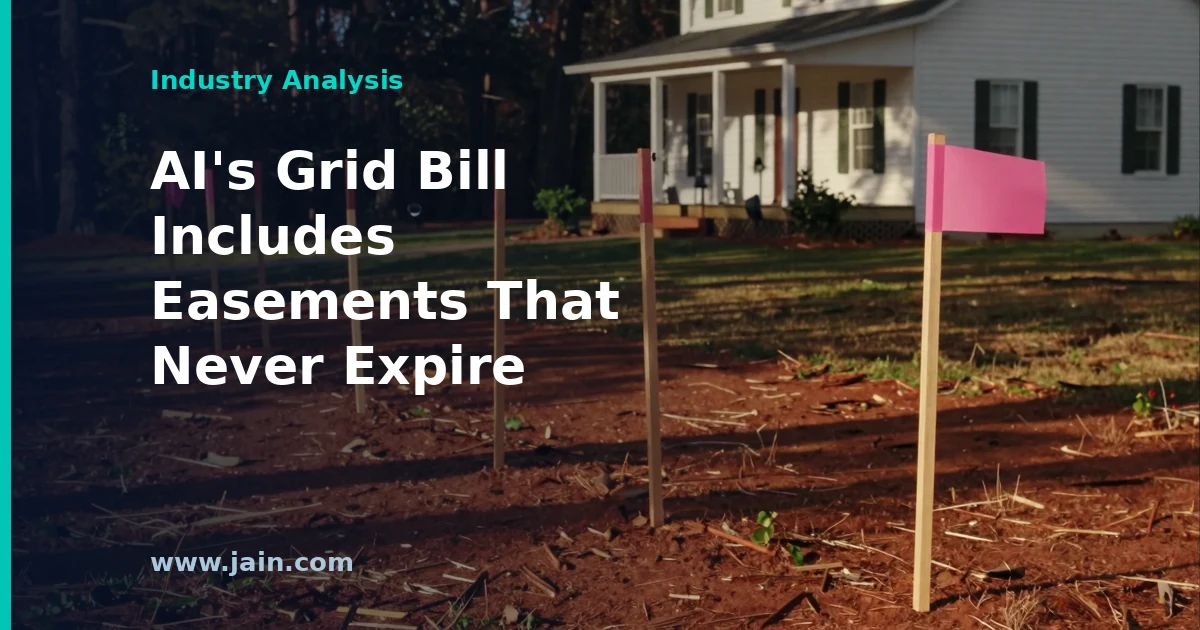
The lines must cross private land: more than 330 properties, including nearly 30 homes that will be torn down. The company starts its offers a quarter above a property’s appraised value and says it rarely forces a sale. But the right to run lines across land usually lasts forever, even after the owner sells.
Fortune reported on July 26, 2026 that Georgia Power is contacting property owners along a 35-mile route through Fayette, Heard, Fulton and Coweta counties for the Ashley Park-Wansley Transmission Project, a new line between its Ashley Park Substation and its plant at Wansley. It is one of five projects that together make up more than 1,000 miles of new transmission in the utility’s plan. That plan spans more than 330 parcels of land and requires nearly 30 residential properties to be leveled.
Georgia Power says land acquisition and easement negotiations are close to complete, with construction as early as 2027. It opens offers at 125% of appraised value and says eminent domain is used in fewer than 1% of its land transactions: five times in the past year, none on homes. The utility disputes describing the line as a data center project. The generation plan it agreed with the Georgia Public Service Commission in December 2025 says about 80% of nearly 10,000 new megawatts is expected to power data centers.
Executive Summary
Georgia Power is acquiring land and easements for one of five transmission projects that together add more than 1,000 miles of high-voltage lines to Georgia’s grid. Transmission lines are the long-distance wires that move bulk electricity from power plants to local substations. The buildout accompanies roughly 10 gigawatts of new generation that state regulators certified in December 2025, and about 80% of that generation is expected to power data centers.
The story matters because it moves the cost of AI-era grid expansion out of abstract rate cases and onto specific parcels of land. Georgia Power argues that large data center customers will pay more, which it projects will cut residential bills by about $102 a year from 2029. That argument does not address the right-of-way. Nearly 30 homes are to be leveled, and permanent easements will cover hundreds of parcels.
How utilities conduct those negotiations shapes how fast AI infrastructure can be powered and on what terms. So does how often they fall back on eminent domain, and how publicly they justify it.
The Rate Math Counts Bills, Not Easements
Georgia Power frames its public case for the buildout around electricity bills. The utility projects that the five transmission projects will save residential customers about $102 a year each starting in 2029. The mechanism is that large-load customers, meaning very big single users such as data centers, are required to pay more. Media Relations Manager Meredith Stone said those funds put “downward pressure on the rates for our residential customers.” That is a claim about tariffs, the prices customers pay, and it is the number the utility leads with.
The land side of the same projects works differently. Delivering power over more than 1,000 miles of new line means securing rights across more than 330 parcels and leveling nearly 30 homes. Georgia Power says it opens negotiations at 125% of appraised value. Where owners grant an easement rather than sell outright, the utility gains a permanent right to use a strip of their land. David Needham, a Georgia attorney who has represented landowners in eminent domain cases for more than a decade, said those rights stay attached to the property after it is sold. They can prohibit permanent structures beneath the lines and can reserve broad rights for the utility to install additional infrastructure.
The per-customer savings figure does not capture that cost. A bill saving is spread across the whole residential customer base and recurs every year. An easement is priced once, at the negotiating table, and its restrictions are carried indefinitely by whoever owns that particular piece of ground. For utilities and data center developers, the consequence is that AI-driven grid expansion depends on hundreds of individual land deals, not only on the generation plan regulators certified. Those deals determine how fast the expansion proceeds and how much public acceptance it wins.
Condemnation Is Rare; the Room to Say No Is Narrow
On the record, condemnation is uncommon. Georgia Power says eminent domain is a last resort that occurs in fewer than 1% of its land transactions. It says the power was used five times in the past year, none involving residential homes. Nothing disclosed contradicts those figures. The case that drew the most public attention also ended in a deal. It became widely known through social media posts by Ansley Brown and involved the office of U.S. Rep. Brian Jack, and Georgia Power said it reached an agreement with the family, without disclosing the terms.
Residents’ description of the process is also consistent with how it works. “We don’t have a choice in this,” Brown said in one video. Once a route is chosen, a landowner’s options are a full sale or an easement, and keeping the line off the property is not one of them. Condemnation stands behind the negotiation as the alternative if talks fail. Needham called the resulting easement agreements “very much tilted in favor of the power company,” while noting that “there is compensation offered.” Both accounts can be accurate: forced takings are rare, and the bargaining position is uneven.
Who the Line Serves Depends on Which Number You Read
Georgia Power says it is “not in the data center business.” It says the Ashley Park-Wansley line will serve the broader needs of the communities and customers who rely on reliable service. CBS reported that 70% to 80% of the power from this particular line would go to AI data centers. A Georgia Power representative was unable to confirm that estimate.
At the portfolio level the question is less open. In December 2025 the Public Service Commission and Georgia Power agreed to certify nearly 10,000 megawatts of new generation, and the agreement said approximately 80% of it is expected to power data centers. Transmission lines are shared assets, and the same wires feed homes, hospitals and server halls. The utility’s framing is therefore defensible for any single line. Still, the regulator-approved document says the new demand justifying this much new capacity comes mostly from data centers.
The distinction matters because eminent domain rests on public use. The more visibly new corridors are tied to a small number of very large customers, the more utilities and regulators have to show the broader benefit. The $102 savings projection plays exactly that role.
Georgia’s Welcome for Data Centers Is Getting Conditional
Georgia hosts more than 200 operational data centers, nearly 170 of them in Atlanta, including facilities owned by Microsoft, Amazon and Google. A sales and use tax exemption dating to 2018 waives 100% of state and local sales and use taxes on equipment purchases for projects that meet a minimum investment of $100 million to $250 million. In 2024 lawmakers voted to suspend new exemptions, and Governor Brian Kemp vetoed the measure. A December 2025 evaluation by the University of Georgia’s Carl Vinson Institute of Government projected the exemption’s net fiscal impact at roughly negative $574 million.
Georgia is now scrutinizing its tax incentives, charging large loads more, and facing land disputes in public view. The pattern for operators is that the state remains open to data centers but is pricing more of their wider costs explicitly. “The policy direction has clearly shifted,” said J. Thomas Perdue, a policy analyst at the Georgia Public Policy Foundation. For developers weighing sites, power in Georgia increasingly comes with public questions about who bears the cost of delivering it.
Background
Georgia Power is the state’s largest electric utility and a subsidiary of Southern Company. It plans its generation and transmission through an Integrated Resource Plan, a long-range forecast of demand and the resources needed to meet it. The plan requires approval from the Georgia Public Service Commission, the elected body that regulates the state’s utilities. The commission approved the 2025 plan, which cited continued power needs driven by AI investment. In December 2025 it certified nearly 10,000 megawatts of new generation. It also approved a formal process to evaluate grid-enhancing technologies that can squeeze more capacity from existing lines.
Georgia has courted data centers since 2018 through sales and use tax exemptions and now hosts more than 200 operating facilities, most of them around Atlanta. Legislative support has cooled: a 2024 vote to suspend new exemptions was vetoed, and a 2025 state-commissioned evaluation found the incentive to be a net fiscal cost. Eminent domain, the power to take private property for public use with just compensation, is available to utilities building infrastructure. Georgia Power says it treats it as a last resort.
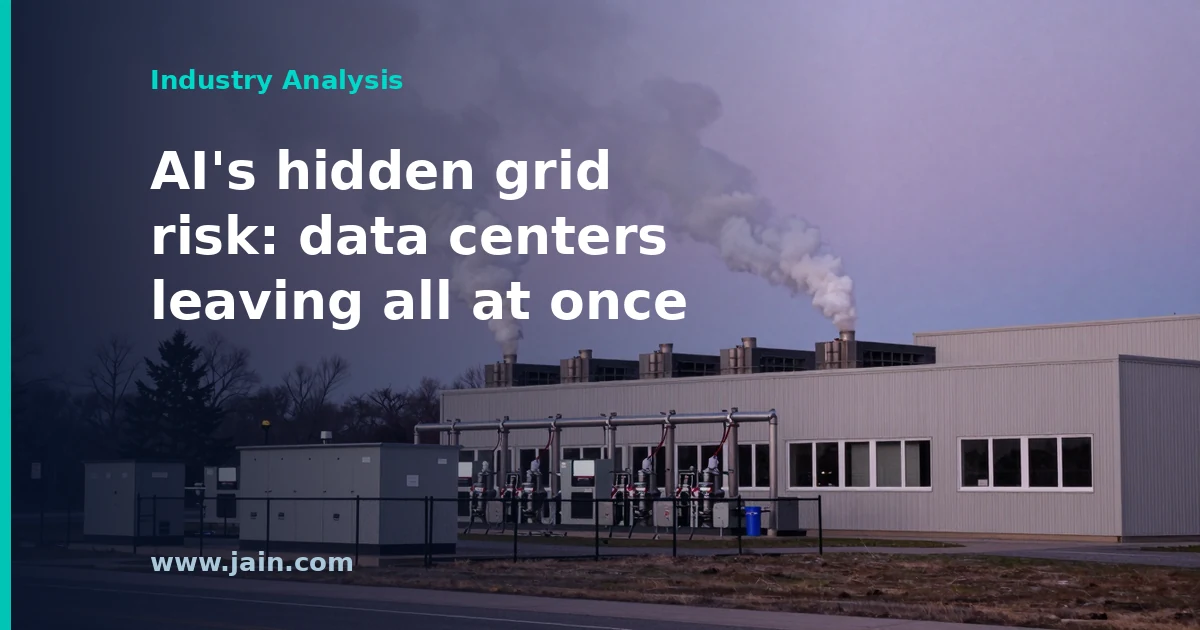
When one power line failed near Washington, DC, a wave of data centers (the warehouse-sized buildings full of computers that run the internet and AI) unplugged from the power grid within seconds and switched to their own backup power.
Together they had been using about 3% of the electricity on a grid that serves 67 million people. Losing that much demand at once threw the system off balance. Lights flickered from Virginia to Chicago, and it took more than 10 minutes to settle.
It was twice as big as a similar scare in 2024, and data centers keep multiplying. The proposed fix is to make them stay connected through brief hiccups, often by using giant batteries.
A single power line failure outside Washington, DC, this past week caused a wave of Northern Virginia data centers to switch to backup power at nearly the same moment, TechCrunch reported. According to PJM data, about 3.1 gigawatts of demand disappeared from the PJM Interconnection grid in roughly 30 seconds. After a partial recovery, more facilities dropped off, and the grid’s surplus peaked at 3.49 gigawatts. Stabilizing took another 11 minutes. A line fault like this one normally takes only a few seconds to recover from.
According to Reuters, the disconnected load was about 3% of PJM’s demand at the time. Sensor data from the startup Ting Labs showed voltage spiking across the grid from Northern Virginia to Chicago. There was no blackout, but lights flickered across the region. The event was roughly twice the size of a 2024 PJM incident in which 60 data centers disconnected at once and removed 1.5 gigawatts.
Executive Summary
Most discussion of data centers and the power grid asks whether there is enough electricity to feed them. This event shows the opposite failure: a cluster of very large customers that all leave the grid at once when they sense trouble. Each facility’s protective logic behaved as designed and switched to on-site backup power when voltage dipped. Together, those individually sensible decisions turned a routine line fault into a regional disturbance that lasted more than ten minutes.
Two remedies are being proposed. The first is coordination. Ali Zain Banatwala, a senior market models specialist at the Independent Electricity System Operator, argues that neighboring loads need a way to disconnect and reconnect one after another rather than all together. The second is ride-through, which means keeping facilities connected through brief disturbances. Ricardo de Azevedo, CTO of ON.Energy, whose company sells campus-scale battery systems built for that purpose, said ERCOT, the Texas grid operator, will require large loads to ride through disruptions.
The stakes rise with the load. Synapse Energy Economics put data centers at about 6% of PJM’s load in 2024 and projects 24% by 2040. The potential size of a synchronized dropout grows with that share unless the facilities are built to behave differently.
AI’s Other Grid Problem Is Load That Leaves
An electric grid has to keep supply and demand in near-perfect balance from moment to moment. When a line goes down, the grid normally absorbs the loss and rebalances within seconds. This time, the voltage dip from the fault reached many data centers sitting close together. Their protection systems are designed to make split-second decisions to safeguard the computers inside, and they moved the facilities onto backup power within a few seconds of each other. The grid lost about 3.1 gigawatts of demand in roughly 30 seconds. Generators were suddenly producing more electricity than customers were using, and voltage jumped.
The second wave is the detail grid planners should focus on. PJM’s grid appeared to recover partway before more loads dropped off, pushing the surplus to a peak of 3.49 gigawatts. In that pattern, the disturbance triggers disconnections, and the disconnections deepen the disturbance. That feedback is what stretched a seconds-long event into an 11-minute one. A gigawatt is roughly the output of a large power plant. In effect, the grid had to absorb the sudden departure of several power plants’ worth of customers.
That is why the grid risk from the data center buildout is not only a question of supply. Operators are used to planning around the sudden loss of a large generator. Clustered data centers create a mirror-image contingency: a large block of customers lost all at once because of a single triggering event. Everyone on the grid is exposed to that. Households saw flickering lights, generators must ramp down fast, and the operator must hold capability in reserve for a contingency that grows as data center load grows.
Concentration Turns a Local Fault Into a Regional Event
Northern Virginia has the highest concentration of data centers in the world. That density is what made the disconnection synchronized, because one voltage dip reached many facilities almost at once. The effect traveled well beyond Virginia. Ting Labs runs a sensor network through household electrical outlets, and it recorded the voltage spike as far away as Chicago. PJM covers the territory from New Jersey to Illinois, serves 67 million customers, and is the largest grid operator in the United States.
The trend line gives the event its weight. In 2024, 60 data centers disconnected together and removed 1.5 gigawatts. This time the figure was about 3.1 gigawatts, roughly double. Data centers were about 6% of PJM’s load then, and Synapse Energy Economics projects 24% by 2040. Two events are not a statistical series, and nothing here shows the next one will double again. The arithmetic still matters: if protective behavior stays the same while the share of load it governs roughly quadruples, the ceiling on a synchronized dropout rises with it.
De Azevedo called the event “the canary in the coal mine” and said incidents involving large loads are “happening more and more.” That claim comes from a vendor of the remedy. The two PJM incidents, with their measured sizes, are the documented reference points.
Two Fixes: Choreograph the Exit, or Don’t Leave
The first approach accepts that data centers will disconnect but asks them to do it in order. “We need to figure a way for these loads that are located next to each other to sequentially either disconnect or reconnect,” Banatwala said. Staggered behavior would let grid operators write procedures in advance instead of reacting to a cliff. The hard part is coordination. The facilities belong to different owners, each has settings tuned to protect its own uptime, and they would need shared thresholds or a shared signal.
The second approach is ride-through, meaning the facility stays connected through brief disturbances. ON.Energy’s version is an uninterruptible power supply, the battery backup that keeps servers running through outages, sized for an entire campus, including chillers and other equipment as well as servers. Batteries and power-conversion equipment sit between the grid and the facility, so the grid sees one steady, predictable load. The company says the system:
charges its batteries when the grid has surplus power;
discharges to the servers when supply dips;
follows the grid within milliseconds;
smooths the swings of AI training workloads that ramp power up and down.
It says it is installing 3 gigawatts of these systems across four campuses.
Those claims are specific enough to test. The test is whether a campus behind such a system stays connected and grid-friendly during a real fault like this one. The economics matter too. Sizing batteries and power electronics for a whole campus adds capital cost that the developer bears, while most of the benefit goes to the grid. Mandates may be what shifts that calculation, such as ERCOT’s ride-through requirement, which de Azevedo described.
What Developers and Buyers Should Expect
From a tenant’s point of view, the July event worked: the data centers switched to backup, and the computers presumably kept running. The cost of that decision fell on the grid and everyone else connected to it. This asymmetry is what makes the event a policy question rather than just an engineering one. Individual facilities have little reason to change behavior that protects their own uptime unless interconnection rules require it.
For developers, the likely direction is toward grid connection terms that specify how a facility behaves during a disturbance, not just how much power it draws. ERCOT is moving that way, according to de Azevedo. PJM, where both incidents occurred, is where the question is now most visible. For suppliers of storage, power conversion and switchgear, the grid-facing layer of a campus becomes part of the design requirement. For colocation buyers, it is reasonable to ask providers how their facilities respond to voltage dips and whether ride-through requirements could change facility design or pricing.
Background
PJM Interconnection is a regional transmission organization, the independent body that runs the high-voltage grid and wholesale electricity market for an area stretching from New Jersey to Illinois. It serves 67 million customers and is the largest grid operator in the United States. Its territory includes Northern Virginia, which has the highest concentration of data centers in the world.
Data centers are built never to lose power. When grid voltage wavers, they switch to on-site backup, such as uninterruptible power supplies and generators, in a split second. That design protects the computers inside. When many facilities share the same stretch of grid, however, it also means they can react to the same disturbance at the same moment. PJM saw this in 2024, when 60 data centers disconnected simultaneously, and saw it again at twice the scale this July. ERCOT, the operator of most of Texas’s grid, is among the grid managers moving to require large loads to ride through disturbances.
The organization that runs the electric grid for 67 million people across 13 states, including Pennsylvania, held its auction to line up power plants for 2028 and 2029. The price hit the maximum allowed, again. Even at that price, it could not secure as much power as it wanted.
Data centers, giant buildings full of computers, are one big reason demand is climbing fast. A Pennsylvania consumer advocate says higher power costs already add $220 to $320 a year to a typical household’s bill. Paying top dollar is not fixing it, because new power plants cannot be built and connected fast enough.
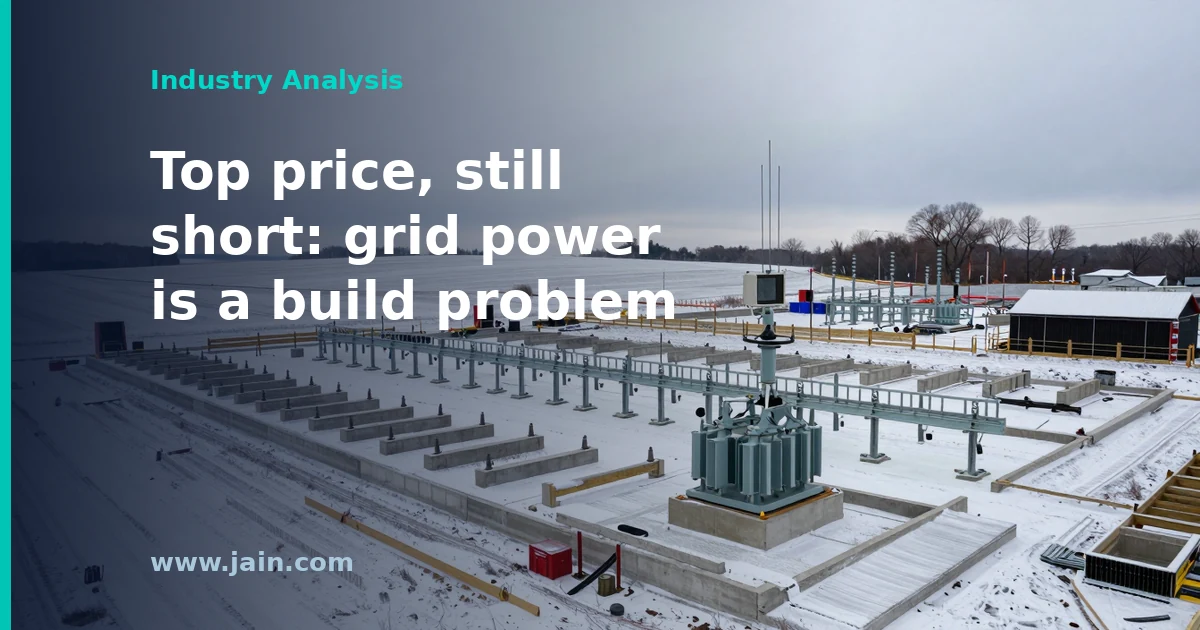
PJM Interconnection, the Valley Forge, Pennsylvania-based nonprofit that operates the largest electricity grid in the United States, announced on July 14, 2026 that its latest capacity auction cleared at $325 per megawatt-day for the 2028-2029 delivery year. That is the maximum allowed under a price cap first negotiated by Pennsylvania Governor Josh Shapiro’s administration after the 2024 auction set a record of $269.92, and later extended at the request of PJM-state governors and the Trump administration. The Pennsylvania Capital-Star reported that the auction also fell 6,831 megawatts short of PJM’s capacity goal, a larger deficit than in last year’s auction.
PJM President and CEO David Mills said the results show “demand for electricity continues to grow faster than electricity supply.” PJM’s peak demand forecast has risen by 66,000 megawatts through 2036, driven by retiring fossil fuel plants, electrification of transportation and industry, and proposed data center development.
Executive Summary
PJM’s capacity auction, the mechanism it uses to pay power plants to be available on the hottest and coldest days of the year, hit its price ceiling again. At $325 per megawatt-day, the 13-state grid still came up 6,831 megawatts short of its target. The cap will also apply to the next auction, scheduled for December and covering 2030 and 2031.
This matters beyond the price. When an auction clears at its maximum and still falls short, the shortfall shows how much supply the highest permitted price could not attract. Consumer advocates and the generators’ own trade association disagree on a lot, but both point to the same near-term obstacle: getting new plants built and connected to the grid. The main limit on power for data centers in the largest US grid is construction and interconnection, not willingness to pay.
For households, the cost is already visible. Pennsylvania’s former consumer advocate estimates the last two auctions added about $16 billion in reliability costs, and $220 to $320 a year to the average Pennsylvania residential bill.
At the Ceiling, the Price Signal Runs Out of Room
A capacity auction is supposed to work like any market. If the grid needs more standby power, the price rises until enough generators commit to being available. The price is quoted per megawatt-day, the payment for one megawatt of capacity held ready for one day. In this auction that mechanism hit its limit. The clearing price of $325 is the cap itself, and even at that price PJM ended up 6,831 megawatts below its capacity goal, a wider gap than last year’s.
This is the key point for anyone planning around PJM power. A market that clears below its cap tells you what supply costs. A market that clears at its cap and still comes up short only tells you that the maximum permitted price was not enough. Two years ago the record was $269.92. Prices are now pinned at the ceiling, and the ceiling has been extended through the December auction for 2030 and 2031. Patrick Cicero, the former Pennsylvania consumer advocate now with the Pennsylvania Utility Law Project, described what that looks like: “These are flat prices that are going to remain high. It’s not necessarily another spike, but it’s really, really high prices remaining.”
Why the Constraint Is Construction, Not Capital
Robert Routh of the Natural Resources Defense Council blames data center load for the price pressure, and Todd Snitchler of the Electric Power Supply Association, which represents competitive generators, defends the price as a healthy investment signal. The two still converge on where the bottleneck sits. Routh said a lack of money is not among the problems: “Tech companies, data center customers that have a need for power have deep pockets. Any power plant that can get built these days should have no problem finding buyers and arranging financing.” He named the real obstacles as supply chain delays, long construction timelines, and siting and permitting hurdles. Snitchler said “new supply is coming; the issue now is to address getting it connected to the system as quickly as possible.”
That connection step is PJM’s responsibility. The grid operator vets proposed power plants and transmission lines before approving them to connect, and it has faced intense criticism for a years-long backlog of projects waiting in that line, often called the interconnection queue. Some projects dropped out while they waited. PJM says it has made significant progress by prioritizing shovel-ready projects.
There is one honest caveat. Because the cap is binding, this auction cannot show how much supply an uncapped price might have drawn in, and EPSA’s argument that years of record-low prices discouraged investment deserves weight. Still, even the generators’ trade group names connection rather than compensation as the near-term limit. For data center developers, the implication is plain: a higher bid does not produce a megawatt that has not been built. The scarce resources are deliverable, connected capacity and the time it takes to create it.
Who Carries the Cost, and the Proposal to Separate It
The link between auction prices and retail bills is indirect, but it is real. Cicero said the last two auctions added about $16 billion to the cost of ensuring reliability. Some Pennsylvania utilities have raised default rates, the rate paid by customers who do not shop for an electricity supplier, by up to 20%. He put the added cost to the average Pennsylvania residential customer at $220 to $320 per year.
The policy response under discussion is a separate auction, sought by PJM-state governors and the Trump administration, in which data centers and other large-load customers would buy long-term power commitments that fund new capacity. Routh described it as a matchmaking venue to build new supply “without raising prices for everyone else.” By his own account, though, that process faces the same supply chain, timeline and permitting hurdles as everything else. It could change who pays for new generation. On its own, it does not shorten the time it takes to build and connect that generation, which is what closes a 6,831-megawatt gap.
Weighing the Competing Explanations
Each camp’s framing captures part of the picture. NRDC’s Routh attributes the pressure to data centers directly: “Data center load growth is degrading grid reliability, and it’s raising prices to the Governor Shapiro-negotiated cap.” PJM’s 66,000-megawatt forecast increase through 2036, nearly 80 times the output of the Three Mile Island nuclear plant, bundles three drivers into one number: retiring fossil plants, electrification, and proposed data centers. How much of that number belongs to data centers is the question that decides whether large-load cost allocation addresses most of the problem or only part of it.
The Three Mile Island example shows how the pieces fit together. That plant is set to reopen next year to serve data centers exclusively, a sign that large tech buyers are already securing dedicated supply outside the shared pool. Snitchler’s point that new supply is coming is plausible given that buying interest. Until it is connected, however, the region is running on the capped price and a growing shortfall, and the costs fall largely on customers who did not create the new load.
Background
PJM Interconnection coordinates electricity supply across 13 states, including Pennsylvania, for 67 million customers. Alongside real-time grid operations, it runs capacity auctions years in advance to ensure enough generators are on standby for peak demand. It also reviews and approves new power plants and transmission lines seeking to connect, a process that has drawn criticism for a years-long backlog.
Capacity prices in PJM were low for years, which the generators’ trade association says discouraged investment. The 2024 auction broke that pattern with a record $269.92 per megawatt-day. Pennsylvania’s governor then negotiated a price cap, and PJM later extended it at the request of state governors and the Trump administration. Demand forecasts have risen sharply since, as fossil plants retire, transportation and industry electrify, and data center proposals multiply.
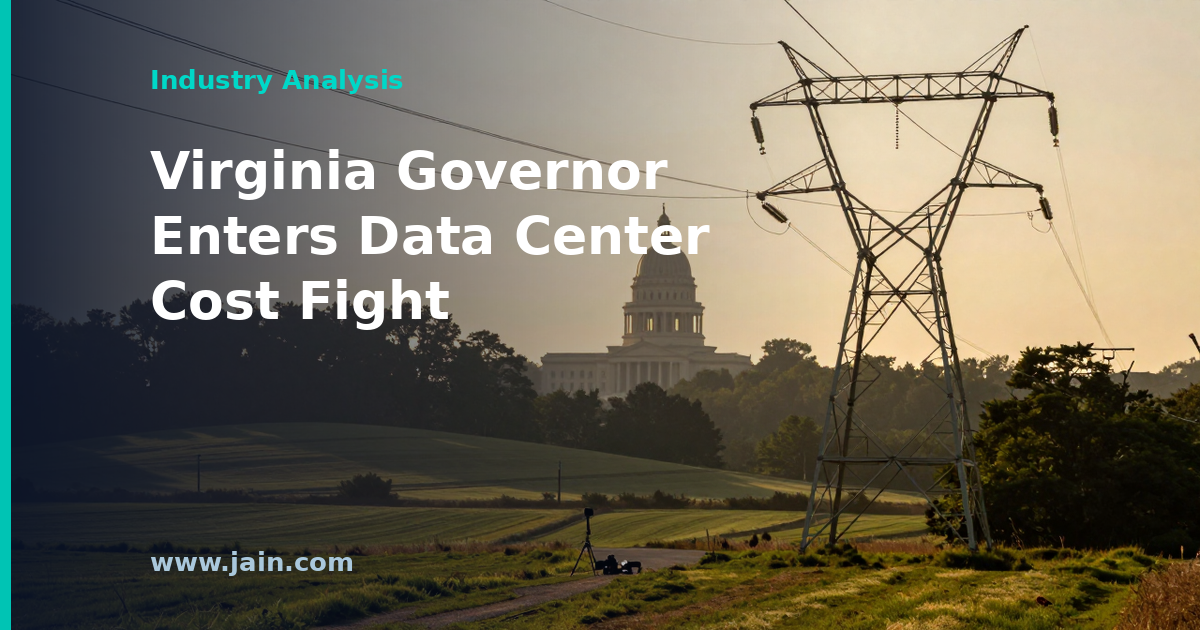
Virginia’s governor has intervened in a regulatory case that will decide how the costs of transmission upgrades tied to data center growth are divided between hyperscale customers and ordinary ratepayers, according to Inside Climate News reporting dated July 12, 2026.
The dispute sits at the intersection of the state’s booming data center economy, rising residential power bills, and a grid buildout that regulators, utilities, and large load customers are all trying to steer.
Executive Summary
Northern Virginia hosts the densest concentration of data centers on the planet, and the transmission and generation investment required to keep serving them has become one of the most consequential utility cost questions in the United States. A gubernatorial intervention signals that the case has escalated from a technical rate proceeding into a matter of state economic policy.
For the industry, the outcome will influence the true landed cost of Virginia capacity, the pace at which hyperscalers site new campuses in the commonwealth, and how other states allocate similar costs as their own AI-driven load pipelines mature. For residents, it will help decide whether utility bills continue to absorb infrastructure built primarily to serve a handful of very large customers.
The underlying source is a single news article, so specifics of the governor’s filing, the docket, and the parties’ positions are limited to what Inside Climate News reported.
Why Cost Allocation Is Suddenly a Headline Issue
Transmission cost allocation — the rules that decide which customers pay for a given wire, substation, or upgrade — used to be an obscure regulatory topic. That changed as data center load in places like Loudoun County grew faster than the grid was built to accommodate, forcing utilities to propose large capital programs on compressed timelines. When those costs are socialized across all ratepayers, residential and small-business customers effectively subsidize infrastructure whose primary driver is hyperscale demand; when they are assigned directly to the causing load, data center economics tighten and siting decisions shift. A governor’s intervention indicates the political calculus has caught up with the engineering one.
Winners, Losers, and the Cost of Ambiguity
The commercial stakes cut in several directions. Hyperscalers and colocation operators benefit when upgrade costs are broadly shared, because it keeps their power price competitive against Texas, Ohio, and emerging international markets. Incumbent utilities are somewhat indifferent to who pays so long as they can recover prudent investment, but they carry regulatory risk if allocations are later reversed. Residential ratepayers and consumer advocates are pressing for a stricter causer-pays framework. And the state itself must weigh tax base, jobs, and grid reliability against bill pressure on voters — a balance that helps explain why the executive branch is now engaged rather than leaving the matter to the State Corporation Commission alone.
Precedent Beyond Virginia
Because Virginia is the reference market for data center growth, whatever framework emerges here will be studied by regulators in PJM neighbors such as Ohio, Pennsylvania, and Maryland, and by ERCOT, MISO, and Southeast utilities facing their own large-load queues. A ruling that leans toward direct assignment could accelerate the migration of speculative projects to jurisdictions with more forgiving cost rules; a ruling that leans toward socialization could invite legislative pushback in other states where residential rate increases have already become political flashpoints. Either way, the case is likely to be cited well outside the commonwealth.
Background
Virginia, and Loudoun County in particular, has been the world’s leading data center market for more than a decade, driven by early fiber concentration, favorable tax treatment, and proximity to federal customers. The AI build-out has intensified an already tight supply picture, with utility Dominion Energy warning of sharp load growth and PJM signaling capacity constraints across the region.
Against that backdrop, state regulators, legislators, consumer advocates, and hyperscale customers have been negotiating — sometimes in public dockets, sometimes in the legislature — over how the costs of a much larger grid should be shared. The current case is the latest and most prominent flashpoint in that longer debate.
Reuters reported on July 12, 2026, citing sources, that the White House intends to rally electric utilities and data center operators behind a pledge addressing the power costs associated with artificial intelligence. The report frames the effort as a response to growing concern that the AI build-out is putting upward pressure on electricity bills.
No official announcement accompanied the report, and the text, participants, and timing of any pledge had not been made public at the time of writing.
Executive Summary
According to the Reuters report, the administration is convening two industries whose interests increasingly collide on the electric grid: the utilities that must build generation and transmission to serve surging demand, and the hyperscale data center operators whose AI workloads are driving much of that demand. A “power cost pledge” — the report’s shorthand — suggests a voluntary commitment aimed at reassuring the public that households will not shoulder the cost of AI’s electricity appetite.
The move matters because it signals that data center power demand has fully crossed from an industry planning question into a national political one. When the White House feels compelled to broker a public commitment on electricity costs, it reflects pressure from ratepayers, state regulators, and elected officials who are hearing about rising bills from constituents.
It also matters for what it is not: a report based on unnamed sources, describing a voluntary pledge whose contents are unknown. Whether this becomes a substantive cost-allocation framework or a reputational exercise depends entirely on details that had not yet been disclosed.
Why Electricity Bills Became an AI Problem
The AI boom has made data centers one of the fastest-growing sources of new electricity demand in the United States, reversing roughly two decades in which overall power consumption was largely flat. Serving that growth requires new power plants, new transmission lines, and grid upgrades — and under traditional utility regulation, those costs are spread across all customers through rates approved by state commissions. That is the mechanism at the heart of the ratepayer backlash: households can end up helping pay for infrastructure built primarily to serve a handful of very large industrial customers.
Utilities and data center operators counter that large customers typically sign long-term contracts, often pay for dedicated interconnection upgrades, and can anchor investments that benefit the whole grid. Both framings contain truth, and which one dominates in a given state depends on tariff design — the specific rate structures regulators approve. A federal pledge would be entering a debate that is normally fought state by state, utility by utility.
What a Voluntary Pledge Can — and Cannot — Do
Voluntary pledges are a familiar Washington instrument: they move quickly, require no legislation, and give all parties a public commitment to point to. If the pledge commits data center operators to pay the full incremental cost of serving their load — through special tariff classes, minimum-take contracts, or funding their own generation — it could genuinely shift cost risk away from households. Several utilities and states have already been moving in this direction through large-load tariffs, so a pledge could standardize and accelerate an existing trend.
The limits are equally clear. A pledge cannot override state ratemaking authority; electricity rates are set by state public utility commissions, not the White House. It carries no enforcement mechanism unless one is built in. And “power cost” commitments are only as strong as their accounting: transmission, capacity, and reliability costs are notoriously difficult to attribute to a single customer class, which gives every party room to claim compliance. Analysts and consumer advocates will reasonably ask who verifies the math.
Winners, Losers, and the Politics of Grid Cost Allocation
For hyperscalers, a pledge is likely a price worth paying. Their binding constraint is speed of interconnection — how fast new facilities can get grid connections and power. A public commitment on costs could defuse local opposition and regulatory friction that currently slow projects. For utilities, the calculus is similar: demand growth is the best earnings story the sector has had in decades, and anything that keeps the political environment permissive protects that story.
The open question is what ratepayer advocates get. If the pledge produces binding tariff structures and transparent cost attribution, consumers benefit. If it produces language without accounting, the underlying dispute simply resurfaces in the next rate case. Smaller data center operators and AI startups also warrant attention: cost-allocation rules designed around hyperscalers can inadvertently raise barriers for firms without the balance sheet to fund their own substations or sign decade-long power contracts.
Background
Since the generative AI boom began in late 2022, hyperscale cloud providers and AI companies have raced to build data center capacity across the United States, turning electricity availability into the industry’s defining constraint. After decades of roughly flat national power demand, utilities now face sustained load growth, and the question of who pays for the required generation and transmission has become a flashpoint in state rate cases and local permitting fights.
Both federal and state policymakers have increasingly engaged with the issue — from grid interconnection reform to utility proposals for special large-load tariffs — as electricity affordability has risen on the political agenda. The reported White House pledge effort sits squarely in that context: an attempt to get ahead of ratepayer backlash without new legislation.
A Brookings Institution commentary published July 10, 2026 contends that industry and utility promises to protect residential and small-business electricity customers from the cost of serving AI data centers lack the enforcement teeth needed to be credible. The piece calls on regulators and legislators to convert voluntary pledges into binding conditions.
Executive Summary
The core argument is straightforward: as hyperscale AI campuses queue up for grid interconnection, utilities and developers have offered assurances that the resulting infrastructure costs — new generation, transmission upgrades, and capacity payments — will not be socialized onto ordinary ratepayers. Brookings argues those assurances are only as strong as the mechanisms that back them.
For state public utility commissions, legislators, and the data center industry itself, the commentary reframes what has been a public-relations conversation as a regulatory design problem. Without tariff structures, cost-allocation rules, or contractual covenants that survive load forecasts going wrong, the risk of cost shift lands on households by default.
Why Pledges Alone Rarely Hold
Electricity is a shared system. When a single customer class — in this case, very large computing loads — drives new generation and transmission investment, the cost of that investment must be allocated somewhere. Utilities recover prudent investments through rates approved by state commissions, and if a large customer departs, downsizes, or renegotiates before the useful life of the asset ends, the remaining ratepayers typically absorb the stranded cost. A verbal or written pledge that this will not happen carries weight only if a tariff, contract, or regulation makes it operationally true.
Brookings’ framing is that the current moment resembles earlier episodes in utility history where load forecasts drove capital plans that later customers had to pay for. The remedy, in its view, is not to block data center growth but to make the accountability match the marketing.
What Enforcement Could Look Like
Enforcement can take several concrete forms familiar to regulatory practitioners: dedicated large-load tariffs that require the customer to underwrite the specific generation and transmission built to serve them; minimum bill or take-or-pay provisions that survive early departure; collateral or parent-company guarantees; and cost-allocation rulings that ring-fence hyperscale-driven investment from the general residential class. Each option shifts risk away from small customers, and each has trade-offs in complexity, competitiveness, and how attractive a jurisdiction remains to future investment.
The article’s contribution is less a specific policy blueprint than a call to close the gap between what is being promised in press releases and what is written in tariffs and interconnection agreements. That distinction matters because state commissions, not industry, control the enforceable side.
Winners, Losers, and Second-Order Effects
If enforceable ratepayer protections become standard, the near-term winners are residential and small-commercial customers in fast-growing data center regions, and the utilities that avoid political backlash over rising bills. The near-term losers, at least on paper, are hyperscale developers who face higher up-front commitments and potentially longer siting timelines while tariffs are litigated. In practice, well-capitalized operators generally absorb these costs; the marginal effect may be on siting geography, favoring jurisdictions with clearer rules over those with ambiguous ones.
There is also a fairness question the piece implicitly raises but does not resolve: whether existing ratepayers should share in any upside — for example, lower per-unit system costs — if hyperscale load ultimately spreads fixed costs across more kilowatt-hours. That is a legitimate counterpoint worth weighing alongside the downside protection argument.
Background
Electricity in the United States is delivered largely by regulated utilities whose rates and major investments require approval from state public utility commissions. Historically, load growth was gradual, driven by population and general economic activity. The rise of hyperscale cloud and AI computing has changed that pattern, with individual campuses requesting interconnection capacities that rival small cities and materially reshaping utility capital plans.
As bills have risen in some data center-heavy regions, policymakers, consumer advocates, and think tanks including Brookings have focused on how the costs of serving these new loads are allocated. Voluntary industry pledges to protect ordinary ratepayers have become common; the debate has now moved to whether those pledges are matched by enforceable rules.
Texas regulators have approved grid standards intended to keep large data centers online during electrical disturbances, according to reporting by E&E News by POLITICO published July 10, 2026. The measure addresses so-called ride-through behavior — whether massive computing facilities stay connected and continue drawing power during voltage or frequency dips, or abruptly disconnect and shift the shock onto the rest of the grid.
The standards make the Texas grid, operated by the Electric Reliability Council of Texas (ERCOT), the first to impose formal ride-through expectations on data centers as a class of customer — a notable reversal of the usual arrangement, in which reliability rules bind generators rather than the loads that consume their output.
Executive Summary
The announcement, as reported, is straightforward: Texas has approved standards governing how large data centers must behave when the grid experiences a disturbance, with the stated goal of keeping those facilities online rather than having them drop off en masse. “Ride-through” is grid-engineering shorthand for a connected machine’s ability to tolerate a brief sag in voltage or frequency without tripping offline — a requirement long imposed on wind and solar plants, but historically never on customers.
Why it matters: data centers have become some of the largest single points of electrical demand ever connected to power systems, and ERCOT has been the epicenter of that growth. When a facility drawing hundreds of megawatts disconnects in a fraction of a second — typically because its protective equipment or uninterruptible power supplies switch to on-site backup at the first sign of trouble — the grid suddenly has surplus power with nowhere to go, which can push frequency out of bounds and cascade into a wider event. Regulating load behavior, not just generator behavior, is a genuinely new frontier in grid reliability.
For the industry, the precedent matters more than the particulars. Texas is the most attractive data center market in the United States precisely because of speed and abundant land and energy; if even Texas concludes that large loads must accept reliability obligations as a condition of interconnection, other states and grid operators facing the same demand surge are likely to follow.
The Grid’s Newest Problem Is Demand That Vanishes
For a century, grid reliability rules have concentrated on supply: power plants must stay online through disturbances so a single fault doesn’t snowball. Large data centers invert the problem. They are engineered for near-perfect uptime of the computing inside, which means their electrical systems are hair-triggered to abandon the utility feed and jump to batteries and backup generators the instant power quality wavers. That design is rational for each individual facility and destabilizing in aggregate: if many gigawatt-scale campuses in one region flee the grid simultaneously during a routine voltage dip, the disturbance they were protecting themselves from gets dramatically worse for everyone else.
ERCOT is uniquely exposed to this dynamic. It runs a largely isolated grid with limited connections to neighboring systems, so it cannot lean on imports to absorb a sudden swing. It also hosts one of the fastest-growing concentrations of data center and other large flexible load anywhere. A ride-through standard essentially tells these facilities: your protection settings are no longer purely your private business, because your collective reflexes have become a system-level risk.
A Template Other States Will Study
Texas moving first is consistent with its recent posture. State lawmakers and the Public Utility Commission have spent the past several years building a framework for very large loads — from interconnection review to provisions allowing curtailment of big customers in emergencies — as ERCOT’s demand forecasts ballooned on data center growth. Ride-through standards are a logical next brick in that wall, and the E&E News framing — standards “to keep data centers online” — suggests regulators are positioning this as pro-reliability rather than anti-industry.
Other jurisdictions are watching the same load-loss phenomenon. Grid reliability bodies in the U.S. have publicly examined incidents in which large blocks of data center load disconnected during disturbances, and utilities in Virginia, Georgia, Arizona and elsewhere face the same concentration of hyperscale demand. Because national reliability standards for loads do not yet exist the way they do for generators, a working Texas rulebook — definitions, thresholds, compliance mechanics — becomes the natural starting draft for everyone else. First-mover regulation tends to propagate: California’s emissions rules and Virginia’s zoning fights both show how one jurisdiction’s template shapes an industry’s national playbook.
The Economics: Compliance Cost Versus Queue Position
For data center operators, ride-through compliance is mostly an engineering and procurement question: configuring uninterruptible power supply systems, protection relays, and switchgear to tolerate defined disturbances rather than instantly transferring to backup. On new builds, that is a design parameter. On existing facilities, retrofits could be more intrusive, and operators will care greatly about which facilities are grandfathered — a detail the reporting summary does not settle.
The strategic calculus, though, likely favors acceptance. The binding constraint on data center growth today is not capital but grid access — interconnection queues measured in years. A clear, uniform reliability standard gives ERCOT and utilities more confidence to connect very large loads quickly, which is worth far more to developers than the cost of compliant electrical gear. Operators who fight load-behavior rules risk slower interconnection everywhere; operators who embrace them can market themselves as grid-friendly customers, a distinction that increasingly influences which projects get powered first.
Winners, Losers, and the Fine Print
The likely winners are grid operators, who gain a tool against a novel instability risk; incumbent data center operators with modern electrical infrastructure, for whom compliance is manageable and who benefit from anything that keeps Texas interconnections moving; and vendors of power equipment — UPS systems, protection relays, grid-interface controls — who now have a regulatory driver for upgrades. The pressured parties are operators of older facilities that may need retrofits, and any tenant whose uptime guarantees assumed the freedom to disconnect at the first flicker. There is a real tension here: staying connected through a disturbance transfers some risk from the grid to the facility, and enterprise customers pay for facilities engineered to take zero chances. How the standards balance grid needs against facility-level risk tolerance is the technical heart of the rule — and exactly the kind of detail that will determine whether other states copy it verbatim or rework it.
Background
Texas has become the defining battleground for data center growth in the United States. ERCOT operates a mostly self-contained grid serving the large majority of the state, and its combination of fast interconnection, abundant land, and booming generation development has drawn an extraordinary pipeline of hyperscale computing projects, alongside crypto-mining and industrial electrification. That surge pushed ERCOT’s long-term demand forecasts sharply upward and prompted Texas lawmakers and the Public Utility Commission to construct a new regulatory framework for very large loads over the past several years, including closer scrutiny of interconnection requests and emergency-management provisions for big customers.
In parallel, grid engineers across the country have documented a novel reliability phenomenon: large blocks of data center load disconnecting from the grid nearly simultaneously during disturbances, as facility protection systems shift to on-site backup. Because reliability standards historically governed generators rather than customers, no established national rulebook addressed this load behavior — the gap the newly approved Texas standards are the first to fill.
The Brookings Institution, a Washington-based public policy think tank, published an analysis on July 7, 2026 arguing that the wave of local opposition to data center construction across the United States is more than scattered NIMBY friction — it is an early signal of a broader political and economic fight over how much electricity artificial intelligence will consume, and who will pay for it.
Executive Summary
According to the piece’s framing, communities near proposed data center campuses are increasingly pushing back on projects through zoning hearings, moratoriums, and local elections. Brookings connects these disputes to the underlying driver: AI workloads require enormous amounts of electricity, and the infrastructure to deliver it — generation, transmission lines, and substations — lands in specific towns and counties whose residents did not sign up for it.
Why it matters: the data center industry has historically won siting battles on the strength of tax revenue and jobs arguments. If Brookings is right that opposition is hardening into an organized, durable political force, the industry’s expansion model — fast site acquisition, utility-negotiated power deals, and light-touch local engagement — may need to change. For an industry racing to build AI capacity, the constraint may prove to be not capital or chips, but community consent and grid access.
The Grid Is Where AI Meets Local Politics
Data centers are unusual among industrial facilities: they consume power on the scale of heavy manufacturing while employing relatively few permanent workers. That asymmetry is at the heart of the backlash Brookings describes. A large AI campus can draw as much electricity as a small city, which means new transmission lines, new substations, and in some regions new generation — all of which are visible, local, and subject to public process. AI is often discussed as an abstract technology; the grid is where it becomes a land-use question that a county board can vote on.
This gives local governments real leverage. Zoning approvals, special-use permits, and utility interconnection queues are choke points where a project can be delayed for years or killed outright. The industry has long treated these as procedural hurdles; the Brookings framing suggests they are becoming political contests.
Ratepayers, Tax Deals, and the Question of Who Pays
The economics beneath the backlash deserve attention. When a utility builds infrastructure to serve a massive new load, the cost recovery question — does the data center operator pay its full share, or do costs get socialized across all ratepayers — is decided in regulatory proceedings most residents never see. Where residents perceive that their electric bills are rising to serve a tech company’s servers, opposition tends to sharpen. Several state utility commissions have begun creating special large-load rate classes to address exactly this concern, an implicit acknowledgment that the old cost-allocation model strains under AI-scale demand.
Tax abatements cut the same way. Data centers are frequently recruited with incentive packages, and critics ask whether the revenue and job numbers justify them. Operators who can demonstrate full cost-of-service payment and transparent community benefit will be better positioned than those relying on confidentiality agreements and after-the-fact announcements.
What Hardening Opposition Means for the Buildout
If backlash becomes systematic, expect three shifts. First, siting migrates toward jurisdictions that actively want the load — regions with surplus generation, declining industrial demand, or explicit pro-data-center policy. Second, timelines lengthen and carry more political risk, which favors operators with existing land banks, secured power, and strong community track records over new entrants assembling projects from scratch. Third, self-supplied power — on-site generation, long-term clean energy contracts, and eventually small modular reactors — becomes more attractive precisely because it reduces the project’s visible draw on the shared grid.
None of this stops the AI buildout; demand is too strong. But it changes who can build, where, and how fast — and it rewards the operators who treat community engagement and grid stewardship as core competencies rather than public relations.
Background
Data centers — the warehouse-scale buildings full of servers that run websites, cloud services, and AI models — have expanded rapidly since generative AI took off in late 2022, with hyperscale operators and specialized developers announcing successive waves of multi-gigawatt campuses across the United States. Electricity availability has replaced land and fiber as the industry’s primary constraint, pulling utilities, state regulators, and local governments into what was once a quiet corner of commercial real estate. Northern Virginia, the world’s largest data center market, became an early flashpoint for community opposition, and similar disputes have since surfaced in markets across the country, making siting politics a national story that policy institutions like Brookings now track.
The U.S. Department of Energy issued a directive on or around July 3, 2026 instructing data centers to switch to on-site backup generators during an active heat wave, so that grid electricity could be redirected to residential and commercial air conditioning demand.
The action, first reported by CNN, applies during the peak-load emergency window and treats hyperscale and colocation facilities as flexible load that can be temporarily islanded from the public grid.
Executive Summary
Federal regulators rarely intervene directly in how private data centers source their power. This order does exactly that, framing backup generators — normally reserved for outages — as a demand-response tool the government can call on during a grid emergency.
For an industry that has spent the past two years defending its rising share of national electricity consumption, the directive is a concrete signal that data-center load is now large enough to be actively managed by policymakers, not just utilities. It also raises immediate questions about emissions, fuel supply, wear on generator fleets, and who bears the incremental cost.
The CNN report is short on operational specifics. What is clear is the precedent: in a heat-driven grid crunch, the federal government has publicly told data centers to burn their own fuel so households can keep the AC on.
From Backup to Balancing Asset
Data-center backup generators — typically diesel, occasionally natural gas — are designed as insurance against utility failure. Running them proactively to relieve the grid reframes them as a demand-response resource, a category more commonly filled by industrial curtailment contracts and battery storage. The DOE’s move effectively conscripts private infrastructure into a public reliability role during an emergency window, without (based on the reporting available) a pre-existing market mechanism to compensate that role.
For operators, the economics are straightforward but uncomfortable: diesel fuel and generator hours are far more expensive per kilowatt-hour than grid power, and every runtime hour consumes maintenance life and emissions allowances. Whether those costs are reimbursed, absorbed, or passed to tenants under force-majeure or emergency-operations clauses in colocation contracts is not addressed in the source.
Policy Signal for a Power-Constrained Industry
The directive lands in the middle of an ongoing national debate over data-center power draw, particularly from AI training and inference workloads. Utility interconnection queues are years long in several regions, and multiple states are weighing tariffs and rate structures specific to large loads. An emergency order that pulls data centers off the grid on the hottest days does not solve those structural issues, but it does establish a template: when residential cooling and industrial compute compete for the same electrons, households come first.
That template has implications well beyond one heat wave. Operators planning new sites will read this as evidence that federal and state authorities are willing to treat their facilities as interruptible when the public interest demands it, which strengthens the case for on-site generation, long-duration storage, and firm behind-the-meter power. It also gives ammunition to utilities and community groups arguing that new hyperscale campuses should arrive with dedicated generation, not just a grid connection.
Environmental and Reliability Trade-offs
Shifting large facilities to diesel or gas backup during a heat wave trades one problem for another. Peak summer conditions already coincide with elevated ground-level ozone; concentrated diesel runtime in data-center clusters — northern Virginia, Dallas, Phoenix, Santa Clara — could measurably worsen local air quality on precisely the days when it is most fragile. The source does not indicate whether the order includes air-quality carve-outs, geographic targeting, or emissions monitoring.
Reliability is the other side of the ledger. Backup generators are tested regularly but not designed for sustained multi-hour or multi-day operation across an entire fleet. Fuel logistics, cooling of the generators themselves in extreme heat, and the risk of cascading failure if a facility loses backup mid-event are real engineering concerns. None of these are discussed in the reporting available, and they will determine whether the directive is remembered as a pragmatic success or a stress test that exposed hidden fragility.
Background
Data-center electricity demand has climbed sharply over the past several years as cloud computing and, more recently, AI training and inference workloads have expanded. Utilities in Virginia, Texas, Arizona, and the Pacific Northwest have publicly flagged multi-year interconnection queues for large loads, and several states have opened proceedings on tariffs and cost allocation specific to hyperscale facilities.
At the same time, summer heat waves have repeatedly pushed regional grids to the edge of their reserve margins, prompting conservation appeals and, in some cases, rolling outages. The DOE has authority to intervene in electricity emergencies but historically uses it sparingly and mostly to keep specific generators running. A directive aimed at reducing data-center load is a notable inversion of that pattern.