TL;DR · 30-second read
The Short Version
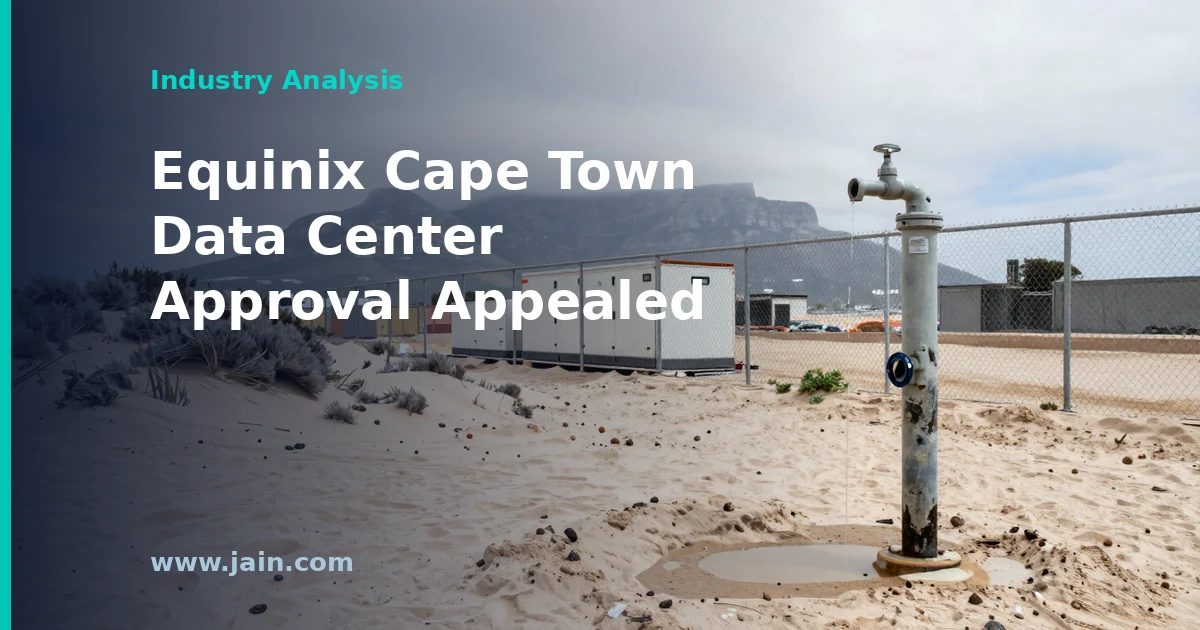
Two campaign groups are trying to overturn Cape Town’s approval of two very large Equinix data centers near the city’s airport. Data centers are warehouse-sized buildings full of computers that run cloud storage, websites and artificial intelligence.
The site could draw about 170 megawatts of electricity, comparable to the round-the-clock demand of a sizeable town. Critics say the approval came without clear figures on water and power use, in a city that nearly ran out of water in 2018.
Equinix says it owns the land but has not yet filed detailed building plans.
Housing Assembly and the UK-based organization Foxglove have appealed a municipal approval for two large Equinix data centers planned for the King Air Industria industrial area near Cape Town International Airport, Benin Web TV reported, citing the Financial Times. The project is estimated at roughly 170 megawatts (MW) of capacity on a site of about 122,500 square meters. Cape Town’s municipal planning tribunal approved it in July despite objections.
The appellants say the approval rested on insufficient detail about water consumption, electricity demand, backup diesel generators, emissions and noise, and they want a new assessment before the project proceeds. Equinix confirmed it has acquired the land. It said no detailed development plan has been submitted yet and that it will continue talking with stakeholders if the project moves forward.
Executive Summary
The appeal puts one of the largest publicly discussed data center proposals in Africa’s most developed data center market under formal review. The objection does not claim the campus is inherently unacceptable. It argues that the city approved the project before anyone had quantified the resources it would consume. If the appeal succeeds, developers may have to submit a new application or provide more information before development continues.
The case matters beyond one site. South Africa holds about 70% of Africa’s data center capacity, according to Financial Times estimates, and that growth is driven by cloud services and artificial intelligence workloads. The South African Human Rights Commission told the Associated Press it has received more than 250 submissions in a consultation on how data centers affect water, electricity, land and communities. For operators, the Cape Town appeal is an early test of how much resource disclosure regulators and communities will expect, and at what stage of a project they will expect it.
An Approval Granted Before the Blueprint
The dispute contains a timing tension. The planning tribunal approved two data centers in July, but Equinix says no detailed development plan has been submitted. Large developments often move through stages: land-use or zoning consent first, then detailed site and building plans. At those later stages, designs for cooling, power connections and backup generation become concrete. An early-stage approval can be legitimate while still leaving the resource questions unanswered.
That is the gap the appellants are targeting. Their argument is essentially about sequencing: the water, electricity, diesel and noise numbers should be on the table before the city commits, not after. Equinix’s position points the other way. It says it is not yet at the detailed-plan stage and would continue engaging stakeholders if the project advances. The appeal will likely turn on which standard the municipal process requires at the approval stage.
Water, Power and Diesel in a City That Remembers Day Zero
Each resource concern maps to a real engineering choice. Data centers shed heat. Evaporative cooling uses less electricity but consumes water, while closed-loop and air-based systems use little water but more power. In Cape Town, where the 2018 “Day Zero” scare brought the city close to turning off municipal taps, the water side of that trade-off is politically sensitive. The electricity side is sensitive too, in a country whose national grid has long struggled with supply.
Backup diesel generators are the less-discussed issue. Operators install them so servers keep running during grid outages. Where the grid is unreliable, generators may run more often than in markets where they are rarely used, which raises the emissions and noise questions the appellants cite. The site sits in an industrial area near an airport, which may shape how noise is assessed. Emissions and fuel storage still need their own analysis.
Scrutiny Is Becoming a Market-Wide Cost
The Human Rights Commission’s consultation shows that the debate in South Africa is broadening from individual permits to how the whole sector is regulated. For developers, that raises the likely cost of permitting: more studies, more disclosure, longer timelines and more exposure to appeal. Operators that can document low-water cooling, credible power sourcing and limited generator use may find approvals easier to defend. Those that cannot may face delays.
Customers have a stake too. Cloud providers, enterprises and network operators that rely on South Africa as the continent’s main data center hub need capacity to arrive on schedule. A longer, more contested approval path in Cape Town could shift demand toward sites with clearer permits or delay the capacity growth the market expects.
Fair Questions for Both Sides
The appellants’ core request, quantified resource data before final commitment, is a reasonable planning principle. Their case would be stronger with specifics: which thresholds or disclosures would satisfy them, and whether full data can realistically exist before detailed designs do. Calling for a new assessment is different from showing that the project’s impacts would be unacceptable, and the reported objections so far focus on missing information rather than demonstrated harm.
Equinix’s statement is also limited. Saying no detailed plan has been filed explains the absence of numbers but does not provide any. The 170 MW estimate has not been confirmed as the company’s own figure, and it has not described cooling technology, power sourcing or backup arrangements for the site. Early voluntary disclosure of design intentions would give the tribunal, the appellants and the public a factual basis for the debate.
Background
Equinix is a US-based, publicly traded digital infrastructure company that operates data centers and interconnection hubs worldwide, where networks, cloud providers and enterprises connect directly to each other. It entered African markets through its 2022 acquisition of West African operator MainOne and has since expanded its presence on the continent, including in South Africa.
South Africa is Africa’s largest data center market. Cape Town and Johannesburg host most of the continent’s capacity, alongside major cloud regions. The country’s growth has come with resource concerns: Cape Town’s near-miss with running out of municipal water in 2018 and the national grid’s long-running supply problems have made water and electricity central to public debate over large new energy users. Source: South Africa: Equinix’s 170 MW data centers challenged on appeal (Benin Web TV), on the appeal against Cape Town’s approval of two Equinix data centers near the airport.Sources