Tag: data center cooling

  • Microsoft’s Restaurant-Sized Water Claim: Testing the Closed-Loop Cooling Math

    Microsoft’s Restaurant-Sized Water Claim: Testing the Closed-Loop Cooling Math

    Microsoft’s chief executive said the company’s newest AI data centers consume as little water annually as a typical restaurant, crediting a closed-loop cooling design that recirculates the same fluid indefinitely rather than evaporating fresh water to reject heat. The claim, reported June 3, 2026, positions the design as a step-change from conventional facilities that can draw millions of gallons per year.

    Executive Summary

    The comparison is striking by design: restaurants are among the most water-intensive small businesses people intuitively understand, and equating a hyperscale AI facility to one reframes the water debate around data centers. The engineering behind the claim is real and well understood — closed-loop (or liquid-to-chip, sealed-circuit) cooling fills the system once and rejects heat to the outside air through dry coolers or chillers, eliminating the continuous evaporation that makes traditional cooling towers thirsty.

    Why it matters: water has become a genuine siting constraint for AI infrastructure. Communities from the American Southwest to drought-prone regions abroad have pushed back on data center projects over aquifer draw, and utilities increasingly ask about consumptive water use before power. If Microsoft can credibly demonstrate restaurant-scale water budgets at gigawatt-scale campuses, it changes the permitting conversation for the whole industry.

    The caveat: the claim as reported applies to new facilities built to the closed-loop design, not Microsoft’s existing fleet, and the reported remarks do not specify how many sites qualify, how the restaurant benchmark is defined, or whether the figure counts the water embedded in the extra electricity that dry heat rejection typically requires.

    The Engineering Is Credible — the Accounting Is the Question

    Closed-loop cooling is not a moonshot; it is a design choice with known trade-offs. In a conventional data center, cooling towers chill water by evaporating a portion of it — that evaporation is the “consumption” that shows up in the millions-of-gallons figures. A sealed circuit avoids this entirely: coolant is filled at commissioning, circulates across cold plates or heat exchangers at the servers, and dumps heat to ambient air. On-site water use then falls to domestic needs — restrooms, humidification, kitchens — which is plausibly restaurant-scale.

    The honest question is boundary-drawing. Site water use is only one ledger. Dry heat rejection generally consumes more electricity than evaporative cooling, especially in hot climates, and most grid electricity has its own water footprint at the power plant. A facility that saves water on site but draws more thermally generated power may shift consumption upstream rather than eliminate it. The reported remarks, as relayed, do not say whether Microsoft’s restaurant comparison is site-only or includes that indirect water. Neither answer would be wrong — but they are very different claims.

    Water Is Becoming the Second Currency of AI Siting

    For years, the binding constraint on data center development was power: megawatts available, interconnection queue position, substation timelines. Water has quietly become the second gate. Local opposition to AI campuses increasingly centers on aquifer and municipal-supply impacts, and several jurisdictions now require consumptive-use disclosures in permitting. A hyperscaler that can walk into a county hearing with a restaurant-equivalent water budget has a materially easier approval path — and that is worth real money in schedule terms, since permitting delay is often costlier than construction premium.

    This creates competitive dynamics beyond Microsoft. If closed-loop designs become the de facto community expectation, operators running evaporative plants may face pressure to retrofit or to defend designs that were unremarkable five years ago. Cooling vendors, dry-cooler manufacturers, and liquid-cooling integrators stand to gain; regions that marketed abundant water as a siting advantage lose a differentiator.

    Marketing Benchmarks Deserve the Same Scrutiny as Critics’ Numbers

    The water debate around AI has featured loose numbers on all sides — viral estimates of water “per chatbot query” have often rested on contested assumptions, and industry rebuttals have sometimes cherry-picked their best sites. A restaurant comparison is vivid but imprecise: restaurant water use varies enormously by size and type, and the reported claim does not state which benchmark Microsoft used. The fair posture is symmetrical skepticism. Critics’ worst-case figures should be tested against actual metered data; Microsoft’s best-case figure should be tested against fleet-wide averages, third-party verification, and the full indirect footprint. Until per-site water data is published, both the alarm and the reassurance rest partly on trust.

    Background

    Microsoft is one of the largest builders of AI infrastructure in the world, expanding data center capacity at historic pace to serve AI training and cloud workloads. The company has long publicized environmental commitments — including goals around water stewardship — and in recent years began promoting data center designs that minimize or eliminate evaporative water use, as rising rack densities pushed the industry from air cooling toward liquid cooling.

    The water question grew alongside the AI boom: as hyperscale campuses multiplied in water-stressed regions, consumptive use became a flashpoint in local permitting battles and media coverage. The June 2026 remarks land in that context — an industry seeking to prove that AI growth and water stewardship are compatible, before regulators decide the question for it.

    Source: Microsoft CEO says new AI data centers use as little water annually as a restaurant — report of Microsoft chief executive’s remarks on closed-loop cooling for new AI data centers, published June 3, 2026.

  • Amazon, Google, Meta and Microsoft Align on Sustainable Data Center Technology

    Amazon, Google, Meta and Microsoft Align on Sustainable Data Center Technology

    Amazon, Google, Meta and Microsoft — the four largest hyperscale cloud and platform operators — are jointly supporting an initiative aimed at advancing sustainable data center technology, according to a report published by trade outlet ESG Dive on May 28, 2026. The move brings direct competitors together on the environmental footprint of the AI-driven data center build-out.

    Executive Summary

    The four companies behind most of the world’s hyperscale data center capacity are aligning behind a shared effort to accelerate sustainable data center technology. Details in the initial report are limited, but the direction is clear: rather than each company pursuing greener infrastructure alone, the hyperscalers are pooling their influence — and, implicitly, their purchasing power — to pull cleaner technologies into the market faster.

    Why it matters: these four companies are the dominant buyers of data center capacity, electricity, chips and cooling equipment worldwide. When they signal jointly that they want a class of technology to exist at scale, vendors, utilities and investors listen. A coordinated demand signal from Amazon, Google, Meta and Microsoft can do what no single procurement contract can — de-risk the early production runs of technologies such as low-carbon building materials, advanced cooling and cleaner backup power. The open question, which the initial reporting does not resolve, is how much money, binding commitment and measurable accountability sit behind the alliance.

    Why Fierce Rivals Cooperate on Infrastructure

    Amazon, Google, Meta and Microsoft compete intensely for cloud customers, AI workloads and advertising dollars, but they face an identical physical problem: the AI build-out requires enormous amounts of electricity, water, land, concrete, steel and cooling capacity, and public scrutiny of that footprint is rising. Sustainability technology is what economists call a pre-competitive domain — no hyperscaler wins market share because its concrete is lower-carbon, so there is little to lose and much to gain by developing the supply base together.

    There is precedent for this pattern in the industry. Hyperscalers have previously collaborated through open hardware efforts and joint clean-energy procurement pledges, where aggregated demand from multiple large buyers gave manufacturers the confidence to invest in new production capacity. A sustainability-technology initiative follows the same logic: the hardest problem for emerging green technologies is rarely the science — it is finding a first buyer large enough to justify scaling up production. Four hyperscalers acting together are the largest first buyer imaginable in this market.

    The AI Build-Out Makes This Urgent, Not Optional

    The context for the alliance is the unprecedented wave of data center construction driven by AI training and inference — the computing processes behind models like chatbots and image generators, which consume far more power per rack than traditional workloads. All four companies have publicly held climate commitments, and all four have acknowledged in their own sustainability reporting that rapid data center expansion has made those goals harder to reach. Grid connection queues, community pushback on power and water use, and regulatory attention in the US and Europe have turned sustainability from a reporting exercise into a genuine constraint on growth.

    Seen that way, this initiative is as much about securing the ability to keep building as it is about emissions. Data centers that use less water, draw less grid power per unit of computing, or can be permitted with lower-carbon materials are easier to site and faster to approve. Sustainable technology, in other words, is becoming a capacity-expansion strategy, not just an environmental one.

    Winners, Losers and the Ripple Effects Down-Market

    If the initiative translates into real procurement, the clearest winners are vendors of emerging sustainable infrastructure: low-carbon cement and steel producers, advanced cooling firms (including liquid cooling, which removes heat with fluid rather than air and can sharply cut energy use), clean backup-power providers, and grid-technology companies. Utilities and regional grid operators also benefit from any standardization the hyperscalers drive, since it makes large data center loads more predictable.

    For the broader data center industry — colocation providers, regional operators and enterprise builders — the effects cut both ways. Technologies that hyperscaler demand pushes down the cost curve eventually become affordable for everyone, just as hyperscale-driven renewable power purchasing matured that market for smaller buyers. But in the near term, four dominant buyers coordinating around preferred technologies could concentrate supply, lengthen lead times, and effectively set de facto standards the rest of the market must follow without having had a seat at the table.

    What Would Make This More Than a Press Release

    The honest test of any joint sustainability initiative is whether it changes procurement. The initial report, as reflected in the available material, confirms the who and the intent but not the mechanics: no disclosed funding figure, no binding purchase commitments, no named technologies, timelines or measurement framework are visible in the source at hand. That does not make the effort hollow — early-stage coalitions often announce direction before detail — but it means the announcement should be read as a statement of intent whose substance is not yet substantiated.

    History offers both encouraging and cautionary examples. Aggregated corporate buying genuinely transformed the renewable energy market over the past decade. Other multi-company pledges have faded once headlines passed. The indicators worth watching are concrete ones: signed offtake agreements (advance commitments to buy a technology’s output), dollar amounts, third-party verification of claimed impacts, and whether the group’s membership and criteria are opened to the wider industry.

    Background

    Amazon, Google, Meta and Microsoft collectively operate the largest fleet of data centers in the world, underpinning cloud services, social platforms and the current generation of AI systems. Each has spent years pursuing individual sustainability programs — renewable energy purchasing, efficiency engineering and public climate commitments — while the AI era has sharply increased their facilities’ demand for power, water and construction materials.

    That tension has made the environmental footprint of data centers a mainstream policy and community issue in the US and Europe, with grid operators, regulators and local governments increasingly shaping where and how quickly new capacity can be built. Joint industry action on the technology supply chain, as reported here, is a logical next step from the collective clean-energy buying models the same companies helped pioneer over the past decade.

    Source: Amazon, Google, Meta and Microsoft initiative looks to boost sustainable data center tech — ESG Dive report, May 28, 2026, on a joint hyperscaler effort to advance sustainable data center technology.

  • Modine Lands $4 Billion Direct-to-Chip Cooling Deal With Hyperscale Customer

    Modine Lands $4 Billion Direct-to-Chip Cooling Deal With Hyperscale Customer

    Modine Manufacturing has signed a cooling solutions agreement valued at $4 billion with a hyperscale data center customer, as reported by BizTimes Milwaukee on May 27, 2026. The agreement centers on direct-to-chip liquid cooling — technology that removes heat from processors through cold plates mounted directly on the silicon — and ranks among the largest single cooling-infrastructure commitments ever disclosed.

    The customer was not named in the report, and details such as contract duration, delivery schedule, and the split between hardware, installation, and services were not disclosed.

    Executive Summary

    The announcement matters for two reasons. First, the sheer size: $4 billion for cooling alone would have been implausible only a few years ago, when cooling was a modest slice of data center capital budgets dominated by air-handling equipment. A commitment of this scale signals that liquid cooling has become a first-order line item in hyperscale AI buildouts, driven by processor power densities that air cooling cannot economically serve.

    Second, the counterparty structure: a single hyperscale customer writing a multi-billion-dollar cooling commitment suggests the largest cloud and AI operators are now locking up thermal-management supply the way they already lock up power, land, and chips. For Modine — a century-old thermal-management company headquartered in Racine, Wisconsin — an agreement of this magnitude is potentially transformative relative to its historical revenue base, though how the value converts to recognized revenue over time is not yet clear from the report.

    Cooling Graduates From Line Item to Mega-Contract

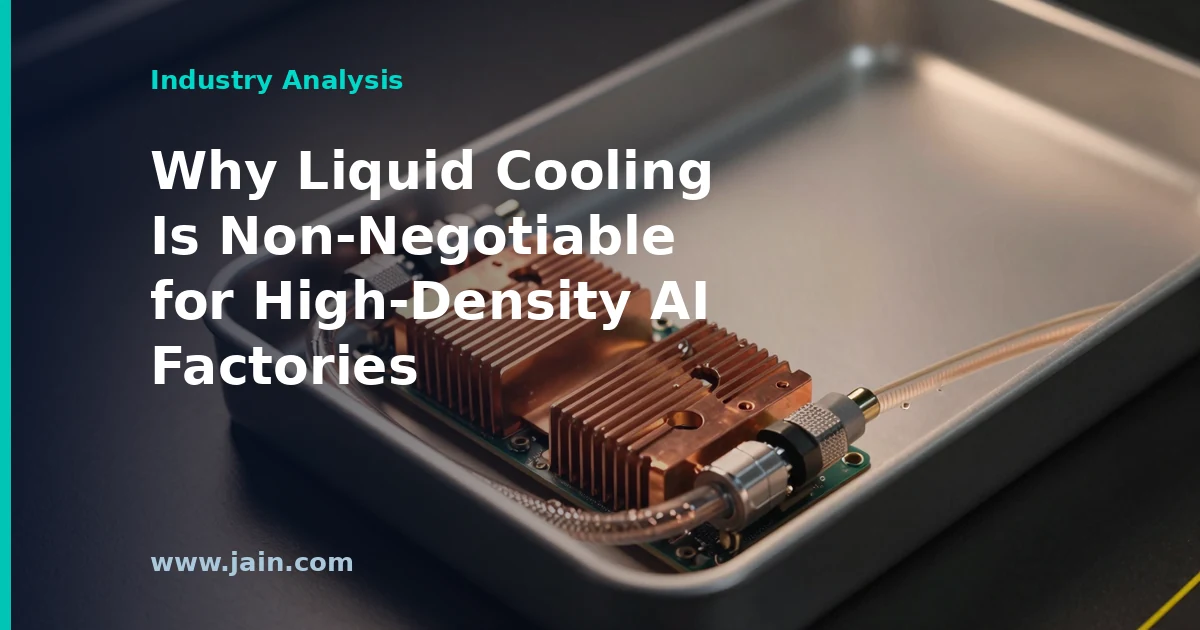
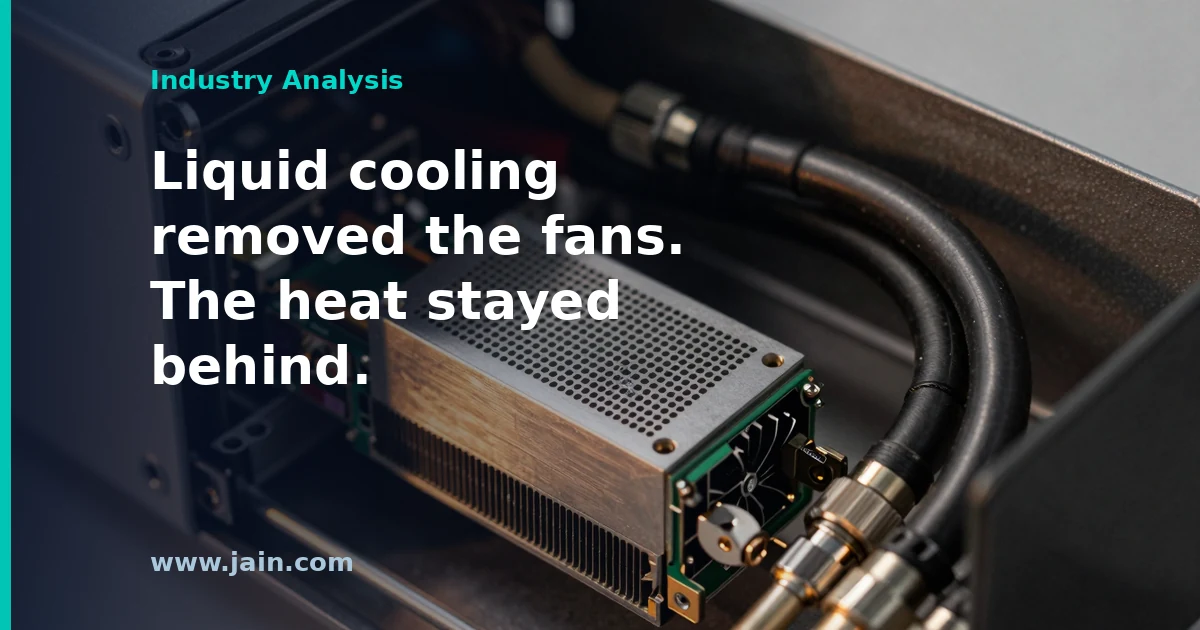
    Direct-to-chip cooling circulates liquid coolant through cold plates that sit directly on top of processors, carrying heat away far more efficiently than blowing chilled air across server racks. The technology exists because modern AI accelerators draw so much power — and concentrate it in so little space — that traditional air cooling hits physical and economic limits. As rack densities climb from tens of kilowatts toward 100 kilowatts and beyond, liquid cooling shifts from an exotic option to a requirement.

    A $4 billion commitment to a single cooling vendor is the clearest evidence yet of that shift. Hyperscalers historically procured cooling equipment project by project, from a fragmented field of suppliers. Consolidating that spend into one long-horizon agreement mirrors how they already contract for power and semiconductors: secure capacity early, at scale, before competitors do. If that procurement pattern spreads, the cooling industry’s competitive dynamics change — scale, manufacturing capacity, and balance-sheet strength start to matter as much as thermal engineering.

    What the Deal Could Mean for Modine

    Modine is best known as a legacy thermal-management manufacturer — its roots are in vehicle radiators — that has spent recent years repositioning toward data center cooling through its climate-solutions business and its Airedale data center cooling brand. A $4 billion agreement would be large relative to what mid-cap industrial suppliers typically book across multiple years, which is precisely why the announcement drew attention beyond the trade press.

    The caveat is that headline contract values and recognized revenue are different things. The report does not say whether the $4 billion represents a firm purchase obligation, a framework agreement with volume expectations, or a ceiling contingent on the customer’s buildout pace. Investors have learned from other AI-infrastructure announcements that multi-year framework deals can be revised as deployment schedules shift. Until Modine discloses the structure, the number is best read as a statement of intended scale rather than booked backlog.

    An Unnamed Customer and the Concentration Question

    Hyperscale operators routinely require anonymity from suppliers, so the customer’s absence from the report is normal practice, not a red flag. But it leaves open a question that matters for assessing the deal: customer concentration. A supplier whose order book is dominated by one buyer gains scale but inherits that buyer’s capital-spending cycle. If the customer slows its AI data center buildout — for reasons ranging from power availability to shifts in AI demand — the supplier feels it directly.

    The flip side is validation. Hyperscalers qualify cooling vendors through demanding technical and reliability reviews, because a cooling failure in a liquid-cooled AI cluster can take down hardware worth far more than the cooling system itself. Winning a commitment of this size implies Modine cleared that bar at scale, which itself is a competitive signal to the rest of the market.

    The Competitive Ripple Across the Cooling Market

    The direct-to-chip market has been contested by a mix of large incumbents and specialists, and a deal of this size resets expectations for what winning looks like. Rivals will face pressure to demonstrate comparable manufacturing capacity and to pursue their own anchor agreements with major operators. For buyers below hyperscale size — enterprises and smaller cloud providers — the concern runs the other way: if the biggest customers lock up vendor capacity, lead times and pricing for everyone else could tighten.

    There is also an upstream effect. Direct-to-chip systems depend on coolant distribution units, quick-disconnect fittings, cold plates, and pumps — components with their own supply chains. A $4 billion program implies significant component demand over its life, which tends to pull investment into that supplier tier. The unanswered question is timing: without a disclosed delivery schedule, it is impossible to gauge how quickly that demand arrives.

    Background

    Modine Manufacturing is a Wisconsin-based thermal-management company whose history stretches back over a century, beginning with radiators for early automobiles. Like several legacy industrial firms, it has pivoted toward data center cooling as that market’s growth outpaced its traditional vehicle business, building out a climate-solutions portfolio that includes the Airedale data center cooling brand and, more recently, liquid-cooling capabilities aimed at AI workloads.

    The backdrop is a structural shift in data center design. The AI buildout that accelerated from 2023 onward pushed rack power densities beyond what air cooling can serve, making liquid cooling — and direct-to-chip systems in particular — one of the fastest-growing segments of data center infrastructure spending.

    Source: Modine secures $4 billion cooling solutions agreement with data center user — BizTimes Milwaukee report, May 27, 2026, on Modine’s direct-to-chip cooling agreement with a hyperscale customer.

  • Modine Signs $4 Billion Airedale Cooling Capacity Deal Through 2029

    Modine Signs $4 Billion Airedale Cooling Capacity Deal Through 2029

    Modine Manufacturing announced a long-term capacity agreement valued at $4 billion, running through 2029, with an unnamed strategic data-center customer for its Airedale by Modine cooling solutions. The announcement was made May 26, 2026 via PR Newswire, which Modine itself characterized as a landmark deal.

    Executive Summary

    Modine, the Wisconsin-based thermal-management company behind the Airedale precision-cooling brand, says it has secured a long-term capacity agreement worth $4 billion through 2029 with a single strategic data-center customer. “Capacity agreement” is the operative phrase: rather than a conventional purchase order for a defined set of equipment, the customer is effectively reserving a share of Modine’s future manufacturing output for years in advance.

    That structure matters more than the headline number alone. Reserving cooling capacity years ahead is the kind of behavior the industry previously reserved for scarce inputs like advanced chips, transformers, and grid interconnection. If cooling equipment now warrants the same treatment, it confirms that thermal management — the systems that remove the enormous heat generated by dense AI computing — has moved from a routine line item to a strategic bottleneck in data-center construction.

    Cooling Joins the Reservation Economy

    AI data centers concentrate far more electrical power — and therefore heat — into each rack than traditional facilities, and every watt that goes in must be removed as heat. That has strained the supply chains for chillers, computer-room air handlers, coolant-distribution units, and related gear, with lead times for major thermal equipment stretching well beyond what developers were accustomed to. In that environment, a developer that cannot lock in cooling deliveries risks having a building, power, and chips ready with no way to keep the hardware from overheating.

    A multi-year capacity agreement is the rational response: the customer trades flexibility for certainty of supply, and the manufacturer trades some future pricing freedom for guaranteed volume. The fact that a single data-center customer is willing to commit at a reported $4 billion scale through 2029 is itself a market signal — it implies that the buyer expects its own construction pipeline to remain heavy for years and considers cooling supply a risk worth paying to retire early.

    What Locked-In Volume Does for a Manufacturer

    For Modine, the appeal of an agreement like this is visibility. Industrial manufacturers typically expand factories cautiously because demand can evaporate faster than a new production line pays for itself. A multi-year committed customer changes that calculus, giving management cover to invest in capacity, hire, and negotiate with its own component suppliers from a position of predictable demand.

    The mirror image is concentration risk. A deal this size with one customer ties a meaningful share of the Airedale business to that customer’s continued buildout. If the buyer’s AI capacity plans slow — or if the agreement contains generous rescheduling or exit provisions, which the announcement does not describe — the guaranteed volume may prove softer than the headline suggests. How much of the $4 billion is firmly committed versus a framework ceiling is the single most important unknown, and it is one investors in similar announcements across the industry have learned to probe.

    A Data Point in the AI Infrastructure Debate

    Announcements like this land in the middle of a live argument about whether AI infrastructure spending is durable or overheated. Skeptics note that multi-year, multi-billion-dollar commitments amplify the damage if demand disappoints; proponents answer that customers do not reserve factory capacity for years unless their own order books justify it. Both readings can be tested against the same evidence: the disclosed terms.

    Here, the disclosure is limited — a value, an end date, and an unnamed customer. That is not unusual for supply agreements, where customers often insist on anonymity, but it means outside observers cannot yet verify the deal’s firmness, product mix, or margin profile. The reasonable conclusion is narrower but still significant: at least one major data-center operator judged cooling supply scarce enough, for long enough, to warrant contracting for it the way the industry contracts for chips and power.

    Background

    Modine Manufacturing, founded in 1916 in Racine, Wisconsin, built its business on heat-transfer technology — radiators, heat exchangers, and HVAC equipment. Its Airedale brand, rooted in UK-based Airedale International Air Conditioning, specializes in precision cooling for critical facilities, and Modine has repositioned the company in recent years around data-center thermal management as its principal growth engine.

    That repositioning coincided with the AI construction boom, which transformed cooling from a routine building system into a supply-constrained input. Data-center operators now contend with multi-year lead times across power and thermal equipment, prompting the kind of long-term capacity reservations that this agreement exemplifies.

    Source: Modine Announces Landmark $4 Billion Long-Term Capacity Agreement through 2029 with Strategic Data Center Customer for Airedale by Modine™ Cooling Solutions — PR Newswire announcement, May 26, 2026, distributed via Google News.

  • Multi-Kilowatt AI Chips Push Direct-to-Chip Liquid Cooling From Option to Mandate

    Multi-Kilowatt AI Chips Push Direct-to-Chip Liquid Cooling From Option to Mandate

    Engineering trade publication Electronics360 published an analysis on May 24, 2026 arguing that direct-to-chip (D2C) liquid cooling — circulating coolant through cold plates mounted directly on processors — has crossed from a design option to a practical requirement, driven by AI accelerator chips whose power draw has reached the multi-kilowatt range per device.

    The piece frames this as the end of an era: air cooling, the default thermal strategy for data centers since the industry’s beginning, can no longer keep pace with the heat that flagship AI silicon produces in the small area of a single chip package.

    Executive Summary

    The core claim is thermodynamic rather than commercial: individual AI processors now dissipate thousands of watts each, and moving that much heat out of a dense rack with air alone requires airflow volumes and temperature differentials that become impractical or impossible at the densities AI clusters demand. Direct-to-chip liquid cooling, which places a liquid-filled cold plate against the chip itself, removes heat far more efficiently because liquids carry heat orders of magnitude better than air.

    Why it matters: if D2C is genuinely mandatory rather than optional, every layer of the data-center stack changes — facility design, plumbing, power distribution, rack architecture, maintenance skills, and capital budgets. Operators of existing air-cooled facilities face retrofit decisions, and new builds are being designed liquid-first. For an industry that standardized on air handling for decades, this is a foundational transition, not an incremental upgrade.

    Physics Ended the Debate Before the Market Did

    Air cooling persisted as the default not because it was elegant but because it was cheap, simple, and universally understood. Its limitation is fundamental: air is a poor heat conductor, so cooling a hotter chip means moving more air, faster, across larger heatsinks. As AI accelerators pushed past one kilowatt per device — with roadmaps pointing well beyond — the heat concentrated in a few square centimeters of silicon began to exceed what any realistic airflow can absorb. Water and engineered coolants transfer heat dramatically more effectively, which is why cold plates bolted directly onto the chip package have become the pragmatic answer.

    The word ‘mandatory’ in the source’s framing is worth taking seriously but precisely. Air cooling is not disappearing from data centers generally — the vast installed base of conventional enterprise and cloud workloads runs at rack densities air handles fine. The mandate applies to the frontier: dense AI training and inference clusters built around multi-kilowatt accelerators. That distinction matters for anyone budgeting a transition.

    The Retrofit Question Splits the Market

    Liquid-first design is straightforward in a new build: coolant distribution units, manifolds, leak detection, and higher floor loading are engineered in from day one. Retrofitting an existing air-cooled facility is harder. Piping must be routed through spaces never designed for it, water supply and heat-rejection capacity must be added, and operations teams must learn to manage a system where a leak — rare but nonzero — sits inches from expensive silicon.

    This creates a divergence in asset value across the industry. Facilities that can economically accept liquid cooling — because of their power capacity, structure, and location — become more valuable as AI demand grows. Older facilities that cannot may be relegated to lower-density workloads. Colocation providers, hyperscalers, and enterprise operators are all making that assessment now, and the answers will shape which real estate wins the AI buildout.

    A New Supply Chain Rises Around the Cold Plate

    A shift of this scale redraws the vendor landscape. Demand moves toward cold plates, coolant distribution units, quick-disconnect fittings, dielectric and water-based coolants, leak-detection systems, and rear-door or facility-level heat exchangers — categories that were niche a few years ago. Established thermal-management and precision-cooling vendors are competing with newer specialists, and chip and server makers increasingly ship liquid-ready designs, effectively deciding the question for their customers.

    There is also an efficiency dividend. Because liquid captures heat at the source, less energy is spent on fans and air handling, and the warm coolant leaves at temperatures useful for heat reuse in some settings. For operators facing scrutiny over data-center energy consumption, D2C offers a genuine efficiency story — though it introduces its own considerations around water use and coolant handling that deserve equally honest accounting.

    Background

    For most of computing history, data centers were cooled the same way: chilled air pushed through raised floors or ducts, across finned metal heatsinks, and back to air-handling units. That model worked because individual chips drew tens or hundreds of watts. The AI era broke the assumption — training and running large models rewards packing the most powerful accelerators as densely as possible, and each generation of AI silicon has raised per-chip power substantially, crossing the kilowatt mark and continuing upward.

    Liquid cooling itself is not new; mainframes and supercomputers used water cooling decades ago before commodity air-cooled servers displaced them on cost. What has changed is that the physics that once made liquid cooling a supercomputing niche now applies to mainstream AI infrastructure, pulling a once-specialist discipline back to the center of data-center design.

    Source: Multi-kilowatt chips make D2C cooling mandatory — Electronics360 analysis (May 24, 2026) on why multi-kilowatt AI processors are forcing data centers from air cooling to direct-to-chip liquid cooling.

  • Copper Cold Plates and the 90% Cooling-Energy Claim: What Is Actually Shown

    Copper Cold Plates and the 90% Cooling-Energy Claim: What Is Actually Shown

    A report published May 19, 2026 by New Atlas describes a copper cold-plate cooling design that, its developers say, could slash data-center cooling energy use by as much as 90%. Cold plates are metal blocks that sit directly on hot chips and carry heat away in circulating liquid, and they are already the workhorse of liquid cooling for AI servers.

    The syndicated listing carries the headline claim but few technical specifics, so the central question for operators is what baseline the 90% figure is measured against and how far the design is from production racks.

    Executive Summary

    The announcement lands in the middle of the data-center industry’s most pressing operational problem: heat. As AI accelerators push individual chips past the point where moving air can cool them, operators are converting to direct liquid cooling, in which coolant is piped to a copper plate mounted on each processor. Cooling can consume a substantial share of a facility’s total power, so a design that meaningfully cuts that overhead would translate directly into more of a site’s grid connection being available for compute — the scarcest resource in the industry right now.

    That is why a 90% reduction claim deserves attention, and also why it deserves scrutiny. Laboratory cooling advances routinely post dramatic percentage improvements against narrow baselines — often legacy air cooling rather than the modern liquid systems they would actually compete with. The report as syndicated does not settle which comparison is being made, what workloads were tested, or what the path to manufacturing looks like.

    Our read: the direction of the work is squarely aligned with where the industry is going, but the headline number should be treated as a research claim pending the details — test conditions, baseline, and durability data — that determine whether it survives contact with a production rack.

    Why Cooling Energy Is the Prize

    Every watt a data center spends on cooling is a watt it cannot sell as compute. The industry measures this with PUE (power usage effectiveness), the ratio of total facility power to IT power; cooling is typically the largest contributor to the overhead above 1.0. With utilities quoting multi-year waits for large new grid connections, reducing cooling energy is one of the few ways an operator can add sellable capacity inside an existing power envelope.

    AI has sharpened the problem. Modern accelerators dissipate far more heat per chip than the servers most air-cooled facilities were designed around, and rack densities have climbed to the point where liquid cooling is no longer optional for leading-edge deployments. Any credible improvement in how efficiently heat moves from silicon to the outside world therefore has a direct, monetizable value — which is exactly why cooling claims also attract inflated framing.

    What a Cold Plate Does, and Where 90% Could Come From

    A cold plate is conceptually simple: a copper block with internal channels, clamped to a chip, with liquid flowing through it. Copper is used because it conducts heat exceptionally well. The engineering is in the internal geometry — how the channels are shaped determines how much heat the plate extracts per unit of coolant flow, and how much pumping energy is needed to push liquid through it.

    Large system-level energy savings in cooling generally come from one of a few places: extracting heat more effectively so pumps and fans work less; running coolant at warmer temperatures so facilities need little or no energy-hungry mechanical chilling; or exploiting phase change, where evaporating liquid absorbs far more heat than warming it does. The report does not specify which mechanisms this design relies on, and the answer matters — a plate that enables warm-water operation saves energy at the facility level, while one that merely improves plate-level performance saves much less in practice.

    The Baseline Question

    The most important unstated detail is what the 90% figure is measured against. Compared with a legacy air-cooled facility using mechanical chillers, a well-executed modern liquid-cooling system can already cut cooling energy dramatically — so a new design showing 90% savings against air cooling would be roughly matching the state of the art, not leapfrogging it. A 90% saving against current cold-plate systems would be a genuinely major result, but a far more demanding claim requiring correspondingly strong evidence.

    This is not a criticism unique to this announcement; it is the standard failure mode of cooling-technology communication. Percentage claims are only as meaningful as their denominators, and syndicated coverage frequently drops the denominator. Buyers evaluating any such technology should ask for the comparison system, the coolant supply temperature, the heat load tested, and the pumping power included in the accounting.

    From Lab Bench to Production Rack

    Even a validated design faces a long road to deployment. Cold plates must be manufactured at volume and consistent quality, qualified against leaks over multi-year lifetimes, integrated with server vendors’ thermal designs, and supported by the manifolds, coolant-distribution units, and facility water loops that make up a complete cooling chain. Hyperscale operators typically require extended reliability testing before new thermal hardware touches revenue-generating silicon.

    The realistic near-term significance of research like this is therefore directional: it signals continued headroom in cold-plate engineering at exactly the moment the market is standardizing on the technology. Incumbent cooling suppliers, server OEMs, and chipmakers all have active cold-plate programs, so novel designs tend to reach the market through licensing or acquisition rather than as standalone products. For operators, the practical takeaway is that cooling efficiency is still improving quickly enough to factor into facility designs with multi-decade lifetimes.

    Background

    Data-center cooling has moved through distinct eras: raised-floor air cooling with room-scale chillers, then contained hot/cold aisles and free-air economization, and now direct liquid cooling as AI chips exceed what air can handle. Cold plates — liquid-cooled copper blocks on each processor — have shifted in just a few years from a niche high-performance-computing technique to the default for new AI capacity, alongside alternatives such as immersion cooling, which submerges entire servers in dielectric fluid.

    Because cooling is the largest controllable overhead in facility power, and because grid capacity has become the binding constraint on data-center growth, cooling-efficiency research now attracts intense industry and investor attention — along with a steady stream of dramatic percentage claims that reward careful reading of their baselines.

    Source: Cooling copper plates could slash data center energy use by 90% — New Atlas, a May 19, 2026 report on a copper cold-plate design claimed to sharply reduce data-center cooling energy.

  • Iceotope Raises $26M as Liquid Cooling Becomes Table Stakes for AI Data Centers

    Iceotope Raises $26M as Liquid Cooling Becomes Table Stakes for AI Data Centers

    Iceotope, a UK-based data center cooling technology startup, has raised $26 million in new funding and says it intends to use the capital to scale, as reported by SiliconANGLE on May 14, 2026. The company specializes in liquid cooling — removing heat from servers with circulating fluid rather than fans and chilled air — a technology segment that has moved from niche to near-mandatory as AI computing hardware grows hotter and denser.

    Executive Summary

    The announcement itself is brief: a $26 million raise and a stated intent to scale. Investors, valuation, and use-of-proceeds details were not included in the source report. But the timing and the segment tell a larger story. Racks built for AI training and inference now routinely draw power densities that air cooling physically struggles to handle, and every serious data center operator is being forced to evaluate liquid cooling in some form.

    For Iceotope, a longtime specialist in what it calls precision liquid cooling, fresh capital is a bet that the company can convert years of engineering work into deployments at the exact moment demand is inflecting. For the industry, it is one more data point that capital continues to flow toward the thermal side of the AI infrastructure buildout — not just chips and buildings, but the plumbing that keeps them running.

    Why Investors Keep Funding the Thermal Layer

    Cooling used to be a background line item in data center design. AI changed that. Modern accelerator-dense racks can draw many times the power of a traditional enterprise rack, and nearly all of that electricity becomes heat that must be removed. Air — the industry’s default coolant for decades — becomes impractical at these densities: you simply cannot move enough of it through a rack fast enough. Liquids carry heat far more efficiently, which is why liquid cooling has shifted from an exotic option to a planning assumption for new AI capacity.

    A $26 million round is modest by AI-infrastructure standards, where individual data center campuses are financed in the billions. But it fits the pattern of the moment: investors funding the enabling-technology layer around the AI buildout, on the thesis that whoever wins the compute race, the cooling suppliers get paid. That thesis does not require picking a winning chipmaker or cloud — only believing that rack densities keep rising, which is currently one of the safer bets in the industry.

    Where Iceotope Sits in a Crowded Field

    Liquid cooling is not one technology but several. Direct-to-chip cooling pipes fluid through cold plates mounted on processors and has become the mainstream choice for hyperscale AI deployments. Immersion cooling submerges entire servers in dielectric (non-conductive) fluid. Iceotope’s approach — precision liquid cooling — delivers dielectric fluid to components inside a sealed chassis, aiming to capture most of immersion’s thermal benefits without the tanks and handling challenges of full immersion.

    The competitive field is intense and getting more so. Large incumbents such as Vertiv and Schneider Electric have built out liquid cooling portfolios, cold-plate specialists serve the hyperscalers, and a cluster of venture-backed startups pursue immersion and chassis-level designs. Iceotope’s differentiation has historically rested on serviceability and suitability for edge and telecom environments as well as data halls — places where a sealed, self-contained cooling design matters. Whether that positioning wins share against the direct-to-chip mainstream is the central commercial question the company’s new capital must answer.

    What $26 Million Buys — and What It Doesn’t

    For a hardware company, scaling means manufacturing capacity, channel partnerships, and the field engineering to support deployments — all capital-intensive. A raise of this size can fund meaningful expansion for a focused firm, but it does not buy the balance-sheet heft of the industrial giants it competes with. That makes partnerships with server makers and infrastructure vendors, which Iceotope has cultivated in the past, strategically essential: the realistic path to volume for a cooling specialist runs through OEM channels rather than direct sales alone.

    The flip side of a crowded, strategically important market is consolidation. Thermal management specialists have been steady acquisition targets for larger infrastructure players seeking credible AI-cooling stories. A funded, technology-differentiated company in this segment is both a competitor and, plausibly, a future acquisition — an outcome investors in this space have historically been comfortable underwriting. That is analysis of market structure, not a prediction about this company; the source report says nothing about Iceotope’s strategic intentions beyond scaling.

    Background

    Iceotope is a UK-based cooling technology company that has spent years developing chassis-level liquid cooling, branding its approach precision liquid cooling. It raised significant venture funding in 2021 and has pursued a partner-led route to market, working with server and infrastructure vendors to package its cooling into deployable systems for data centers, edge sites, and telecom environments.

    The market context transformed around it. The generative AI boom that began in late 2022 drove data center rack power densities sharply upward, straining air cooling and turning liquid cooling into one of the fastest-growing categories in data center infrastructure. Incumbents, startups, and hyperscalers alike have poured investment into the segment, making thermal management a strategic battleground rather than a commodity afterthought.

    Source: Data center cooling tech startup Iceotope aims to scale after raising $26M — SiliconANGLE report, May 14, 2026, on Iceotope’s $26 million funding round.

  • Hydronic Design Rethink: Direct-to-Chip Cooling Outgrows Legacy Plant Assumptions

    Hydronic Design Rethink: Direct-to-Chip Cooling Outgrows Legacy Plant Assumptions

    Data Center Knowledge published an analysis on May 11, 2026, titled “Redefining Hydronic Design for D2C Liquid Cooling,” addressing how the shift to direct-to-chip (D2C) liquid cooling is changing the way data center water systems — the hydronic plant — must be designed. The piece lands amid an industry-wide transition in which AI-driven rack power densities have climbed beyond what traditional air-cooled facility designs were built to handle.

    Executive Summary

    The core issue flagged by the headline is straightforward but consequential: direct-to-chip liquid cooling — where coolant is piped through cold plates mounted directly on processors, rather than cooling servers with chilled air — does not simply bolt onto the chilled-water infrastructure most data centers already have. Hydronic design, meaning the engineering of the pumps, piping, heat exchangers, and control systems that move liquid through a facility, was historically sized around air handlers serving racks of modest power draw. D2C changes the temperatures, flow rates, water quality requirements, and failure modes the plant must support.

    Why it matters: liquid cooling has moved from niche to mainstream as AI accelerators push per-rack power well beyond what air can economically remove. Operators deciding between retrofitting existing plants and building new liquid-native facilities are making capital decisions that will constrain them for decades. A trade-press focus on hydronic fundamentals — rather than just on the servers or cold plates — signals that the industry’s bottleneck conversation is shifting upstream, from the rack to the plant room.

    The Plant Room Becomes the Bottleneck

    For two decades, data center cooling design treated the white space and the plant as loosely coupled: air handlers absorbed variation on the floor, and the chilled-water loop behind them changed slowly. Direct-to-chip cooling collapses that buffer. The coolant loop now terminates inches from the silicon, typically through a coolant distribution unit (CDU) — a device that isolates the clean, tightly controlled technology loop serving the servers from the facility water loop. That coupling means plant-side decisions about supply temperature, flow stability, and redundancy propagate directly to chip behavior, and legacy assumptions about acceptable temperature bands and transient response no longer hold automatically.

    This is why hydronic design is having its moment in the trade press. The hard problems in liquid cooling are increasingly civil and mechanical engineering problems — pipe sizing, pump redundancy, water treatment, commissioning — not server-vendor problems. Operators who treat D2C as a rack-level product purchase, rather than a facility-level design change, risk discovering the mismatch after the equipment is on the dock.

    Warm Water Changes the Economics

    A frequently underappreciated aspect of D2C cooling is that cold plates can generally accept much warmer supply water than air-cooling systems require. Warmer facility water expands the hours in which outside air can reject heat without running chillers — so-called free cooling — which can reduce energy consumption and, in some designs, eliminate mechanical refrigeration for part or all of the year. But capturing that benefit requires designing the hydronic system around it: heat exchangers, dry coolers, and controls sized for warm-water operation, not a legacy chilled-water loop running at temperatures chosen for air handlers.

    The economics cut both ways. A retrofit that simply taps an existing chilled-water plant may work, but it can leave the efficiency upside of liquid cooling unrealized and burden an aging plant with duty it was never sized for. A purpose-designed warm-water system costs more up front and demands different operational expertise. The Data Center Knowledge piece’s framing — redefining hydronic design rather than extending it — suggests the editorial judgment that incrementalism has limits here, a view worth testing against each facility’s actual constraints.

    Winners, Losers, and the Skills Gap

    If hydronic design is the new frontier, the beneficiaries are the firms that own that competence: mechanical engineering consultancies, CDU and heat-rejection equipment manufacturers, and colocation providers that invested early in liquid-ready plants. Operators of large fleets of air-era buildings face harder choices — retrofit selectively, densify only some halls, or cede the highest-density workloads to newer facilities. There is also a human dimension: hydronic systems at this criticality level need commissioning agents and operators fluent in water chemistry, two-phase transients, and leak response, and that talent pool is thin relative to the pace of AI buildout.

    None of this makes air cooling obsolete. Most enterprise workloads remain comfortably air-coolable, and hybrid facilities — liquid for accelerator rows, air for everything else — are likely the dominant pattern for years. The design challenge the article’s title points to is precisely that hybridity: one plant serving two very different thermal customers.

    Background

    Data centers have been overwhelmingly air-cooled since the industry’s beginnings: chillers or outside air cool water, water cools air handlers, and air cools servers. That chain held while racks drew a few kilowatts each. The AI buildout of the mid-2020s broke the assumption, as accelerator-dense racks pushed power draw to levels where moving enough air became impractical, driving rapid adoption of direct-to-chip liquid cooling across hyperscale, colocation, and enterprise deployments.

    The transition has unfolded in stages — first server-level cold plates, then rack-level manifolds and CDUs, and now, as this Data Center Knowledge piece reflects, a reckoning with the facility-level hydronic plant itself. Industry bodies and operators have been working toward common temperature classes and reference designs, but practice is still consolidating, which is why plant-level design questions remain live editorial territory in 2026.

    Source: Redefining Hydronic Design for D2C Liquid Cooling — Data Center Knowledge analysis, published May 11, 2026, on how direct-to-chip liquid cooling is reshaping data center water-system design.

  • AWS ‘Thermal Event’ Outage Puts Data Center Cooling on the Cloud Risk Map

    AWS ‘Thermal Event’ Outage Puts Data Center Cooling on the Cloud Risk Map

    Amazon Web Services suffered a data center outage that the company attributed to a “thermal event,” according to a May 9, 2026 report from CRN. At the time of the report, some AWS services were still impacted, indicating recovery was ongoing rather than complete when the cause was disclosed.

    The disclosure was notably spare: the phrase “thermal event” confirms a cooling- or heat-related failure inside an AWS facility, but the public reporting available at publication did not detail which region was hit, how many customers were affected, or how long full restoration would take.

    Executive Summary

    The world’s largest cloud provider experienced a facility-level outage traced not to software, networking, or a cyberattack, but to heat. A “thermal event” is industry shorthand for a situation in which a data center’s cooling systems can no longer remove heat as fast as the IT equipment produces it, forcing servers to throttle or shut down to protect themselves. That this occurred at AWS — an operator with deep engineering resources and decades of operational experience — is the story.

    It matters because the physics of cloud computing are changing. Modern servers, especially those built for artificial intelligence workloads, draw far more power per rack than the equipment data centers were designed around a decade ago, and every watt consumed becomes heat that must be removed. Cooling has quietly moved from a background utility to one of the most consequential single points of failure in cloud infrastructure.

    For enterprises, the incident is a prompt to treat facility-level physical risk — cooling and power, not just software bugs — as a first-class input to cloud architecture and continuity planning. For the industry, it is a data point in a pattern: as densities rise, thermal margins shrink, and the cost of a cooling failure grows with every server packed into the room.

    What a ‘Thermal Event’ Actually Means

    Data centers are, at their core, heat-management machines. Every server converts electricity into computation and, unavoidably, into heat; chillers, cooling towers, air handlers, and increasingly liquid-cooling loops carry that heat away. When any link in that chain fails — a chiller trips, a pump loses power, a control system misbehaves, or outside conditions exceed design assumptions — temperatures inside the data hall can climb within minutes. Servers respond by throttling performance and then shutting down to avoid permanent damage.

    The phrase “thermal event” confirms the failure mode without revealing the failure cause. It could reflect mechanical breakdown, a power interruption to cooling equipment, a controls fault, or environmental stress. Each has different implications for how preventable the incident was, and the public reporting at the time did not say which applied. What the phrase does establish is that physical infrastructure, not code, took cloud services down — a category of failure that no amount of software redundancy inside a single facility can fully paper over.

    Why Cooling Is Now a Top-Tier Reliability Risk

    For most of the cloud era, the outages that made headlines were logical: configuration errors, DNS problems, cascading software failures. Cooling rarely featured because thermal margins were generous — racks drawing a few kilowatts left plenty of headroom. That headroom is disappearing. AI accelerators and dense compute have pushed rack power demands up sharply across the industry, and higher density means a cooling interruption becomes critical faster, with less time for operators to respond before equipment protection kicks in.

    The economics cut both ways. Operators pack facilities densely because space, power, and capital are expensive, but density concentrates risk: one cooling plant now underpins far more revenue-generating compute than it once did. The industry’s shift toward liquid cooling addresses heat removal at the chip level yet introduces new mechanical dependencies — pumps, loops, coolant distribution units — each a component that can fail. The engineering trend line points one direction: thermal management is becoming more complex precisely as the tolerance for its failure shrinks.

    The Customer’s Dilemma: Redundancy Is a Design Choice, Not a Default

    Cloud providers, AWS included, architect their platforms around Availability Zones — physically separate facilities within a region — precisely so that a single-building failure like a thermal event need not become a customer outage. But that protection only applies to workloads customers have deliberately architected to span zones, and the fact that “some services” remained impacted when CRN reported suggests the blast radius extended beyond any one customer’s choices.

    The practical lesson for buyers is uncomfortable but familiar: the shared-responsibility model extends to physical risk. Enterprises that treat a single cloud region — or a single zone — as infinitely reliable are making an implicit bet on someone else’s chillers. Incidents like this one argue for testing failover paths rather than assuming them, and for asking providers harder questions about facility-level dependencies that sit beneath the abstractions. It also strengthens the case, for the most critical workloads, of multi-region or hybrid designs whose costs were once hard to justify.

    Transparency as a Competitive Variable

    Two words — “thermal event” — carried the entire public explanation at the time of the report. That is consistent with how hyperscalers typically communicate mid-incident, and there are defensible reasons for early caution: root causes genuinely take time to establish. But the information asymmetry is real. Customers making architecture and procurement decisions cannot weigh a risk they cannot see, and cooling-plant design, maintenance posture, and thermal headroom are precisely the details cloud providers disclose least.

    How AWS follows up matters more than the initial phrasing. The company has historically published detailed post-event summaries for major incidents, and a substantive account of what failed and what will change would convert this outage into usable information for the market. Absent that, enterprises are left to price the risk blind — and the industry loses a chance to learn from a failure at one of its most sophisticated operators.

    Background

    Amazon Web Services, launched in 2006, is the largest cloud infrastructure provider in the world, operating dozens of regions composed of multiple Availability Zones — physically separate data center facilities engineered so that a failure in one need not take down the others. Enterprises, governments, and a large share of the consumer internet run on its platform, which is why even partial AWS disruptions ripple widely and draw immediate scrutiny.

    Data center cooling, meanwhile, has shifted from a background utility to a strategic constraint across the industry. Rising rack power densities — accelerated by the AI buildout — have pushed operators toward higher-capacity cooling designs, including liquid cooling, while simultaneously narrowing the time margin between a cooling interruption and equipment shutdown. Facility-level physical failures now sit alongside software faults among the principal threats to cloud availability.

    Source: AWS Data Center Outage Caused By ‘Thermal Event,’ Some Services Still Impacted — CRN’s May 9, 2026 report on an AWS facility outage attributed to a cooling-related failure, with some services still recovering at publication.

  • Johnson Controls Q2 Sales Rise 8% on Data Center Cooling Demand

    Johnson Controls Q2 Sales Rise 8% on Data Center Cooling Demand

    Johnson Controls, one of the world’s largest building-technology and HVAC companies, reported an 8% year-over-year increase in sales for its fiscal second quarter, with data center cooling demand cited as a principal driver, according to a May 7, 2026 report by Facilities Dive. Because Johnson Controls’ fiscal year ends in September, its second quarter covers roughly January through March 2026.

    Executive Summary

    The headline number — 8% sales growth at a company of Johnson Controls’ scale — is notable less for its size than for its attribution. When a diversified industrial that sells everything from fire-suppression systems to building controls credits data center cooling as the engine of a quarter, it quantifies something the industry has sensed for two years: AI-driven data center construction has become a primary demand source for the industrial HVAC sector, not a niche vertical.

    Cooling is the second-largest consumer of power and capital in a data center after the IT equipment itself, because nearly every watt a server draws becomes heat that must be removed. As hyperscale operators — the companies running the largest cloud and AI facilities — race to add capacity, the vendors who make chillers, air handlers, and thermal-management systems are seeing that race show up directly in their revenue lines. Johnson Controls’ quarter is one of the cleaner public data points yet on how large that effect has become.

    From Building Controls to AI Infrastructure Supplier

    Johnson Controls has spent recent years narrowing its portfolio toward commercial buildings and applied HVAC — the large, engineered cooling systems used in campuses, hospitals, and data centers — including divesting its residential and light-commercial HVAC business to Bosch and acquiring Silent-Aire, a maker of modular cooling and hyperscale data center equipment, in 2021. A quarter in which data center cooling is called out as the growth driver suggests that repositioning is doing what it was designed to do: concentrate the company’s exposure where capital spending is heaviest.

    That matters for how investors and customers should read the company. Johnson Controls is increasingly priced and evaluated not as a building-products conglomerate but as a supplier to AI infrastructure buildouts — a category that commands different growth expectations, and different scrutiny, than traditional construction-linked HVAC.

    The Economics of the Cooling Boom

    Data center cooling is attractive business for industrial vendors for structural reasons. The equipment is large, engineered-to-order, and often sold with long-term service contracts — chillers (machines that produce chilled water to absorb heat from server halls) run continuously for decades and require ongoing maintenance. Hyperscale projects are also ordered in fleets rather than units, which fills factory backlogs years ahead and gives manufacturers unusual visibility and pricing power compared with the one-building-at-a-time commercial construction cycle.

    The industry is simultaneously navigating a technology transition. As AI chips grow denser, air cooling reaches physical limits, and liquid cooling — circulating coolant directly to the chips or their racks — is taking a growing share of new deployments. That transition is an opportunity for incumbents with liquid-capable portfolios and a risk for anyone whose installed strength is concentrated in legacy air-based systems. The source report does not break down how much of Johnson Controls’ growth came from which technology, a distinction that matters for judging how durable the growth is.

    A Rising Tide Across the Vendor Field

    Johnson Controls is not alone in reporting data-center-driven strength; the same demand wave has lifted results across thermal-management and power-equipment vendors, and competitors such as Vertiv, Carrier, Trane Technologies, Schneider Electric, Munters, and Daikin all compete for slices of the same buildouts. The significance of this quarter is corroborative: each vendor that attributes measurable growth to data centers adds evidence that hyperscale capital spending is flowing through to the industrial supply chain broadly, rather than pooling with one or two specialists.

    For data center operators and enterprises planning capacity, the flip side of vendor prosperity is procurement reality: strong vendor demand typically means longer lead times and firmer pricing for large cooling equipment. Buyers who plan orders early, standardize designs, and lock delivery slots hold the advantage in a seller’s market.

    The Concentration Question

    The risk embedded in an 8% quarter driven by one end market is the same as its appeal: concentration. Data center demand is ultimately a derivative of a handful of hyperscalers’ AI capital-expenditure decisions. If AI infrastructure spending decelerates — because of monetization pressure, power-availability constraints, or efficiency gains that reduce cooling intensity per unit of compute — the vendors that re-oriented toward this vertical would feel it quickly. Nothing in the source report suggests that is imminent, but a growth story built on one customer class deserves to be monitored as one.

    The even-handed reading: this quarter substantiates real, current demand flowing to a major HVAC vendor. It does not, by itself, establish how long the cycle runs, and the headline-level detail available leaves the durability question open.

    Background

    Johnson Controls traces its roots to 1885, when Warren S. Johnson commercialized the electric room thermostat, and grew over the following century into one of the world’s largest building-technology companies, spanning HVAC equipment (including the York chiller brand), building automation, and fire and security systems after its 2016 merger with Tyco. In recent years the company has deliberately narrowed toward commercial and engineered building systems, selling its residential and light-commercial HVAC business to Bosch and investing in data center capabilities, most visibly through the 2021 acquisition of hyperscale cooling specialist Silent-Aire.

    That repositioning coincided with the AI infrastructure boom, in which data center construction — and the power and cooling systems it requires — became one of the fastest-growing capital-spending categories in the global economy, reshaping demand for the entire industrial HVAC sector.

    Source: Data center cooling drives Johnson Controls’ Q2 sales up 8% — Facilities Dive report (May 7, 2026) on Johnson Controls’ fiscal second-quarter results and the role of data center cooling demand.