Tag: Constellation Energy

  • Google’s 890 MW Across 11 Reactors Means AI Nuclear Uprates Are Bought by the Fleet

    Google’s 890 MW Across 11 Reactors Means AI Nuclear Uprates Are Bought by the Fleet

    TL;DR · 30-second read

    The Short Version

    Google and Amazon are paying to get more electricity out of nuclear plants that are already running, rather than waiting for new ones, to feed the computers behind artificial intelligence.

    Google’s deal adds 890 megawatts, close to what one large reactor produces. Getting there takes upgrades at 11 different reactors, because each one can only be pushed about a fifth harder at most.

    The extra power arrives from 2028 into the 2030s. It flows into the shared regional grid, not straight into the companies’ computer buildings.

    Data Center Frontier reported that Google and Amazon have signed long-term agreements with Constellation Energy that support about 1,080 MW of additional generating capacity from existing nuclear reactors. Under an October 6 deal, Google signed a 20-year power purchase agreement covering 890 MW of new capacity from more than $4.3 billion in upgrades at 11 operating reactor units in Illinois, Pennsylvania and New Jersey, with first deliveries expected in 2028. Google also signed a separate 15-year agreement for 2,700 MW of existing output. Amazon’s September 30 agreement covers 690 MW from Maryland’s Calvert Cliffs, including about 190 MW of new capacity due between 2030 and 2032 and backed by more than $3 billion in upgrades.

    The deals follow Meta’s January 2026 agreements with Vistra, which cover 2,609 MW, including 433 MW of planned uprates at Perry and Davis-Besse in Ohio and Beaver Valley in Pennsylvania. The Nuclear Regulatory Commission expects 31 uprate applications through 2032, totaling about 2,421 MW of potential added capacity.

    Executive Summary

    Hyperscalers, the largest cloud and AI operators, are moving beyond buying the output of existing nuclear plants. They are now paying to increase that output through power uprates. An uprate is a regulator-approved increase in the power level at which a licensed reactor may run. Combined, the Google and Amazon agreements with Constellation underpin more than $7 billion in planned investment. The new capacity they add to the grid runs from 2028 into the early 2030s.

    The approach has clear advantages. These plants already hold licenses, grid connections and experienced workforces, so the companies avoid much of the permitting and construction burden of building new reactors. It also has a structural ceiling. Uprates are bounded by the reactor and equipment already on site, typically from under 2% up to about 20% of a plant’s output. Volume therefore has to be assembled across many reactors, and owners with large operating fleets are best placed to supply it.

    The deals also expose a separate problem. New generation entering the PJM regional grid does not guarantee power at a specific data center. FERC’s October 9 rejection of key elements of PJM’s large-load framework sharpened that gap between financing megawatts and delivering them to a site.

    Why 890 Megawatts Takes 11 Reactors

    The arithmetic of Google’s deal shows how this market works. Constellation is upgrading 11 operating units to deliver 890 MW of new capacity. Spread evenly, that is about 81 MW per unit. The companies have not given a per-unit split, but the national figures follow the same pattern. The NRC’s 31 anticipated uprate applications total about 2,421 MW, an average of roughly 78 MW each. These additions are meaningful, but they come in increments of tens of megawatts, not gigawatts.

    The ceiling comes from the engineering. The NRC recognizes three uprate classes:

    • Measurement uncertainty recapture: generally under 2%, achieved through more precise instrumentation such as feedwater flow measurement.
    • Stretch uprates: about 2% to 7%, drawing on margins already designed into the plant.
    • Extended power uprates: sometimes up to 20%, but requiring work on turbines, condensate pumps, generators, transformers and other systems.

    Amazon’s 190 MW at Calvert Cliffs is about 10.6% above the plant’s current 1,790 MW, which puts it beyond stretch territory and well into extended-uprate work. Even at the top of that range, a single plant contributes a bounded slice of its existing output.

    As a result, a buyer seeking hundreds of megawatts of new nuclear output has to aggregate across many reactors. Google did that within Constellation’s fleet. Meta did it across three Vistra plants: 213 MW at Perry, 80 MW at Davis-Besse and 140 MW at Beaver Valley. The suppliers with an advantage are owners of many operating units. For the hyperscaler, the practical limit on any one deal is the number of uprate-ready reactors a single counterparty can bring to the table.

    Headline Dollars Bundle Preservation With Growth

    Every one of these agreements pairs a modest block of new capacity with a much larger purchase of existing output. Google’s 890 MW of new capacity sits alongside a separate 15-year deal for 2,700 MW of existing generation. Amazon’s 690 MW at Calvert Cliffs includes only about 190 MW of new capacity. Meta’s 2,609 MW with Vistra includes 433 MW of uprates and 2,176 MW of existing generation.

    The contracts also support plant life extensions. Amazon’s commitment gives Constellation revenue certainty to seek another 20 years of operation at Calvert Cliffs, whose two reactor licenses expire in 2034 and 2036. Meta’s agreements support Vistra’s plans to seek 20-year license extensions at all three of its plants. Part of what these hyperscalers are financing, then, is keeping existing carbon-free generation online.

    This matters when reading the investment figures. Dividing Amazon’s more than $3 billion by 190 MW produces a cost per new megawatt far above Google’s more than $4.3 billion for 890 MW. The comparison is not like-for-like, because neither company has said how much of its spend goes to new output versus modernization and life extension. Investors and analysts should treat the dollar totals as program budgets, not as a price for incremental capacity.

    Generation Gets Financed; Delivery Remains Unsolved

    None of this power is dedicated to a specific campus. Amazon’s Calvert Cliffs agreement replaced a proposed on-site data center that was withdrawn amid local opposition. All of the plant’s output will continue to flow into PJM, the 13-state grid and wholesale market, and Amazon also signed a related retail supply agreement across that territory. Meta has linked its Prometheus AI supercluster in New Albany, Ohio to its nuclear procurement, but the Vistra plants have no dedicated transmission to the campus.

    This grid-supply model avoids the regulatory and community friction that has surrounded co-locating data centers at nuclear plants. In exchange, it leaves the hardest local question open: whether transmission and distribution can carry the power to where the servers are. FERC’s October 9 rejection of key elements of PJM’s large-load framework is a reminder that the rules for connecting very large loads are still unsettled.

    Timelines add a further constraint. Large uprates have to be coordinated with scheduled refueling outages, equipment procurement and NRC safety review. Google’s first added output is expected in 2028. Amazon’s new capacity is due from 2030 to 2032, and Meta’s full 433 MW is not expected until the end of 2034. For developers short of power today, uprates are a source of supply in the next decade, not a near-term fix.

    Background

    Nuclear uprates are an established practice. According to the NRC, uprates approved over the past 20 years have added about 6 GW of capacity to the U.S. grid, roughly the output of six large reactors. Reactors are licensed by thermal power, measured in megawatts thermal, so a formal uprate raises the licensed heat output. Turbine-efficiency improvements, by contrast, can raise electrical output without changing the license.

    As AI data center demand has grown, hyperscalers have signed long-term contracts for the output of existing nuclear plants, many of them in the PJM market that spans 13 states. The latest agreements extend that model. Instead of only buying the electricity existing plants already produce, Google, Amazon and Meta are now financing increases in that output.

    Sources

    Source: Big Tech’s Next Nuclear Bet: More Power From Reactors Already Running (Data Center Frontier) covers Google, Amazon and Meta agreements to finance power uprates at operating U.S. nuclear plants.

  • Reactor Restarts for AI Already Have Grid Hookups. Their 2.25 GW Waits on NRC and Fuel

    Reactor Restarts for AI Already Have Grid Hookups. Their 2.25 GW Waits on NRC and Fuel

    TL;DR · 30-second read

    The Short Version

    Three American nuclear power plants that shut down between 2019 and 2022 are being brought back as computer centers running artificial intelligence push up electricity demand. One sits at Pennsylvania’s Three Mile Island, beside the reactor that partly melted down in 1979.

    Microsoft and Google have signed 20- and 25-year deals to buy power from two of them. Together the three could supply about two million homes and businesses.

    Reviving old plants is quicker than building new ones because the power lines already exist. But none is running yet: repairs, refueling and the federal safety regulator decide when they switch on.

    Three retired US nuclear plants are being prepared to return to service, which would restore a combined 2.25 gigawatts (GW) of generating capacity. eeNews Europe reported on October 24, citing the Associated Press, that the US Department of Energy is providing up to $4.4 billion in loans across the projects, which together could supply roughly two million homes and businesses.

    The projects are Holtec International’s 800 MW Palisades plant in Michigan, targeting a return around March 2027; Constellation Energy’s 835 MW Crane Clean Energy Center, formerly Three Mile Island Unit 1, in Pennsylvania, targeting 2027 and backed by a 20-year Microsoft power purchase agreement; and NextEra Energy’s 615 MW Duane Arnold Energy Center in Iowa, expected back in the first quarter of 2029 under a 25-year agreement with Google.

    Executive Summary

    Two of the largest technology buyers of electricity have now tied long-term contracts to reactors that were shut down for economic reasons only a few years ago. Microsoft has a 20-year agreement covering Crane, Google a 25-year agreement covering Duane Arnold, and federal lending of up to $4.4 billion sits underneath the three restarts. Constellation alone is spending about $1.6 billion on Crane, supported by a $1 billion government loan; NextEra has secured up to $1.9 billion in federal loans for Duane Arnold.

    The significance for data center planning is where the remaining risk now lives. A new power plant typically spends years waiting for a grid connection. These three sites already have one, along with cooling systems and turbine equipment. What stands between them and electricity on the wires is inspection, repair, refueling and approval from the US Nuclear Regulatory Commission (NRC), the federal safety regulator. Palisades, the most advanced of the three, has already slipped on fuel-handling work, which is a useful preview of how these schedules will move.

    The Grid Hookup Is Already Built. The Clock Is NRC and Fuel.

    Grid-connection delays have become one of the main obstacles to data center expansion. Any new generator, whether a gas plant, a solar farm or a new reactor, normally has to enter an interconnection queue, the line of projects waiting for grid operators to study and approve their connection to the transmission network. A retired reactor does not start at the back of that line. Palisades, Crane and Duane Arnold already have grid connections, cooling systems and turbine equipment in place, which removes the step that often governs schedules for new power plants.

    That shifts the critical path, the sequence of tasks that sets the earliest possible finish date, onto work inside the fence: inspections, repairs of ageing equipment, loading fresh nuclear fuel and securing NRC approval. Palisades shows what that looks like in practice. The 800 MW pressurised water reactor entered its refuelling phase in August 2026, fuel-handling work then ran into delays, and Holtec is now targeting a return to generation around March 2027. The most advanced restart in the country slipped on plant work, not on the grid.

    For anyone counting these 2.25 GW in their plans, including Microsoft, Google and grid planners in Michigan, Pennsylvania and Iowa, the milestones that matter are NRC sign-offs, fuel-load dates and first power, not funding or contract announcements. A restart should be tracked like a regulatory and maintenance programme, because that is where its schedule risk now sits.

    Faster Than New Nuclear, Still Measured in Years

    Restarts are quicker than building reactors from scratch, and they are nearer-term than small modular reactors (SMRs), the smaller factory-style designs technology companies are also funding, most of which remain several years from commercial operation. But fast is relative. Duane Arnold closed in 2020 and is not expected back until the first quarter of 2029. Crane was retired in 2019 and is targeting 2027.

    The 2.25 GW therefore arrives in stages over roughly two years rather than as a single block, and each unit, between 615 MW and 835 MW, is sized to the hundreds of megawatts of continuous supply that large technology companies now seek. Buyers planning AI capacity around these plants have to plan around three separate dates, each subject to its own technical work and regulatory approval.

    Long Contracts and Federal Loans Rewrote the Economics

    All three plants were retired when their operating economics became less favourable. What changed is the buyer. A power purchase agreement (PPA) is a long-term contract to buy a specific plant’s output, and 20- and 25-year commitments from Microsoft and Google give the owners revenue visibility that the wholesale market alone did not. Federal lending adds a second layer: $1 billion toward Crane and up to $1.9 billion for Duane Arnold, within the up-to-$4.4 billion total.

    Contracts and loans reduce revenue and financing risk; they do not remove technical risk. Questions about ageing equipment, refurbishment costs and the use of public financing continue to accompany the projects, and those questions are fair ones that will only be settled once the units are generating. The claim that restarts are a quicker route to carbon-free power is well supported by the reuse of existing infrastructure. The claim that they will hit their dates is not yet proven by any of the three.

    A Firm Megawatt Is a Different Product

    NextEra’s third-quarter results, released October 21 and furnished to the SEC with an 8-K, show the scale of its other pipeline: the company added 3.7 GW of renewables and storage to its backlog in the quarter, bringing that backlog to about 36.7 GW. By nameplate, Duane Arnold’s 615 MW is less than 2% of that figure.

    Nameplate understates the difference. A nuclear unit is designed to run around the clock, which matches the continuous load of a data center in a way that weather-dependent generation does not without storage. That is the product Google is buying for 25 years, and it explains why a single mid-sized reactor commands a contract longer than many renewable deals.

    Background

    The United States retired a number of nuclear reactors in the late 2010s and early 2020s as their operating economics deteriorated; Crane (Three Mile Island Unit 1) closed in 2019, Duane Arnold in 2020 and Palisades in 2022. Since then, electricity demand from data centers, driven heavily by AI computing, has grown to the point where large technology companies seek continuous supplies measured in hundreds of megawatts, and grid connections for new generation have become a significant bottleneck.

    Constellation Energy is the largest operator of US nuclear plants; Holtec International is a nuclear equipment and decommissioning company that acquired Palisades after its closure; NextEra Energy is a Florida-based utility holding company that owns Florida Power & Light and NextEra Energy Resources, and is pursuing a combination with Dominion Energy that its shareholders approved in September 2026.

    Sources

    Source: Nuclear restarts: Holtec, Constellation, NextEra plan 2.25 GW (eeNews Europe), on three US reactor restarts, their offtake contracts and federal loan support.

    Primary sources: NextEra Energy Form 10-Q for the quarter ended September 30, 2026 (filed October 21, 2026); NextEra Energy Form 8-K (filed October 21, 2026); NextEra Energy reports third-quarter 2026 financial results (Exhibit 99 to Form 8-K).

  • LS Power’s 606 MW Texas Buy Changes Who Owns Firm Power, Not How Much AI Gets

    LS Power’s 606 MW Texas Buy Changes Who Owns Firm Power, Not How Much AI Gets

    TL;DR · 30-second read

    The Short Version

    A big Texas power plant has a new owner. Constellation Energy, a major American electricity producer, has sold its Brazos Valley Energy Center to another power company, LS Power. The natural-gas plant can produce 606 megawatts, roughly what a mid-sized city uses.

    Why care? Data centers that run artificial intelligence are competing for electricity they can count on day and night. Gas plants can be switched on whenever needed, which makes them valuable. This sale creates no new power. It changes who decides who gets to buy it.

    citybiz reported that Constellation Energy (CEG) has completed the sale of the Brazos Valley Energy Center, a 606-megawatt gas-fired power plant in Texas, to LS Power. With the transaction closed, the plant’s dispatchable capacity on the ERCOT grid is now owned and operated under LS Power. Dispatchable means it can be turned on when the grid needs it.

    Executive Summary

    Constellation Energy has closed the sale of its 606 MW Brazos Valley Energy Center to LS Power, moving a sizeable block of firm, on-demand generation in Texas to a new owner. The plant sits on the grid run by ERCOT, the Electric Reliability Council of Texas, where large new electricity users, including data centers, are competing for power that is available around the clock.

    The deal matters less for what it adds than for what it reassigns. A change of ownership adds no megawatts to the Texas grid. What changes is who sets the plant’s commercial strategy: whether its output is sold into the wholesale market or under long-term contracts, how it is maintained and run, and which customers can secure its power. For data-center developers and the utilities serving them, that makes LS Power the counterparty to watch for this capacity.

    The companies have not disclosed a price, financing, existing contracts on the plant’s output or LS Power’s plans for it. Those details will determine whether the transfer matters to the Texas data-center buildout or is simply a portfolio reshuffle.

    A Sale Moves 606 MW on Paper, Not Onto the Grid

    The most important number in this deal is the one that did not change. The Brazos Valley Energy Center held 606 megawatts of generating capacity before the sale closed, and it holds the same 606 megawatts afterward. The transaction neither adds nor removes anything from ERCOT’s supply. For a developer trying to secure firm power for an AI campus in Texas, the pool of available dispatchable generation is no larger than it was before.

    What does change is the counterparty. The owner of a dispatchable plant decides how its output is sold. It can go into the wholesale market at whatever price each hour brings, or be locked into long-term contracts with utilities or retail electricity providers. It can also be committed to large customers under direct agreements. The owner also decides how the plant is maintained, how often it runs, and whether to invest in extending its life or raising its output. Those decisions now sit with LS Power rather than Constellation.

    That is the operational point for anyone planning large loads in Texas. New firm generation takes years to permit, finance and build. Meanwhile, existing plants change hands, and each sale resets the commercial relationship that hyperscalers (the largest cloud and AI operators) and their developers must negotiate. Counting megawatts on the grid says little about access to firm power. Knowing who controls the contracts on those megawatts says more.

    Why Dispatchable Gas Carries Weight in Texas

    A dispatchable plant can be started and ramped up when the grid operator calls for it. Wind and solar output, by contrast, follows the weather. Data centers, and especially AI training clusters, tend to draw power steadily around the clock. The generation that matters most to them is the kind that can be relied on during a still summer evening or a winter cold snap.

    ERCOT runs what is known as an energy-only market. Generators are paid mainly for the electricity they deliver, not for simply being available. That design rewards plants that can run when prices spike, which is exactly when the grid is tight. As large new loads, data centers among them, compete for supply in the state, an operating plant that can respond on demand becomes more strategically useful. LS Power has now chosen to own 606 megawatts of that kind of capacity.

    Reading Each Side of the Trade

    For LS Power, the purchase means owning operating capacity in Texas rather than building it. The acquired plant already has an interconnection, meaning the physical and regulatory connection to the grid, along with an operating history. For new projects, interconnection is among the slowest things to secure. Ownership also brings exposure. If the plant’s output is not contracted, its revenue rises and falls with wholesale prices, gas costs and weather.

    For Constellation, the sale reduces its gas-fired footprint in ERCOT by 606 MW. The company is best known for its nuclear fleet, and it has not publicly set out its reasoning alongside the completion. Large generators sell plants for many reasons, including recycling capital, narrowing their focus, or meeting conditions attached to other transactions. Which of these applies here is not stated, so the sale alone should not be read as a judgment on the Texas market.

    Background

    Constellation Energy (CEG) is one of the largest power producers in the United States and is best known for operating the country’s biggest nuclear fleet. Its portfolio also includes gas-fired plants. LS Power is a privately held developer, owner and operator of power generation and transmission assets. It has built its business on acquiring and developing grid infrastructure.

    Texas runs its own grid through ERCOT, under a market design that pays generators mainly for the energy they produce. Rising demand from large users, including data centers, has made dispatchable generation, the plants that can run on demand, a focal point for developers and power buyers in the state.

    Sources

    Source: Constellation Completes Sale of 606-Megawatt Brazos Valley Energy Center to LS Power (citybiz), reporting the closing of Constellation’s sale of the 606 MW Texas gas plant to LS Power.

  • Everyone Sees Google’s 3.6 GW Deal. AI’s Grid Gain Is the 890 MW of New Nuclear

    Everyone Sees Google’s 3.6 GW Deal. AI’s Grid Gain Is the 890 MW of New Nuclear

    TL;DR · 30-second read

    The Short Version

    Google signed a long-term deal to buy electricity from Constellation Energy, the biggest owner of nuclear power plants in the United States. The total is roughly what three large nuclear reactors produce.

    The surprise: only about a quarter of it is described as new power that does not exist today. The companies have not said whether the rest is new.

    That matters because the giant computer buildings that run artificial intelligence are straining the power grid across a large part of the eastern United States. New plants add electricity for everyone. Buying power that already exists mostly changes who gets it.

    Google has entered a long-term power agreement with Constellation Energy that Reuters reported totals 3.6 gigawatts (GW), a gigawatt being a thousand megawatts, or roughly the output of one large nuclear reactor. Google’s announcement says the agreement will bring 890 megawatts (MW) of new nuclear capacity to the PJM grid, the regional power system covering the Mid-Atlantic and parts of the Midwest. Bloomberg, which reported the talks before the announcement, put the deal’s value at roughly $1 billion or more.

    Executive Summary

    The headline number is 3.6 GW, which makes this one of the larger power agreements a technology company has signed for its data centers. But Google’s own framing singles out a smaller figure: 890 MW of new nuclear capacity on PJM. That is about a quarter of the total. The companies have not described the remaining roughly 2.7 GW as new supply.

    The distinction matters because data centers built for artificial intelligence (AI) are adding electricity demand faster than grid operators are adding generation, and PJM is where that pressure is most visible. New capacity increases the amount of power the grid can deliver to everyone. A contract for output from plants that already run changes who is credited with that power, but does not, on its own, add megawatts to the system.

    So the useful question about this deal is not how large it is, but how much of it is additive. On current disclosures, the answer is 890 MW, with the composition of the rest still unexplained.

    The 890 MW Is the Only Slice Labeled as New Supply

    Subtract the new nuclear capacity from the total and roughly 2.7 GW of the 3.6 GW agreement remains without a public description. If that remainder is drawn from reactors already running and already selling into the grid, it is a reassignment: the same electrons are produced, but a contract now ties their output, or the clean-energy credit attached to it, to Google rather than to the open market. Energy analysts call the difference ‘additionality’, meaning whether a purchase causes new generation to exist that would not otherwise have been built.

    The 890 MW is different in kind. Whether it comes from upgrading existing reactors to produce more power (known as ‘uprates’), restarting idle capacity, or something else, the companies describe it as new, which means it should expand what PJM can actually supply once it comes online. For the utilities, data center developers and households that share that grid, the 890 MW is the part of this deal that eases supply. The rest primarily determines who holds a claim on supply that was already there.

    That is why the 890 MW, not the 3.6 GW, is the operationally meaningful number. It is the portion that shows up as added capacity in grid planning, and it is the portion other large power buyers on PJM will feel.

    Why PJM Is Where Additionality Matters Most

    PJM Interconnection coordinates wholesale electricity for 13 states and Washington, D.C., and its territory includes Northern Virginia, the densest concentration of data centers in the world. PJM runs an auction that pays power plants to commit capacity years in advance, and prices in recent auctions rose sharply as forecasts of data center demand climbed. Meanwhile, new generators wait in an ‘interconnection queue’, the line of projects seeking permission to connect to the grid, which has been slow to clear.

    In that setting, contracts that lock up existing output for one large buyer can tighten the market for everyone else, because the total available supply does not change while one claimant’s share does. Co-location arrangements involving existing nuclear plants in PJM have already drawn regulatory scrutiny over who pays for grid services. A deal anchored in new capacity sidesteps much of that argument, which may be one reason Google’s announcement leads with the 890 MW figure.

    The Case for Contracting Existing Nuclear Output

    Reassignment is not worthless, and it is fair to say so. Long-term contracts give a plant owner price certainty, which can justify the spending needed to extend a reactor’s licensed life or fund the very uprates that create new capacity. A reactor kept online through a contract is supply the grid does not lose. For Google, which has set a goal of running on carbon-free energy around the clock by 2030, contracted nuclear output also supports that target in a way intermittent wind and solar cannot fully match.

    Constellation has used this model before, with Microsoft for the restart of a reactor at the former Three Mile Island site, now called the Crane Clean Energy Center, and with Meta for output from its Clinton plant in Illinois. The pattern suggests technology companies are willing to pay a premium for firm, carbon-free power, and that Constellation can convert that willingness into investment in its fleet. The open question is how much of each contract funds new megawatts versus securing existing ones, and this deal is the clearest case yet where the split is visible in the headline numbers.

    What the $1 Billion Figure Cannot Yet Explain

    Bloomberg’s figure of roughly $1 billion or more has not been broken down publicly. It is unclear whether it represents total contract value, annual spending, or capital tied specifically to the new capacity. Without a contract length or price per megawatt-hour, readers cannot judge whether Google is paying a premium for new supply, a market rate for existing output, or a blend.

    That matters to investors comparing Constellation’s tech-sector contracts, and to other buyers trying to benchmark what firm, carbon-free power now costs on PJM. Until the companies disclose more, the dollar figure is best read as a signal of scale rather than a basis for valuation.

    Background

    Technology companies have become some of the largest buyers of electricity in the United States as they build data centers to train and run AI models. Nuclear power is attractive to them because it runs around the clock without carbon emissions, unlike wind and solar, which vary with the weather. Google has set a goal of matching its electricity use with carbon-free energy every hour of every day by 2030, and has previously signed a deal for future small modular reactors with Kairos Power.

    Constellation Energy, spun off from Exelon in 2022, owns the largest fleet of nuclear plants in the country, much of it inside PJM. It has signed long-term agreements with Microsoft and Meta, making it a central player as AI-driven demand collides with a grid that is slow to add new generation.

    Sources

    Source: Google and Constellation Energy Near $1 Billion Nuclear Power Deal as AI Data Centers Drive Power Demand: Google and Constellation Energy reach a long-term nuclear power agreement as AI data centers drive electricity demand.

  • Only 190 of Amazon’s 690 Nuclear MW Are New. The Bigger AI Stake Is a 2034 License.

    Only 190 of Amazon’s 690 Nuclear MW Are New. The Bigger AI Stake Is a 2034 License.

    TL;DR · 30-second read

    The Short Version

    Amazon has signed a 20-year deal to buy about a third of the electricity from Calvert Cliffs, Maryland’s only nuclear power plant, which today produces enough for more than 1.3 million homes. The plant’s owner, Constellation Energy, says the deal unlocks more than $3 billion of investment.

    The twist: most of that power already exists. Just over a quarter of Amazon’s share will come from new equipment, due between 2030 and 2032. The plant’s two reactors have federal operating licenses that expire in 2034 and 2036, long before the contract ends. The power also stays on the shared grid rather than being walled off for Amazon.

    Constellation Energy and Amazon signed a 20-year agreement on Sept. 30, 2026 under which Amazon will buy 690 megawatts (MW) of output from the Calvert Cliffs Clean Energy Center in Maryland, Mugglehead Investment Magazine reported. The 690 MW includes a planned 190 MW capacity increase at the 1,790 MW station, expected to come online between 2030 and 2032. Constellation says the agreement is expected to enable more than $3 billion in Maryland infrastructure investment.

    Amazon said electricity from Calvert Cliffs will continue flowing to the PJM regional grid. The companies also signed a separate retail supply agreement covering Amazon operations across PJM’s 13 states and the District of Columbia. Constellation did not disclose a price per megawatt-hour or a spending schedule for the investment.

    Executive Summary

    Amazon, one of the hyperscalers (the largest cloud and AI computing operators), has committed to two decades of nuclear power from Maryland’s only nuclear plant. The contract covers 690 MW, roughly a third of the station’s output once a planned 190 MW uprate is complete. Constellation ties the deal to more than $3 billion of state investment, to relicensing the plant for another 20 years, and to potential new clean energy plants at the site.

    The deal is less about new megawatts than the headline suggests. About 500 MW of the contract comes from reactors already running, and the new 190 MW will not arrive until 2030 to 2032. The larger consequence is financial: a 20-year revenue stream for a station whose two reactor licenses expire in 2034 and 2036 strengthens the case for keeping all 1,790 MW running into the 2050s. The structure matters too. The plant stays connected to the shared grid instead of being dedicated to an Amazon campus built on site.

    What remains open is the economics. There is no disclosed price, start date, investment schedule, or relicensing application date. Constellation has also named no design or budget for the new plants it says the deal will help advance.

    Most of the 690 Megawatts Already Exists

    A megawatt measures generating capacity. Calvert Cliffs’ current 1,790 MW supplies the equivalent of more than 1.3 million homes and about 80 per cent of Maryland’s clean energy, by Constellation’s count. Amazon’s 690 MW contract includes the planned 190 MW increase, so roughly 500 MW of it is output from reactors that are already operating. The 190 MW is an uprate, meaning engineering changes that let existing reactors produce more power. It is not a newly ordered reactor.

    For anyone modeling new electricity supply for data center growth in PJM, the timing is the point. In the near term, the deal assigns existing carbon-free output to a named buyer. The net addition to the grid, about a tenth more capacity at the station, arrives between 2030 and 2032.

    Amazon’s earlier PJM nuclear agreement follows a similar pattern. Talen Energy’s June 11, 2025 contract covers 1,920 MW from the existing Susquehanna plant in Pennsylvania, reaching full quantity no later than 2032 and running through 2042. Talen treats any extra output from uprates as a separate possibility. Two contracts with one buyer do not make a market-wide trend. Still, both of Amazon’s disclosed PJM nuclear deals are anchored on reactors that already exist, with new capacity small or optional.

    Why the 2034 License Date Is the Bigger Stake

    The U.S. Nuclear Regulatory Commission (NRC) lists Unit 1’s operating license as expiring July 31, 2034 and Unit 2’s as expiring Aug. 13, 2036. Both licenses were renewed in 2000. A 20-year contract signed in 2026 runs into the mid-2040s at the earliest. If deliveries begin soon after signing, more than half of the term falls after Unit 1’s current license ends. The contract can be fully performed only if the NRC grants subsequent license renewal. That process extends reactor operation from 60 to 80 years and requires its own safety and environmental reviews.

    The arithmetic shows where the stake lies. The uprate adds 190 MW. Operation beyond the mid-2030s depends on relicensing for all 1,790 MW, more than nine times as much capacity. Constellation says the agreement helps provide the revenue certainty needed to relicense the plant for another 20 years. That is the mechanism: long-dated contracted revenue is what justifies the cost of a renewal application and the plant investment that goes with it. “Amazon’s commitment supports the long-term operation of Calvert Cliffs for generations to come,” chief executive Joe Dominguez said.

    Several parties depend on that outcome. Amazon needs the plant running to receive its contracted supply. Maryland gets most of its clean electricity from this one station. PJM would lose far more capacity if the plant closed than the uprate adds. A power sale does not renew a license, though, and Constellation has given no date for an application. The deal’s most consequential effect is a stronger financial case for keeping the station open. The regulatory decision is still years away.

    A Hyperscaler Pays for Nuclear Without Taking It Off the Grid

    Amazon said Calvert Cliffs’ electricity will keep flowing to PJM, the operator of the regional grid serving 13 states and Washington, D.C. That footprint includes Northern Virginia, the world’s largest data center market. The main alternative is co-location, in which a data center is built at the plant and draws power directly, “behind the meter,” before it reaches the grid. Co-location has drawn regulatory scrutiny in PJM over its effect on other customers.

    Calvert Cliffs instead uses what the industry calls a grid-side power purchase agreement (PPA), a long-term contract to buy a plant’s output. The plant sends its electricity into the grid, and Amazon’s facilities are served through a separate retail supply agreement. Under a structure like this, the buyer underwrites the plant’s revenue while its output stays available to the regional system. That reduces the friction co-location attracts.

    The trade-off is that Amazon’s sites still depend on the grid’s ability to deliver power where its data centers are located. The nuclear contract secures a source of electricity, but it does not settle questions of local grid connections or transmission capacity.

    The $3 Billion Figure Still Needs a Schedule

    Constellation says the deal will “enable” more than $3 billion of Maryland investment. That figure is not described as Amazon’s direct spending, and no spending timeline was given. It is also unclear how the sum divides among the uprate, relicensing work, and the potential new clean energy plants, for which Constellation named no design, equipment order, budget, or completion date.

    Without a price per megawatt-hour, outside observers cannot compare the contract with market power prices or judge how much of the plant’s future revenue it locks in. Constellation’s shares rose after the announcement, which suggests investors value the long-term revenue certainty. Overall, the announcement is concrete on duration, volume, and the uprate window, and thin on economics.

    Background

    Constellation Energy, spun off from Exelon in 2022, operates the largest fleet of nuclear plants in the United States. Calvert Cliffs, on Maryland’s Chesapeake Bay shore, has two reactors totaling 1,790 MW. The company is also working to restart an 835 MW reactor in Pennsylvania under a separate long-term agreement with Microsoft. That unit received an NRC environmental finding on Sept. 25, 2026.

    Since 2024, hyperscalers have turned to existing nuclear plants for around-the-clock, carbon-free power for cloud and AI data centers. Many of these deals sit inside PJM, the grid serving 13 states and Washington, D.C., where data center demand has grown fastest. Amazon’s 1,920 MW contract with Talen Energy’s Susquehanna plant, signed in June 2025, is the closest comparable.

    Sources

    Source: Constellation Energy signs 20‑year Amazon deal for 690 MW at Calvert Cliffs (Mugglehead Investment Magazine): report on the Sept. 30, 2026 Constellation–Amazon power purchase agreement covering Calvert Cliffs’ output and a planned 190 MW uprate.

  • AI’s Nuclear Restarts Also Need Rivers: Three Mile Island’s 73M-Gallon-a-Day Permit

    AI’s Nuclear Restarts Also Need Rivers: Three Mile Island’s 73M-Gallon-a-Day Permit

    TL;DR · 30-second read

    The Short Version

    Pennsylvania’s environmental regulator has approved how the Three Mile Island nuclear plant may use river water if it restarts. The plant’s power has been promised to Microsoft to help run its computer centers.

    On its busiest days the plant could draw up to 73 million gallons from the Susquehanna River, enough to fill more than 100 Olympic swimming pools. About 21 million gallons a day would turn to steam and not return.

    The takeaway: reviving old nuclear plants for artificial intelligence depends on rivers and fish, not just reactor safety.

    The Pennsylvania Department of Environmental Protection (DEP) has issued a Section 401 Water Quality Certification for restarting Constellation Energy’s Three Mile Island nuclear plant in Londonderry Township, Dauphin County, PA Environment Digest reported on September 18, 2026. Notice of the decision appears in the September 19 edition of the Pennsylvania Bulletin, the state’s official register.

    The certification covers water withdrawals from the Susquehanna River of up to 73.2 million gallons per day on a peak day, consumptive use of up to 21 million gallons per day, and heated-water discharges back to the river at a maximum of 110°F. Anyone aggrieved by the decision has 30 days from the notice to appeal to Pennsylvania’s Environmental Hearing Board.

    Executive Summary

    A Section 401 certification is the state’s formal finding that a federally licensed project will meet state water quality standards. For a nuclear plant, the federal license comes from the Nuclear Regulatory Commission (NRC), and under the federal Clean Water Act that license cannot take effect for an activity discharging into U.S. waters unless the state certifies it or waives its right to do so. DEP’s action therefore removes a state-level condition on the path to restarting Unit 1, the reactor Constellation has agreed to run for Microsoft under a 20-year power purchase agreement announced in 2024.

    The certification also puts hard numbers on the restart’s physical footprint. The plant expects to withdraw up to 73.2 million gallons a day at peak and consume up to 21 million gallons, water lost to evaporation in cooling towers rather than returned to the river. DEP concluded that closed-cycle cooling will minimize harm to fish drawn into or trapped against the intake.

    The decision is not yet final in a practical sense: the 30-day appeal window is open, and the certification is one of several approvals a restart needs. But it shows that the fastest route to firm, carbon-free power for AI, reviving a plant that already exists, still runs through water regulators.

    Why a Water Permit Gates a Reactor Restart

    Most coverage of nuclear power for AI focuses on the NRC, which judges whether a reactor is safe to operate. The Three Mile Island certification highlights a second, parallel track. A steam-cycle power plant is, in large part, a machine for moving heat into water: it pulls water from a river, uses it to condense steam, and either evaporates it through cooling towers or sends it back warmer. Every one of those steps touches state water quality law.

    DEP’s notice identifies three impacts it had to weigh: withdrawal from the Susquehanna, consumptive use, and thermal discharge into a river designated for warm water fishes and migratory fishes. The figures are specific. Peak withdrawal of up to 73.2 million gallons a day, consumptive use of up to 21 million gallons a day, and a discharge temperature ceiling of 110°F. Those numbers define what the restarted plant is permitted to do, and they are set by the state, not by the NRC or the power buyer.

    This is the mechanism behind the headline. A restart deal with a technology customer creates the demand; a reactor license makes operation legally possible; but without the water certification, the federal license cannot rest on a finding that state water standards will be met. For the developers, utilities and hyperscalers (the largest cloud operators) counting on restarts to bridge the AI power gap, water approvals belong on the critical path alongside nuclear safety reviews.

    The Consumptive-Use Number Is the One to Watch

    The 73.2-million-gallon withdrawal figure is the larger number, but the 21-million-gallon consumptive-use figure is arguably the more consequential. Consumptive use is water that does not return to the river, mostly because it evaporates from cooling towers. In a closed-cycle system, the plant recirculates water through towers instead of passing river water through once and discharging it, which sharply cuts withdrawals and the number of fish pulled into the intake (entrainment) or pinned against screens (impingement). The trade-off is that evaporation is built into the design.

    That matters most in dry, hot periods, when river flows drop and every user of the basin competes for the same water. The release does not describe any low-flow conditions attached to the certification, which is why the full certification document, available from DEP’s Southcentral Regional Office, will be of interest to other water users downstream and to anyone modeling the plant’s summer availability.

    Pennsylvania’s Grid Stress Raises the Stakes

    The certification arrives in a week that illustrates why firm generation is valuable in Pennsylvania. PJM Interconnection, the grid operator for Pennsylvania and 12 other states plus Washington, D.C., issued maximum generation and load management alerts for September 17 amid hot weather and 35,000 megawatts of maintenance outages, and a Pennsylvania Public Utility Commission study warned that rapid data center growth could cause PJM to fail a reliability standard in 2027 absent further action. The same week, DEP opened comment on a water quality permit for an Amazon Data Services campus in Luzerne County and on stormwater permits for PPL Electric transmission projects intended to serve large loads.

    Against that backdrop, a restart that returns an existing nuclear unit to service is one of the few supply additions that can arrive on a data-center timeline. But the pattern across these permits is consistent: whether the project is a reactor, a data center or a transmission line, state environmental permits for water and land disturbance are a gating step. Buyers of AI capacity who treat power as purely a contracting or interconnection question are likely to underestimate schedule risk.

    Background

    Three Mile Island, on the Susquehanna River south of Harrisburg, is best known for the 1979 partial meltdown at Unit 2, the most serious accident in U.S. commercial nuclear history. Unit 2 never reopened, but Unit 1 continued operating until 2019, when it closed for economic reasons. In 2024 Constellation Energy, the largest U.S. operator of nuclear plants, announced a 20-year power purchase agreement with Microsoft tied to restarting Unit 1, renamed the Crane Clean Energy Center.

    The deal became a reference point for a broader trend: technology companies seeking around-the-clock, carbon-free electricity for AI data centers are turning to existing nuclear assets because new reactors take many years to build. Pennsylvania sits inside PJM, the largest U.S. grid region, where data center demand growth has become a central reliability and cost concern for regulators.

    Sources

    Source: DEP Issues Section 401 Water Quality Certification For Restart Of Constellation Energy Three Mile Island Data Center Nuclear Power Plant In Dauphin County (PA Environment Digest), summarizing DEP’s notice in the September 19, 2026 Pennsylvania Bulletin.

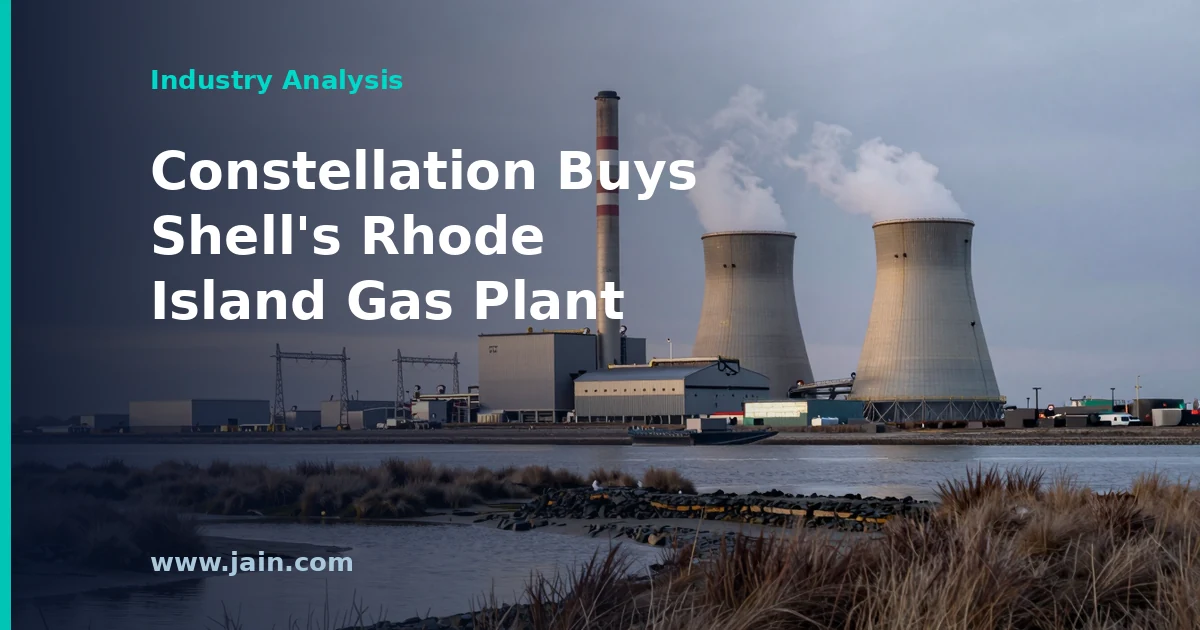
  • Constellation Buys Shell’s Rhode Island Gas Plant for $715M

    Constellation Buys Shell’s Rhode Island Gas Plant for $715M

    TL;DR · 30-second read

    The Short Version

    Constellation, one of the largest electricity producers in the United States, is paying $715 million to buy a natural gas power plant in Rhode Island from the oil company Shell. As part of the same package, Shell takes over Constellation’s share of a gas plant in Pennsylvania.

    Nobody is building anything new here. Two big companies are trading plants that already exist and are already plugged into the grid.

    That matters because the giant computer warehouses behind artificial intelligence are soaking up electricity faster than new plants can be built. A plant you can switch on today is now worth a great deal.

    Constellation Energy has agreed to acquire the Rhode Island State Energy Center, a gas-fired power station, from Shell for $715 million, and in the same package to hand Shell its interest in the Hunlock Creek generating station in northeastern Pennsylvania. Reuters reported the two legs as a single transaction announced together, with cash moving one way and a minority generating stake the other. Constellation has said it expects the purchase to be accretive, meaning it should add to per-share earnings rather than dilute them.

    The timing sits inside a busy stretch for Shell’s portfolio. In a Form 6-K filed with the Securities and Exchange Commission on September 3, Shell confirmed it had completed its acquisition of ARC Resources on September 2, a roughly $16.5 billion enterprise-value deal that adds about 370,000 barrels of oil equivalent per day of Canadian production. Selling a single merchant power plant in New England while closing a multibillion-dollar upstream gas acquisition is a fair summary of where Shell is putting its capital.

    Executive Summary

    The headline number is $715 million for a combined-cycle gas plant, but the structure is the more interesting part. Constellation is buying full ownership of dispatchable capacity in New England, generation that can be called on when the grid needs it rather than when the weather allows it. At the same time it is releasing a partial interest in a Pennsylvania plant to a buyer that wants a position there. Each side is trading breadth for concentration.

    For Constellation, already the largest operator of nuclear plants in the country, gas is the flexible complement to an around-the-clock nuclear fleet. Nuclear runs flat out; gas fills the peaks, backs up intermittent renewables, and earns capacity payments for simply being available. Owning both in the same regions gives a generator more ways to sell the same megawatt.

    For Shell, the sale continues a steady retreat from owning physical power stations in North America while it concentrates on producing and trading the gas that fuels them. The Hunlock Creek leg complicates a clean narrative of exit, and neither company has explained what Shell intends to do with that position.

    Steel in the Ground Beats Steel on Order

    The scarcest thing in American power right now is not a turbine. It is a finished plant with a signed grid connection. Interconnection queues, the waiting lines developers join to attach a new project to the transmission system, run for years in most regions. Gas turbine manufacturers have sold out much of their delivery capacity into the next decade. Against that backdrop, a plant that is built, permitted, connected and running carries a premium that has very little to do with the cost of replicating it.

    That is the logic behind a $715 million cheque for an asset nobody is describing as new. Constellation is buying time. Every year of permitting and construction it skips is a year of capacity revenue and energy margin it collects instead. The same arithmetic explains why merchant generators across the Northeast have spent the past two years buying each other’s plants rather than breaking ground on their own.

    The risk is symmetrical. Paying a scarcity premium works only if scarcity persists. If load growth from data centers arrives more slowly than forecast, or if the current wave of announced projects actually gets built, today’s premium prices become tomorrow’s writedowns. Constellation has not published the assumptions behind its accretion claim, so outsiders cannot see which side of that bet it is making.

    Two Grids, Two Different Bets

    Rhode Island sits inside the six-state New England grid, run by ISO New England. Hunlock Creek sits inside PJM, the grid operator covering 13 states and the District of Columbia from New Jersey west to Illinois. The swap therefore does something more specific than consolidate: it deepens Constellation’s position in New England while trimming a minority holding in PJM, and it gives Shell a foothold in the market where capacity prices have risen most sharply.

    PJM is where the data center load story has been loudest, driven by northern Virginia and spreading into Ohio, Pennsylvania and Maryland. Its recent capacity auctions, the periodic sales where generators are paid to guarantee availability years ahead, have cleared at record levels precisely because demand forecasts rose while older plants retired. New England has a quieter but structurally tighter story: less land, constrained pipelines into the region during winter cold snaps, and an aggressive state-level push toward renewable retail supply that raises the value of firm capacity even as it discourages new fossil construction.

    Read that way, Constellation is not buying into a boom. It is buying into a squeeze. New England needs dispatchable generation to stay reliable in February regardless of what its decarbonisation policy says about 2033, and the plants that remain face little prospect of new fossil competition. That is a defensible position to own, and a politically exposed one.

    For Shell, Power Plants Are No Longer the Point

    Shell’s direction of travel is visible in its own filings. The completion of the ARC Resources acquisition on September 2, disclosed in a Form 6-K, added roughly 370,000 barrels of oil equivalent per day and was framed by chief executive Wael Sawan around long-duration, low-cost liquids and the Montney gas basin. Shell said the deal should generate double-digit returns and be accretive to free cash flow per share from 2027. The company is also mid-way through a share buy-back programme it announced on July 30 and has reported on repeatedly since.

    Against $16.5 billion of enterprise value in upstream production, a $715 million power plant sale is a rounding adjustment, and that is the point. Shell is choosing molecules and trading over electrons and assets. Owning a merchant generator means accepting capacity market rules, state environmental policy and grid operator decisions you do not control. Selling the plant while keeping the gas supply and trading relationship captures much of the commercial upside with far less regulatory surface area.

    Which makes the Hunlock Creek leg the genuine open question of this transaction. A company retreating from US power generation does not normally buy a generating stake on the way out. Neither party has said whether Shell values it as a physical hedge for its gas trading book, a PJM beachhead, or simply a way to reduce the cash component of the deal.

    What It Means If You Are Buying Power, Not Selling It

    Data center developers reading this should notice what did not happen. No customer was named. No contracted capacity was disclosed. No power purchase agreement accompanied the announcement. This is a generator strengthening its position in a tight market, not a generator responding to a specific signed load.

    The practical implication for large electricity buyers is that the pool of counterparties who can offer firm, around-the-clock supply in the Northeast just got slightly more concentrated. Concentration is not automatically bad for buyers. Fewer, larger owners with nuclear and gas in the same region can structure blended products that a single-asset owner cannot. It does, however, mean less price tension in negotiations, and it raises the value of getting into a contract before the next round of consolidation prices it higher.

    Headlines in the sessions around the announcement pointed in both directions, with Constellation shares described as falling in one and both stocks higher in another. Short-run share moves say more about how a deal was expected than about whether it was wise. The substantive test is arithmetic that neither company has yet published.

    Background

    Constellation Energy was separated from utility parent Exelon in 2022 as a standalone competitive generator, taking with it the largest nuclear fleet in the United States alongside gas, hydro and renewable assets. Unlike a regulated utility, it sells power into wholesale markets rather than earning a set return on rate base, which makes its earnings a direct function of energy prices, capacity auctions and contracts with large customers. That model has drawn investor attention as artificial intelligence data centers began signing long-term deals for firm, carbon-free power.

    Shell entered North American merchant power partly through its trading arm and partly through acquisitions, but has spent recent years narrowing to what it does best at scale: finding, moving and selling hydrocarbons, with a large trading operation on top. Its completed purchase of ARC Resources, confirmed to the Securities and Exchange Commission in early September, is the clearest expression of that focus. Selling a New England generating station while adding Canadian gas production is consistent with a company that wants exposure to the fuel and to the market, without owning the machinery that burns it.

    Sources

    Source: Constellation Energy stock falls after Rhode Island acquisition announcement — coverage of the market reaction to Constellation’s agreement to acquire the Rhode Island State Energy Center from Shell for $715 million.

    Primary sources: Shell plc, Form 6-K filed September 3, 2026 — completion of the ARC Resources acquisition; Shell plc, Form 6-K filed September 1, 2026 — Transaction in Own Shares; Shell plc, Form 6-K filed September 1, 2026 — Admission to Trading of new Shell shares; AP News, September 7, 2026. Additional reporting on the transaction from Reuters, Hart Energy and Providence Business News.

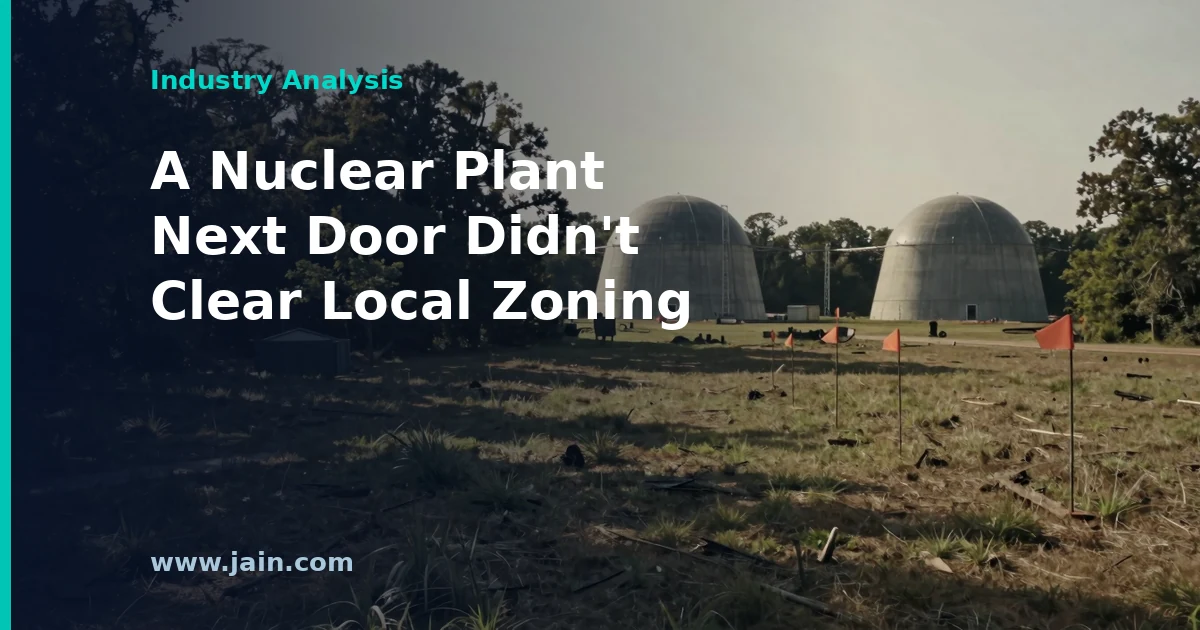
  • Amazon’s 2.4M Sq Ft Calvert Cliffs Exit Shows a Nuclear Plant Can’t Shortcut Zoning

    Amazon’s 2.4M Sq Ft Calvert Cliffs Exit Shows a Nuclear Plant Can’t Shortcut Zoning

    TL;DR · 30-second read

    The Short Version

    Amazon has dropped plans to build a large group of data centers on the grounds of a nuclear power plant in southern Maryland. Data centers are warehouse-sized buildings full of computers that run apps, websites and artificial intelligence. This one would have covered roughly 40 football fields of floor space.

    Having a giant power plant next door was not enough. Local voters removed three county leaders who had resisted pausing these projects, and the county is now considering a six-month freeze. Amazon calls it a business decision. Either way, local approval proved as important as electricity.

    Amazon Web Services (AWS), Amazon’s cloud computing arm, has abandoned its proposal to build data centers on the campus of the Calvert Cliffs Nuclear Power Plant near Lusby, Maryland, Maryland Matters reported on August 4, 2026, citing a Calvert County government news release. The proposal, submitted to the county in early May, called for “multiple data center campuses” covering 2.4 million square feet.

    The withdrawal follows the June 23 primary election, in which all three Calvert County commissioners who had voted against a pause on data centers lost their races. The county has scheduled an August 18 public meeting on a temporary six-month moratorium on site plan approvals for data center projects. Amazon described the move as a business decision; plant owner Constellation Energy said the opportunity at the site continues.

    Executive Summary

    AWS has walked away from what was, on paper, one of the most attractive data center sites in the Mid-Atlantic: land beside a nuclear plant that Constellation calls Maryland’s largest source of clean, reliable energy. Co-locating a data center with a power plant is the siting strategy much of the industry has pursued to secure the large, round-the-clock electricity that AI and cloud computing demand.

    The Calvert Cliffs outcome shows the limit of that strategy. Power next door does not remove the need for local land-use approval, and in Calvert County the politics of that approval shifted sharply between Amazon’s May filing and its August exit. Amazon’s own statement names development timelines as a deciding factor — the variable a county moratorium directly controls.

    For developers, utilities and investors, the lesson extends well beyond one county. Much of Maryland’s population now lives under some form of data center moratorium, according to a regional climate advocacy group, and state lawmakers may take up statewide proposals in 2027.

    Power Next Door Did Not Replace the Permit

    Data center developers have spent the past two years chasing power, not land. Large facilities that train and run AI models draw electricity continuously, and securing that supply through a crowded regional grid can take years. Building beside a nuclear plant — often called co-location — is attractive because the plant produces large amounts of steady, carbon-free power on site. Calvert Cliffs, with Units 1 and 2 near Lusby, offered exactly that.

    But a site plan still has to be approved by the county. Amazon filed its 2.4 million-square-foot proposal in early May. On June 23, voters removed commission president Todd Ireland, vice president Mark C. Cox Sr. and commissioner Earl F. “Buddy” Hance, the three commissioners who had voted against a data center pause, in favor of candidates critical of the county’s data center trajectory. On August 4, the county announced both Amazon’s withdrawal and a hearing on a six-month moratorium on data center site plan approvals, intended to allow time for new zoning rules and studies.

    Amazon says the decision was a business one, and nothing public contradicts that. Its statement, however, lists the factors it weighs: “development timelines, operational requirements, and our ability to deliver quickly for customers.” A six-month pause followed by a zoning rewrite is a timeline risk that no amount of nearby generation can offset. The mechanism is straightforward: the power advantage of a nuclear site is realized only after the building exists, while the permitting clock starts first. For hyperscalers — the largest cloud operators — that measure value in speed to capacity, an uncertain local calendar can outweigh a favorable power position.

    Maryland’s Moratorium Map Is Now a Siting Input

    Calvert County is not an isolated case. The Chesapeake Climate Action Network (CCAN), an advocacy group that supports moratoriums, said in July that nearly 77% of Maryland’s population lives under some kind of data center moratorium. That figure comes from an interested party, but the underlying measures are matters of public record: Prince George’s County enacted a two-year hold in July, Harford County has a ban with no time limit, Montgomery County, Baltimore County and Baltimore City have adopted measures, and Queen Anne’s and Washington counties have one-year pauses.

    The political signal is also visible in Frederick County, where voters ousted council chair Brad Young after the council expanded a data center zone in Adamstown. County Executive Jessica Fitzwater then paused data center development through year-end — while county leaders still intend to proceed with a planned 2,500-acre campus. That combination matters: it suggests the backlash is producing delays and new process rather than blanket rejection everywhere, which is a different risk for developers to price.

    CCAN’s Maryland director expects the General Assembly to consider statewide moratorium bills in 2027. That is a forecast, not a filed bill, but for anyone evaluating Maryland sites it turns a county-by-county patchwork into a possible statewide variable.

    What Constellation and the Next Applicant Are Left Holding

    Constellation, which owns Calvert Cliffs, loses a named tenant but not its thesis. It said the opportunity remains to “create jobs, grow the economy and support in-state federal agencies” and that this can be done “responsibly while protecting and expanding” the plant. Those are claims about future projects that have yet to be specified; the county’s proposed review of zoning and heavy industrial use is where they would be tested.

    Opponents have their own case to make. Petition organizer Melissa Emmal, whose Change.org petition has passed 10,000 signatures, and the nonprofit Save Lusby Inc. are asking for studies and zoning changes before any project proceeds. The June results suggest broad local support for that position, though the scope of the studies and the criteria for lifting a pause remain undefined — questions the county will need to answer if a moratorium is meant to lead to rules rather than indefinite delay.

    Meanwhile, the pipeline has not emptied. Natelli Holdings has proposed a separate data center nearby along Route 4, near Calvert Cliffs State Park, an existing landfill, a wastewater treatment facility and a county-owned gun range. Amazon could also resubmit. Whoever moves next will face the same question Amazon did: not whether the power is there, but how long approval will take.

    Background

    Calvert Cliffs Nuclear Power Plant, with Units 1 and 2 near Lusby in Southern Maryland, is owned by Constellation Energy, which describes it as the state’s largest source of clean, reliable energy. Amazon Web Services is one of the hyperscalers — the handful of companies that build and operate the largest cloud and AI data centers — and has been pursuing sites with reliable access to large amounts of electricity.

    Maryland has become a focal point for local resistance to data center development. Through 2026, counties including Prince George’s, Montgomery, Harford, Baltimore County, Queen Anne’s and Washington adopted pauses or bans, and data center policy became a deciding issue in county primaries in Calvert and Frederick counties.

    Sources

    Source: Amazon abandons plans for data center campus at Calvert Cliffs — Maryland Matters on AWS withdrawing its Calvert Cliffs data center proposal after a county primary centered on data centers.