Tag: Clean Air Act

  • Georgia’s 33-Engine Data Center Case Shows Permits Pace AI’s Bring-Your-Own Power

    Georgia’s 33-Engine Data Center Case Shows Permits Pace AI’s Bring-Your-Own Power

    TL;DR · 30-second read

    The Short Version

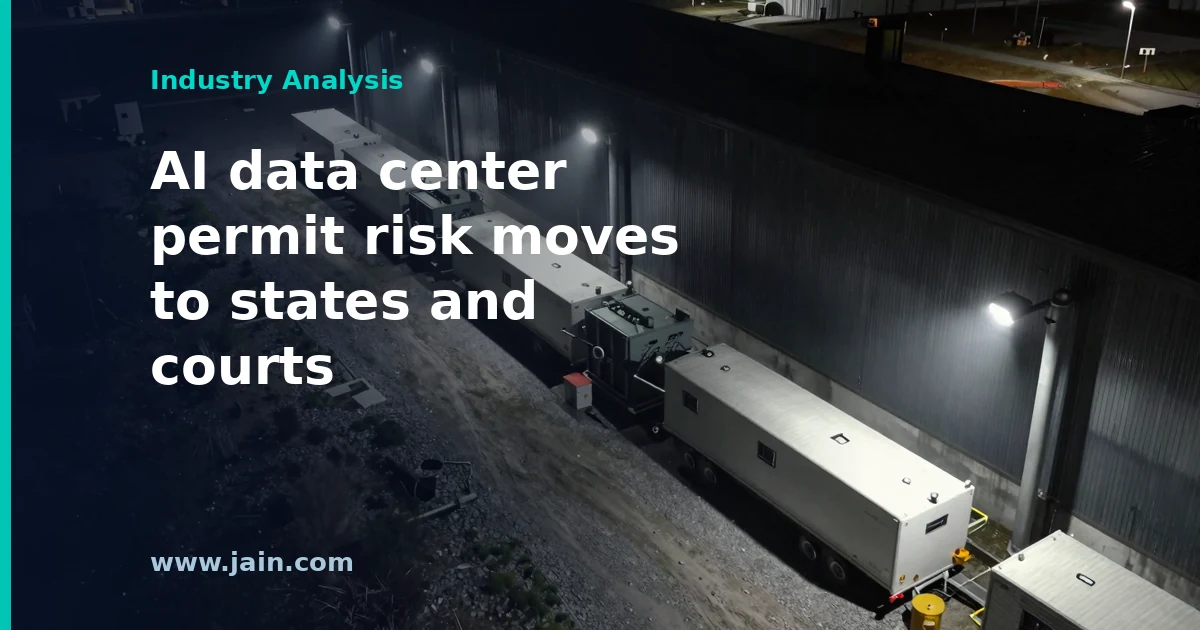
    A company building a data center near Atlanta, a warehouse of computers of the kind that runs AI tools, planned its own small power plant next door. The plant uses 33 large engines burning diesel and natural gas.

    Environmental groups say the companies started building before Georgia approved the air-pollution permits. The state has now issued formal violation notices.

    Why it matters: building your own power is pitched as the fast way to get AI running. This case shows that government approval, not the equipment, decides how fast.

    The Georgia Environmental Protection Division (EPD) has issued notices of violation to microgrid company VoltaGrid and data center company Serverfarm over a planned data center and on-site power plant in Covington, southeast of Atlanta. WABE reported the notices on July 7, 2026, citing the Southern Environmental Law Center (SELC), which said the agency acted after inspecting the site.

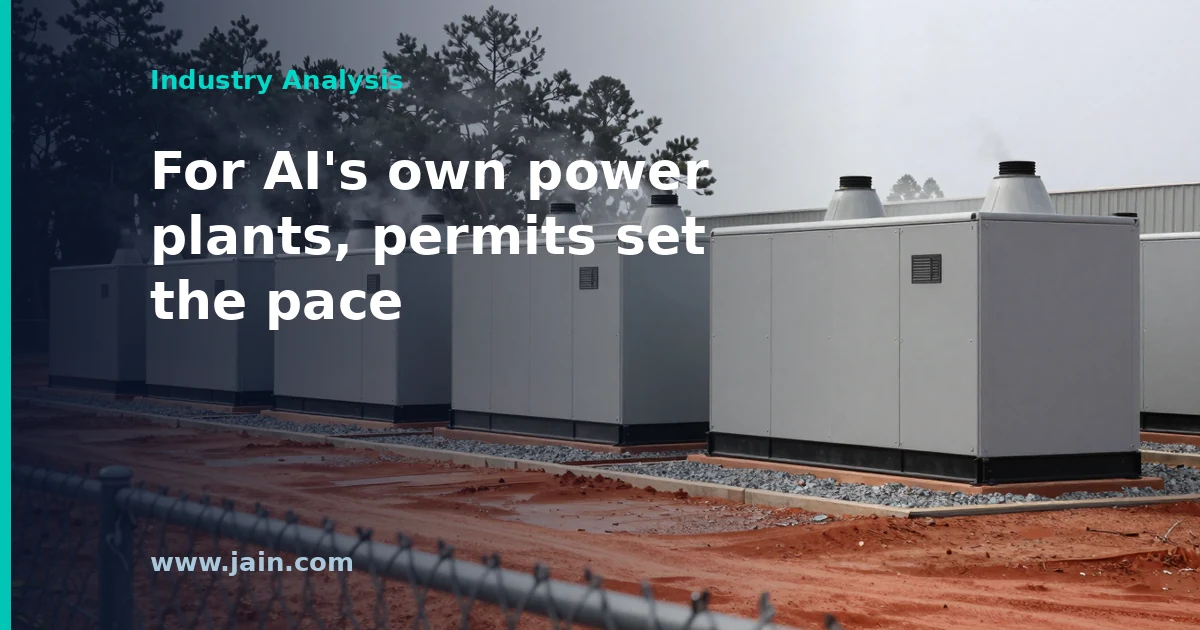
    The companies have applied for state permits for a 33-engine “pop-up” power plant burning diesel and natural gas, plus backup generators for the data center. SELC, Altamaha Riverkeeper and Sustainable Newton allege construction began before those permits were issued and have asked EPD to halt it and assess penalties. VoltaGrid, Serverfarm and EPD did not reply to requests for comment.

    Executive Summary

    VoltaGrid’s permit application describes the Covington plant as “alternative, rapidly deployable prime power”: 33 internal-combustion engines supplying the data center directly rather than drawing from Georgia Power’s grid. It would be the first project of its kind in Georgia. The environmental groups say engines and emergency generators are already standing, some complete and some under construction, while the permit request is still in public comment.

    The significance reaches beyond one site. On-site, or “behind-the-meter,” generation has become a favored answer to the grid bottleneck facing AI data centers, and it has drawn interest from Georgia officials worried about who pays for utility expansion. The Covington dispute shows where that model’s speed advantage runs out: engines can arrive quickly, but air permits under Georgia law and the federal Clean Air Act still have to come first. A notice of violation is not a final penalty, and the companies have not responded publicly. Still, the first project of this type in the state is now under scrutiny, and that sets the tone for the next ones.

    Speed Is the Product, and the Permit Is the Clock

    The appeal of a pop-up power plant is time. A large data center waiting on a utility can face years of transmission upgrades and new generation. Georgia Power is adding 10 gigawatts of capacity, mostly for data centers. Modular engines like the 33 in VoltaGrid’s application can be shipped, set on pads and wired up in a fraction of that time. VoltaGrid’s own filing calls the power “rapidly deployable,” and that phrase is the business case.

    But 33 fuel-burning engines are a significant new source of air emissions. In Georgia they need a state air permit, which the groups say must be issued before construction starts. That permit process includes public comment, and residents have already used it to raise pollution concerns. So the deployment timeline is set by the permit, not by the equipment. The groups allege the companies tried to run both timelines at once. If EPD finds they did, the remedies the groups are requesting, a halt to “all prohibited construction activities” plus penalties, would turn any time saved into delay and legal exposure.

    The people affected are specific. Developers pitching bring-your-own power have to schedule around permit decisions, not delivery dates. Data center tenants and financiers counting on an early energization date carry the risk if a regulator stops work. And a stop-work demand on the state’s first such project will likely be read by every developer planning a second one.

    Why Bring-Your-Own Power Appeals in Georgia

    Georgia is one of the country’s hottest data center markets. Meta already operates a large facility near Covington and Amazon is building one. Georgia Power’s 10-gigawatt expansion has drawn pushback from customers and advocates, who worry that households and small businesses will end up covering part of the cost through rates or fuel charges.

    A self-supplied plant addresses that concern directly. If the data center generates its own electricity, there is no new utility infrastructure to recover from other ratepayers. That is why the idea has come up as the Georgia Public Service Commission and the legislature grapple with data center energy demand. The Covington case tests whether that policy preference survives contact with environmental permitting in practice.

    The Emissions Trade-Off Does Not Disappear

    Moving generation behind the meter changes who pays for power. It does not change what the power plant burns. The VoltaGrid engines would run on diesel and natural gas, and residents’ public comments focus on air pollution from those units, which would sit close to the community rather than at a distant central station. Carbon emissions remain a concern too.

    Cleaner options that suit an on-site model, such as the small nuclear reactors some tech companies are pursuing, are still years away. For now, bring-your-own power for AI data centers mostly means fossil-fueled engines or turbines. That makes air permits the main regulatory checkpoint, and it is why the permitting process draws this much attention.

    Weighing the Claims on Both Sides

    The groups’ case rests on aerial photographs they say show completed and partly built engines and generators, and on EPD’s notices of violation, which SELC says followed an inspection. The notices carry weight because they reflect the regulator’s own finding after a site visit, not only the advocates’ reading of photos. The terms of those notices, and what exactly EPD found, have not been made public by the agency. It is also open to question whether everything visible in the photos counts as prohibited construction rather than staged equipment. The companies are the ones best placed to answer that, and they have not.

    The opposition is also not framed as anti-data-center. Nancy Schulz of Sustainable Newton called Meta and Amazon good community partners and said the demand is simply to get permits before building. That framing makes the case about process compliance rather than whether data centers belong in Newton County. It is a narrower claim, and one that EPD’s eventual findings can settle.

    Background

    Metro Atlanta has become one of the largest data center markets in the United States, driven by demand for the computing that powers generative AI. Newton County, where Covington sits, already hosts a large Meta data center, and Amazon is building another. The boom has divided communities: some local officials welcome the investment and tax revenue, while residents and other leaders have opposed projects over electricity use, water consumption and pollution.

    To meet the demand, Georgia Power is adding 10 gigawatts of generation, mostly for data centers. That has fueled debate at the Georgia Public Service Commission and in the legislature about who pays. Having data centers bring their own power has emerged as one proposed answer, and the VoltaGrid–Serverfarm project would be the first power plant of its kind in the state.

    Sources

    Source: Atlanta-area data center, power plant accused of building generators without permit (WABE): Georgia EPD issues notices of violation to VoltaGrid and Serverfarm over a 33-engine power plant for a Covington data center.

  • EPA’s AI Data Center Exit: 57 Disputed Turbines Show Where Permit Risk Lands

    EPA’s AI Data Center Exit: 57 Disputed Turbines Show Where Permit Risk Lands

    TL;DR · 30-second read

    The Short Version

    The federal government’s main pollution regulator said on June 10 that it will not write national environmental rules for the giant computer warehouses that run artificial intelligence. States and local towns will decide instead.

    That does not mean fewer fights. Some of these sites burn natural gas on their own property to get electricity quickly. In April, civil rights and environmental groups sued the company xAI, saying it ran 57 gas-fired generators near Memphis without the pollution permits the law requires. How that case ends will decide who gets to challenge these projects in court.

    US Environmental Protection Agency (EPA) Administrator Lee Zeldin said at the Politico Energy Summit on June 10, 2026, that the agency will not pursue any nationwide environmental requirements or recommendations aimed at the AI industry, Crowell & Moring reported. Zeldin acknowledged that technologies exist to reduce data centers’ water consumption and air pollution, but said deciding the right practices for each facility is a matter for states and local communities, not EPA.

    The announcement follows a year of EPA actions easing permitting for power generation and data centers, and it lands amid active litigation: an April 14 Clean Air Act citizen suit by the NAACP, the Southern Environmental Law Center and Earthjustice alleging that xAI and its subsidiary MZX Tech operated 57 unpermitted portable methane gas turbines to power the Colossus 2 data center in South Memphis, and a June 16 Department of Justice motion to intervene and have that suit dismissed.

    Executive Summary

    EPA has taken itself out of the business of writing AI-specific environmental rules. There will be no national standard for data center water use, air emissions or cooling practices, and no federal list of recommended best practices. That removes a layer of regulation developers had reason to expect, but it does not suspend the Clean Air Act or the Clean Water Act, and it does not change the fact that most day-to-day permitting decisions sit with state and local agencies.

    The practical effect is to relocate risk rather than remove it. The part of an AI campus most exposed is on-site combustion — gas turbines and backup engines that make electricity on the property — because that equipment is what triggers air permits. With no federal template, those permits will be judged against differing state and local standards, and enforcement increasingly runs through private lawsuits, as the xAI case shows.

    Whether that private enforcement route stays open is now itself in question. The Department of Justice has argued that private groups cannot pursue Clean Air Act suits over the federal government’s objection. The outcome of that argument will shape the legal risk attached to fast-tracked on-site power across the industry.

    Stepping Back Is Not the Same as Fewer Permits

    Zeldin’s June 10 statement rules out new federal requirements and recommendations aimed at AI. It does not rewrite existing law. Data centers that burn fuel on site still fall under the Clean Air Act, and those that discharge water still fall under the Clean Water Act. New Source Review (NSR) — the Clean Air Act program requiring a permit before a large new pollution source is built — still applies. Until EPA finalizes the rule it proposed in May 2026, a major NSR permit is still required before any construction begins.

    Read in sequence, EPA’s recent actions share a pattern. In May 2025 it issued guidance allowing certain emergency engines to run up to 50 hours a year in non-emergency conditions to support grid reliability for data centers. In September 2025 it gave developers flexibility to start non-emissions-related building work before obtaining a Clean Air Act permit. In May 2026 it proposed redefining when construction legally ‘begins’ so non-emitting structures can go up earlier. Each step lets the concrete and steel move faster. None of them exempts the equipment that actually emits.

    Why 57 Turbines Mark Where the Risk Now Sits

    The server halls of an AI campus do not need an air permit; the generators feeding them can. That is the mechanism behind the title’s claim. When grid connections lag behind construction schedules, some developers bridge the gap with on-site gas generation, and that generation is precisely where Clean Air Act obligations bite. The citizen suit filed April 14 alleges that xAI and MZX Tech ran 57 portable methane gas turbines without required air permits to power Colossus 2 — a fleet the complaint treats as the data center’s power supply, not an ancillary backup. The allegations have not been proven in court, and the plaintiffs seek substantial penalties and cite health risks for families in South Memphis and North Mississippi.

    With EPA declining to set a national standard, the questions that decide cases like this — whether equipment crosses major source thresholds (the emissions levels above which a facility needs the most demanding permits), what controls are required, how long ‘temporary’ generation may run — are answered by state air agencies and local boards, and tested by private plaintiffs in federal court. A citizen suit is a lawsuit a private party can bring to enforce a federal environmental law after giving 60 days’ notice. The people most affected are developers using on-site generation to beat grid timelines, the lenders and customers relying on those schedules, and the communities living next to the equipment.

    The Justice Department’s Intervention Is the Swing Variable

    On June 16, the Department of Justice moved to intervene in the xAI case and have it dismissed. Its filing argues that the suit threatens national security by seeking to cut power to AI infrastructure that supports the Department of War’s operations, and, more broadly, that the executive branch holds exclusive authority to enforce federal law, so private parties cannot pursue Clean Air Act citizen suits over the government’s objection.

    If a court accepted that theory, it would sharply narrow a private right of action Congress wrote into the statute and raise separation-of-powers questions, since the executive branch would effectively decide which cases reach a judge. Crowell & Moring’s attorneys consider it unlikely the court will accept the argument. Either way, the ruling matters well beyond Memphis: it will tell developers whether federal non-enforcement actually lowers their exposure, or whether private enforcement fills the space EPA has left.

    A Patchwork Rewards Early Paperwork

    Without a national baseline, requirements will diverge by state and locality, and a multi-state developer will face different rules for the same turbine or cooling design. That favors operators who secure permits before breaking ground, audit whether their generation crosses major source thresholds, and treat compliance with federal law as protection against both citizen suits and a future administration that enforces more aggressively.

    Zeldin’s own acknowledgment that pollution- and water-reducing technologies exist points to a hedge: voluntary adoption of measures such as closed-loop cooling, which recirculates water rather than evaporating it, may reduce the odds of state action and local opposition. The competitive edge in this environment belongs less to whoever builds fastest than to whoever can show a regulator, a neighbor or a judge that the power plant behind the data center was permitted from day one.

    Background

    The US Environmental Protection Agency sets national rules under laws such as the Clean Air Act and Clean Water Act, but state and local agencies issue and enforce many of the permits that apply to individual facilities. The rapid growth of AI data centers — and the electricity they need — has drawn activity from Congress, the executive branch, federal agencies and the courts, without yet producing a cohesive regulatory framework.

    Since May 2025, EPA has issued a string of actions aimed at speeding data center and power plant construction, and in January 2026 it held a roundtable with the Data Center Coalition, the industry’s trade association. xAI’s Colossus 2 in South Memphis has become the most visible test of how environmental law applies to AI campuses that generate their own power on site.

    Sources

    Source: EPA Steps Back from AI Data Center Regulation: What Developers Must Know Now – Crowell & Moring LLP — EPA’s June 10, 2026 decision not to set national environmental standards for AI data centers, and the Clean Air Act litigation over xAI’s Colossus 2 turbines.