Tag: behind-the-meter power

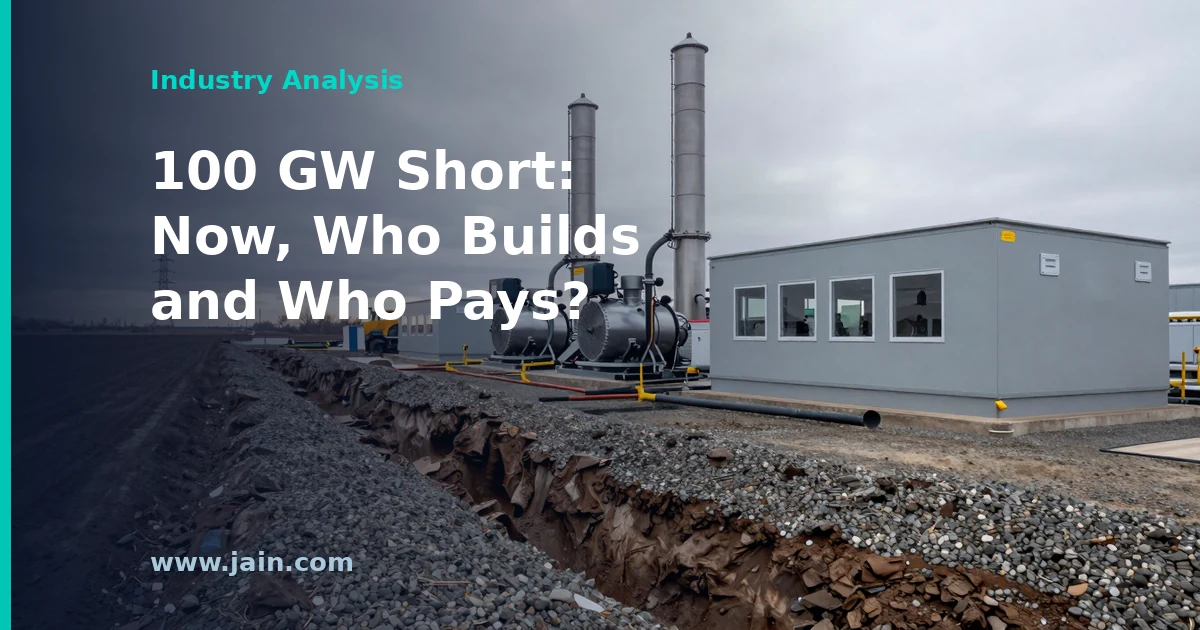
  • BofA’s 100 GW Gap Shifts the AI Power Debate From Forecasts to Who Builds and Pays

    BofA’s 100 GW Gap Shifts the AI Power Debate From Forecasts to Who Builds and Pays

    TL;DR · 30-second read

    The Short Version

    America’s artificial intelligence boom may need far more electricity than power companies plan to supply. Bank of America analysts expect a shortfall by 2030 about equal to the output of 100 large nuclear reactors.

    Some builders of giant computing centers may make their own power on site, often with natural gas engines. Some coal plants due to close are staying open.

    The big unresolved question is who pays. The answer could shape what households and businesses see on their electric bills.

    Utility Dive reported on July 17, 2026 that Bank of America analysts expect the United States to need more than 230 gigawatts (GW) of new generating capacity over the next five years, while regulated utilities add only about 93 GW of accredited supply, leaving a gap of more than 100 GW. Data centers alone could add roughly 125 GW of electric load, helping push electricity demand growth to a 4.1% compound annual rate from 2026 through 2030.

    With large gas turbines largely sold out through 2030, the analysts expect data center developers to turn increasingly to on-site gas engines. They expect utilities to extend coal plant operations, deploy batteries and pursue transmission upgrades.

    Executive Summary

    BofA’s forecast puts a number on a problem the power and data center industries have been circling: planned utility additions cover only a minority of the capacity the analysts think the country will need by 2030. About 93 GW of accredited utility supply set against more than 230 GW of need is roughly 40% coverage.

    The more useful part of the report concerns what happens next. More than 7.5 GW of data center projects with on-site generation are under construction and another 60 GW-plus are in pre-construction. Coal plants in seven states have had retirements delayed or canceled, and engine manufacturers have expanded production. Each of those responses carries its own costs, and utilities and regulators are still working out how to allocate the cost of new infrastructure.

    That is why the planning question is changing. Utilities have raised their demand forecasts in each of the past three years, so attention is moving toward which assets can be delivered by 2030 and who will finance them. The forecast itself still depends on a fast AI hardware rollout, which is the main assumption to test.

    Why the Debate Is Moving Past the Forecast

    For years, the central argument in utility planning was whether projected data center demand would show up. BofA’s analysts take a firmer position. “The market is no longer constrained by demand — it is constrained by where power can actually be delivered,” they wrote. Their evidence is that utilities have revised demand forecasts upward in each of the past three years as AI-related load has arrived faster than expected.

    The arithmetic explains the shift. Against a need of more than 230 GW, regulated utilities are expected to add about 93 GW of accredited supply, a shortfall the analysts put at more than 100 GW. Even if demand came in somewhat below the forecast, a gap of that size would still leave planners deciding which resources to build, extend or contract, and who should carry the cost. Data centers’ roughly 125 GW of added load is a bit over half of the 230 GW figure, although load and generating capacity are not identical measures. The requirement is therefore larger than data centers alone.

    The demand question is not fully closed, however. The outlook rests largely on projections from BofA’s semiconductor analysts about how quickly AI chips and servers will be deployed. A slower hardware rollout would change the size of the gap, so the claim that demand is no longer the constraint is strongest as a description of the current market and depends on that rollout continuing.

    On-Site Power Is Growing, but 7.5 GW Is Not 100 GW

    The most visible response is behind-the-meter generation, meaning power plants built at the customer’s site rather than supplied solely through the utility grid. More than 7.5 GW of such data center projects are under construction, which is a small fraction of a gap exceeding 100 GW. Adding the 60 GW-plus in pre-construction brings the pipeline to more than 67.5 GW. That still falls short of the gap, and projects in pre-construction are not yet being built.

    Equipment availability is shaping the technology choice. Large gas turbines remain the preferred source of flexible power, but manufacturing capacity is largely committed through 2030 and new units can take years to enter service after shipment. Reciprocating engines, which work on a similar principle to a very large car engine, can be deployed faster and respond quickly to changing loads. Caterpillar, INNIO, Rolls-Royce and Wärtsilä have expanded production, according to the analysts.

    On-site generation does not take these projects off the grid. BofA expects facilities to pair self-generation with traditional grid connections to improve reliability and shorten timelines. Developers would therefore take on more of the power-plant work while still relying on utilities, which keeps questions about grid costs and connection terms open.

    The Capacity on Paper May Overstate What Shows Up at Peak

    The analysts also argue that planned additions may overstate available supply. A resource’s nameplate rating is its maximum output, while accredited capacity reflects what grid planners can count on during peak demand. Wind and solar typically earn less accreditation than their nameplate ratings suggest, so BofA concludes that firm resources, meaning those that can run on demand, will remain essential even as renewable generation expands.

    That helps explain why existing plants have become part of the plan. The report identifies coal plants in Maryland, Wisconsin, Indiana, Utah, Kansas, Nebraska and Mississippi whose retirements were delayed or canceled to preserve dispatchable capacity. Batteries, transmission expansion and regulatory changes that make fuller use of existing generators could also help.

    Transmission is the slowest of these options. BofA cites the Champlain Hudson Power Express, which took 16 years from planning to energization. That is one example rather than a typical schedule, but it shows why new lines may do little for a shortfall measured through 2030. It also gives weight to the analysts’ emphasis on where power can actually be delivered, since generation in one region does not help a site the grid cannot reach.

    Who Pays Is the Harder Question

    Prices are unlikely to close this gap on their own. Academic research cited in the report suggests a 10% increase in real electricity prices typically reduces consumption by 1% to 2% in the short to medium term. Set against forecast demand growth of 4.1% a year, that reduction is less than half of one year’s projected increase.

    Limited price response puts more weight on cost allocation. Utilities and regulators are already addressing how to connect large new loads and divide the cost of new infrastructure. BofA notes that higher power prices could cause some demand destruction among customers and energy-intensive industries, so these decisions could reach well beyond the data center sector.

    The likely mix of solutions also spreads costs differently. On-site engines place more of the build-out with developers, life extensions for existing plants run through utilities and their regulators, and transmission can involve many parties over many years. The choice of what gets built is therefore closely tied to who ends up paying for it.

    Background

    US electricity consumption grew little for about a decade as efficiency improvements, LED adoption and distributed solar generation offset new demand. AI infrastructure has changed that outlook, and utilities have raised their demand forecasts in each of the past three years. Because turbines, transmission lines and other grid assets can take years to deliver, faster load growth can quickly become a supply problem.

    Regulators are responding as well. The Federal Energy Regulatory Commission has issued a decision on data center interconnection, the process of connecting a facility to the grid. In June, Texas, facing a 438 GW queue, approved an initial large-load interconnection process. These moves reflect the same issue at the center of BofA’s report: how large new customers connect to the system and on what terms.

    Sources

    Source: AI data center growth could force US utilities to rethink generation plans, BofA says, Utility Dive’s July 17, 2026 brief on Bank of America’s forecast of a US electricity supply gap through 2030.

  • Georgia’s 33-Engine Data Center Case Shows Permits Pace AI’s Bring-Your-Own Power

    Georgia’s 33-Engine Data Center Case Shows Permits Pace AI’s Bring-Your-Own Power

    TL;DR · 30-second read

    The Short Version

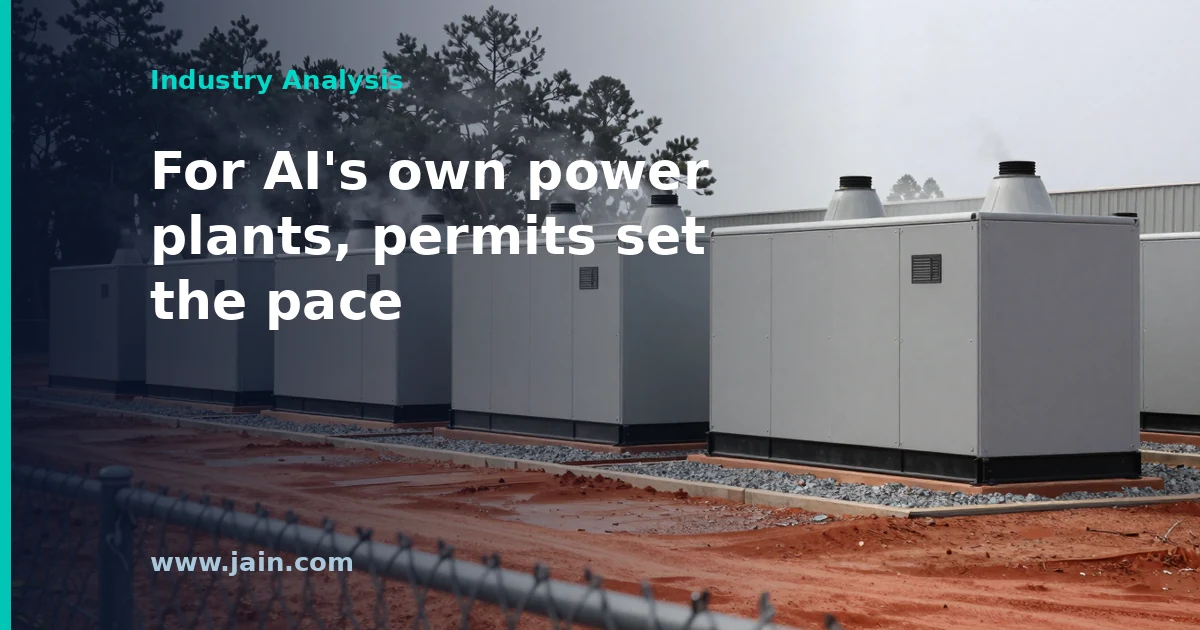
    A company building a data center near Atlanta, a warehouse of computers of the kind that runs AI tools, planned its own small power plant next door. The plant uses 33 large engines burning diesel and natural gas.

    Environmental groups say the companies started building before Georgia approved the air-pollution permits. The state has now issued formal violation notices.

    Why it matters: building your own power is pitched as the fast way to get AI running. This case shows that government approval, not the equipment, decides how fast.

    The Georgia Environmental Protection Division (EPD) has issued notices of violation to microgrid company VoltaGrid and data center company Serverfarm over a planned data center and on-site power plant in Covington, southeast of Atlanta. WABE reported the notices on July 7, 2026, citing the Southern Environmental Law Center (SELC), which said the agency acted after inspecting the site.

    The companies have applied for state permits for a 33-engine “pop-up” power plant burning diesel and natural gas, plus backup generators for the data center. SELC, Altamaha Riverkeeper and Sustainable Newton allege construction began before those permits were issued and have asked EPD to halt it and assess penalties. VoltaGrid, Serverfarm and EPD did not reply to requests for comment.

    Executive Summary

    VoltaGrid’s permit application describes the Covington plant as “alternative, rapidly deployable prime power”: 33 internal-combustion engines supplying the data center directly rather than drawing from Georgia Power’s grid. It would be the first project of its kind in Georgia. The environmental groups say engines and emergency generators are already standing, some complete and some under construction, while the permit request is still in public comment.

    The significance reaches beyond one site. On-site, or “behind-the-meter,” generation has become a favored answer to the grid bottleneck facing AI data centers, and it has drawn interest from Georgia officials worried about who pays for utility expansion. The Covington dispute shows where that model’s speed advantage runs out: engines can arrive quickly, but air permits under Georgia law and the federal Clean Air Act still have to come first. A notice of violation is not a final penalty, and the companies have not responded publicly. Still, the first project of this type in the state is now under scrutiny, and that sets the tone for the next ones.

    Speed Is the Product, and the Permit Is the Clock

    The appeal of a pop-up power plant is time. A large data center waiting on a utility can face years of transmission upgrades and new generation. Georgia Power is adding 10 gigawatts of capacity, mostly for data centers. Modular engines like the 33 in VoltaGrid’s application can be shipped, set on pads and wired up in a fraction of that time. VoltaGrid’s own filing calls the power “rapidly deployable,” and that phrase is the business case.

    But 33 fuel-burning engines are a significant new source of air emissions. In Georgia they need a state air permit, which the groups say must be issued before construction starts. That permit process includes public comment, and residents have already used it to raise pollution concerns. So the deployment timeline is set by the permit, not by the equipment. The groups allege the companies tried to run both timelines at once. If EPD finds they did, the remedies the groups are requesting, a halt to “all prohibited construction activities” plus penalties, would turn any time saved into delay and legal exposure.

    The people affected are specific. Developers pitching bring-your-own power have to schedule around permit decisions, not delivery dates. Data center tenants and financiers counting on an early energization date carry the risk if a regulator stops work. And a stop-work demand on the state’s first such project will likely be read by every developer planning a second one.

    Why Bring-Your-Own Power Appeals in Georgia

    Georgia is one of the country’s hottest data center markets. Meta already operates a large facility near Covington and Amazon is building one. Georgia Power’s 10-gigawatt expansion has drawn pushback from customers and advocates, who worry that households and small businesses will end up covering part of the cost through rates or fuel charges.

    A self-supplied plant addresses that concern directly. If the data center generates its own electricity, there is no new utility infrastructure to recover from other ratepayers. That is why the idea has come up as the Georgia Public Service Commission and the legislature grapple with data center energy demand. The Covington case tests whether that policy preference survives contact with environmental permitting in practice.

    The Emissions Trade-Off Does Not Disappear

    Moving generation behind the meter changes who pays for power. It does not change what the power plant burns. The VoltaGrid engines would run on diesel and natural gas, and residents’ public comments focus on air pollution from those units, which would sit close to the community rather than at a distant central station. Carbon emissions remain a concern too.

    Cleaner options that suit an on-site model, such as the small nuclear reactors some tech companies are pursuing, are still years away. For now, bring-your-own power for AI data centers mostly means fossil-fueled engines or turbines. That makes air permits the main regulatory checkpoint, and it is why the permitting process draws this much attention.

    Weighing the Claims on Both Sides

    The groups’ case rests on aerial photographs they say show completed and partly built engines and generators, and on EPD’s notices of violation, which SELC says followed an inspection. The notices carry weight because they reflect the regulator’s own finding after a site visit, not only the advocates’ reading of photos. The terms of those notices, and what exactly EPD found, have not been made public by the agency. It is also open to question whether everything visible in the photos counts as prohibited construction rather than staged equipment. The companies are the ones best placed to answer that, and they have not.

    The opposition is also not framed as anti-data-center. Nancy Schulz of Sustainable Newton called Meta and Amazon good community partners and said the demand is simply to get permits before building. That framing makes the case about process compliance rather than whether data centers belong in Newton County. It is a narrower claim, and one that EPD’s eventual findings can settle.

    Background

    Metro Atlanta has become one of the largest data center markets in the United States, driven by demand for the computing that powers generative AI. Newton County, where Covington sits, already hosts a large Meta data center, and Amazon is building another. The boom has divided communities: some local officials welcome the investment and tax revenue, while residents and other leaders have opposed projects over electricity use, water consumption and pollution.

    To meet the demand, Georgia Power is adding 10 gigawatts of generation, mostly for data centers. That has fueled debate at the Georgia Public Service Commission and in the legislature about who pays. Having data centers bring their own power has emerged as one proposed answer, and the VoltaGrid–Serverfarm project would be the first power plant of its kind in the state.

    Sources

    Source: Atlanta-area data center, power plant accused of building generators without permit (WABE): Georgia EPD issues notices of violation to VoltaGrid and Serverfarm over a 33-engine power plant for a Covington data center.

  • Chevron to Power Microsoft’s West Texas AI Data Center With Natural Gas

    Chevron to Power Microsoft’s West Texas AI Data Center With Natural Gas

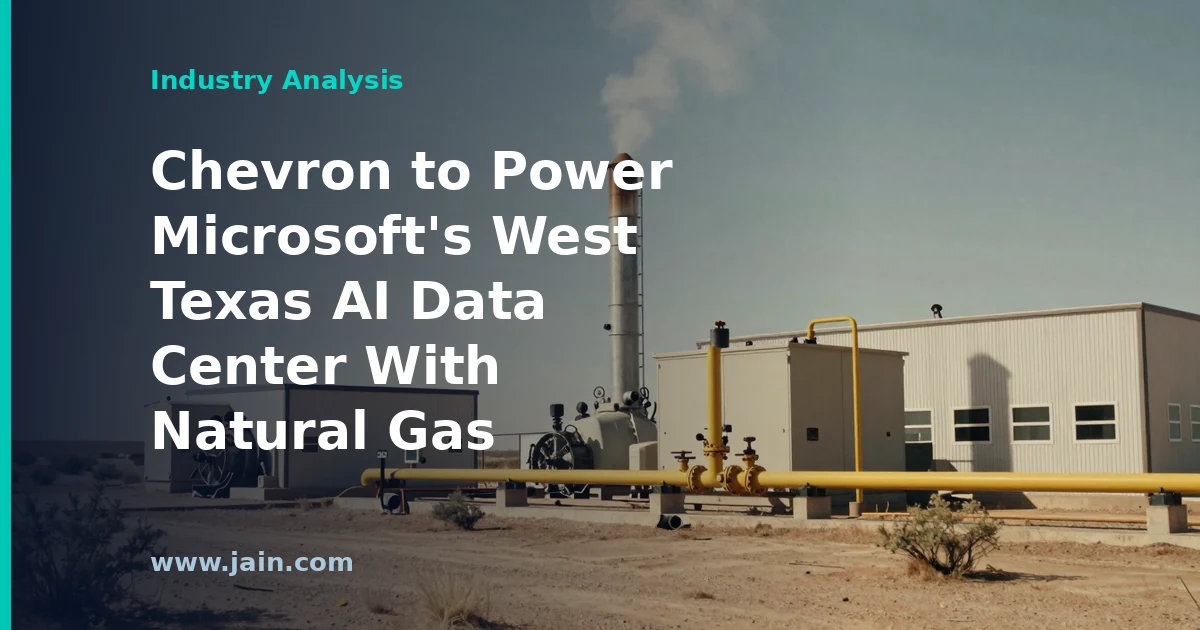
    Chevron has struck a deal to supply electricity generated from natural gas to a Microsoft artificial-intelligence data center in West Texas, according to a Wall Street Journal report dated June 21, 2026. Deal terms — including capacity, pricing, and start date — were not disclosed in the source material available to us.

    The agreement pairs one of America’s largest oil and gas producers with one of its largest data-center builders, and it lands in the Permian Basin region, where Chevron produces enormous volumes of natural gas close to where Microsoft needs power.

    Executive Summary

    The reported arrangement makes Chevron a power supplier — not just a fuel supplier — to a hyperscaler, the industry term for the handful of companies (Microsoft, Google, Amazon, Meta) that operate cloud computing at global scale. That distinction matters: selling gas molecules is Chevron’s traditional business, while selling electrons under long-term contract to a single anchor customer is a new one, and it captures more of the value chain.

    For Microsoft, the deal addresses the single biggest constraint on AI expansion: getting large amounts of reliable power quickly. Utility interconnection queues — the waiting lists to plug big new loads or generators into the transmission grid — now stretch years in much of the country. Dedicated generation built by an energy company with its own fuel supply is one way to shortcut that wait.

    Chevron had previously signaled this ambition: in early 2025 the company announced plans to develop gas-fired power plants co-located with data centers, in partnership with investment firm Engine No. 1 and turbine maker GE Vernova, with West Texas among the first targeted regions. The Microsoft deal, as reported, would be visible evidence that the strategy has landed a marquee customer.

    Oil Majors Are Becoming Power Companies

    For decades, the boundary was clean: oil and gas companies produced fuel, utilities and independent power producers turned it into electricity. AI is dissolving that boundary. Data-center operators need gigawatt-scale power on timelines utilities struggle to meet, and they are willing to sign long-dated contracts to get it. That contract structure — a creditworthy counterparty committing to buy power for many years — is exactly what makes a power plant financeable, and it is an asset profile oil majors understand from their LNG businesses.

    Chevron’s advantage is vertical integration. In the Permian Basin, gas is so abundant relative to pipeline takeaway capacity that regional prices at the Waha hub have repeatedly traded near zero or even negative in recent years. Burning that gas on-site to serve a data center converts a stranded, low-value commodity into contracted electricity revenue. Few competitors can match that feedstock economics story.

    Why Gas, and Why West Texas

    Natural-gas turbines remain the fastest way to deliver large blocks of firm, around-the-clock power — the kind AI training clusters demand. Solar and wind are cheaper per unit of energy but intermittent; nuclear is firm but slow to build; batteries shift power in hours, not weeks. Texas adds a structural advantage: ERCOT, the state’s independent grid, has lighter interconnection processes than other U.S. regions, and state law accommodates large co-located or behind-the-meter loads — facilities that take power directly from a dedicated plant rather than through the public grid.

    The tradeoff is emissions. Microsoft has a publicly stated goal of being carbon negative by 2030, and a new gas-fired power arrangement runs against that grain unless it is paired with carbon capture, offsets, or a credible transition plan. The source material does not say whether any such mitigation is part of this deal — a material omission, since how hyperscalers reconcile gas-fired AI power with climate commitments is one of the industry’s live controversies. The fair reading cuts both ways: gas power for data centers is neither the betrayal critics sometimes claim nor the bridge its promoters assert until the specifics — capture rates, contract duration, retirement plans — are on the table.

    Winners, Losers, and the Competitive Map

    If deals like this proliferate, the winners are gas producers with stranded Permian volumes, turbine manufacturers whose order books are already stretched to the end of the decade, and Texas jurisdictions collecting tax base. Traditional utilities lose a growth story if the largest new loads in a generation bypass them; conversely, they shed the risk of building for a demand boom that may not fully materialize.

    The strategic question is whether hyperscaler-oil-major partnerships become a template. ExxonMobil has announced similar ambitions in gas-plus-carbon-capture power for data centers, and other producers are circling. If the model works, the AI buildout will have quietly created a new class of independent power producer — one with its own wells.

    Background

    Chevron is one of the world’s largest integrated energy companies and a top producer in the Permian Basin, the West Texas oil field whose wells also produce vast quantities of natural gas. Historically Chevron sold that gas into pipelines and export markets; in 2025 it announced a venture to build gas-fired power plants serving data centers directly, reserving turbine capacity with GE Vernova alongside investment firm Engine No. 1.

    Microsoft, through its Azure cloud division and its partnership with OpenAI, has been spending tens of billions of dollars a year building AI data centers, and has pursued a wide portfolio of power deals — from renewables to the planned restart of a reactor at Three Mile Island — as electricity has replaced land and chips as the scarcest input in the AI buildout.

    Source: Chevron Strikes Power Deal With Microsoft for West Texas AI Data Center — WSJ, reporting a natural-gas power supply agreement for a Microsoft AI data center, published June 21, 2026.

  • Texas Data Center Goes Behind the Meter Amid Grid Delays

    Texas Data Center Goes Behind the Meter Amid Grid Delays

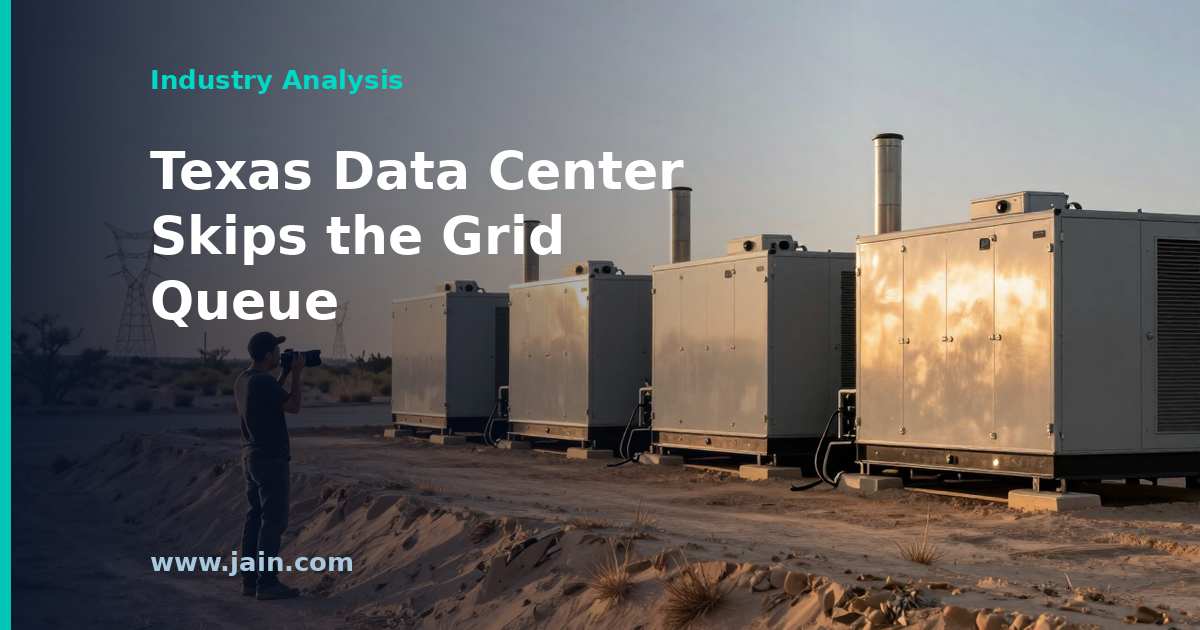
    Data Center Knowledge reported on 9 May 2026 that a Texas data center has stopped waiting for a grid connection and will instead be served by generation sited behind the meter — industry shorthand for power that reaches the load without passing through the utility’s revenue meter, typically from plant on or adjacent to the customer’s own property. The stated trigger is delay in the interconnection queue: the study-and-approval process through which a large new load or generator is modelled, cleared and physically tied into the transmission network.

    The report as circulated to us is headline-level. It does not name the operator, the site, the megawatt capacity, the generating technology, the counterparties or the energisation date, so the size of the commitment cannot be established from this source alone.

    Executive Summary

    The substantiated claim is narrow but consequential: at least one Texas data center project has concluded that private generation is a faster route to electrons than the queue for public grid capacity. That is a decision about time, not ideology. A shell with tenants and no power earns nothing, and self-supply converts a regulatory wait into a construction schedule the operator controls.

    It matters because it inverts a fifty-year assumption in this industry. Data centers were historically sited where large, reliable, cheap grid power already existed; the operator’s job was to buy it well. When queue times stretch past the useful life of an AI hardware generation, the operator’s job becomes building a power plant as a precondition of building a data center — a different balance sheet, a different risk register and a different set of counterparties.

    Read with appropriate caution. A single trade report of a single project establishes a direction of travel, not its magnitude. What follows treats the behind-the-meter decision as reported and examines the economics and risks that any such decision entails, while marking clearly where the source is silent.

    What Behind the Meter Actually Buys — and What It Costs

    Grid power is, in ordinary conditions, the cheapest and least troublesome electricity a data center can buy. Someone else finances the plant, maintains it, holds the fuel contracts, carries the outage risk and spreads the cost across many customers. Going behind the meter means taking all of that onto your own books: capital for generating equipment, firm fuel supply, air permits, spare parts, operators on shift, and redundancy engineered to the availability level your tenants’ contracts require.

    What the operator gets in exchange is a schedule. Interconnection is an administrative queue in which the customer’s position is set by process, not by willingness to pay; on-site generation is a procurement and construction problem, and construction problems respond to money. The arithmetic that makes the swap rational is straightforward: if a leased or pre-let facility is earning nothing while it waits, the carrying cost of idle capital plus foregone revenue can exceed the premium on self-generated power for a long time. That premium is real, and it recurs every year the plant runs.

    The corollary is that this decision is much easier with contracted demand behind it. Speculative capacity rarely justifies a private power plant. Where an operator has firm hyperscale or AI tenancy, the revenue is certain enough to underwrite generation assets; where it does not, behind-the-meter economics look considerably thinner. The report does not tell us which situation applies here, and that distinction changes how much the case should be generalised.

    The Queue Became the Scarce Asset

    For most of the past decade the constraints on data center siting were land, fibre routes, water, tax treatment and labour. Power was a line item. The last few years have promoted grid access to the binding constraint almost everywhere large campuses are proposed, and the practical effect is that a credible, near-dated path to megawatts is now the asset being competed for — more than the acreage it sits on.

    That reordering creates identifiable winners. Suppliers of on-site generating equipment and the engineering firms that install it gain pricing power, because their delivery slots are what a stranded project is actually buying. Landowners with gas pipeline adjacency, existing industrial permits or brownfield interconnects become disproportionately valuable. Developers who can present a financed, permitted power solution can charge for certainty in a market where certainty is scarce.

    The losers are less visible. Developers whose principal advantage was an early queue position lose that advantage when rivals stop queuing. Utilities forgo the load growth that would have supported their own investment cases, and lose the revenue base across which fixed network costs are spread. System planners face a harder forecasting problem when significant demand exists but does not appear as grid load. None of these effects is catastrophic at the scale of one project; all of them compound if the pattern holds.

    Texas Rules, Texas Risks

    Texas is a plausible place for this to surface first. ERCOT, the grid operator covering most of the state, runs an energy-only market and sits largely apart from the two big interconnections that cover the rest of the country, which has historically made it quick to build in and attractive to load. Rapid demand growth has strained that reputation, and Texas has abundant gas infrastructure and a permitting culture that makes private generation a more available answer than it would be in many jurisdictions.

    It also lands in an unresolved policy argument that deserves scrutiny in both directions. Consumer advocates argue that very large loads which self-supply but retain grid ties for backup or standby service should still contribute to the network costs they rely on; operators argue that adding generation alongside new demand relieves rather than burdens the system. Both positions are testable and neither should be accepted on assertion: the fair questions are what the load’s actual grid interaction looks like under stress, whether the on-site plant is dispatchable to the system or purely captive, and what the standby tariff genuinely recovers. Nothing in this report answers those questions for this project.

    The risk ledger is equally concrete. Generating equipment has its own multi-year lead times, so the swap is not automatically fast. Firm fuel transport must be contracted, and fuel price exposure moves onto the operator. Air permitting can consume the schedule the queue exit was meant to save. And behind-the-meter is often a bridge rather than a destination — many operators intend to connect eventually and run private generation as an interim or hybrid arrangement. Whether that is the plan here is precisely the sort of thing the available reporting does not say.

    Background

    Data centers were traditionally sited where large, reliable grid power already existed, alongside fibre routes, water and favourable tax treatment. The rise of AI training and inference workloads has pushed campus power requirements to a scale that many transmission systems cannot absorb quickly, and the interconnection queue — the sequential study process that clears new loads and generators for connection — has become the binding constraint on when a facility can open rather than a routine administrative step.

    Texas is a focal point for that pressure. Most of the state is served by ERCOT, an energy-only market operating largely independently of the wider US interconnections, which long gave it a reputation for speed and low cost and attracted heavy data center investment. As demand growth has outpaced network build-out, operators there have increasingly explored on-site generation, co-location with power plants and other private-supply arrangements. Data Center Knowledge, which reported this case, is a long-established trade publication covering the sector.

    Source: Interconnection Delays Push Texas Data Center Behind the Meter — Data Center Knowledge, 9 May 2026, reporting that grid connection delays have led a Texas data center to adopt behind-the-meter power.

  • Kevin O’Leary’s 9GW Utah Data Center Campus Wins Approval

    Kevin O’Leary’s 9GW Utah Data Center Campus Wins Approval

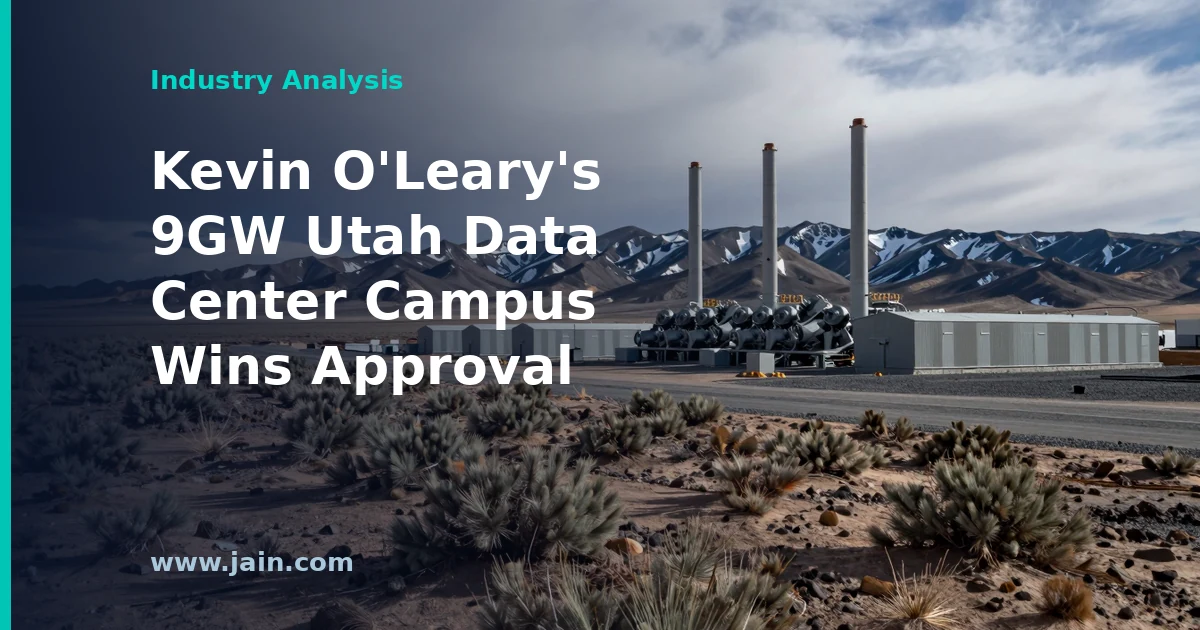
    A 9-gigawatt AI data center campus backed by investor Kevin O’Leary has been approved in Utah, according to an April 26, 2026 report from Tom’s Hardware. The project is described as generating and consuming more than twice the amount of power the entire state of Utah currently uses — placing it among the largest data center developments ever announced anywhere in the world.

    Executive Summary

    The headline fact is the scale: 9 gigawatts is not a data center in any conventional sense — it is a power project with computing attached. For perspective, 9GW is roughly the output of nine large nuclear reactors, and the report frames it as more than double Utah’s entire statewide electricity draw. Notably, the report says the campus will generate as well as consume that power, which signals a behind-the-meter model: building dedicated generation on site rather than asking the regional grid to supply it.

    The second fact is the word “approved.” Some jurisdictional body has said yes to something — but at headline level, the report does not specify which approval this is: land-use zoning, an air-quality permit, a generation license, or a state economic-development agreement. In mega-project development, each of those is a different gate, and clearing the first one is a long way from moving dirt. What is substantiated here is an approval milestone for an extraordinarily ambitious plan; what is not yet substantiated is financing, customers, a construction timeline, or the generation technology behind the 9GW figure.

    A Power Plant First, a Data Center Second

    The most telling detail in the report is that the campus will “generate and consume” its power. AI campuses at gigawatt scale have collided with a hard constraint across the United States: utility interconnection queues — the waiting lines to connect large new loads to the grid — now stretch years in many regions. Developers who cannot wait are going behind the meter, building their own gas turbines, and in some proposals nuclear or geothermal capacity, dedicated to the site. A 9GW self-generation plan sidesteps the queue but inherits a different set of problems: gas turbine order books are backed up years, fuel supply must be contracted at enormous volume, and on-site generation still typically requires air-quality permits and some grid tie for backup and startup power.

    For lay readers, the practical meaning is this: the binding constraint on AI infrastructure has shifted from chips and buildings to electricity. Projects are now sized and sited around where power can be created, not where fiber or customers happen to be. Utah — with land, gas access, and a development-friendly posture — fits that new map.

    What “Approved” Does and Does Not Mean

    Approval is a genuine milestone; it is also the cheapest one. The industry has spent the past two years in an announcement race, with proposed multi-gigawatt campuses in the U.S., Canada, and the Gulf states collectively promising far more capacity than the supply chain — turbines, transformers, switchgear, chips, and skilled labor — can deliver on the advertised timelines. Analysts increasingly distinguish between announced gigawatts and energized gigawatts, and the gap between the two is wide. Kevin O’Leary himself previously announced a separate multi-gigawatt AI data center park in Alberta, Canada, which illustrates the pattern: high-profile backers can secure land and early approvals quickly, while the capital-intensive middle of the project — measured in tens of billions of dollars for a campus this size — takes years and committed tenants to close.

    None of that makes the Utah project unserious. It makes it unproven, which is the honest status of nearly every gigawatt-class announcement at the approval stage. The credible test will be what follows: named anchor tenants, equipment orders, and financing commitments, not renderings.

    Winners, Losers, and the Utah Question

    If the campus advances, the near-term winners are clear: turbine and electrical-equipment manufacturers with the scarcest order slots, construction and trades labor in Utah, and the state’s tax base. Hyperscalers and AI labs hungry for capacity gain another potential supply option in a market where powered land is the scarcest commodity. The open question is who bears the risks. Behind-the-meter gas generation at this scale raises air-quality and emissions questions; data centers in the arid West raise water and cooling questions; and residents near any 9GW generation complex will have views on all of it. A project sized at more than twice the state’s current consumption will, fairly or not, become a referendum on how Utah wants to participate in the AI buildout — and community sentiment has already slowed or stopped large data center proposals in other states. Developers who engage those concerns early, with specific commitments on emissions, water, and grid impact, have fared better than those who lead with the gigawatt number.

    Background

    The AI boom has turned electricity into the data center industry’s scarcest input. Training and running large AI models requires dense clusters of power-hungry chips, and since 2023 developers have raced to secure “powered land” — sites where gigawatt-scale electricity can be delivered or built. With utility interconnection queues stretching years, a new class of power-first campuses has emerged that builds its own generation on site, and announced capacity across North America and the Gulf now far outstrips what has actually been energized.

    Kevin O’Leary, the investor and Shark Tank personality behind O’Leary Ventures, entered this race with a previously announced multi-gigawatt AI data center park in Alberta, Canada. The Utah campus extends that playbook to the U.S. at even larger scale: at 9GW, the approved plan would exceed the entire current power draw of the state that will host it — a first even by the standards of this buildout.

    Source: New AI data center in Utah will generate and consume more than twice the amount of power the entire state uses — Kevin O’Leary’s 9 Gigawatt Utah data center campus approved — Tom’s Hardware report, April 26, 2026, on the approval of O’Leary’s 9GW self-generating AI campus in Utah.