Category: Power Infrastructure

  • AI Data Center Boom Hits a New Wall: Power Equipment and Grid Workers

    AI Data Center Boom Hits a New Wall: Power Equipment and Grid Workers

    Reuters reported on May 17, 2026 that the ongoing rush to build data centers — driven above all by AI computing demand — is worsening shortages of power equipment and of the skilled workers needed to build and connect electrical infrastructure. The report frames the industry’s constraint as no longer just the availability of electricity itself, but the transformers, switchgear, and trained grid workforce required to deliver it.

    Executive Summary

    The headline finding is a shift in where the AI infrastructure bottleneck sits. For the past several years, the dominant question in data center development has been access to megawatts — whether utilities can supply enough electricity to power ever-larger campuses. Reuters’ reporting points to a second-order problem: even where power generation exists on paper, the physical equipment that moves electricity (transformers, switchgear, high-voltage cable) and the people qualified to install and energize it (electricians, linemen, substation engineers) are in increasingly short supply, and data center demand is making both shortages worse.

    This matters because equipment and labor constraints behave differently from generation constraints. A power plant shortfall is a capacity planning problem that utilities and regulators can see coming years ahead. Equipment lead times and workforce gaps are supply chain and demographic problems — they compound quietly, hit every project in the queue at once, and cannot be solved quickly by spending more money, because factories and apprenticeship pipelines take years to expand. For anyone planning, financing, or buying data center capacity, the practical effect is the same: schedules stretch, and the projects that secured equipment and crews early hold a widening advantage.

    The Bottleneck Has Moved Down the Stack

    Data center development has always been a race through sequential constraints: land, then fiber, then power, and now the electrical hardware and hands that turn a power allocation into an energized facility. A utility commitment to deliver megawatts is only the first step — that electricity still has to pass through high-voltage transformers, substations, and switchgear before a single server boots. Reuters’ framing suggests the industry has cleared enough of the megawatt question, at least in some markets, to expose the layer beneath it.

    This is a meaningful change in how projects fail or slip. A site with signed power agreements can still sit idle waiting for a transformer delivery or a qualified crew to commission a substation. Because these inputs are procured late in a project’s life but have long lead times, the mismatch tends to surface after significant capital is already committed — the most expensive place in a project to discover a delay.

    Why Equipment Shortages Are Hard to Fix Quickly

    Large power transformers and switchgear are not commodity products. They are engineered-to-order equipment built in a limited number of factories worldwide, with specialized inputs like electrical steel and, critically, their own skilled manufacturing workforces. When demand surges — from data centers, but also from grid modernization, electrification, and renewable interconnection all competing for the same order books — manufacturers cannot simply add shifts. Expanding capacity means new plants and new trained workers, both multi-year undertakings.

    The result is a queue that rewards incumbency and scale. Hyperscale operators and large utilities can place framework orders years ahead and absorb price increases; smaller developers and municipal utilities wait longer and pay more. If the Reuters reporting is right that data center demand is actively worsening the shortage, the competitive gap between well-capitalized builders and everyone else — including utilities buying replacement equipment for ordinary grid maintenance — likely widens before it narrows.

    The Workforce Problem Is Demographic, Not Cyclical

    The second shortage Reuters identifies — grid workers — is in some ways the harder one. Electricians, linemen, and substation technicians are trained through apprenticeships that take years, and the utility workforce in the United States has been aging toward retirement for over a decade. A demand spike from data center construction lands on a labor pool that was already thinning for structural reasons.

    Unlike equipment, labor cannot be stockpiled or ordered ahead. Builders can and do bid up wages to pull crews toward their projects, but that reallocates a fixed pool rather than growing it — and it raises costs for utilities and other construction sectors drawing on the same trades. The durable fixes are training pipelines, union apprenticeship expansion, and making grid trades attractive careers, none of which pays off inside a single project’s timeline. For the industry, that means workforce constraints should be treated as a persistent planning input, not a temporary tightness that clears next quarter.

    What It Means for Buyers, Builders, and the Grid

    For enterprises and AI companies buying capacity, the practical takeaway is that delivery dates carry more risk than headline megawatt figures. A provider’s real differentiator is increasingly its position in equipment queues and its access to qualified construction and commissioning labor — questions worth asking directly during procurement. Operators with existing powered shells, spare substation capacity, or long-standing utility and contractor relationships can deliver on timelines that new entrants cannot match.

    For the broader grid, there is a fairness dimension regulators will have to manage: data centers competing for scarce transformers and crews are competing, in part, with the routine reliability work utilities perform for everyone else. How that tension is priced and prioritized — who pays for grid upgrades, whose projects move first — is becoming one of the central policy questions of the AI buildout. It deserves scrutiny from both directions: utilities and communities are right to ask whether data center growth is crowding out other needs, and developers are right to note that their demand is also financing grid investment that would otherwise struggle for funding.

    Background

    Data centers are the industrial facilities that house computing hardware, and the surge in AI workloads since 2023 has pushed their power requirements from tens of megawatts per site toward campus-scale demands that rival heavy industry. That growth first collided with electricity generation and transmission capacity, making utility power agreements a gating factor for new projects. The electrical supply chain behind those agreements — transformer manufacturing, switchgear production, and the skilled-trades workforce that installs them — was already strained before the AI boom by aging grid infrastructure, electrification, and renewable energy buildouts. Reuters’ May 2026 reporting captures the point where data center demand and those pre-existing strains visibly compound.

    Source: Data center rush worsens shortages of power, grid workers — Reuters, reporting published May 17, 2026 on power equipment and grid workforce constraints in the data center buildout.
  • Reported $67B Dominion–NextEra Deal Puts Data Center Alley’s Power in Play

    Reported $67B Dominion–NextEra Deal Puts Data Center Alley’s Power in Play

    Technical.ly reported on May 17, 2026 that a $67 billion deal between Dominion Energy and NextEra Energy could reshape Northern Virginia’s data center economy — the largest concentration of data center capacity in the world. At that price, the transaction would rank among the biggest utility deals in U.S. history.

    The report frames the deal around Northern Virginia’s “Data Center Alley,” the Loudoun County–centered corridor whose electricity is supplied largely by Dominion, and whose AI-driven load growth has become the defining challenge for the regional grid.

    Executive Summary

    According to the report, Dominion Energy — the regulated utility serving most of Virginia, including the Northern Virginia data center corridor — and NextEra Energy, the Florida-based utility holding company that is also the largest developer of wind and solar generation in the United States, are parties to a transaction valued at roughly $67 billion. The headline figure alone signals a bet that serving data center load is now the most valuable franchise in the American power sector.

    Why it matters: whoever owns the wires and generation feeding Data Center Alley effectively controls the throttle on the region’s — and arguably the industry’s — AI buildout. Dominion has publicly described a contracted and requested data center pipeline measured in tens of gigawatts, an order of magnitude beyond historical utility growth rates. Pairing that captive demand with NextEra’s generation development machine is the strategic logic the market will read into a combination of this size, whatever the final structure proves to be.

    A caution up front: the source available at publication is a single news headline. The deal’s structure — acquisition, merger, asset purchase, or joint venture — its financing, and its regulatory path are not described in the material we can verify, and we treat them accordingly below.

    Why a Utility Deal Is Really a Data Center Deal

    Northern Virginia is not just another service territory. Loudoun County and its neighbors host tens of millions of square feet of data center space, and Dominion has for years been the region’s essential supplier — its interconnection queue, transmission buildout, and rate design decisions directly set the pace at which hyperscalers and colocation providers can energize new capacity. A $67 billion transaction touching this territory is therefore less a conventional utility consolidation story than a claim on the single most concentrated pool of AI-era electricity demand on the planet.

    For readers outside the power business: regulated utilities like Dominion earn a state-approved return on the infrastructure they build, which means guaranteed-growth demand — like contracted data center load — translates almost mechanically into earnings growth. That is why data center demand has turned sleepy utility stocks into growth assets, and why a buyer or partner would pay a historic premium to be attached to it.

    The NextEra Logic: Generation Meets Load

    NextEra brings the other half of the equation. Through NextEra Energy Resources it has built more wind, solar, and battery capacity than any other U.S. developer, and its regulated arm, Florida Power & Light, is among the country’s largest utilities. The structural problem in Northern Virginia has never been demand — it is that generation and transmission cannot be added fast enough. Marrying the nation’s most aggressive generation developer to the nation’s most demand-rich territory is a coherent industrial thesis, and it tracks the broader pattern of power and compute vertically converging: hyperscalers signing nuclear offtakes, developers co-locating generation with campuses, and utilities racing to finance multi-decade capital plans.

    It also concentrates risk. AI demand forecasts are contested; utilities and grid operators have acknowledged that interconnection queues contain speculative and duplicate requests. A $67 billion valuation built on tens of gigawatts of projected load is exposed if even a fraction of that pipeline evaporates, gets self-supplied behind the meter, or migrates to cheaper-power regions.

    Who Feels This: Ratepayers, Regulators, and Tenants

    Any transaction involving Dominion’s Virginia franchise runs through the State Corporation Commission, and likely federal reviews as well, at a moment when data center cost allocation is already politically charged in Richmond. Virginia regulators have been actively weighing how to keep large-load infrastructure costs from spilling onto residential bills; a mega-deal gives them maximum leverage to extract commitments on rates, reliability, and clean energy timelines as conditions of approval. Expect the approval process, not the announcement, to determine what this deal actually does.

    For data center operators and tenants, the practical questions are concrete: does consolidation speed up interconnection by unifying generation and delivery under deeper-pocketed ownership, or does it reduce competitive pressure and harden pricing power over a customer base with nowhere else to plug in at scale? Both outcomes are plausible, and the answer will likely be written into regulatory conditions rather than the merger agreement.

    The Consolidation Signal

    Step back and the deal — if consummated — marks a phase change: AI power demand is no longer being met by incremental utility capital plans but by restructuring the ownership of the grid itself. Other demand-heavy territories (Georgia, Texas, Ohio, Arizona) and the utilities that serve them become obvious candidates for similar combinations, and every hyperscaler’s site-selection calculus now has to price in who will own their utility in five years. The financing of the AI buildout is migrating from tech balance sheets and project finance into the regulated-utility capital model — with all the ratepayer politics that entails.

    Background

    Northern Virginia became the internet’s landlord over three decades, as early network exchange points around Ashburn attracted carriers, then cloud providers, then AI training campuses. Dominion Energy grew into the indispensable supplier of that boom, and by the mid-2020s was publicly describing data center demand — measured in tens of gigawatts of contracted and requested capacity — as the dominant driver of its capital plans, while Virginia lawmakers and regulators debated who should pay for the grid expansion it requires.

    NextEra Energy took a different route to power-sector prominence: alongside its Florida utility franchise, it built the nation’s largest renewable generation fleet and has consistently argued that electricity demand from AI and electrification marks the sector’s biggest growth era in decades. A combination with Dominion, as reported, would fuse the industry’s largest generation developer with its most demand-rich territory.

    Source: $67B Dominion-NextEra deal could reshape Northern Virginia’s data center economy — Technical.ly’s May 17, 2026 report on a reported $67 billion transaction between the two utilities.

  • Data Centers Drive a 76% Surge in PJM Capacity Prices: AI Load Meets the Grid

    Data Centers Drive a 76% Surge in PJM Capacity Prices: AI Load Meets the Grid

    Capacity prices in PJM Interconnection — the regional transmission organization that operates the largest wholesale electricity market in the United States — have surged 76%, and reporting by E&E News (POLITICO) on May 16, 2026 identifies data center demand as the principal driver. PJM coordinates power across 13 states and the District of Columbia, serving roughly 65 million people, so a price move of this size in its capacity market ripples directly into the electric bills of a substantial share of the American population.

    Capacity prices are not the price of energy itself; they are what the market pays generators simply to be available during the hours of highest demand. A 76% jump in that availability premium is the market’s way of saying that spare headroom on the grid is getting scarce — and the reporting attributes that scarcity chiefly to the wave of AI-driven data center construction concentrated in PJM’s footprint.

    Executive Summary

    The reported 76% surge in PJM capacity prices is arguably the most concrete, dollar-denominated evidence to date that AI infrastructure buildout is stressing the US power system. Forecasts of data center load growth have circulated for two years; a capacity auction result is different. It is a binding market outcome — real money that electricity suppliers must pay, and ultimately recover from customers, because demand is growing faster than dependable supply.

    The mechanism matters. PJM procures capacity through auctions held in advance of each delivery year: generators offer their availability, and the auction clears at the price needed to cover forecast peak demand plus a reserve margin. When large new loads such as hyperscale data centers enter the forecast while older power plants retire and new ones queue slowly for interconnection, the supply-demand balance tightens and the clearing price rises. A 76% increase indicates that tightening is now severe, not incremental.

    For the infrastructure industry, the signal cuts both ways. It validates the scale of AI demand that data center operators have been describing — but it also raises the operating cost of every facility in the region, hands utilities and consumer advocates a concrete number to organize around, and increases the likelihood of regulatory intervention in how large loads connect to and pay for the grid.

    What a Capacity Price Actually Measures

    Capacity markets are insurance markets for the grid. Separate from the energy market, where power is bought and sold as it is consumed, a capacity auction pays generators a fixed amount — typically quoted per megawatt-day — to guarantee they will be available when the system hits its peak. The clearing price is therefore a pure scarcity signal: it reflects how much spare, dependable generating capacity exists relative to forecast peak demand, years before that peak arrives.

    That is what makes a 76% surge more telling than any demand forecast. Forecasts can be revised; auction results are settled commitments backed by penalties for non-performance. When the availability premium jumps this sharply, it means the market — with real capital at stake — has concluded that the cushion between peak demand and dependable supply in PJM is thinning quickly. Attribution of the surge to data centers puts a name on the demand side of that squeeze.

    Why AI Load Lands So Hard on PJM

    PJM’s territory includes Northern Virginia, the densest concentration of data centers on Earth, along with fast-growing markets in Ohio, Pennsylvania, and the Chicago area. Data center load has characteristics that stress a capacity market more than most growth: facilities are large — a single AI campus can draw as much power as a mid-sized city — they run near-continuously rather than peaking with the weather, and they arrive in clusters on compressed construction timelines measured in a couple of years.

    Supply cannot respond at that speed. New gas turbines face multi-year equipment backlogs, renewable and storage projects sit in long interconnection queues, and coal units continue to retire on schedules set years ago. Capacity auctions exist precisely to signal when this mismatch is forming, and the reported surge suggests the signal has moved from amber to red. In that sense the price is doing its job — the open question is whether investment in new generation can respond before the cost of scarcity compounds.

    Who Pays, and Who Benefits

    Capacity costs flow through electricity suppliers to virtually all retail customers, spread across households, businesses, and industry regardless of who caused the demand growth. That socialization of costs is the political flashpoint: a homeowner in Baltimore or Columbus pays part of the premium created, in large part, by hyperscale computing facilities they may never see. Expect this number to feature in rate cases, state legislative hearings, and the ongoing debate over whether large loads should face special tariffs or bring-your-own-generation requirements.

    On the other side of the ledger, existing generators — particularly gas, nuclear, and other dispatchable plants that can pledge dependable capacity — are clear beneficiaries, and higher capacity revenue is exactly the incentive the market design uses to attract new entry and keep existing plants online. Data center developers face a more nuanced picture: higher power costs raise operating expenses, but a market that rewards firm capacity also strengthens the case for the on-site generation, storage, and long-term supply deals that many operators are already pursuing.

    A Price Signal With Policy Consequences

    Sharp capacity price increases rarely stay contained within market design circles. When the driver is identifiable — here, data centers — regulators and politicians gain a specific target for cost-allocation reform. Proposals already circulating across US grid regions include dedicated rate classes for very large loads, requirements that new data centers fund transmission upgrades, and co-location arrangements that pair facilities directly with power plants. A 76% surge gives all of those efforts fresh momentum in PJM’s 13 states.

    For the broader AI infrastructure economy, the strategic takeaway is that power availability — not land, fiber, or chips — is consolidating as the binding constraint on growth in established markets. Operators that secured capacity, interconnection positions, or generation partnerships early hold an appreciating asset. Those planning new facilities in PJM territory now face higher costs, longer utility timelines, and a more contentious public environment — pressures that are already redirecting some development toward regions with more available headroom.

    Background

    PJM Interconnection began as a power pool of Pennsylvania, New Jersey, and Maryland utilities and grew into the largest grid operator in the United States, running wholesale energy and capacity markets across 13 states and the District of Columbia. Its capacity construct, the Reliability Pricing Model, procures guaranteed generating capacity through auctions held in advance of each delivery year — a design meant to keep enough dependable supply online as the generation fleet changes.

    For most of the 2010s, flat demand and cheap shale gas kept PJM capacity prices low. That era ended as AI and cloud growth transformed data centers into the region’s dominant new load — anchored by Northern Virginia, the world’s largest data center market — while coal retirements and slow interconnection queues constrained supply. Capacity auctions in the mid-2020s began registering that squeeze with sharply higher clearing prices, of which the 76% surge reported in May 2026 is the latest and among the starkest examples.

    Source: Data centers drive 76% surge in PJM power prices — E&E News by POLITICO, reporting published May 16, 2026 on data center demand driving capacity price increases in the PJM grid region.

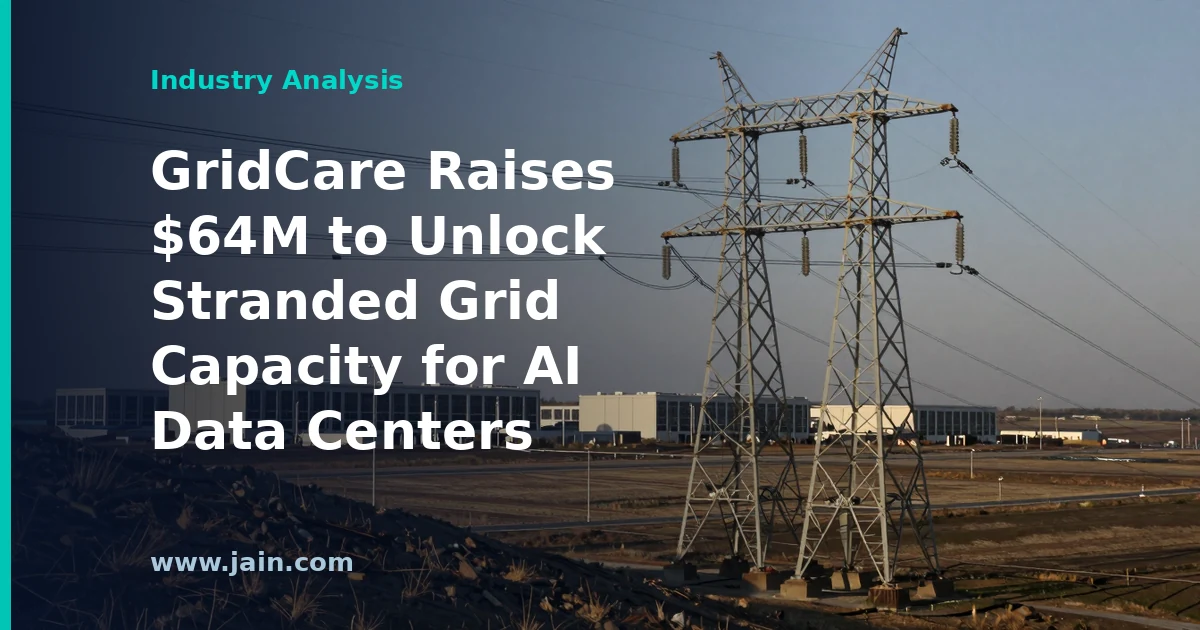
  • GridCare Raises $64M to Unlock Stranded Grid Capacity for AI Data Centers

    GridCare Raises $64M to Unlock Stranded Grid Capacity for AI Data Centers

    GridCare, a Palo Alto-based grid-software startup, has raised $64 million to accelerate the connection of AI data centers to the electric grid, according to a SiliconANGLE report published May 16, 2026. The company’s pitch is to identify “stranded” capacity — grid headroom that already exists but sits unused most hours of the year — and match it with data-center developers who would otherwise wait years in utility interconnection queues.

    Executive Summary

    The announcement itself is brief: a $64 million raise aimed at speeding up AI data-center projects. The report, as circulated, does not name the investors, the round’s structure, or a valuation. What makes the round worth analyzing is the problem it targets. The single biggest constraint on AI infrastructure buildout in the United States is no longer chips or capital — it is access to electric power, and specifically the multi-year queue to connect large new loads to the grid.

    GridCare’s approach inverts the usual answer to that problem. Rather than building new generation or new transmission — both slow — it uses software to find places where the existing grid has spare room, then structures deals in which the data center agrees to flex its consumption during the relatively few hours when the grid is genuinely constrained. If that model works at scale, it converts a five-year infrastructure problem into a months-long contracting problem. A $64 million round suggests investors believe the thesis has moved past the pilot stage, though the public announcement offers little evidence either way — a gap we detail below.

    Why the Interconnection Queue Became AI’s Bottleneck

    Every large new electricity user or generator must apply to connect to the grid, and the utility or regional grid operator must study whether the connection would overload wires and transformers. That process — the interconnection queue — has become the choke point of the AI era. Lawrence Berkeley National Laboratory has tracked roughly 2,600 gigawatts of generation and storage stuck in U.S. queues, and wait times for large projects commonly stretch five years or more. Data centers seeking hundreds of megawatts of new load face similar studies, similar upgrade bills, and similar timelines.

    For AI developers, that timeline is intolerable. Model-training capacity is a competitive weapon measured in quarters, not decades, which is why hyperscalers have turned to behind-the-meter gas turbines, nuclear power-purchase agreements, and sites in far-flung jurisdictions. Any company that can credibly compress grid access from years to months is selling exactly what the market’s most aggressive buyers want most.

    The Stranded-Capacity Thesis

    The grid is engineered for its worst hour — the summer evening peak when air conditioning, industry, and households all draw at once. The rest of the year, much of that capacity idles. GridCare’s argument, made publicly since it emerged in 2025, is that this latent headroom is enormous; the company has claimed more than 100 gigawatts could be unlocked nationally. The catch is that a data center can only use that headroom if it gets out of the way during the constrained hours — by throttling workloads, drawing on batteries, or running on-site generation for a small fraction of the year.

    The economics can be attractive for every party. The utility monetizes an asset it already built and spreads fixed costs over more sales, which can put downward pressure on rates for other customers. The data center trades a modest flexibility obligation for years of saved time — and in AI economics, time-to-power is often worth more than the cost of the flexibility. The hard part is trust and verification: utilities need enforceable guarantees that the load will actually curtail when called, because the consequence of a broken promise is overloaded equipment, not a missed earnings estimate. Software that can model, contract, and verify that behavior is the actual product being financed here.

    A Crowded Race Around the Queue

    GridCare is not alone in attacking time-to-power. Competitors come from several directions: developers building behind-the-meter gas or geothermal generation, battery vendors marketing “bridge power,” utilities themselves rolling out flexible-interconnection tariffs, and grid-analytics firms courting the same utility relationships. Regulators are moving too — federal and state proceedings on large-load interconnection are actively reshaping the rules GridCare must operate within, which is both a tailwind (flexibility is gaining formal recognition) and a risk (a tariff change can rewrite the business model overnight).

    The structural advantage of the stranded-capacity approach is that it requires no new steel in the ground; its structural weakness is that it depends on utility cooperation, and utilities adopt new commercial models slowly. The likely winners of this period are parties on both sides of the deal: utilities that learn to monetize flexibility, and data-center developers that treat power procurement as a portfolio rather than betting on a single path. The losers are projects that queued up conventionally and now watch flexible newcomers connect first.

    What $64M Signals — and What It Doesn’t

    A round of this size, roughly a year after the company’s reported seed financing, implies investors saw commercial traction worth underwriting. But it is worth being precise about what the public announcement substantiates: a funding amount and a stated purpose. It does not, as circulated, disclose customers, megawatts under contract, utility partnerships, or revenue. Venture funding validates a thesis’s attractiveness to investors, not its operational success. The evidence that matters — signed interconnection agreements and data centers energized ahead of queue timelines — will come from utility filings and customer announcements, not from the size of the round.

    Background

    GridCare is a Palo Alto-based startup that emerged from stealth in 2025 with a reported $13.5 million seed round, led by founder and CEO Amit Narayan — who previously founded AutoGrid, a grid-flexibility software company acquired by Schneider Electric in 2022. GridCare’s founding claim is that over 100 gigawatts of usable capacity is hiding in plain sight on the U.S. grid, accessible to data centers willing to be flexible.

    The company operates against the backdrop of a historic grid bottleneck: Lawrence Berkeley National Laboratory has tracked roughly 2,600 gigawatts of projects waiting in U.S. interconnection queues, and the surge in AI data-center demand since 2023 has made time-to-power the defining constraint of the buildout. Regulators, utilities, and hyperscalers are all converging on flexibility — the idea that new loads can connect faster if they yield during peak hours — as one of the few near-term answers.

    Source: GridCare raises $64M to speed up AI data center projects — SiliconANGLE report, May 16, 2026, on GridCare’s funding round targeting stranded grid capacity for AI data centers.

  • Phantom Data Centers Expose a Grid Interconnection Queue Already in Crisis

    Phantom Data Centers Expose a Grid Interconnection Queue Already in Crisis

    POWER Magazine published an analysis on May 16, 2026, arguing that so-called phantom data centers — speculative, duplicative, or abandoned requests for grid connections at facilities that may never be built — did not break the U.S. power grid’s planning process. Its headline thesis is blunter: the flood of questionable megawatt requests proved the interconnection system was already broken before the AI-era demand surge arrived to stress it.

    Executive Summary

    The piece lands in the middle of one of the most consequential debates in energy and digital infrastructure: how much of the enormous projected data center load on utility books is real. Utilities and grid operators across the country have reported unprecedented volumes of large-load interconnection requests — the formal applications a big customer files to connect to the grid — driven by the AI build-out. A meaningful but unquantified share of those requests is widely believed to be speculative: the same project shopped to multiple utilities at once, or land plays filed to reserve capacity cheaply.

    POWER Magazine’s framing matters because it shifts the blame from the applicants to the process. If a planning system can be swamped by requests that cost little to file, take years to study, and require little proof of commitment, the vulnerability was structural — phantom load merely exposed it. For an industry whose credibility with regulators and the public increasingly depends on accurate demand forecasts, that distinction shapes what the fix should be.

    What a Phantom Megawatt Is — and Why It Ends Up on the Books

    An interconnection request is not a binding order for power; in most jurisdictions it has historically been a cheap option. A developer scouting sites can file requests with several utilities for the same prospective campus, keep every option open while negotiating land, chips, and capital, and walk away from all but one — or all of them. Each of those filings, however, can enter a utility’s load forecast and transmission-study pipeline as if it were a real future customer.

    The result is a compounding distortion. Study queues lengthen for everyone, including projects that are fully financed and ready to build. Forecasts inflate, which feeds into decisions about new generation, transmission lines, and rate cases. And because utilities cannot easily distinguish a committed hyperscale campus from a land speculator’s placeholder, the honest answer to “how much data center load is coming” becomes genuinely unknowable from the queue alone.

    The Queue Was Broken Before AI Showed Up

    The article’s central claim — that phantom load revealed rather than caused the breakdown — fits the longer history. Interconnection processes were designed for an era of slow, predictable load growth, with first-come-first-served study sequences, modest deposits, and few readiness screens. Generator interconnection queues showed the same failure mode years earlier, when speculative renewable projects piled up and forced regulators toward cluster studies and stiffer milestone requirements. Large-load interconnection, by contrast, has remained far less standardized, leaving each utility to improvise its own defenses.

    Seen that way, data centers are the stress test, not the disease. Any process that prices a multi-hundred-megawatt reservation at close to zero will attract free options in a land rush; AI simply supplied the land rush. The implication is uncomfortable for utilities and developers alike: tightening screens on data centers without reforming the underlying study process would treat the symptom that made the problem visible.

    Who Pays When the Forecast Is Wrong in Either Direction

    Phantom load creates a two-sided planning risk. If utilities build generation and wires for demand that evaporates, the cost of that overbuild lands in rate base — the pool of investment that ordinary electricity customers repay over decades. If utilities discount the queue too aggressively and real projects materialize, the grid is short, prices spike, and serious data center customers face multi-year connection delays that push investment to other regions or into on-site generation.

    That asymmetry explains the emerging middle path many utilities and regulators are pursuing: making the request itself carry real commitment. Larger deposits, demonstrated site control, staged payments tied to milestones, and contractual minimum-take obligations all convert a free option into a priced one. Developers with real projects generally have reason to support such screens, because they clear the queue of competitors who were never going to build — though they also raise the cost of legitimate early-stage flexibility.

    Background

    The AI infrastructure build-out has made data centers the dominant story in U.S. electricity demand, ending decades of roughly flat load growth. Utilities in many regions now report interconnection requests from prospective data center customers that dwarf their historical planning assumptions, and those figures flow into generation plans, transmission proposals, and rate cases. POWER Magazine, a long-running trade publication covering the power generation and delivery sector, has tracked the resulting tension: grid planners must commit capital years ahead of demand, using a queue that mixes committed hyperscale campuses with speculative placeholders. Generator interconnection went through a similar speculative pile-up in the renewables boom, prompting regulators to overhaul study processes — a precedent now shaping the debate over how to handle large loads.

    Source: Phantom Data Centers Didn’t Break the Power Grid—They Proved It Was Already Broken — POWER Magazine analysis, May 16, 2026, on speculative data center load and interconnection-queue dysfunction.

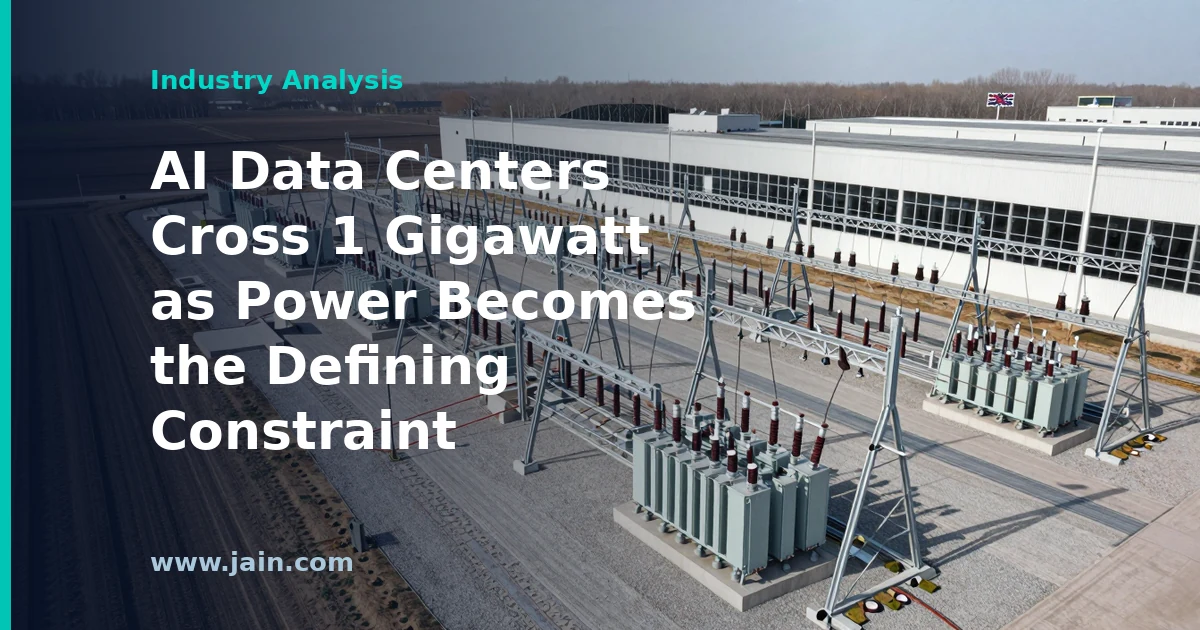
  • AI Data Centers Cross 1 Gigawatt as Power Becomes the Defining Constraint

    AI Data Centers Cross 1 Gigawatt as Power Becomes the Defining Constraint

    Individual AI data center campuses in the United States have crossed the 1-gigawatt power threshold, according to a May 15, 2026 report from Quartz — a scale at which a single computing facility draws as much electricity as roughly a large power plant produces. The report frames these sites as an emerging strain on the U.S. power grid.

    The milestone matters less as a round number than as a signal: the binding constraint on AI infrastructure buildout has shifted from chips and capital to electricity itself.

    Executive Summary

    For most of the data center industry’s history, a large facility drew tens of megawatts, and a 100-megawatt campus was considered enormous. The reporting highlighted here marks a step change: single AI training and inference campuses now demanding 1 gigawatt or more — a thousand megawatts — concentrated at one grid interconnection point. That is a load comparable to a mid-sized city, arriving on the grid in a fraction of the time it takes to permit and build the generation and transmission to serve it.

    Why it matters: electricity supply, not silicon supply, is now the gating factor for AI capacity growth in the United States. Utilities plan generation and transmission on decade-long horizons; hyperscale AI developers want power in two to four years. That mismatch shapes where data centers get built, how fast AI capacity can scale, who pays for grid upgrades, and which operators — those with secured power — hold the scarcest asset in the industry.

    The source is a brief news report rather than a detailed study, so the specific sites, operators, and grid regions involved are not enumerated. But the direction of travel it describes is consistent with what grid operators and utilities have been signaling: unprecedented load-growth forecasts driven overwhelmingly by data centers.

    From Megawatts to Gigawatts: A Different Kind of Customer

    A gigawatt-scale data center is not a bigger version of a traditional one; it is a different category of grid customer. A gigawatt is roughly the output of a large nuclear reactor, and connecting that much load at a single substation requires high-voltage transmission capacity that most locations simply do not have spare. Traditional data centers could slot into existing industrial corridors. Gigawatt campuses force utilities to build new transmission lines, upgrade substations, and in some cases procure or build new generation — projects that routinely take five to ten years to permit and construct.

    This inverts the historical relationship between data centers and utilities. Data centers used to be desirable, quiet, high-load-factor customers that utilities courted. Now the largest projects arrive as planning problems: loads so large that a utility must ask whether serving one customer degrades reliability or raises costs for everyone else. Several of the practical consequences — long interconnection queues, large-load tariffs, and demands for financial guarantees from developers — follow directly from that inversion.

    Power as the Scarce Asset — and the New Competitive Moat

    When electricity is the bottleneck, secured power becomes the most valuable asset in the AI infrastructure stack. A developer holding an executed interconnection agreement for hundreds of megawatts, or land adjacent to underused generation, holds something that cannot be quickly replicated at any price. That favors incumbent data center operators with existing utility relationships, energy companies entering the data center business, and sites near retired or underutilized industrial load where grid capacity already exists.

    It also reshapes geography. Buildout gravitates toward regions with available generation, faster permitting, and willing utilities — which can pull AI infrastructure away from traditional hubs toward areas that historically saw little data center investment. For buyers of AI capacity, the practical implication is that delivery timelines increasingly depend on a provider’s power position, not its ability to procure GPUs — graphics processing units, the specialized chips that do the computational work of AI.

    Who Bears the Cost of the Strain?

    “Straining the grid” is ultimately a question about allocation: of capacity, of reliability risk, and of cost. If a utility builds transmission and generation to serve gigawatt loads and spreads the cost across its rate base, ordinary ratepayers can end up subsidizing AI infrastructure. If it charges data center developers the full incremental cost, projects become more expensive but the burden lands where the demand originates. Regulators across multiple states are actively working through exactly this question, and the outcome will materially affect both AI economics and household electricity bills.

    There is also a reliability dimension. Grid operators plan around peak demand, and very large, fast-growing loads compress the margin between available supply and consumption. The fair reading is that gigawatt data centers do not create grid fragility by themselves — decades of underinvestment in transmission predate the AI boom — but they arrive fast enough to expose it. How operators respond, through on-site generation, flexible operation during grid stress, or long-term power purchase agreements that fund new supply, will determine whether AI load becomes a grid liability or a financing engine for new generation.

    Background

    Data centers are the physical home of the internet and, increasingly, of artificial intelligence: warehouse-scale buildings full of servers, networking, and cooling equipment. For decades they were a modest and predictable slice of U.S. electricity demand, and overall U.S. power consumption was roughly flat, allowing utilities to plan conservatively. The generative-AI boom that began in late 2022 broke that pattern: training and running large AI models requires vastly more computing — and therefore more electricity and cooling — than conventional workloads.

    Since then, hyperscale operators and AI developers have announced successively larger campuses, with facility sizes climbing from tens of megawatts toward the gigawatt class this report describes. Grid operators and utilities across the country have responded with sharply raised load-growth forecasts, and questions of interconnection timelines, cost allocation, and reliability have moved from utility back offices to the center of both energy policy and AI strategy.

    Source: AI data centers pass 1 gigawatt and strain the U.S. power grid — Quartz report, May 15, 2026, on single AI data center campuses crossing the 1-gigawatt power threshold and the resulting pressure on the U.S. electric grid.

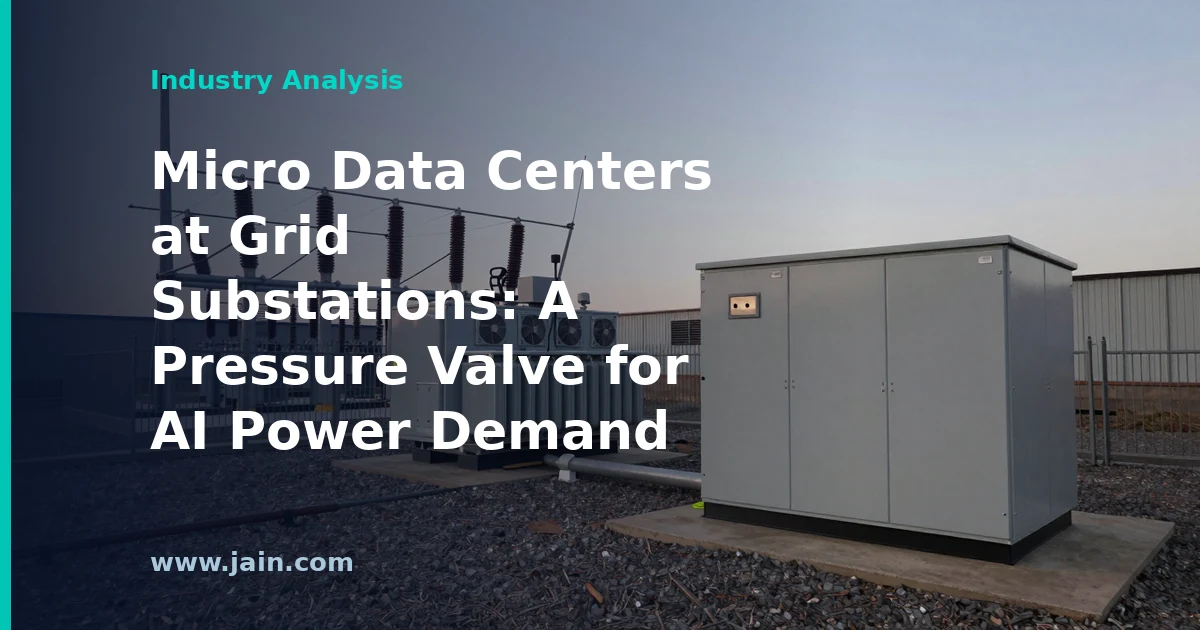
  • Micro Data Centers at Grid Substations: A Pressure Valve for AI Power Demand

    Micro Data Centers at Grid Substations: A Pressure Valve for AI Power Demand

    IEEE Spectrum reported on May 13, 2026 on an emerging infrastructure concept: placing small, modular data centers directly at electric-grid substations as a way to keep surging AI power usage in check. Rather than concentrating hundreds of megawatts of computing at a single campus and forcing utilities to build new transmission to serve it, the approach distributes compute in small increments at points where the grid already has capacity, interconnection equipment, and land.

    Executive Summary

    The idea IEEE Spectrum describes inverts the dominant pattern of the AI buildout. Instead of asking the grid to come to the data center — often a multi-year, multi-billion-dollar transmission and generation exercise — micro data centers go to the grid, occupying the underused margins of existing substations. A substation is the node where high-voltage transmission is stepped down for local distribution; many have spare transformer capacity for part of the day or year, plus fenced land and existing utility interconnection.

    Why it matters: interconnection queues and transmission constraints, not chips, have become the binding constraint on AI capacity growth in many U.S. markets. Any credible mechanism that adds compute without triggering new large-load interconnection studies deserves attention from utilities, hyperscalers, and colocation operators alike. The open question — which the source coverage frames but cannot yet settle — is whether compute measured in hundreds of kilowatts to a few megawatts per site can meaningfully offset demand measured in gigawatts.

    Why the Substation Is Suddenly Prime Real Estate

    The scarce resource in the AI era is not land or servers — it is grid interconnection. Large data center campuses in major markets face waits that can stretch for years while utilities study whether the transmission system can absorb a new load of 100 MW or more. A substation-sited micro facility sidesteps much of that: the interconnection already exists, the utility already owns and monitors the site, and the incremental load can be sized to fit whatever headroom the local transformer bank actually has.

    There is also a load-shaping logic. Substation loading varies by hour and season; a data center that can throttle or shift its work — as some AI training and batch-inference workloads can — could soak up capacity when the neighborhood demand is low and back off at peak. In that framing, the micro data center is less a tenant than a grid instrument: a flexible load that improves utilization of assets ratepayers have already paid for.

    The Economics Cut Both Ways

    Distributing compute forfeits the economies of scale that made the hyperscale model dominant. A 200 MW campus amortizes security, staffing, cooling plant, and network backbone across a vast footprint; a 1 MW pod at a substation must be nearly autonomous — remotely operated, prefabricated, and cheap to service — or its cost per kilowatt will not compete. The viability of the model rests heavily on modular manufacturing driving unit costs down, something the industry has promised for a decade with mixed results.

    On the revenue side, however, distributed sites have an asset central campuses lack: proximity. Inference — the serving of trained AI models to users — benefits from being near population centers, and substations are by definition embedded where people and businesses are. If AI demand shifts from training-dominated to inference-dominated, as most industry roadmaps assume, the value of many small, close-in sites rises relative to a few remote giants.

    Utilities as Gatekeepers — and Potential Partners

    Nothing in this model works without the utility, which controls the substation, the interconnection, and the tariff. That is both the model’s strength and its fragility. Utilities gain a new class of revenue-generating, potentially flexible load and a better story for regulators worried about data centers driving up residential rates. But utilities are conservative by design and by regulation: hosting third-party commercial equipment inside the substation fence raises questions of liability, security, union work rules, and whether ratepayer-funded assets can be leveraged for private gain.

    Expect the regulatory treatment to vary sharply by state and by whether the market is vertically integrated or restructured. Pilots with a single cooperative or municipal utility are one thing; scaling across investor-owned utilities under public-utility-commission oversight is a much longer road, and the source coverage does not indicate that road has been mapped.

    A Complement, Not a Substitute

    It is worth being precise about scale. AI’s incremental power demand is commonly discussed in gigawatts per year in the U.S. alone; substation-sited pods of a megawatt or less would need to be deployed by the thousands to absorb even a modest share. That does not make the idea a gimmick — grid-edge flexibility has outsized value precisely at the margins where systems break — but it does mean micro data centers are best understood as a pressure valve, as the framing suggests, rather than a replacement for large campuses, new generation, and transmission expansion. The realistic outcome is a layered market: hyperscale for training, regional colocation for enterprise, and grid-embedded micro sites for latency-sensitive inference and load balancing.

    Background

    The idea of the micro or edge data center predates the AI boom — telecoms and content networks have long placed small compute nodes near users — but it struggled commercially because most cloud workloads tolerated centralization. Two forces revived it: the AI buildout’s collision with grid interconnection queues, and the rise of latency-sensitive inference. By 2026, utilities, regulators, and hyperscalers were all publicly wrestling with how to add gigawatts of data center load without destabilizing rates or reliability, making grid-aware siting concepts — flexible loads, curtailable contracts, and now substation-sited compute — a mainstream topic of industry discussion rather than a fringe experiment.

    Source: Tiny Data Centers at Substations Aim to Keep AI Power Usage In Check — IEEE Spectrum’s May 13, 2026 report on siting micro data centers at grid substations to ease AI-driven electricity demand.

  • FERC Weighs Federal Oversight of AI Data Center Grid Connections: What Could Change

    FERC Weighs Federal Oversight of AI Data Center Grid Connections: What Could Change

    According to a May 12, 2026 report from Engineering News-Record, the Federal Energy Regulatory Commission (FERC) is weighing federal oversight of how AI data centers connect to the electric grid. The report signals that the commission — the U.S. regulator of interstate transmission and wholesale power markets — is considering a more direct role in the interconnection of the very large loads that hyperscale AI facilities represent.

    Executive Summary

    The headline development is straightforward but consequential: FERC is reportedly considering whether the federal government should assert oversight over AI data center grid connections — the physical and contractual arrangements that let a large computing facility draw power from the bulk electric system. Historically, connecting a new load (a consumer of power, as opposed to a generator) has been governed largely by state regulators and local utilities. A federal framework would be a meaningful shift in who sets the rules for the fastest-growing category of electricity demand in decades.

    Why it matters: power availability has become the binding constraint on AI infrastructure buildout. Data center developers routinely cite interconnection timelines and grid capacity — not chips or capital — as the limiting factor on new capacity. Whoever writes the rules for large-load interconnection will influence where hyperscale campuses get built, how fast they energize, and who pays for the grid upgrades they require. Based on the available report, FERC is weighing action, not announcing a final rule; the scope, mechanism, and timeline remain to be seen.

    Why the Grid Connection Became the Bottleneck

    AI training and inference clusters concentrate enormous electrical demand in single facilities — individual campuses now request capacity measured in the hundreds of megawatts, and some multi-site plans reach into the gigawatts. That is utility-scale demand appearing at a pace the interconnection process was never designed for. Utilities and grid operators must study whether the local transmission network can serve a new load without degrading reliability for existing customers, and those studies, plus any required upgrades, can take years.

    For the AI infrastructure sector, the interconnection queue is now a competitive battleground. Access to a firm, timely grid connection has become as strategically valuable as access to GPUs. Any change in who governs that process — and under what standards — goes directly to the economics of the buildout.

    The Jurisdictional Line FERC Would Be Redrawing

    FERC’s authority under the Federal Power Act covers interstate transmission and wholesale electricity sales; states and their utility commissions traditionally govern retail service, distribution, and the siting of both power plants and large customers. Load interconnection has mostly lived on the state side of that line. But recent disputes have pulled FERC in — most visibly the fights over co-located load, where a data center connects directly to a power plant (such as a nuclear station) and questions arise about whether it is fairly using, or bypassing, the shared transmission system. FERC’s 2024 rejection of an expanded co-location arrangement at a Pennsylvania nuclear plant, and its subsequent review of co-location rules in the PJM region, established the commission as an active referee in this space.

    Weighing broader oversight of AI data center connections would extend that trajectory. The legal theory matters: rules framed around transmission access and wholesale-market effects sit comfortably within FERC’s mandate, while anything resembling federal siting authority over customer facilities would be contested territory. Expect states, utilities, and hyperscalers to litigate exactly where that line falls.

    Winners, Losers, and the Price of Certainty

    A single federal framework could benefit large developers by replacing a patchwork of state-by-state and utility-by-utility processes with predictable national rules — much as FERC’s generator interconnection reforms sought to standardize the queue for power plants. Uniformity lowers diligence costs and could speed projects in regions where local processes are slow or opaque.

    The countervailing risk is that new federal process layers add time before they save it, and that cost-allocation rules — who pays for the transmission upgrades a gigawatt-scale campus triggers — shift in ways developers cannot yet price. Utilities in high-growth regions may welcome clearer rules for protecting existing ratepayers; states courting data center investment may resist anything that dilutes their leverage. Ratepayer advocates, who have pressed regulators to ensure ordinary customers do not subsidize hyperscale growth, would likely see federal engagement as validation of their concerns — though the substance of any rule will determine whether they view it as protection or preemption.

    What Is — and Is Not — Substantiated Here

    It is worth being direct about the sourcing: this is a single trade-press report that FERC is weighing oversight. The available material does not establish whether the commission has opened a formal proceeding, issued a proposed rule, or merely discussed the topic at a conference or in commissioner statements. “Weighing” can describe anything from staff inquiry to an imminent order. Readers should treat the direction of travel — growing federal attention to large-load interconnection — as well supported by the past two years of docket activity, while treating any specific regulatory outcome as unconfirmed until FERC itself acts.

    Background

    FERC was created to regulate the interstate wholesale electricity system, leaving retail service and facility siting to states — a division written long before any single electricity customer could demand a gigawatt. That division has come under strain as AI-driven data center growth produced the fastest load expansion the U.S. grid has seen in decades, with grid operators across the country reporting unprecedented volumes of large-load interconnection requests.

    The pressure surfaced first in co-location disputes: FERC’s 2024 rejection of an expanded data-center arrangement at a Pennsylvania nuclear station, followed by a broader review of co-located load rules in the PJM region, made the commission a central player in data center power policy. The reported deliberations over direct oversight of AI data center grid connections are the logical next chapter in that story.

    Source: FERC Weighs Federal Oversight of AI Data Center Grid Connections — Engineering News-Record report, May 12, 2026, on FERC deliberations over federal jurisdiction of large-load grid interconnection.

  • FERC Targets Data Center Interconnection Delays: The Grid Chokepoint for AI

    FERC Targets Data Center Interconnection Delays: The Grid Chokepoint for AI

    The Federal Energy Regulatory Commission (FERC) — the U.S. agency that oversees interstate electricity transmission and wholesale power markets — is taking aim at the delays data centers face when connecting to the power grid, according to a May 11, 2026 report from Broadband Breakfast. Interconnection, the formal process by which a large new electricity load or generator gets studied and physically wired into the transmission system, has become one of the tightest bottlenecks in the AI infrastructure buildout.

    Executive Summary

    According to the report, FERC is targeting the interconnection delays that have left large data center projects waiting — often years — for grid connections. The report available to us is brief and does not detail the specific mechanism, so it is not yet clear whether the action takes the form of a rulemaking, an order directed at grid operators, or a preliminary inquiry. What is clear is the direction: the federal regulator most responsible for transmission access is treating data center connection timelines as a problem worth its attention.

    Why it matters: capital, chips, and land have largely stopped being the binding constraints on AI data center construction — power is. A hyperscale campus can be financed and built in two to three years, but securing a firm grid connection can take longer than that in constrained regions. Any FERC move that compresses those timelines, or that standardizes how utilities and regional grid operators study large new loads, goes directly to the pace at which announced AI capacity actually energizes.

    The Queue Is the Chokepoint

    For most of the grid’s history, interconnection processes were designed around new power plants, not new consumers. A data center drawing hundreds of megawatts — comparable to a small city — inverts that model: it is a load so large that utilities must run detailed studies to confirm the transmission system can serve it without destabilizing service to everyone else. Those large-load studies are handled inconsistently across the country, often utility by utility, with no uniform federal timeline. The result is a patchwork in which functionally identical projects can face wait times that differ by years depending on jurisdiction.

    FERC has already spent years reforming the generator side of this problem — its Order 2023 overhauled generator interconnection queues with clustered, first-ready-first-served studies after backlogs stretched to multi-year waits. The load side, where data centers sit, has had no equivalent national framework. FERC has also been drawn into adjacent fights, most visibly over co-location arrangements that would place data centers directly at existing power plants, a structure that raised contested questions in the PJM region about who pays for the grid and who gets access to scarce capacity. An action targeting data center interconnection delays fits a pattern of the Commission being pulled, docket by docket, into the collision between AI demand growth and grid process.

    What Federal Action Can and Cannot Fix

    FERC’s leverage is real but bounded. It regulates interstate transmission and the regional grid operators (RTOs and ISOs) that administer most of the U.S. bulk power system, so it can standardize study timelines, impose deadlines, and clarify cost responsibility for network upgrades. That could meaningfully shrink the procedural portion of interconnection delays — the months lost to sequential studies, restudies, and ambiguity about process.

    What FERC cannot conjure is physical capacity. Where delays reflect genuinely constrained transmission — lines and transformers that do not yet exist — faster paperwork simply delivers a faster “no” or a large upgrade bill. Transformers and high-voltage equipment carry their own multi-year supply lead times, and retail-level service decisions remain with states and local utilities. The honest framing is that federal reform can remove artificial delay, not engineering reality; both matter, and the report available does not indicate which FERC believes is dominant.

    Winners, Losers, and the Cost Question

    Faster, more predictable interconnection most benefits large, well-capitalized developers — hyperscalers and major colocation operators — who can meet readiness requirements and post financial commitments quickly. It also benefits regions competing for data center investment, where interconnection uncertainty has begun steering projects toward states or utilities perceived as faster. Utilities face a more mixed picture: standardized deadlines add pressure and potential liability, but a clearer process also protects them from accusations of arbitrary treatment.

    The hardest question any reform must answer is cost allocation: when a multi-hundred-megawatt load triggers transmission upgrades, does the data center pay, or do those costs spread across all ratepayers? Consumer advocates have pressed this issue sharply as residential bills rise in data-center-heavy regions, and it was central to the co-location disputes FERC has already handled. A reform that accelerates connections without settling who pays would relocate the fight rather than resolve it — and that question deserves scrutiny regardless of which side raises it.

    Background

    FERC’s involvement in the data center power crunch has been building for several years. U.S. electricity demand, flat for roughly two decades, began rising sharply in the mid-2020s as AI training and cloud workloads drove a wave of hyperscale construction, and grid operators repeatedly raised their load forecasts in response. The Commission modernized generator interconnection with Order 2023, but large consuming loads had no comparable national framework, leaving data centers subject to a patchwork of utility-specific processes. FERC was also pulled into high-profile disputes over co-locating data centers at power plants, which crystallized the cost-allocation and market-access questions that any broader interconnection reform will have to answer. Action targeting data center connection delays is the logical next step in that progression.

    Source: FERC Targets Data Center Interconnection Delays — Broadband Breakfast report, May 11, 2026, on federal regulatory action addressing grid connection delays for data centers.

  • PPL’s 28.3 GW Data Center Pipeline Shows the Scale of Pennsylvania’s Grid Crunch

    PPL’s 28.3 GW Data Center Pipeline Shows the Scale of Pennsylvania’s Grid Crunch

    PPL Corporation’s pipeline of “advanced-stage” data center projects seeking to connect in its Pennsylvania service territory has grown to 28.3 gigawatts, according to a May 10, 2026 report by Utility Dive. The figure refers to prospective load — data centers that have progressed beyond casual inquiry into serious interconnection planning with the utility — not capacity that is contracted, under construction, or energized.

    For scale, 28.3 GW of potential new demand concentrated in one utility’s footprint is several times the historical peak load of PPL’s Pennsylvania system, making it one of the clearest single data points yet on how large the AI-driven interconnection wave has become.

    Executive Summary

    Utilities increasingly disclose their data center “pipelines” — the aggregate megawatts of projects in active interconnection discussions — as a forward indicator of load growth. PPL’s disclosure that its advanced pipeline has reached 28.3 GW in Pennsylvania matters for three reasons. First, it quantifies demand pressure in PJM Interconnection, the 13-state grid region that already faces tightening capacity margins. Second, it signals that Pennsylvania, with its proximity to fiber routes, available land, and in-state generation, has become a first-tier data center market rather than a spillover from Northern Virginia. Third, it frames the central planning question of this cycle: how much of a paper pipeline converts into steel, concrete, and actual megawatt-hours.

    The distinction between pipeline and reality is the heart of the story. Developers routinely file interconnection requests at multiple utilities for the same project, and “advanced” is a utility-defined category, not a standardized industry term. Even so, the direction and magnitude of the number — and the fact that it keeps growing — tells investors, regulators, and infrastructure buyers that the interconnection queue, not chips or capital, is now the binding constraint on data center growth.

    What “Advanced” Actually Means — and Why the Definition Matters

    When a utility labels pipeline projects “advanced,” it generally means the developer has moved past an initial inquiry: engineering studies are underway, agreements may be in negotiation, and sites are typically identified. That is meaningfully stronger than the raw interconnection queue, which is notorious for speculative and duplicative requests. But it still is not a commitment. No standardized definition governs the term across utilities, so a project counted as advanced at PPL could simultaneously appear in another utility’s pipeline while the developer shops for the fastest path to power.

    The practical consequence is that 28.3 GW should be read as a demand signal, not a construction forecast. Utilities themselves typically plan around a conversion rate — an internal estimate of what fraction of the pipeline materializes — though the report at hand does not disclose PPL’s assumption. The honest framing is that even a modest conversion of a pipeline this size would represent transformative load growth for a single service territory.

    Pennsylvania’s Emergence as a Load-Growth Epicenter

    For two decades, U.S. data center demand concentrated in Northern Virginia. As land, power, and community tolerance tightened there, developers fanned out along the PJM footprint, and central and eastern Pennsylvania — PPL’s territory — offered a compelling combination: transmission access, proximity to East Coast network routes, comparatively available land, and significant in-state generation including nuclear and gas. A 28.3 GW advanced pipeline suggests that migration is no longer incremental; Pennsylvania is being treated as a primary market.

    That creates a genuine economic opportunity for the state — construction activity, tax base, and potential anchor tenants for new generation — alongside a genuine planning burden. Interconnecting even a fraction of this load requires new transmission, substations, and ultimately generation, all of which run on multi-year timelines that sit awkwardly against data center developers’ desired 24- to 36-month schedules.

    The Ratepayer Question Hanging Over Every Gigawatt

    The unresolved policy issue beneath these numbers is cost allocation: who pays for the grid upgrades that hyperscale load requires, and who bears the risk if forecast load never shows up. PJM’s recent capacity market results have already drawn scrutiny over rising costs attributed partly to data center demand, and utilities across the region have been developing large-load tariffs — contract structures requiring minimum payments, collateral, or long-term commitments from data center customers — precisely to shield residential ratepayers from stranded-asset risk.

    A pipeline of 28.3 GW sharpens that debate rather than settling it. If utilities build for demand that fails to materialize, ordinary customers can be left carrying the cost; if they under-build, they forfeit economic development and constrain a strategically important industry. The quality of the screening — how rigorously “advanced” projects are vetted for financial commitment — is therefore not a technicality. It is the mechanism that determines whether this boom is financed by its beneficiaries.

    Winners, Losers, and the New Scarcity

    The clearest winners from a demand signal of this size are owners of existing generation in PJM, transmission developers, and the electrical-equipment supply chain — transformers, switchgear, and high-voltage gear already carry long lead times, and this level of demand extends them. Data center operators with interconnection positions already secured hold assets that appreciate as the queue lengthens. The squeezed parties are late-arriving developers facing multi-year waits, industrial customers competing for the same grid headroom, and any market participant that underestimated how quickly regional capacity margins would tighten.

    For enterprise buyers of data center capacity, the takeaway is concrete: power availability, not real estate, now drives site selection and delivery dates. Contracted, deliverable megawatts in PJM have become the scarce commodity, and pipelines like PPL’s explain why.

    Background

    PPL Corporation, headquartered in Allentown, Pennsylvania, delivers electricity through PPL Electric Utilities to roughly 1.5 million customers in central and eastern Pennsylvania, a territory inside PJM Interconnection — the regional transmission organization spanning 13 states and Washington, D.C. For most of the past two decades, U.S. utilities planned around flat or declining load; efficiency gains offset economic growth, and grid investment focused on reliability rather than expansion.

    The AI buildout that accelerated from 2023 onward broke that pattern. Hyperscale and AI-specialist developers began requesting grid connections measured in hundreds of megawatts per campus, overwhelming interconnection processes designed for a slower era. Utilities across PJM — where Northern Virginia’s data center concentration already strained the system — started publishing pipeline figures to communicate the scale of prospective demand to investors and regulators, and those figures have grown with nearly every disclosure. PPL’s 28.3 GW advanced pipeline is among the largest single-utility totals reported to date.

    Source: PPL ‘advanced’ data center pipeline grows to 28.3 GW in Pennsylvania — Utility Dive report, May 10, 2026, on PPL’s disclosure of advanced-stage data center interconnection demand in its Pennsylvania service territory.