Category: Data Center

  • Montgomery’s 6-Month Pause Shows a Retired Power Plant Won’t Fast-Track a Data Center

    Montgomery’s 6-Month Pause Shows a Retired Power Plant Won’t Fast-Track a Data Center

    TL;DR · 30-second read

    The Short Version

    Montgomery County, Maryland, a large suburb just outside Washington, has stopped accepting building applications for new data centers for six months. Data centers are the huge warehouses of computers that run apps, online storage and artificial intelligence.

    The surprise is that the pause also covers a project already proposed on the site of an old, shut-down power plant. Builders often like those sites because they are already wired into the electric grid.

    Local leaders say they want rules on electricity, water and noise written before anything gets built.

    On June 12, 2026, Montgomery County Executive Marc Elrich signed an executive order directing the county’s Department of Permitting Services to stop accepting, processing and considering permit applications for new data centers. Montgomery County announced that the order takes effect immediately and sets a six-month moratorium, which can end sooner if the County Council adopts permanent zoning rules for data centers.

    The pause applies to projects already proposed, including a potential data center at the site of the decommissioned power plant in Dickerson, in the county’s western reaches along the Potomac River. Council Vice President Marilyn Balcombe and Councilmembers Will Jawando and Kristin Mink backed the order.

    Executive Summary

    Montgomery County has frozen data center permitting for six months so its County Council can write a legal framework for the industry. The county said the order responds to concerns about data centers’ energy consumption, water use for cooling, and noise near homes. It is a pause, not a ban: officials described it as time to set rules before applications move forward.

    What makes the order consequential is its scope. Elrich said his approach differs from an earlier proposal by Council Member Glass that would have exempted the Dickerson site and let it keep moving through permitting. His order does not exempt it. A project on a retired power plant parcel, which is the kind of site developers typically prize for its existing grid ties, now waits in the same line as everything else.

    For developers and investors, the signal is that in Montgomery County, a site’s power-plant legacy is not a substitute for local approval. The rules that emerge on clean energy, water, noise and labor will determine whether the county remains a practical option next to one of the world’s densest data center markets.

    Why a Retired Power Plant Didn’t Earn a Head Start

    For data center developers, a decommissioned power plant is often one of the most attractive parcels available. Such sites are usually already used for heavy industry, and they sit where high-voltage transmission lines once carried the plant’s output to the grid. That matters because the scarce input for today’s AI-driven data center buildout is electricity, not land. Connecting a large new electricity customer can take years, and a site with an existing grid footprint is widely seen as a way to shorten that wait.

    Montgomery County’s order removes that advantage for Dickerson. Elrich explicitly contrasted his order with Council Member Glass’s earlier proposal, which exempted the Dickerson site. Councilmember Mink said a large data center is in the permitting process now and that the order covers it “and all others,” calling that an important distinction. Councilmember Jawando said the moratorium bill he introduced in May was the only one that covered the Dickerson project. The county’s elected leadership treated the site’s history as no reason to let it proceed ahead of the rules.

    The reasoning is visible in the concerns officials named: grid strain, brownouts, water for cooling, noise, and watershed protection. An existing transmission connection addresses whether power can physically reach a site. It does not answer whether the county wants that load on its local system, where cooling water comes from, or how loud cooling equipment will be near homes. The Dickerson developer is the first party affected. The same logic applies to any developer or landowner that has valued retired generating sites on the assumption that local approval follows the grid connection. In Montgomery County, at least, it does not.

    What Six Months Is Meant to Produce

    The moratorium is scheduled to expire in six months, around mid-December 2026. It ends earlier if the County Council adopts Zoning Text Amendments, which are changes to the written zoning code that define where a use is allowed and under what conditions. In practice, the pause gives the Council a deadline. If permanent rules arrive first, the freeze lifts on them.

    Officials have already sketched what they want those rules to cover. Jawando listed “clean energy, no subsidies, union labor, and a safe watershed.” Mink wants the County Noise Ordinance updated and watershed protections established. Climate Change Officer Sarah Kogel-Smucker said the goal is to align data center development with the county’s climate goals through best practices for clean energy and efficient cooling. Each of these would raise a project’s costs or narrow its design choices. Clean-energy requirements affect how a facility buys power. Water limits push operators toward cooling systems that use less water, which can mean more electricity. A no-subsidy stance removes the tax incentives many jurisdictions use to compete for these projects.

    None of these positions has become law yet, and they will not all carry equal weight. How the Council balances them will decide whether Montgomery becomes a place where data centers can be built under strict conditions or one where the conditions make the economics hard to close. Balcombe framed the intent as the former: “The moratorium does not mean we stop; it means we work harder.”

    A Pause on the Doorstep of Data Center Alley

    Montgomery County sits across the Potomac River from Loudoun County, Virginia, whose Ashburn area is known as Data Center Alley and hosts one of the largest concentrations of data centers in the world. Maryland and Northern Virginia are both served by PJM Interconnection, the grid operator for much of the mid-Atlantic. That is why concerns about grid strain and brownouts carry weight on both sides of the river.

    The order should not be read as more than it is. It is one county’s six-month pause, and it does not by itself redirect regional demand. What it does show is that a jurisdiction immediately adjacent to the industry’s busiest cluster has chosen to write rules before approving projects, including one on a site with an energy-industry past. Jawando cast the decision in national terms, saying communities across the country face the same choice. Developers looking for land near Northern Virginia’s network and power infrastructure now have one fewer county where timing is predictable.

    Weighing the Claims on Both Sides

    The order’s stated rationale includes serious claims, notably brownouts. Whether any single facility would contribute to them depends on its size and on the utility’s planning, and officials framed the risks in general terms rather than attaching load or water figures to the Dickerson project. The rules the Council writes will be more durable if they rest on measured impacts rather than on the general reputation of the industry.

    The same scrutiny applies to the other side of the argument. Jawando’s description of “corporate promises of profits that may never come” is a political judgment, not a finding. Kogel-Smucker’s observation that data centers are “critical to our digital economy” is the counterweight. No jobs, tax revenue or investment figures for the Dickerson project were offered at the announcement to test either view. The six months are most useful if both the county and the developer put those numbers on the table.

    Background

    Montgomery County is a large suburban county bordering Washington, D.C., to the northwest, with its western edge on the Potomac River. Across the river lies Loudoun County, Virginia, home to Ashburn’s Data Center Alley, one of the largest concentrations of data centers anywhere. Data center demand across the region has grown with cloud computing and, more recently, artificial intelligence workloads, which require large amounts of electricity and cooling.

    Montgomery County had been working toward data center rules before the order. Its Climate Change Officer co-led a community forum on data centers in February 2026, Council Member Glass had put forward a proposal that exempted the Dickerson site, and Councilmember Jawando introduced a moratorium bill in May that covered Dickerson. Elrich’s June 12 executive order paused permitting while the Council finishes that work.

    Sources

    Source: Montgomery County Executive Marc Elrich Signs Executive Order to Temporarily Pause Data Center Permitting — Montgomery County, Maryland’s announcement of a six-month moratorium on data center permit applications, including the proposed Dickerson project.

  • Texas Governor Calls for Regulators to Rein In Data Centers

    Texas Governor Calls for Regulators to Rein In Data Centers

    Texas Governor Greg Abbott has publicly called for regulators to clamp down on data centers, according to a June 11, 2026 report from E&E News by POLITICO headlined “Texas governor talks tough on data centers, calls for clampdown.” The remarks signal a potential policy shift in the state that has become one of the largest and fastest-growing data center markets in the United States.

    The syndicated report available to us carries only the headline, so the specific mechanisms the governor proposed — and which regulators he addressed — are not detailed in the source material.

    Executive Summary

    The significance here is less about any single proposal and more about who is speaking. Texas has spent years courting data centers with cheap power, fast permitting, abundant land, and a light-touch regulatory reputation. When the governor of that state “talks tough” and calls for a clampdown, it suggests the political calculus around hyperscale computing growth is changing even in the market most identified with welcoming it.

    The pressure has been building. Texas’ independent grid, operated by the Electric Reliability Council of Texas (ERCOT — the body that manages electricity flow for most of the state), has projected enormous demand growth driven heavily by large loads such as data centers. In 2025 the state enacted Senate Bill 6, a law giving regulators new tools to manage very large electricity users, including requirements that they be able to reduce consumption during grid emergencies. Gubernatorial rhetoric about a clampdown, if it translates into rulemaking or legislation, would extend that trajectory.

    For the industry, the message is straightforward: even in the most development-friendly major market, social license is not unconditional. Grid reliability, cost allocation, and community impact are now live political issues that developers must plan for rather than assume away.

    When the Friendliest Market Turns Cautious

    Texas — anchored by the Dallas–Fort Worth metro, one of the largest data center hubs in the world, plus fast-growing clusters in San Antonio, Austin, and West Texas — has been a primary beneficiary of the AI-driven construction boom. Developers chose Texas precisely because its political environment favored speed: deregulated retail electricity, no state income tax, and officials who actively recruited large projects. A governor from that same political tradition calling for a clampdown is therefore a meaningful signal, whatever the eventual policy details turn out to be.

    It is worth being precise about what a headline can and cannot tell us. “Talks tough” and “clampdown” are the reporter’s characterizations; the underlying remarks could range from a demand for strict new siting rules to a narrower push for large loads to pay their own way on the grid. Political rhetoric about data centers also does not always convert into binding regulation. But the direction of travel matches a broader national pattern in 2025–2026: statehouses in both parties’ hands have moved from recruiting data centers to scrutinizing them.

    The Grid Is the Battleground

    The most likely driver is electricity. ERCOT has repeatedly flagged that large flexible loads — data centers, crypto miners, industrial electrification — are the dominant source of projected demand growth, on a grid that already suffered a catastrophic failure during Winter Storm Uri in 2021. Every gigawatt of new computing load raises two politically sensitive questions: can the grid stay reliable, and who pays for the transmission and generation needed to serve it?

    Texas’ 2025 Senate Bill 6 was the first major answer, imposing interconnection requirements on very large loads and enabling their curtailment (mandatory reduction of power use) in emergencies. A gubernatorial call for further clampdown suggests officials may view those tools as insufficient — or at least politically insufficient — as residential ratepayer concerns about rising bills and water use gain traction. For an industry whose product is uptime, curtailment obligations and slower interconnection are direct commercial threats, which is why many operators are already investing in on-site generation and storage to reduce their grid dependence.

    Winners, Losers, and the Cost of Uncertainty

    If Texas tightens meaningfully, the near-term losers are speculative developers whose pipeline value depends on fast, cheap grid connections. Established operators with secured power and existing interconnection agreements arguably benefit, since barriers to entry protect incumbents. Utilities and grid operators gain leverage to demand stronger financial commitments from data center customers, reducing the risk that infrastructure is built for projects that never materialize — a growing concern given inflated interconnection queues nationwide.

    Competing markets should temper their enthusiasm, though. Rival states may market themselves as alternatives, but most face their own power constraints, and Texas’ fundamental advantages — land, energy resources, and scale — do not disappear because of tougher rules. The more realistic outcome is not an exodus but a repricing: longer timelines, more self-supplied power, and heavier upfront commitments becoming the standard cost of building in Texas. For buyers of data center capacity, that ultimately flows into pricing and delivery schedules.

    Background

    Texas rose to the top tier of global data center markets over the past decade on the strength of cheap and abundant energy, available land, fast permitting, and active state recruitment. The AI construction boom that accelerated from 2023 onward magnified that growth, with hyperscale campuses proposed across the Dallas–Fort Worth area, Central Texas, and West Texas — and with them, unprecedented projected demand on the ERCOT grid, which operates independently of the two large interconnections serving the rest of the continental U.S.

    The politics shifted as the load forecasts grew. After the deadly 2021 winter blackout exposed the grid’s fragility, Texas lawmakers grew warier of unmanaged demand growth, culminating in 2025’s Senate Bill 6, which created a regulatory framework for very large electricity users. The governor’s June 2026 call for a clampdown, as reported by E&E News, suggests that framework may have been a starting point rather than a settlement.

    Source: Texas governor talks tough on data centers, calls for clampdown — E&E News by POLITICO report, June 11, 2026, on the Texas governor’s call for regulators to rein in data center growth.

  • Louisville’s 500,000 Sq Ft Cap Shows Local Zoning Now Gates AI Data Center Scale

    Louisville’s 500,000 Sq Ft Cap Shows Local Zoning Now Gates AI Data Center Scale

    TL;DR · 30-second read

    The Short Version

    Kentucky’s two biggest cities are drawing lines around the giant computer warehouses being built to run artificial intelligence.

    Louisville proposed a size limit of 500,000 square feet, roughly nine football fields. Only three months earlier, the city approved one about 28 football fields big. Lexington stopped accepting new applications until October 31 after neighbors objected to plans to expand one.

    Why it matters: city halls, not just tech companies, are now deciding how big these buildings can get and where they can go.

    Kentucky’s two largest cities moved on June 9 to rein in hyperscale data centers, the Kentucky Lantern reported. Lexington’s Urban County Council suspended its legislative rules to impose a moratorium on data center applications through Oct. 31 while it writes zoning amendments. The same day, the Louisville Metro Planning Commission released a draft ordinance that would ban any data center larger than 500,000 square feet and restrict facilities over 250,000 square feet to industrial areas.

    Louisville residents have 30 days to comment on the draft before it goes to Louisville Metro Council. In March, the same planning commission approved a 1.6 million-square-foot data center in West Louisville despite local opposition.

    Executive Summary

    Lexington and Louisville took different routes to the same goal on the same afternoon. Lexington hit pause: no new data center applications until Oct. 31, prompted by a developer’s purchase of a local data center property that it intends to expand. Louisville went straight to rules: a draft siting ordinance with a hard size ceiling of 500,000 square feet and industrial-only zoning for anything over 250,000 square feet.

    The significance lies in the numbers. Louisville’s proposed ceiling is less than a third of the size of the facility the city approved three months earlier. For developers planning large AI campuses, that means the maximum scale of a project in Kentucky’s biggest city may be fixed by a planning document, regardless of what the grid or the supply chain could support.

    Both cities cited resident concern. Lexington Mayor Linda Gorton said she supports “very tight controls” and that the city does not support public incentives for the developer seeking to expand.

    A Ceiling Set Below a Third of March’s Approval

    The number that carries this story is the gap between two Louisville decisions made three months apart. In March, the Louisville Metro Planning Commission approved a 1.6 million-square-foot data center in West Louisville over local objections. On June 9, the same commission released a draft ordinance that would ban any data center larger than 500,000 square feet, less than a third of that approved facility, and confine anything over 250,000 square feet to industrial zones.

    This is how local zoning becomes a constraint on the scale of AI buildout. Hyperscale campuses, the very large facilities built for cloud and AI operators, draw much of their economic advantage from concentration: one site, one large electrical connection, one security perimeter, shared cooling infrastructure. A hard floor-area ceiling means a developer who wants that scale in Louisville would have to split it across buildings or sites, if the final ordinance allows that at all, or build somewhere else. In either case, the largest permissible project is being set by the planning code, independent of what power and equipment supply could support.

    The effects fall on specific groups: developers and landowners holding Louisville sites, the local utility planning for large new electrical loads, and residents who opposed the March approval. Brian Davis, director of Louisville’s office of planning, described the goal as “clear, achievable standards that provide transparency and clarity for both residents and potential developers.” Clarity does have value for investors, since a known ceiling is easier to finance around than a case-by-case fight. But the ceiling sits well below the size of the projects that prompted it.

    Two Cities, Two Tools: Pause Versus Rulebook

    Lexington and Louisville used different instruments on the same day. Lexington’s council suspended its legislative rules to impose a moratorium through Oct. 31 while it drafts zoning amendments: pause first, rules later. Louisville, where a separate committee tabled a data center moratorium earlier in June, went straight to draft regulations and opened a 30-day public comment period before the ordinance reaches Metro Council.

    For developers, the difference matters. A moratorium stops the clock entirely and leaves the eventual rules unknown. Lexington’s amendments could end in controls or, potentially, an outright ban. A draft ordinance keeps applications possible and tells the market roughly what it will face. Neither city has final rules today, and Lexington’s pause alone runs for nearly five months.

    Lexington’s action was triggered by a single transaction, a developer buying an existing local data center property with plans to expand it. Council member Emma Curtis called it “a case of an issue being expedited because of constituent concern and advocacy.” That is a direct statement that resident objections, not a staff study, set the timetable. That is a legitimate part of local democracy. It also means the rules will be written with one specific project in view.

    Square Feet Are a Blunt Proxy for the Grid

    Mayor Gorton stated the concern most clearly: data centers “do not produce many jobs, and have the potential to increase utility costs on local residents.” Both points are common in these debates, and both deserve the same scrutiny applied to developers’ promises of economic benefit. Gorton did not attach figures to either claim. Whether a large facility actually raises household bills depends heavily on how the utility and state regulators assign the cost of new generation and transmission, and neither city’s action settles that question.

    That exposes a limit in Louisville’s approach. Floor area is easy to measure and enforce, but it is only an indirect measure of what worries residents most: electricity demand. Servers built for AI draw far more power per rack than conventional cloud equipment, so two buildings of the same size can place very different loads on the grid. A 500,000-square-foot cap controls land use, traffic and physical footprint. It controls power draw only loosely.

    For industry readers, the practical point is that Kentucky’s largest cities are regulating the most visible dimension of data centers first. Site selection now depends on local square-footage thresholds as well as power availability and land cost, and Louisville’s shift between March and June shows those thresholds can move within a single planning cycle.

    Background

    Kentucky has long hosted smaller data centers supporting services such as cloud storage. The wave of investment in artificial intelligence has brought a different class of facility nationwide: hyperscale data centers that can consume as much electricity as an entire power plant and can span millions of square feet.

    Louisville has already experienced that shift. In March its Planning Commission approved a 1.6 million-square-foot data center in West Louisville despite local pushback, and earlier in June a separate city committee tabled a proposed data center moratorium. Lexington’s action followed a developer’s purchase of an existing local data center property with plans to expand it.

    Sources

    Source: Kentucky’s two largest cities take action to address concerns over hyperscale data centers (Kentucky Lantern), on Lexington’s data center moratorium and Louisville’s draft data center siting ordinance.

  • Dell’Oro: AI Buildouts and Memory Inflation Push 1Q 2026 Data Center Capex Higher

    Dell’Oro: AI Buildouts and Memory Inflation Push 1Q 2026 Data Center Capex Higher

    Market research firm Dell’Oro Group reported that worldwide data center capital expenditure moved higher in the first quarter of 2026, attributing the increase to two forces working in tandem: continued buildouts of AI infrastructure and inflation in memory costs. The finding, published June 10, 2026, comes from the firm’s ongoing tracking of data center IT and infrastructure spending.

    The headline pairing matters. It signals that the capex surge is being driven not only by more servers, accelerators, and facilities being deployed, but also by each unit of that equipment costing more — a distinction with real consequences for how the numbers should be read.

    Executive Summary

    Dell’Oro Group’s first-quarter 2026 reading extends a multi-year run of elevated data center spending tied to artificial intelligence. Capex — capital expenditure, the money operators sink into servers, networking gear, storage, and the facilities that house them — climbed again in the quarter, with AI infrastructure named as the primary engine and memory cost inflation as a significant amplifier.

    The memory angle is the notable wrinkle. High-bandwidth memory (HBM) and conventional DRAM are essential inputs to AI servers, and when their prices rise, total spending rises even if unit volumes were flat. Dell’Oro’s framing suggests both effects are in play: operators are buying more, and paying more per unit of what they buy.

    For the infrastructure industry, the read-through is that the AI spend cycle is broadening rather than cresting. Spending strength that persists into 2026 — after two years in which skeptics repeatedly called a peak — keeps demand signals strong for chipmakers, memory suppliers, server OEMs, colocation providers, and the power and cooling ecosystem behind them.

    Broadening, Not Peaking

    Every quarter of continued capex growth is a data point against the “AI bubble about to deflate” thesis — and a data point that must itself be scrutinized. A first-quarter increase in 2026 means the hyperscalers and large AI builders entered the year still accelerating, not digesting. Historically, capex cycles in IT infrastructure end with a visible plateau in quarterly spending before the decline; Dell’Oro’s reading indicates that plateau has not yet arrived.

    The word “broadening” is doing real work here. Early AI capex was concentrated in a handful of hyperscale cloud providers. As the cycle matures, spending typically spreads to second-tier cloud operators, GPU-cloud specialists, enterprises building private AI capacity, and sovereign or national AI initiatives. A quarter in which growth continues at scale is consistent with that widening base of buyers, though the release headline alone does not break out who spent what.

    Memory Inflation: Growth With an Asterisk

    The second driver Dell’Oro names — memory cost inflation — deserves careful reading. Memory (DRAM for general computing, and especially high-bandwidth memory stacked directly alongside AI accelerators) has been in tight supply as AI demand outstripped what the small number of memory manufacturers could produce. When memory prices rise, every AI server costs more, and aggregate capex inflates mechanically.

    That means dollar-denominated capex growth overstates the growth in deployed computing capacity. An analyst comparing 1Q 2026 spending to a year earlier is partly measuring more infrastructure and partly measuring more expensive infrastructure. For memory suppliers this is a windfall; for buyers it is margin pressure; for anyone using capex as a proxy for AI capacity coming online, it is a reason to discount the headline number somewhat. Dell’Oro’s decision to name inflation explicitly as a driver is a useful piece of intellectual honesty in a market prone to reading every big number as pure demand.

    Winners Along the Supply Chain

    The beneficiaries of this spending pattern are ordered by scarcity. Memory manufacturers sit at the top: rising prices on constrained supply flow almost directly to their revenue. Accelerator vendors and the server OEMs that integrate them continue to ride volume growth. Behind the IT equipment, the physical layer — data center developers, colocation operators, power equipment makers, and cooling specialists — benefits from every incremental megawatt the AI buildout requires, and their revenue tends to lag IT capex, meaning a strong 1Q 2026 for equipment implies continued facility demand into 2027.

    The squeezed parties are buyers without pricing power. Smaller cloud providers and enterprises paying inflated memory prices face a worse cost position than hyperscalers, who negotiate supply agreements at scale. If memory inflation persists, it acts as a regressive tax on the smaller end of the AI market — one more force concentrating AI capacity among the largest players.

    The Risk Ledger

    None of this eliminates cycle risk. Capex is a leading indicator of expected demand, not proven demand: the spending only pays off if AI services generate revenue commensurate with the infrastructure behind them. Input-cost inflation adds a second risk — cycles fed partly by price increases can unwind sharply when supply catches up and prices normalize, as memory markets have done repeatedly across their history. And the physical constraints on the buildout, chiefly electric power availability, remain unresolved in many markets.

    The balanced read: 1Q 2026 confirms the AI infrastructure cycle remains in its expansion phase, while the memory-inflation component is a reminder to separate dollars spent from capacity gained before drawing conclusions about either demand or durability.

    Background

    Data center capex has been the defining economic story of the AI era. Since large language models triggered an infrastructure race in 2023, the biggest cloud and AI companies have committed historically unprecedented sums to accelerated computing — spending that flows through chipmakers and server vendors into land, buildings, power, and cooling. Independent trackers like Dell’Oro Group, which has analyzed telecom and data center equipment markets since 1995, provide the industry’s scorecard for whether that race is accelerating or cooling.

    Memory has emerged as the cycle’s chokepoint. Production of high-bandwidth memory is concentrated among a handful of manufacturers, and AI demand has kept supply tight, pushing prices upward across memory categories. That inflation now shows up directly in aggregate capex figures — making 2026 the year analysts must ask not just how much the industry is spending, but how much of that spending buys new capacity versus simply covering higher input costs.

    Source: AI Infrastructure Buildouts and Memory Cost Inflation Drove Data Center Capex Higher in 1Q 2026, According to Dell’Oro Group — Dell’Oro Group’s first-quarter 2026 data center capex report announcement, published June 10, 2026.

  • Ohio Would Halve a $1.6B Data Center Break. The Harder AI Fight Is Who Pays for the Grid

    Ohio Would Halve a $1.6B Data Center Break. The Harder AI Fight Is Who Pays for the Grid

    TL;DR · 30-second read

    The Short Version

    Ohio lawmakers want to shrink a tax break for data centers, the giant warehouses of computers that run artificial intelligence and online services. The break cost the state roughly $1.6 billion last year. The bill would cut it in half.

    The bigger fight is over electricity bills. These buildings use so much power that new power lines and power plants have to be built. Manufacturers and environmental groups warn that ordinary households could end up paying part of that cost.

    Senators aimed to pass the bill within a day.

    Ohio state Sen. Brian Chavez unveiled a sweeping data center bill on Tuesday, June 9, attaching a long list of policy changes to a measure originally written only to study the issue, the Ohio Capital Journal reported. The proposal would cut the state’s discretionary sales and use tax exemption for data centers from 100% to 50%, or 75% for projects that build on brownfields and bring their own power. The exemption has grown to roughly $1.6 billion in the last year. The bill would also cap local property tax abatements at 50%, end data center access to Ohio’s 30-year mega project job creation grant, require data centers to track and report water use, and direct the Public Utilities Commission of Ohio (PUCO) to create a separate electricity rate class for data centers.

    The Senate Energy Committee was scheduled to advance the bill Wednesday morning, June 10, with a full Senate vote planned for later the same day.

    Executive Summary

    Ohio’s bill is one of the broadest state-level rewrites of data center policy so far. It covers tax incentives, nondisclosure agreements, water monitoring, utility billing, and a new surety bond meant to protect local governments. The tax provisions are the most concrete part. A roughly $1.6 billion incentive would be cut in half, with a larger 75% break reserved for projects on brownfields (previously developed, often contaminated land) that supply their own electricity.

    The provision that drew the sharpest testimony was the proposed data center rate class. It is modeled on the tariff PUCO approved for AEP Ohio last year, which the Ohio Manufacturers’ Association is now challenging in the Ohio Supreme Court. The underlying question is the one now running through every state served by PJM Interconnection, the regional grid operator: when AI-era data centers drive new transmission, distribution and generation spending, who ends up paying for it? PJM plans a backstop auction in September to secure 15 gigawatts of new generation. It has warned that without state rules, those costs could fall on other consumers, including residential customers.

    With a committee vote and a floor vote planned within about a day of introduction, the chance to refine the rate-class language before the Senate acts was limited.

    Tax Policy That Doubles as Power Policy

    The headline change is a 50% cut to the sales and use tax exemption. The more revealing detail is the exception. Projects keep a 75% break only if they build on brownfields and bring their own power. That condition ties Ohio’s largest data center incentive to a developer’s grid footprint as well as its capital spending. In practice, the state would be paying a premium for sites that reuse industrial land and lean less on utility-supplied electricity.

    Other provisions point the same way. Capping local property tax abatements at 50% and removing access to the 30-year mega project job creation grant both reduce the long-term public subsidy a single campus can collect. Together, these changes suggest Ohio is trying to stay open to data center investment while no longer competing mainly on how much tax it will forgo. Developers already planning Ohio sites will need to revisit their project economics. Those able to secure their own generation gain a relative advantage. The bill does not define what counts as bringing their own power, and that definition will matter.

    The Harder Fight Is the Rate Class

    The tax changes drew relatively little objection in testimony. The utility billing provision did not. The bill directs PUCO to create a data center rate class that assigns generation, distribution and transmission costs to data centers, similar to AEP Ohio’s existing data center tariff. The Ohio Manufacturers’ Association, already challenging that tariff in court, opposed extending the model statewide. Its energy consultant, John Seryak, described one project in AES Ohio’s territory that would need roughly $230 million in supplemental grid equipment. He said that once the cost is financed over 40 years with return on equity and interest, it comes to about $850 million, and the tariff would recover only $300 million of it. These are the association’s estimates, not audited figures. But the mechanism is plain. If a rate class spreads a project’s costs over years and collects less than the full lifetime cost, the gap has to be paid by someone else on the system.

    Seryak raised a second concern about the minimum monthly demand payments these tariffs impose. Minimum payments are generally meant to ensure a large customer covers the capacity built for it. He argued they could also inflate utilities’ load forecasts, pushing them to plan for more capacity whose cost is then spread across all ratepayers. They could also weaken a data center’s incentive to use power efficiently. The Ohio Environmental Council Action Fund raised a related gap. Nolan Rutschilling asked lawmakers to add explicit language telling PUCO how to handle PJM’s September backstop auction for 15 gigawatts of new generation. He said the large-load tariff might cover it, but the bill should make sure it does. The affected parties are clear. Manufacturers and households pay if costs leak out of the rate class. Developers pay more if it is written tightly. Utilities have to forecast and build against whatever the final design encourages.

    Water, NDAs and Local Leverage

    On water, the bill directs the Ohio EPA to develop a water quality testing plan and report any anomalies. Data centers would have to track and report their water use and adopt conservation practices, including closed-loop cooling, which recirculates coolant rather than continually drawing fresh water. This gives regulators data they currently lack. It does not set usage caps.

    The nondisclosure agreement provision drew criticism from both parties. The bill states that an NDA cannot prohibit or limit the release of a public record. Sen. Bill DeMora, D-Columbus, said this “does nothing to stop NDAs,” because it does not ban them. Sen. Jerry Cirino, R-Kirtland, worried from the other direction that the bill could hurt data centers’ ability to negotiate with local governments. The proposed surety bond is the most unusual local protection. It would equal the average salary of all of a data center’s workers over ten years, which Chavez described as “financial insurance” for affected communities. Save Ohio Parks asked for some carbon-free energy requirements and pointed to diesel backup generators as a pollution concern. The bill as introduced does not include such a requirement.

    Speed Leaves the Details Unsettled

    Chavez’s timeline, with a floor vote potentially one day after introduction, means the most contested language faced little revision in the Senate. DeMora warned that “anything the legislature does in a swift amount of time ends up being bad for everybody.” The risk is concentrated in the rate-class provision. The tax percentages are simple numbers. The cost-allocation rules are not, and they would be left largely to PUCO to design while the AEP tariff remains in litigation.

    For the wider PJM region, Ohio’s bill is a sign of where state policy is heading. Incentives are being trimmed and made conditional, while the real policy work moves to utility commissions and tariff design. That is where the costs of AI-driven load growth will actually be divided.

    Background

    Ohio, particularly central Ohio, has become a major destination for large data center campuses. Its utilities, including AEP Ohio and AES Ohio, are part of the PJM Interconnection grid, which covers all or parts of 13 states and Washington, D.C. As AI-driven demand for computing power has grown, PJM and its member states have struggled with how to pay for the transmission lines, substations and power plants needed to serve that load without shifting costs onto existing customers.

    PUCO approved a data center tariff for AEP Ohio last year to assign more of those costs to data centers. The tariff is now under challenge by the Ohio Manufacturers’ Association in the Ohio Supreme Court. Chavez’s bill draws on testimony from the Ohio Senate’s Select Committee on Data Centers and would extend a similar rate-class approach across the state’s utilities.

    Sources

    Source: Ohio lawmakers introduce sweeping new data center legislation (Ohio Capital Journal), covering Sen. Brian Chavez’s bill on data center tax breaks, water use, NDAs and utility rate classes.

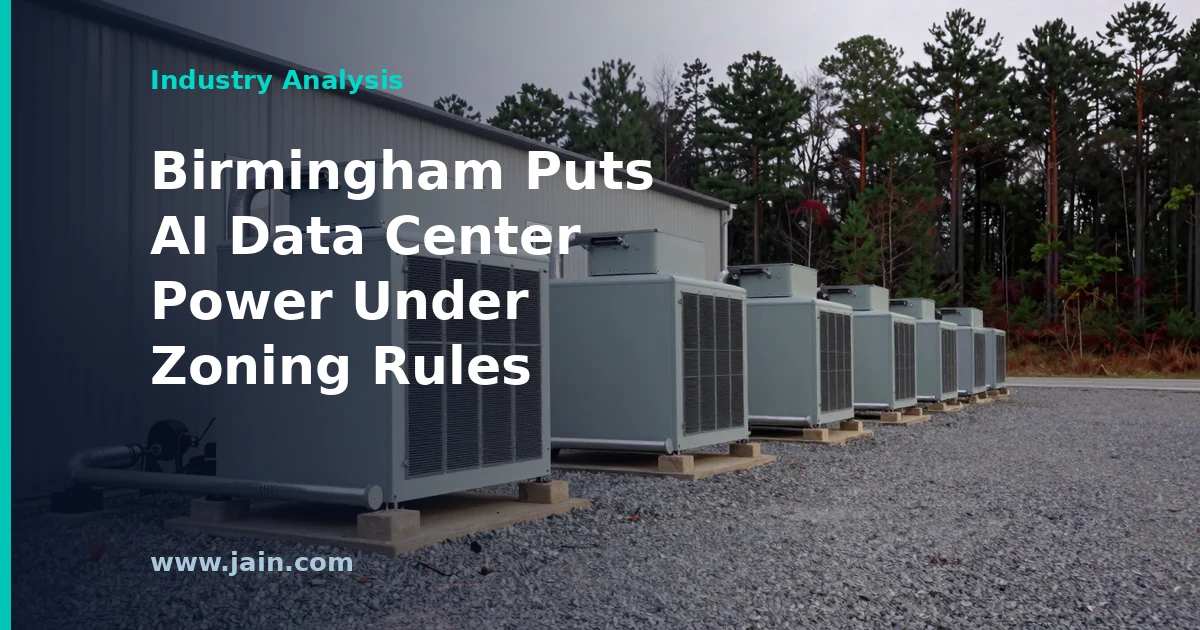
  • Birmingham’s 20-Point Code Turns AI Data Center Power Plans Into Zoning Terms

    Birmingham’s 20-Point Code Turns AI Data Center Power Plans Into Zoning Terms

    TL;DR · 30-second read

    The Short Version

    Birmingham, Alabama, has passed strict new rules for giant data centers, the warehouse-sized buildings full of computers that run cloud services and artificial intelligence.

    • They must sit at least 500 feet from homes, more than a football field and a half.
    • They cannot run their own gas-fired power plants on site.
    • Their cooling must use no more water than an ordinary office building.
    • Nearby neighbors must be told by certified letter before one is built.

    The city, not the state, now decides these terms.

    The City of Birmingham announced on June 9, 2026, that its City Council had approved a zoning ordinance setting 20 protective conditions for hyperscale data centers, the very large facilities built by cloud and AI operators. The city describes it as the toughest such ordinance in Alabama.

    The rules include a 500-foot setback from residential districts, a 1,000-foot separation from high-capacity transit facilities, a 5-acre minimum lot size, mandatory closed-loop cooling, a ban on onsite gas turbines and round-the-clock diesel generation, noise studies before and after construction, disclosure of projected peak electricity demand, and certified-mail notice to property owners within 500 feet.

    Executive Summary

    Birmingham has written the most contested parts of AI data center development, power, water and noise, directly into its zoning code. A developer seeking a site in the city now has to show where its water comes from, how much electricity it expects to draw at peak and in what phases, which utility will supply it, and how it will keep noise at the property line in check, all before the project can proceed.

    The most consequential provision is the prohibition on onsite gas turbines and diesel generators running 24/7. Onsite gas generation has become one of the ways large AI campuses bring capacity online faster than a utility connection allows. Birmingham has closed that route within city limits while leaving room for solar, fuel cells and battery storage under review.

    The city pairs these limits with a pitch: it cites its strong electrical grid, industrial infrastructure and affordable land as reasons developers want to build there. The ordinance is an attempt to keep that demand while setting the conditions locally.

    Power Moves From the Utility Contract to the Zoning File

    Traditionally, how a data center gets its electricity is negotiated between the developer and the utility, and the city’s role is limited to land use. Birmingham’s ordinance changes that in two ways. First, it restricts the generation a site may build for itself: gas turbines and diesel generators running around the clock are prohibited, solar and fuel cells are allowed, and battery storage is permitted subject to emergency-response review. Second, it requires developers to disclose projected peak demand, planned development phases and the identity of the utility provider as part of the application.

    For AI-focused developers, that matters because speed to power is often the binding constraint. When a utility cannot deliver a large new connection quickly, one workaround has been to install gas turbines on site and run them as primary or bridging power. Within Birmingham, that option is off the table. A hyperscale project there will depend on grid supply, supplemented only by solar, fuel cells or batteries, which puts the utility’s delivery timeline back at the center of the project schedule.

    The disclosure requirement has a quieter effect. Peak demand projections and phasing plans give the city a public record of how much load each project intends to add and when. That turns electricity from a private commercial term into something neighbors and officials can see and question during permitting.

    The Water Rule Is a Performance Standard With an Energy Cost

    The ordinance does not just require closed-loop cooling; it sets a benchmark that water use be no greater than that of a similarly sized office building. That is a performance test, not simply a technology checkbox. Closed-loop systems recirculate the same coolant rather than evaporating water to shed heat, which sharply reduces consumption.

    The trade-off is well understood in the industry: cooling without evaporation generally takes more electricity, particularly in hot, humid summers like Alabama’s. Birmingham has therefore chosen to protect local water supplies at the price of somewhat higher power draw per facility, which loops back to the peak demand figures developers must now disclose. Dense AI hardware, which runs hotter than conventional servers, makes that trade-off more pronounced.

    Setbacks, Not Lot Size, Will Decide Where Campuses Fit

    A 5-acre minimum lot is modest by hyperscale standards, so it is unlikely to be the constraint that matters. The 500-foot setback from residential and urban neighborhood districts is more demanding: a 5-acre parcel is only about 470 feet on a side if square, so a small site bordering a neighborhood could struggle to fit a building at all. In practice, the rules steer large projects toward bigger industrial tracts, which Birmingham, with its long manufacturing history, has in supply.

    The 1,000-foot separation from high-capacity transit facilities is less common. It keeps land near major transit, which cities typically reserve for housing and employment-dense development, from being absorbed by facilities that employ relatively few people once built. Combined with pre- and post-construction noise studies, acoustical walls and certified-mail notice within 500 feet, the ordinance front-loads community disclosure rather than leaving disputes to surface after construction.

    Weighing the City’s ‘Toughest’ Claim

    The city’s description of the ordinance as Alabama’s toughest and as a mark of national leadership is its own characterization, and it has not published a side-by-side comparison with other jurisdictions to support it. What can be said is that combining an onsite gas ban, a water-use benchmark, noise studies and power disclosure in a single zoning instrument is more comprehensive than codes that address only setbacks or noise.

    For developers, stricter rules are not purely a cost. Clear conditions published in advance reduce the risk of a project being stalled by opposition late in the process, and a site that meets them arrives with a documented answer to the questions neighbors most often raise. The larger point is structural: state-level tax incentives can make Alabama attractive, but in Birmingham it is the city code that now determines whether and how a specific site gets built.

    Background

    Birmingham grew as an iron and steel center, leaving it with industrial land, heavy electrical infrastructure and rail and utility corridors that suit large facilities. Alabama has courted data centers with state tax incentives and has already drawn large projects from companies such as Google and Meta elsewhere in the state.

    Nationally, the surge in AI computing has driven demand for ever-larger data centers that consume significant electricity and, depending on cooling design, water. Many local zoning codes were written before facilities of this scale existed, and cities have begun adding specific rules on siting, noise, water and power as proposals arrive.

    Sources

    Source: The City of Birmingham approves Alabama’s toughest zoning ordinance, establishing 20-point community protections for data center development, the City of Birmingham’s June 9, 2026 announcement of its hyperscale data center zoning rules.

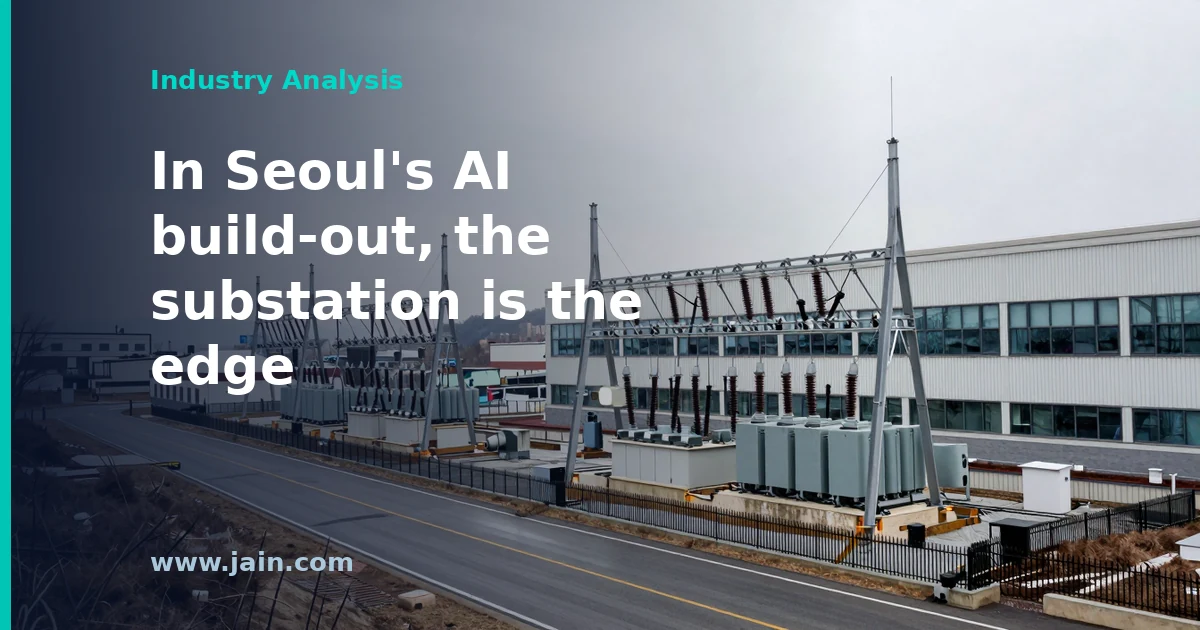
  • LG U+’s 200MW Paju Site Shows Why Seoul’s AI Capacity Starts at the Substation

    LG U+’s 200MW Paju Site Shows Why Seoul’s AI Capacity Starts at the Substation

    TL;DR · 30-second read

    The Short Version

    LG Uplus, one of South Korea’s three big mobile phone companies, is building a giant data center in Paju, just north of Seoul. A data center is a warehouse full of computers, and this one will run artificial intelligence.

    The first building won’t open until next year, but one large customer has already rented all of it. The whole site is designed to draw 200 megawatts, roughly the electricity a small city uses.

    The surprising part: its biggest advantage isn’t the computers. It’s a major hub of the high-voltage power grid right across the road. Near Seoul, that kind of electricity hookup is hard to get.

    Korea JoongAng Daily reported on June 7 that LG Uplus (LG U+) has made its Paju AI Data Center the centerpiece of a plan to win 5 trillion won ($3.3 billion) in cumulative AI data center orders by 2030. The site in Wollong-myeon, Gyeonggi Province, has a confirmed 200-megawatt power supply and will eventually hold five buildings with about 152,000 square meters (1.64 million square feet) of floor space.

    Building 1 was about 20 percent complete at a June 5 site visit and is due for completion in June 2027. It is a 50-megawatt structure carrying about 30 megawatts of IT load, and it is already fully contracted to an unnamed large customer. LG Uplus expects more than 1 trillion won in orders a year through 2030 and projects 15 to 20 percent average annual revenue growth for the business.

    Executive Summary

    LG Uplus is repositioning itself from a traditional data center operator into what it calls an “AI Factory Operator.” In this model, the company sells the power, cooling and operational reliability that AI workloads need, not just rack space. Paju is the template. The site pairs a 200-megawatt grid connection with a hybrid air-and-liquid cooling design built in from the foundation. The first building sold out before its concrete had cured.

    The announcement matters for two reasons. First, it shows where the scarcity lies in AI infrastructure near a capital city. Demand is plainly there; the harder thing to secure is a large, high-voltage power connection at a usable address. Second, it gives buyers and investors specific markers to track: the order target, the revenue growth projection, the 2027 completion date, and the commercial verification of liquid cooling later this year.

    Vice president Ahn Hyurng-gyoon tied the build to a shift from training AI models to running them, known as inference. He said monthly token-processing volumes had risen roughly 67-fold over the past year. Tokens are the small chunks of text that AI models read and write.

    Near Seoul, the Scarce Input Is a Grid Connection

    LG Uplus led its pitch with power, and the details explain why. The Paju site draws from a 345-kilovolt substation directly across the road. That is a backbone transmission voltage, the level that carries bulk electricity across the grid. A 154-kilovolt line serves as backup, and both run underground at a depth of about nine meters. The company says the 200-megawatt supply was locked in after a formal power-impact assessment last August. It says local opposition has been muted because the land sits inside a former LG Display industrial complex.

    Those facts matter more than the building rising above them. Concrete, steel and chillers can be bought and scheduled. The right to draw hundreds of megawatts at a specific address cannot be hurried in the same way. Near a capital region, it depends on an existing substation with spare capacity and on neighbors who will accept the load. LG Uplus’s own framing makes the point. It claims Paju will be the only hyperscale-class facility of its size in the greater Seoul area. Because demand clearly exists, with Building 1 sold out about a year before completion, that is in effect a claim about who secured the grid capacity.

    Three groups feel the consequence. AI tenants that want large capacity close to Seoul’s users and enterprises have few alternatives at this scale, which strengthens the operator’s position on pricing and contract length. Rival developers face the same constraint: their bottleneck is less capital or construction skill than sites already wired to high-voltage infrastructure, which makes former industrial land valuable. The uniqueness claim itself is LG Uplus’s assertion, and it will be tested as competitors bring their own capacity forward.

    Fifty Megawatts on the Building, Thirty for the Servers

    Building 1 is described as a 50-megawatt structure carrying about 30 megawatts of actual IT load, the power that reaches servers, storage and networking gear. The rest is not wasted. In data centers, that margin typically covers cooling, power conversion losses, and the redundant headroom that keeps a site running when a component fails. But the gap is a reminder that the headline megawatt figure on an AI campus is not the same as the compute it can host.

    For buyers comparing providers, the IT-load figure is the one to ask for. If the same ratio held across the full site, 200 megawatts would mean something closer to 120 megawatts for servers. That is an extrapolation, not a company figure, and later buildings may be designed differently. Cooling is where LG Uplus is trying to narrow the gap. Paju is designed as a hybrid air-and-liquid facility, with floor loads, waterproofing and piping engineered for liquid from the start. Its primary method is direct-to-chip cooling developed with LG Electronics, in which a cold plate is attached to the processor and coolant carries heat away. The company says its tests showed about 24 percent better energy efficiency than air cooling.

    Designing for liquid up front is the operationally significant choice. Retrofitting pipes and reinforcing floors under a live data hall is disruptive and costly, and the newest AI chips increasingly run too hot for air alone. All three computing floors of Building 1 are designed for direct-to-chip cooling, so a tenant can switch as its hardware changes. The caveat is timing. Full commercial verification in a live server room is scheduled for later this year. Immersion cooling, in which servers are submerged in non-conductive fluid, still awaits certification.

    An Order Target Is Not Yet a Revenue Line

    The 5 trillion won ($3.3 billion) goal counts cumulative orders through 2030. LG Uplus expects more than 1 trillion won in orders a year to get there, or roughly a fifth of the target annually. Orders are contracted future business, not booked sales. A multi-year colocation contract can carry a large headline value that turns into revenue slowly over its term. The company’s separate projection of 15 to 20 percent average annual revenue growth is a better guide to what will reach the income statement, but the starting revenue base was not given.

    The strategic repositioning is the more durable story. LG Uplus opened Korea’s first internet data center in 1999 and now runs 16 facilities nationwide. Ahn argued that competitiveness now depends “not on the scale of the facility but on how stably you can operate the entire infrastructure.” He pointed to a 27-year record of 99.999 percent uptime, which works out to about five minutes of downtime a year. That is a credible differentiator for a carrier with decades of network operations. It is also a claimed record, and the company itself says sustaining it at 200 megawatts is harder.

    The first building also shows concentration risk: all of it is contracted to one unnamed customer. That validates demand, but it also means Paju’s early economics rest on a single relationship whose terms have not been disclosed.

    Background

    LG Uplus is one of South Korea’s three major mobile carriers, alongside SK Telecom and KT, and part of the LG Group. It opened Korea’s first internet data center (IDC) in 1999 and now operates 16 data centers nationwide. Its Paju project draws on group affiliates: the cooling system was co-developed with LG Electronics, and the site sits inside a former LG Display industrial complex.

    AI data centers differ from traditional ones mainly in power density. Chips that train and run AI models draw far more electricity and give off far more heat per rack. That makes grid connections and liquid cooling central to design choices that were once secondary.

    Sources

    Source: Paju AI data center at heart of LG U+’s $3.3 billion order push. Korea JoongAng Daily’s on-site report on LG Uplus’s 200-megawatt Paju AI data center and its 5 trillion won order target through 2030.

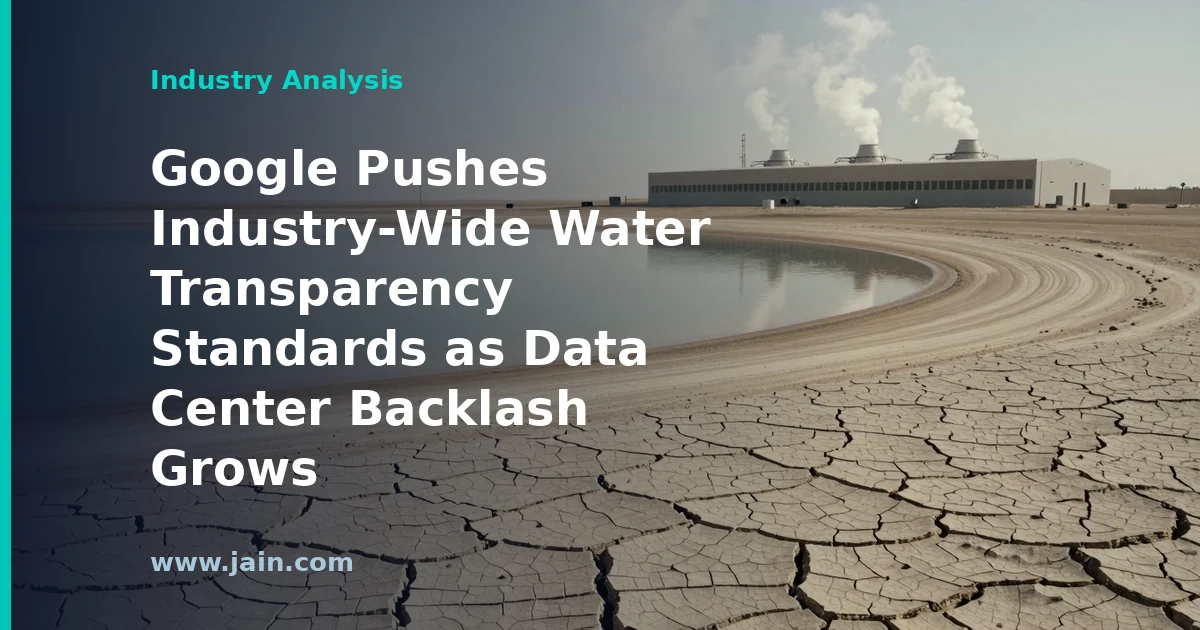
  • Google Pushes Industry-Wide Water Transparency Standards as Data Center Backlash Grows

    Google Pushes Industry-Wide Water Transparency Standards as Data Center Backlash Grows

    Google is advocating for industry-wide standards on how data centers measure and disclose their water use, according to a June 4, 2026 report from Axios. The move comes as public and political backlash over data-center water consumption intensifies, driven by the rapid buildout of AI computing capacity in communities that are increasingly asking what these facilities take from local water supplies.

    Executive Summary

    According to the Axios report, Google — operator of one of the world’s largest data-center fleets — is pushing for water-use standards across the data-center industry at a moment when the sector’s social license to build is under real strain. Water has joined electricity as the most contested resource in data-center siting fights, and operators have historically disclosed water consumption inconsistently, if at all, often citing competitive sensitivity.

    The significance is less about any single company’s practices than about the reporting baseline. Today there is no universally applied, apples-to-apples standard for how a data center reports water withdrawal, consumption, and offsetting. If a major hyperscaler — one of the handful of companies operating cloud infrastructure at global scale — succeeds in normalizing common metrics and disclosure, it changes the conversation for every operator, utility, and permitting authority in the market. The available reporting is brief, so the details of what Google is proposing, and to whom, remain to be seen.

    Why Water Became the AI Buildout’s Flashpoint

    Data centers consume water primarily for cooling: many facilities use evaporative systems, which lower temperatures by evaporating water and are energy-efficient but consumptive — much of that water leaves as vapor rather than returning to the local system. As AI training and inference drive a historic wave of data-center construction, the aggregate water question has moved from sustainability reports to city-council meetings, especially in drought-prone regions where residents and farmers compete for the same supply.

    The backlash dynamic is straightforward: communities are asked to approve large industrial facilities, often under non-disclosure agreements during site selection, and then struggle to learn how much water those facilities actually use. That information vacuum breeds distrust regardless of the underlying numbers. In several well-publicized siting disputes, the absence of clear water data has itself become the story.

    Transparency as a Strategic Play, Not Just a Virtue

    A push for common standards from a company of Google’s scale is best read as both principled and pragmatic. Voluntary, industry-defined standards frequently emerge when an industry senses that mandatory, jurisdiction-by-jurisdiction regulation is the alternative. A single common disclosure framework is far cheaper for a global operator to comply with than fifty different state or municipal reporting regimes — and it lets efficient operators demonstrate that efficiency in a comparable way.

    Standardized metrics also reframe the competitive field. Water-use effectiveness (WUE) — a ratio of water consumed to computing energy delivered, analogous to the industry’s PUE metric for energy — only becomes meaningful if everyone measures it the same way. Operators that have invested in air cooling, recycled or non-potable water sources, or closed-loop liquid cooling would benefit from a regime that makes those investments visible. Operators that have relied on cheap potable water in stressed basins would face uncomfortable comparisons. That is how standards shift markets: not by mandate, but by making differences legible.

    What It Could Mean for Communities, Utilities, and the Rest of the Industry

    For host communities and water utilities, credible standardized disclosure would change permitting conversations from adversarial guesswork into negotiations over real numbers — how much withdrawal, how much consumption, from what source, with what offsets. For colocation providers and smaller operators, an emerging standard cuts both ways: it adds reporting burden, but it also offers a ready-made framework to answer the water question before it derails a project.

    The open risk is that voluntary standards become a ceiling rather than a floor — disclosure calibrated to what the largest operators are already comfortable reporting. Fair questions apply in both directions here: critics should ask whether an industry-authored standard will require site-level data in water-stressed basins, and operators can fairly ask whether blanket opposition to data centers engages with actual consumption figures or with worst-case anecdotes. Standards only defuse a backlash if both sides accept the numbers they produce.

    Background

    Google operates one of the world’s largest fleets of data centers and, alongside the other major cloud providers, is in the midst of an unprecedented expansion to serve AI workloads. The company has positioned itself as a sustainability leader among hyperscalers, publishing water usage data for its operations and pledging in 2021 to replenish more freshwater than it consumes by 2030. The industry as a whole, however, has no universally applied standard for water reporting: metrics, boundaries, and disclosure practices vary widely between operators, and some have historically treated water data as competitively sensitive. That inconsistency has collided with a wave of community opposition to data-center construction — particularly in water-stressed regions of the United States — making water disclosure one of the sector’s most consequential unresolved questions.

    Source: Google pushes water standards amid data center backlash — Axios report, June 4, 2026, on Google’s push for industry-wide data-center water-use disclosure standards.

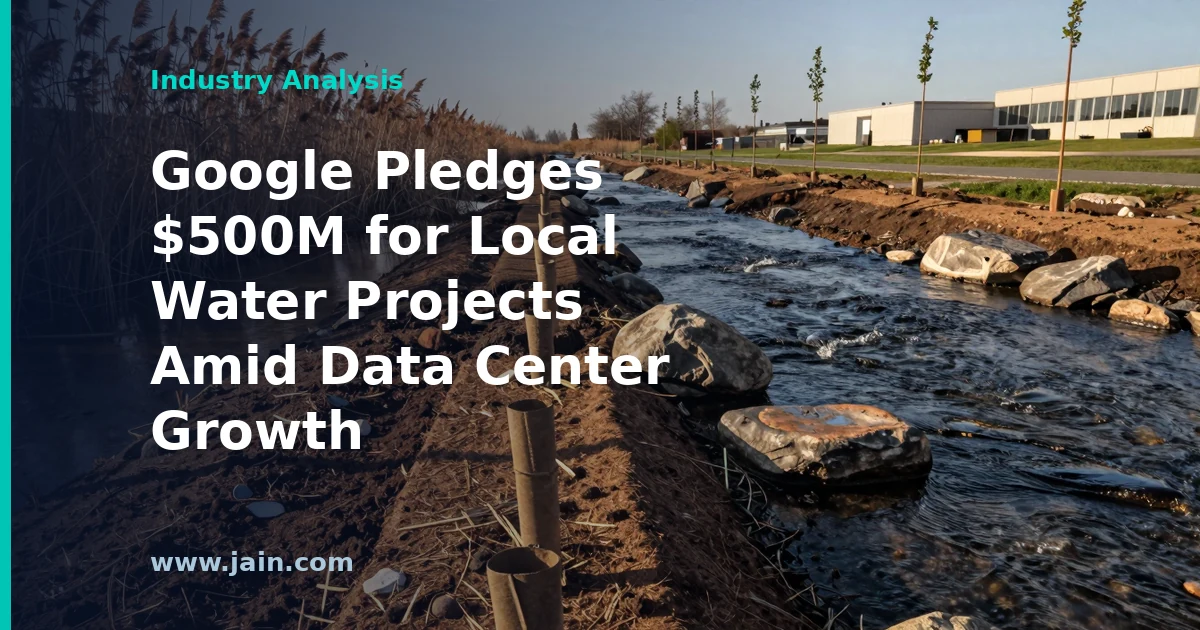
  • Google Pledges $500M for Local Water Projects Amid Data Center Growth

    Google Pledges $500M for Local Water Projects Amid Data Center Growth

    Google has pledged $500 million toward local water projects, a commitment reported June 2, 2026 by E&E News (POLITICO) as the company continues an aggressive data center buildout. The pledge lands amid growing scrutiny of how much freshwater hyperscale computing facilities consume, particularly in water-stressed regions where new sites are planned.

    Executive Summary

    The announcement, as reported, ties a nine-figure dollar commitment to water infrastructure and stewardship in communities affected by Google’s data center push. Data centers use water primarily for evaporative cooling — a process that consumes water to reject the heat generated by servers — and the AI era has sharply increased both the number of facilities and the density of the computing inside them.

    Why it matters: water has become the second front, after electricity, in the contest over where and how fast AI infrastructure gets built. Local opposition over water has delayed or reshaped projects in several U.S. markets, and hyperscalers have learned that a permit fight is more expensive than a partnership. A commitment of this size signals that community water benefits are moving from voluntary sustainability programs toward the cost of doing business for large-scale data center development — though the reported announcement leaves the mechanics of the spending largely undefined.

    Water Is Now a Siting Currency

    For most of the cloud era, electricity determined where data centers went. Water has now joined it. Evaporative cooling remains the most energy-efficient way to cool dense server halls, but it can draw millions of gallons per facility per year — a visible, local impact in a way that grid electrons are not. Communities from the American Southwest to the Pacific Northwest have pushed back on data center water use, and those disputes have made water access a genuine gating factor for new capacity.

    Against that backdrop, a $500 million pledge functions as more than philanthropy: it is a de-risking tool. Funding aquifer recharge, leak repair, or watershed restoration in host communities builds the local goodwill and regulatory credibility that expedite the next permit. That does not make the money less real or less useful — it means the incentive structure has aligned so that community water investment and business strategy point the same direction.

    From Pledges to Proof

    Google has previously set a goal of replenishing more freshwater than it consumes across its operations — a “water positive” ambition targeting 120% replenishment by 2030. The challenge with replenishment accounting, as with carbon accounting before it, is locality: replenishing water in one basin does not help a community whose own aquifer supplies the cooling towers. The strongest version of this new commitment would direct money into the specific watersheds that host Google facilities, with independently verifiable volumes.

    The reported announcement, based on the available source material, does not yet detail which projects, which basins, or over what period the $500 million will be deployed. That distinction — local, measured, and verified versus aggregate and self-reported — is exactly where community groups, utilities, and state regulators will focus. Hyperscalers that get ahead of it with transparent, basin-level disclosure will find siting easier; those that do not will keep meeting organized opposition.

    What It Means for the Rest of the Industry

    When the largest operators attach dollar figures to community water benefits, they reset expectations for everyone else. Colocation providers, GPU-cloud startups, and enterprise builders negotiating with the same counties will increasingly face water-benefit asks modeled on hyperscaler precedents. That favors operators with strong balance sheets and disadvantages smaller developers — a dynamic already visible in power procurement, where hyperscalers’ ability to fund grid upgrades and long-term energy contracts has become a competitive moat.

    It also accelerates the engineering alternatives. Closed-loop liquid cooling, air-side economization, and treated wastewater (reclaimed water) supply all reduce potable water draw, each with cost and energy trade-offs. As community water commitments become priced into projects, designs that minimize freshwater consumption get relatively cheaper — a quiet but consequential shift in how the next generation of AI facilities will be engineered.

    Background

    Google operates one of the world’s largest data center fleets, and the generative-AI boom has pushed it — alongside Microsoft, Amazon, and Meta — into a historic expansion of computing capacity. Because many facilities rely on evaporative cooling, that growth has drawn increasing attention to freshwater consumption, especially in drought-prone regions of the U.S. where several communities have challenged or scrutinized data center water permits.

    Google announced a company-wide water stewardship strategy in 2021, including the goal of replenishing 120% of the freshwater it consumes by 2030. The June 2026 pledge of $500 million for local water projects, reported by E&E News, extends that posture with a concrete dollar figure at a moment when water transparency has become a live permitting and political issue for the entire data center industry.

    Source: Google vows $500M for local water projects amid data center push — E&E News by POLITICO, reporting Google’s $500 million commitment to local water projects amid its data center expansion, published June 2, 2026.

  • Bank of America Institute Calls Data Center Construction a Resource Shock

    Bank of America Institute Calls Data Center Construction a Resource Shock

    The Bank of America Institute, the research arm of Bank of America that publishes economic analysis drawn from the bank’s data and economists, released a report on June 2, 2026 characterizing the ongoing wave of data center construction as a “resource shock.” The framing points to strain across the three inputs every large-scale digital infrastructure project competes for: skilled construction labor, building materials and electrical equipment, and electric power supply.

    Executive Summary

    When a major bank’s in-house think tank labels an investment cycle a “resource shock,” it is making an economic claim, not just a descriptive one. A resource shock is a sudden shift in demand for inputs that outruns the supply side’s ability to respond, pushing up prices and lead times for everyone competing for the same resources. Applied to data centers, the term asserts that the AI-driven construction boom is no longer just a story about one industry’s capital spending — it is large enough to move markets for electricians, transformers, generators, concrete, steel, and grid capacity.

    That matters because the effects of a resource shock do not stay contained. Other construction sectors — housing, manufacturing plants, public infrastructure — draw on the same labor pools and equipment supply chains. Utilities planning grid investments must now weigh data center load requests against other customers. For an institution with Bank of America’s lending and card-spending visibility into the real economy, elevating this to a formal research theme signals that the strain is showing up in measurable economic data, not just industry anecdote.

    Why a Bank Is Sounding This Note

    The Bank of America Institute exists to translate the bank’s proprietary vantage point — payments flows, commercial lending, economic research — into public analysis. Its choice of subject is itself informative: research arms of large banks tend to formalize themes their client-facing businesses are already encountering, such as construction lenders seeing bid inflation or corporate clients reporting equipment delays. A “resource shock” framing suggests the institute sees data center demand as a macroeconomic force rather than a niche real-estate story.

    It also reflects where the money is going. Data centers have shifted from a specialized corner of commercial real estate to one of the most capital-intensive construction categories in the United States, propelled by hyperscale cloud providers and AI infrastructure buildouts. When a single project can require hundreds of megawatts of power and years of specialized electrical work, a national pipeline of such projects mechanically competes with everything else being built.

    The Three Bottlenecks: Labor, Materials, Power

    The report’s headline identifies the three constraints practitioners consistently cite. Labor is the most immediate: data centers need unusually high concentrations of electricians, pipefitters, and mechanical trades, and those skills take years to develop. Materials and equipment form the second constraint — long-lead electrical gear such as transformers, switchgear, and backup generators has been the industry’s chronic pain point, with order backlogs measured in years at various points in this cycle.

    Power is the deepest constraint because it is the slowest to fix. A data center is ultimately a machine for converting electricity into computation, and connecting large new loads requires generation and transmission investments that operate on utility timescales — often five to ten years for major grid upgrades. This is why power availability, more than land or capital, has become the primary siting criterion for new facilities.

    Winners, Losers, and the Cost Question

    A resource shock redistributes advantage. Operators with land already secured, grid interconnection agreements signed, and equipment orders placed hold assets that are increasingly difficult to replicate — which supports valuations for incumbent data center platforms. Electrical contractors, equipment manufacturers, and utilities with capacity to sell are on the receiving end of the demand surge. The squeezed parties are those competing for the same inputs without data-center-scale budgets: other construction sectors facing higher trade wages and equipment prices, and potentially ordinary ratepayers if grid upgrade costs are socialized across utility customers rather than assigned to the large loads that drive them.

    For enterprises buying colocation or cloud capacity, the practical translation is that scarcity flows through to pricing and lead times. When new supply is gated by labor, equipment, and power, existing capacity commands a premium — a dynamic already visible in historically low vacancy rates across major data center markets. Fair questions run in both directions, though: resource-shock framings can also overstate permanence if demand forecasts prove optimistic or if supply responds faster than expected, as it eventually did in previous infrastructure cycles.

    Background

    Data centers — the specialized buildings that house the servers behind cloud services, websites, and AI systems — have grown from a niche real-estate category into one of the largest construction stories in the United States. The acceleration began with cloud computing in the 2010s and intensified sharply after 2022, when the generative AI boom pushed hyperscale operators and AI companies into a race for computing capacity, with individual campuses now sized in the hundreds of megawatts. The Bank of America Institute, launched by the bank in 2022 as a public-facing research arm, has made the economic ripple effects of this buildout a recurring subject, and its June 2026 report places the construction surge in macroeconomic terms: as a demand shock hitting labor, materials, and power markets simultaneously.

    Source: Data center construction creates a resource shock — Bank of America Institute, a research report characterizing the data center construction boom as a strain on labor, materials, and power supply.