
TL;DR · 30-second read
The Short Version
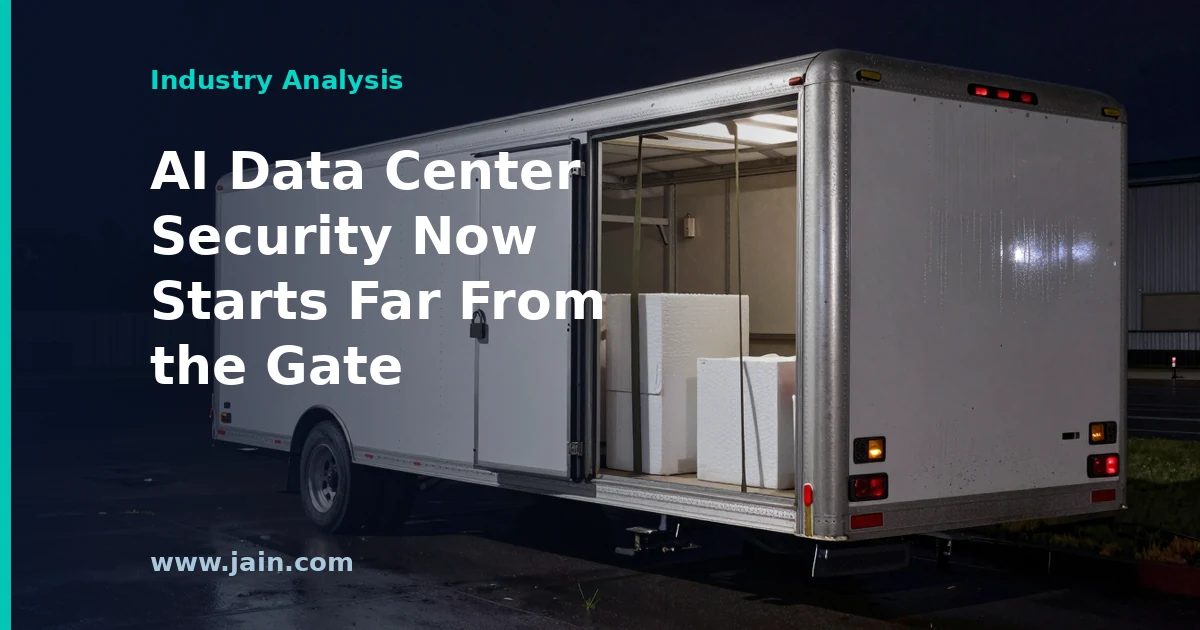
Thieves are stealing truckloads of the kind of supplies used to build the giant computer warehouses that power artificial intelligence.
Near Chicago, a sheriff’s office recovered a stolen trailer holding about $300,000 of copper wire. The truck yard’s owner said the same driver had left another stolen trailer a week earlier, holding about $1 million of computer equipment. They had been taken hundreds of miles away, in Alabama and Florida.
Why it matters: these buildings rely on valuable parts that spend long stretches on the road. Protecting them has to start well before delivery day.
Tom’s Hardware reported on June 30, 2026, citing Business Insider, that the Cook County Sheriff’s Office had recovered a stolen trailer carrying about $300,000 of copper wire spools from a truck yard near Chicago. The yard’s owner said the same driver had dropped off another stolen trailer a week earlier, containing about $1 million of data center equipment.
The copper trailer had been reported stolen in Pine Hill, Alabama, and the equipment trailer in Jacksonville, Florida. The copper trailer was located through its GPS tracker, and Freight Pulse reported that its tags had been replaced with tags from Indiana.
Executive Summary
Two recovered trailers worth a combined $1.3 million or so put a practical question in front of anyone building AI infrastructure: who is responsible for protecting high-value equipment and materials between the supplier and the data center? Construction activity has put millions of dollars of servers, cabling and components on the road at any given time, and cargo thieves have begun to treat those loads as targets.
The dollar figure is not the most striking part of the case. A single stolen load of Nintendo Switch 2 consoles was valued at about $1.4 million last year, so these thefts are not unusual in size. What stands out is the type of cargo, the distance between the theft locations and the recovery site, and the role a tracker played in finding the copper.
Two trailers do not establish an industry trend, and neither load has been publicly described as containing AI chips. Even so, the case shows a real exposure: the physical security of a data center project depends partly on trailers, truck yards and handoffs that sit far outside the facility’s fence line.
The Perimeter Now Runs Through Truck Yards
Data center security is usually discussed in terms of what happens on site: fences, guards, access badges and locked server cages. This case points to an earlier point of exposure. The two trailers were reported stolen in Alabama and Florida, then surfaced in a single truck yard near Chicago, hundreds of miles from either location. For that stretch, the cargo’s protection depended on whatever controls traveled with the trailer, not on anything at a data center.
The numbers show why that matters. More than three-quarters of the roughly $1.3 million total sat in one trailer of data center equipment, valued at about $1 million. A freight trailer can concentrate a large amount of value in one movable box, which a thief can hitch up and take. The replacement of the copper trailer’s tags with Indiana tags, if intended to disguise its origin, suggests that identifying a stolen trailer on the road may not be straightforward.
The exposure falls on several parties at once: equipment makers and distributors that ship the goods, carriers and brokers that move them, contractors waiting for materials, and operators with delivery dates to meet. The practical conclusion is that chain of custody, meaning the documented record of who holds a shipment at each stage, belongs in a data center project’s security planning as well as its procurement paperwork.
Copper May Be the More Instructive Load
Servers look like the obvious prize, but they are difficult to resell. They are specialized machines bought mostly by institutions and large companies. They are also likely to carry serial numbers that a buyer can check with the manufacturer, and serious buyers tend to expect receipts and warranties that a fence (a dealer in stolen goods) cannot provide. Those obstacles do not make theft impossible, but they do complicate the economics of stealing the most expensive items in the supply chain.
Copper wire raises a different concern. Spooled wire is less specialized than a server and would generally be harder to trace item by item, so the resale barriers that apply to servers may not apply in the same way. A $300,000 load also shows that risk is not confined to the headline hardware. Buyers who focus their protections on GPUs, the specialized processors that run AI workloads, could leave less glamorous but still valuable materials with weaker safeguards.
Past electronics thefts offer a mixed comparison. A shipment of EVGA 30-series graphics cards stolen in 2021 appeared months later in Vietnam, sold by a major retailer at a discount, which shows that stolen hardware can cross borders and reach ordinary sales channels. Those were consumer products with a broad market, however, and enterprise servers have a much narrower pool of buyers. That difference is why the resale route for the $1 million equipment load remains an open question.
A Tracker and an Insurance Policy Solve Only Part of the Problem
The most concrete operational lesson is that the GPS tracker worked: it led to the copper trailer. How the equipment trailer was found has not been made public, so this case cannot show how often tracking alone is enough. It does show the value of location data that keeps working after a trailer has changed hands, and of having someone ready to act on it.
Insurance limits the financial damage, since shippers and freight companies often carry coverage for stolen goods. A policy, however, compensates for a loss and does not put a replacement shipment on a job site. Where equipment is specialized or hard to source quickly, the larger risk to a project could be delay. No such delay has been publicly tied to these two trailers, but it is a reasonable question for buyers to raise with their logistics partners.
The measured response is a review, not alarm. Project teams can ask whether high-value loads are tracked independently of the tractor pulling them, whether serial numbers are recorded before shipment, how trailers are secured during stops, and who gets alerted when a load leaves its planned route. Those are modest questions compared with the value of a single trailer.
Background
Cargo theft is a long-standing problem for freight and has often centered on retail goods and consumer electronics, which are comparatively easy to resell. Graphics cards and game consoles have both been targets in recent years. In one 2021 case, stolen EVGA graphics cards later appeared for sale in Vietnam.
The data center construction boom has changed the mix of valuable freight on the road. Building a data center requires a steady flow of servers, cabling, power components and other materials, much of it moved by truck from suppliers to job sites. That movement gives operators and their suppliers a security concern that sits outside the facility itself. Source: Cargo thieves target AI data center supplies in $1.3 million heists, Tom’s Hardware’s June 30, 2026 report on stolen copper wire and data center equipment recovered near Chicago.Sources