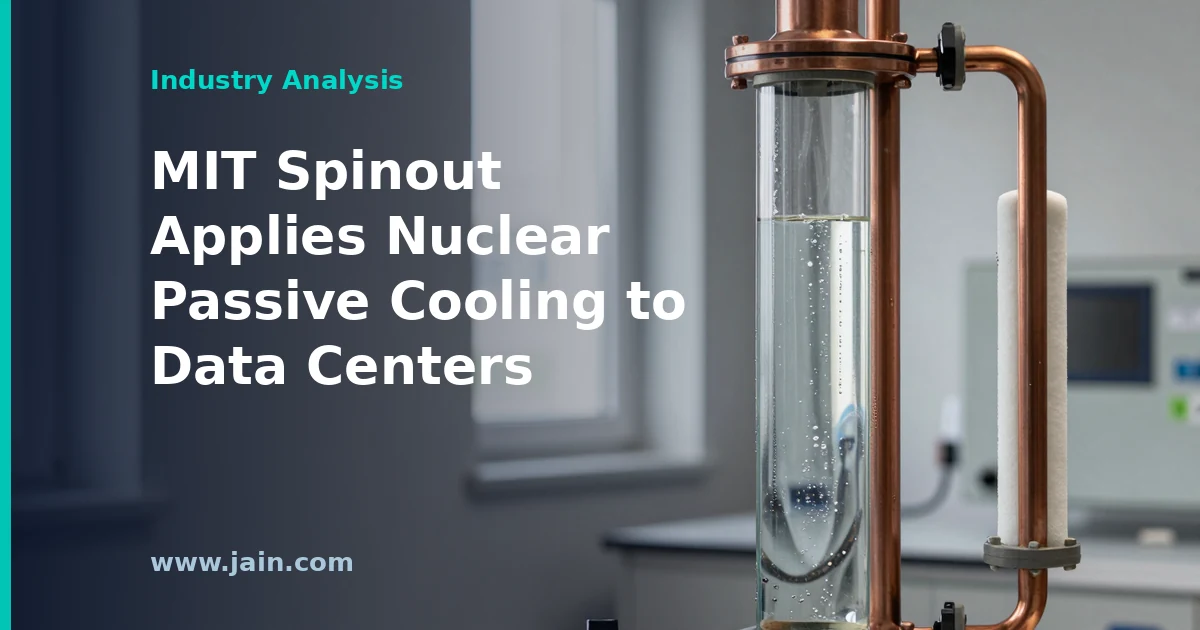
MIT News reported on June 9, 2026, that a startup spun out of the university is commercializing a data-center cooling system inspired by the passive heat-removal designs used in nuclear reactors, with the stated goal of making data centers more sustainable by reducing the energy — and, per the editorial framing, the water — that cooling consumes.
The syndicated release available to us carried the headline and framing but few technical or commercial specifics; we analyze the concept on its merits and flag what remains unsubstantiated below.
Executive Summary
The announcement matters because cooling is one of the largest costs — in electricity, in water, and increasingly in permitting friction — of operating a data center. A system that borrows from nuclear engineering’s passive-safety playbook, where heat is removed by natural physical forces rather than powered machinery, is aimed squarely at that cost. In a reactor, passive cooling means hot fluid rises and cooler fluid sinks, circulating heat away without pumps; the appeal for data centers is the same: fewer energy-hungry moving parts between the hot chip and the outside air.
The timing is not accidental. AI training and inference hardware has pushed per-rack power to levels that conventional air cooling struggles to handle, and communities hosting data centers are scrutinizing water withdrawals from evaporative cooling systems. Any credible technology that reduces both the electric and water bills of heat rejection will get a hearing from operators.
What the source material does not yet establish is whether this particular system works at commercial scale: no performance figures, customer deployments, funding details, or timelines were available in the release we reviewed. The physics pedigree is real; the commercial case is, for now, a thesis.
From Reactor Safety to Server Racks
Nuclear plants pioneered passive cooling for a stark reason: a reactor must shed heat even when the power fails. Designs built on natural circulation exploit the fact that heated fluid becomes less dense and rises while cooled fluid sinks, creating a self-sustaining loop that moves heat with no pumps, no fans, and no operator action. Decades of licensing scrutiny have made these principles among the most carefully validated in thermal engineering.
A data center’s problem is gentler — servers fail safely when they overheat, reactors do not — but structurally similar: concentrated heat that must move continuously to the outdoors. Today that journey is powered at nearly every step, by server fans, chilled-water pumps, compressors, and cooling towers. A passive or semi-passive loop that lets buoyancy or phase change do part of that work attacks the electricity bill directly, and if it rejects heat without evaporating water, it attacks the water bill too. The startup’s bet, as framed by MIT News, is that reactor-grade thermal design can be repackaged at data-center price points.
Why Cooling Is the Data Center’s Second Power Bill
For a typical facility, the electricity that does computing is only part of the meter; a meaningful share of total load goes to moving heat, which is why the industry obsesses over power usage effectiveness (PUE) — the ratio of total facility power to IT power. Every point of cooling overhead removed either cuts operating cost or frees grid capacity for more servers, and grid capacity is currently the scarcest input in the AI buildout.
Water is becoming the second constraint. Many large facilities cool cheaply by evaporating water, and withdrawals have become a flashpoint in drought-prone regions, slowing permits and souring community relations. A technology that credibly reduces both energy and water use would not just trim costs — it would widen the map of places a data center can be built. That is the strategic prize behind this announcement, and it explains why a cooling story from a university lab merits industry attention.
A Crowded Race, and a Conservative Customer
The spinout is not entering an empty field. Direct-to-chip liquid cooling is already shipping at scale from established vendors, immersion cooling has committed adopters, and rear-door heat exchangers are a common retrofit. Most of these still depend on pumped loops and mechanical chillers, so a passive approach is differentiated in principle — but it must prove it can handle the extreme heat density of modern AI racks, where natural circulation alone has historically been hardest to apply.
The harder obstacle may be cultural. Data-center operators are deeply conservative buyers: uptime is the product, and unproven thermal systems are among the last things they will gamble on. The path for a startup here almost always runs through small pilot deployments, published performance data, and partnerships with equipment incumbents or colocation providers willing to host a proving ground. None of those milestones is evidenced in the material released so far, which is normal for a lab-to-market story at this stage — but it defines exactly what to watch for next.
Background
Data-center cooling has been through several generations: raised-floor air cooling, hot/cold aisle containment, evaporative economization, and most recently liquid cooling driven by AI accelerators whose heat output overwhelms air. Each generation traded capital cost against energy and water consumption, and the AI era has sharpened that trade-off — power and water availability now routinely determine where facilities can be built at all.
Nuclear engineering, meanwhile, spent decades perfecting passive heat removal for safety reasons, producing some of the most rigorously validated thermal designs in existence. The MIT spinout profiled here sits at the intersection of those two histories, part of a broader wave of university-born startups applying energy-sector engineering to computing infrastructure.
On June 9, 2026, the Cybersecurity and Infrastructure Security Agency (CISA) published Binding Operational Directive (BOD) 26-04, titled “Prioritizing Security Updates Based on Risk.” A Binding Operational Directive is a compulsory order to U.S. federal civilian executive branch agencies, and this one — as its title states — directs agencies to prioritize security updates according to risk rather than treating all patches alike.
The directive continues an evolution in federal vulnerability management that began with fixed remediation deadlines and moved, over successive directives, toward focusing scarce patching capacity on the vulnerabilities most likely to be exploited.
Executive Summary
BOD 26-04 formalizes a shift that vulnerability-management practitioners have argued for over a decade: with tens of thousands of new vulnerabilities disclosed every year, no organization — not even a federal agency under mandate — can patch everything on a uniform clock. The rational alternative is to rank vulnerabilities by actual risk: whether they are being exploited in the wild, whether they sit on internet-facing or mission-critical systems, and what an attacker could reach through them.
Why it matters beyond Washington: CISA’s directives bind only federal civilian agencies, but they have repeatedly become de facto standards for the private sector. The Known Exploited Vulnerabilities (KEV) catalog, created by BOD 22-01 in 2021, is now baked into commercial security tools, cyber-insurance questionnaires, and contract language far outside government. If BOD 26-04 follows the same path, risk-based patching mandates — with the documentation and telemetry they require — are a preview of what critical-infrastructure operators, federal contractors, and regulated industries should expect to be asked for next.
A caveat on sourcing: this article is based on CISA’s publication of the directive and its stated title and purpose. The operational specifics — exact timelines, scoring methodology, and reporting requirements — live in the directive text itself, and we flag below what a one-line announcement leaves unanswered.
From Compliance Clocks to Risk Math
Federal patching policy has historically run on fixed deadlines. BOD 19-02 (2019) gave agencies 15 days to remediate critical vulnerabilities on internet-facing systems and 30 days for high-severity ones. BOD 22-01 (2021) refined the idea by creating the KEV catalog — a curated list of vulnerabilities with confirmed real-world exploitation, each carrying its own due date. Both approaches share a weakness: they treat severity scores or catalog membership as a proxy for risk, when the risk of any given vulnerability depends heavily on where it sits in a specific network and what it exposes.
A directive built around risk-based prioritization acknowledges that reality. In plain terms, it means an agency should patch a moderately scored flaw on a crown-jewel system before a critically scored flaw on an isolated test box. That is how mature security teams already operate; the significance here is making it a matter of federal mandate rather than practitioner discretion. Mandating judgment is harder than mandating deadlines — which is precisely why the directive’s implementation details will determine whether it works.
The Hidden Prerequisite: Knowing What You Own
Risk-based prioritization has an unglamorous dependency: a complete, current inventory of assets and their exposure. You cannot rank vulnerabilities by risk if you do not know which systems are internet-facing, which hold sensitive data, and which are reachable from which. CISA has been building toward this for years — BOD 23-01 required asset visibility and vulnerability enumeration across federal networks — and BOD 26-04 is the logical next layer on that foundation.
For infrastructure operators, this is the practical takeaway. Data-center, network, and cloud environments are dense with long-lived systems — hypervisors, building-management controllers, out-of-band management interfaces — where blanket patch deadlines were never realistic because patching means downtime windows and change-control risk. A risk-based regime is genuinely better suited to that world, but only for operators who have done the inventory and exposure-mapping homework first.
The Template Effect on Critical Infrastructure
CISA’s binding authority stops at federal civilian agencies; it cannot order a private colocation provider or utility to patch anything. Its influence, however, travels through softer channels: procurement requirements flow from agencies to their contractors and hosting providers, insurers and auditors adopt federal benchmarks because they are free and defensible, and sector regulators borrow CISA’s frameworks rather than inventing their own. KEV remediation status is already a common question in vendor security reviews.
The likely trajectory is that risk-based patching expectations — documented prioritization decisions, exploitability-aware triage, evidence that high-exposure assets get fixed first — migrate into contracts and compliance frameworks over the next several years. Vulnerability-management and exposure-management vendors are natural beneficiaries, since operationalizing “risk-based” at scale is difficult without tooling that correlates threat intelligence, asset criticality, and network exposure. Organizations still running spreadsheet-driven patch cycles keyed to severity scores alone will find the gap widening.
Background
CISA has used Binding Operational Directives to steadily raise the floor of federal cybersecurity since the agency’s creation in 2018. BOD 19-02 imposed fixed remediation deadlines — 15 days for critical vulnerabilities on internet-facing systems — while BOD 22-01 created the Known Exploited Vulnerabilities catalog, shifting attention to flaws with confirmed real-world exploitation, and BOD 23-01 required agencies to build continuous asset and vulnerability visibility. Each directive has tended to ripple outward, shaping commercial security tooling and private-sector practice well beyond its legal reach.
The broader industry context is a vulnerability-disclosure volume that has grown relentlessly for years, far outpacing any organization’s capacity to patch everything quickly. That arithmetic pushed the security field toward exploitability- and exposure-aware prioritization, and BOD 26-04 represents the federal mandate catching up with that practice.
LG Uplus, one of South Korea’s three big mobile phone companies, is building a giant data center in Paju, just north of Seoul. A data center is a warehouse full of computers, and this one will run artificial intelligence.
The first building won’t open until next year, but one large customer has already rented all of it. The whole site is designed to draw 200 megawatts, roughly the electricity a small city uses.
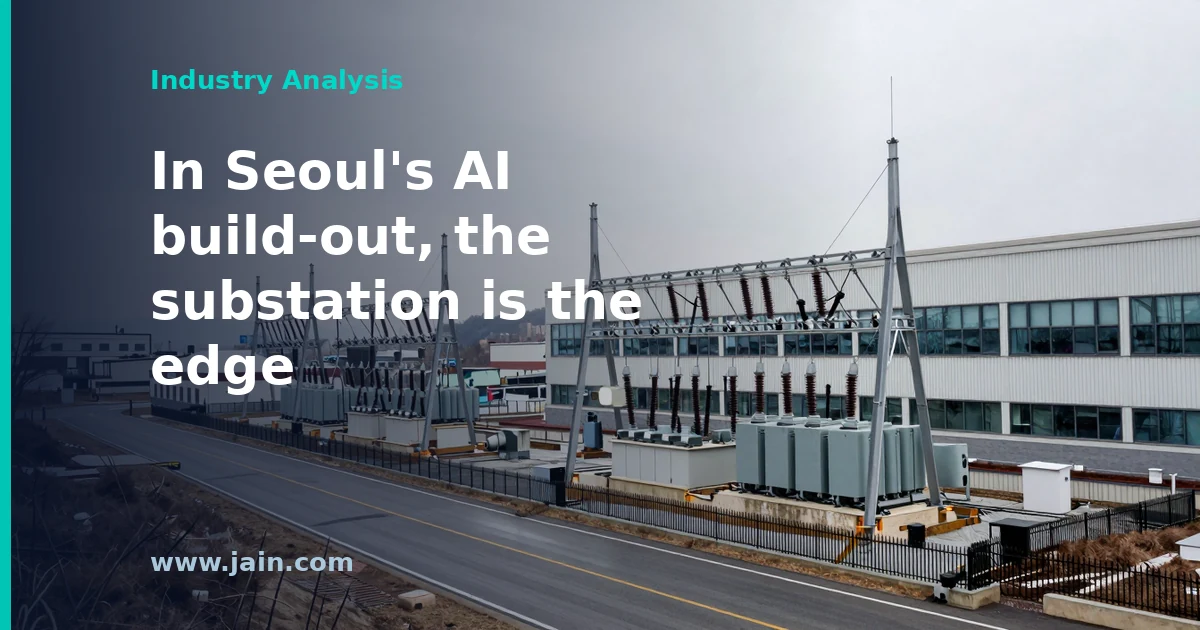
The surprising part: its biggest advantage isn’t the computers. It’s a major hub of the high-voltage power grid right across the road. Near Seoul, that kind of electricity hookup is hard to get.
Korea JoongAng Daily reported on June 7 that LG Uplus (LG U+) has made its Paju AI Data Center the centerpiece of a plan to win 5 trillion won ($3.3 billion) in cumulative AI data center orders by 2030. The site in Wollong-myeon, Gyeonggi Province, has a confirmed 200-megawatt power supply and will eventually hold five buildings with about 152,000 square meters (1.64 million square feet) of floor space.
Building 1 was about 20 percent complete at a June 5 site visit and is due for completion in June 2027. It is a 50-megawatt structure carrying about 30 megawatts of IT load, and it is already fully contracted to an unnamed large customer. LG Uplus expects more than 1 trillion won in orders a year through 2030 and projects 15 to 20 percent average annual revenue growth for the business.
Executive Summary
LG Uplus is repositioning itself from a traditional data center operator into what it calls an “AI Factory Operator.” In this model, the company sells the power, cooling and operational reliability that AI workloads need, not just rack space. Paju is the template. The site pairs a 200-megawatt grid connection with a hybrid air-and-liquid cooling design built in from the foundation. The first building sold out before its concrete had cured.
The announcement matters for two reasons. First, it shows where the scarcity lies in AI infrastructure near a capital city. Demand is plainly there; the harder thing to secure is a large, high-voltage power connection at a usable address. Second, it gives buyers and investors specific markers to track: the order target, the revenue growth projection, the 2027 completion date, and the commercial verification of liquid cooling later this year.
Vice president Ahn Hyurng-gyoon tied the build to a shift from training AI models to running them, known as inference. He said monthly token-processing volumes had risen roughly 67-fold over the past year. Tokens are the small chunks of text that AI models read and write.
Near Seoul, the Scarce Input Is a Grid Connection
LG Uplus led its pitch with power, and the details explain why. The Paju site draws from a 345-kilovolt substation directly across the road. That is a backbone transmission voltage, the level that carries bulk electricity across the grid. A 154-kilovolt line serves as backup, and both run underground at a depth of about nine meters. The company says the 200-megawatt supply was locked in after a formal power-impact assessment last August. It says local opposition has been muted because the land sits inside a former LG Display industrial complex.
Those facts matter more than the building rising above them. Concrete, steel and chillers can be bought and scheduled. The right to draw hundreds of megawatts at a specific address cannot be hurried in the same way. Near a capital region, it depends on an existing substation with spare capacity and on neighbors who will accept the load. LG Uplus’s own framing makes the point. It claims Paju will be the only hyperscale-class facility of its size in the greater Seoul area. Because demand clearly exists, with Building 1 sold out about a year before completion, that is in effect a claim about who secured the grid capacity.
Three groups feel the consequence. AI tenants that want large capacity close to Seoul’s users and enterprises have few alternatives at this scale, which strengthens the operator’s position on pricing and contract length. Rival developers face the same constraint: their bottleneck is less capital or construction skill than sites already wired to high-voltage infrastructure, which makes former industrial land valuable. The uniqueness claim itself is LG Uplus’s assertion, and it will be tested as competitors bring their own capacity forward.
Fifty Megawatts on the Building, Thirty for the Servers
Building 1 is described as a 50-megawatt structure carrying about 30 megawatts of actual IT load, the power that reaches servers, storage and networking gear. The rest is not wasted. In data centers, that margin typically covers cooling, power conversion losses, and the redundant headroom that keeps a site running when a component fails. But the gap is a reminder that the headline megawatt figure on an AI campus is not the same as the compute it can host.
For buyers comparing providers, the IT-load figure is the one to ask for. If the same ratio held across the full site, 200 megawatts would mean something closer to 120 megawatts for servers. That is an extrapolation, not a company figure, and later buildings may be designed differently. Cooling is where LG Uplus is trying to narrow the gap. Paju is designed as a hybrid air-and-liquid facility, with floor loads, waterproofing and piping engineered for liquid from the start. Its primary method is direct-to-chip cooling developed with LG Electronics, in which a cold plate is attached to the processor and coolant carries heat away. The company says its tests showed about 24 percent better energy efficiency than air cooling.
Designing for liquid up front is the operationally significant choice. Retrofitting pipes and reinforcing floors under a live data hall is disruptive and costly, and the newest AI chips increasingly run too hot for air alone. All three computing floors of Building 1 are designed for direct-to-chip cooling, so a tenant can switch as its hardware changes. The caveat is timing. Full commercial verification in a live server room is scheduled for later this year. Immersion cooling, in which servers are submerged in non-conductive fluid, still awaits certification.
An Order Target Is Not Yet a Revenue Line
The 5 trillion won ($3.3 billion) goal counts cumulative orders through 2030. LG Uplus expects more than 1 trillion won in orders a year to get there, or roughly a fifth of the target annually. Orders are contracted future business, not booked sales. A multi-year colocation contract can carry a large headline value that turns into revenue slowly over its term. The company’s separate projection of 15 to 20 percent average annual revenue growth is a better guide to what will reach the income statement, but the starting revenue base was not given.
The strategic repositioning is the more durable story. LG Uplus opened Korea’s first internet data center in 1999 and now runs 16 facilities nationwide. Ahn argued that competitiveness now depends “not on the scale of the facility but on how stably you can operate the entire infrastructure.” He pointed to a 27-year record of 99.999 percent uptime, which works out to about five minutes of downtime a year. That is a credible differentiator for a carrier with decades of network operations. It is also a claimed record, and the company itself says sustaining it at 200 megawatts is harder.
The first building also shows concentration risk: all of it is contracted to one unnamed customer. That validates demand, but it also means Paju’s early economics rest on a single relationship whose terms have not been disclosed.
Background
LG Uplus is one of South Korea’s three major mobile carriers, alongside SK Telecom and KT, and part of the LG Group. It opened Korea’s first internet data center (IDC) in 1999 and now operates 16 data centers nationwide. Its Paju project draws on group affiliates: the cooling system was co-developed with LG Electronics, and the site sits inside a former LG Display industrial complex.
AI data centers differ from traditional ones mainly in power density. Chips that train and run AI models draw far more electricity and give off far more heat per rack. That makes grid connections and liquid cooling central to design choices that were once secondary.
Bloomberg Government reported on June 8, 2026 that lawmakers are floating solutions to the rising power costs associated with data centers — a signal that the electricity-bill impact of the computing buildout has moved from utility commission dockets into the legislative arena. The report’s headline frames the issue squarely as a cost problem in search of a policy fix.
The report arrives amid an unprecedented wave of data center construction driven by artificial intelligence workloads, which has made large computing facilities one of the fastest-growing sources of new electricity demand in the United States.
Executive Summary
The core news, per Bloomberg Government’s June 8 report, is that the cost side of the data center boom — specifically, who pays for the power infrastructure these facilities require — is now attracting active legislative attention, with lawmakers proposing potential solutions rather than merely holding hearings. The report itself is headline-level; the specific proposals, sponsors, and legislative vehicles are not detailed in the material available to us, and we flag that below.
Why it matters: for the past two years, the fight over data center power costs has largely played out state by state, before public utility commissions — the regulators who approve electricity rates. When lawmakers start floating statutory fixes, the rules of the game can change faster and more broadly. Rate design — the technical framework that decides how a utility’s costs are divided among households, businesses, and large industrial customers — is the lever most often discussed, because it determines whether a new transmission line or power plant built substantially to serve a data center is paid for by that data center or spread across everyone’s bills.
For data center developers, utilities, and the customers signing multi-hundred-megawatt capacity deals, this is policy risk in its early, formative stage — the moment when engagement matters most and outcomes are least predictable.
Why Electricity Bills Became a Data Center Story
Data centers concentrate enormous electrical demand in single locations: a large AI campus can draw as much power as a mid-sized city. Serving that demand often requires new generation, new transmission lines, and substation upgrades. Under traditional utility rate-making, much of that infrastructure cost goes into the utility’s general ‘rate base’ — the pool of investment recovered from all customers over decades. When the new demand comes overwhelmingly from one class of customer, other ratepayers can end up subsidizing infrastructure they did not ask for and do not use.
That cost-shifting question is what turns an infrastructure story into a kitchen-table story. Household electricity bills are politically salient in a way that interconnection queues are not, and the Bloomberg Government headline — lawmakers floating solutions to data center power costs — suggests elected officials now see both a genuine allocation problem and a constituency that cares about it. It is worth being even-handed here: data centers also bring tax revenue, jobs during construction, and in some regions have funded grid upgrades that benefit all users. The policy question is not whether data centers are good or bad, but whether the current rules assign their costs accurately.
The Rate-Design Toolkit Lawmakers Are Reaching For
Although the report does not specify which solutions are on the table, the toolkit in active discussion across the industry is well established. It includes creating dedicated tariff classes for very large loads, so data centers pay rates reflecting their actual cost to serve; minimum-take or long-term contract requirements, which protect other customers if a data center closes or scales back before its infrastructure is paid off; and ‘bring your own power’ frameworks that push hyperscale customers toward self-supplied or co-located generation. Each approach shifts risk between the data center customer, the utility’s shareholders, and the general ratepayer base — and each has trade-offs in speed, cost, and legal durability.
The federal-versus-state dimension matters too. Retail rate design is traditionally state territory, while interstate transmission costs and wholesale market rules sit with federal regulators. Legislative proposals could target either layer, and the editorial significance of lawmakers entering the fray is that statutes can override or standardize what has so far been a patchwork of case-by-case commission rulings.
Policy Risk Meets the AI Buildout
For the data center industry, the emergence of legislative interest is a double-edged development. On one hand, clear statutory rules could reduce uncertainty: developers currently face a different rate fight in every state, and a predictable large-load tariff framework can actually accelerate siting decisions. On the other hand, rules written in a politically charged environment — where rising bills are the headline — could impose costs, contract terms, or delays that change project economics, particularly for speculative capacity built ahead of signed tenants.
Utilities sit in the middle. Load growth is the best news the regulated utility sector has had in decades, but only if regulators and legislators let them recover the associated investment without triggering a ratepayer backlash. Expect utilities to support frameworks that lock in long-term commitments from data center customers, and expect hyperscale buyers with strong credit to accept them in exchange for speed. The parties most exposed are smaller developers and enterprises without the balance sheet to sign decade-long minimum-payment contracts. For everyone in the buildout, the practical takeaway is that power procurement is no longer just an engineering and price question — it is now a regulatory and legislative one.
Background
Electricity demand from data centers has grown rapidly since the generative-AI boom began in late 2022, ending roughly two decades of flat U.S. power demand and making computing facilities one of the largest sources of new load on the grid. Individual AI campuses now request capacity measured in the hundreds of megawatts — comparable to small cities — concentrated in hubs such as Northern Virginia, Texas, and the Midwest.
The cost question has followed the demand. Since 2024, state utility commissions have fielded a growing number of cases over how to charge very large loads, and several utilities have proposed dedicated data center tariffs. Bloomberg Government, the source of this report, is a policy-focused news service covering Congress and federal agencies, which itself suggests the issue has reached the national legislative agenda rather than remaining purely a state regulatory matter.
Cybersecurity vendor Check Point reported in early June 2026 that overall global cyberattack volume eased in May, even as ransomware activity surged 48%. The company attributes the ransomware spike to a period of reorganization among threat groups — the criminal organizations that develop and deploy extortion malware.
Executive Summary
According to Check Point’s May 2026 threat data, the broad tide of cyberattacks receded while the most financially damaging category — ransomware, malicious software that encrypts or steals a victim’s data and demands payment for its return — moved sharply in the opposite direction, up 48%. The headline framing is that threat groups are “reorganizing”: regrouping, rebranding, or consolidating rather than retreating.
That divergence is the story. Raw attack counts are a crude measure of risk; a decline in commodity attacks paired with a surge in targeted extortion suggests the threat landscape is becoming more concentrated and more severe per incident, not calmer. For operators of data centers, networks, and cloud platforms — the infrastructure ransomware ultimately runs against and is defended from — the signal is to weight resilience investment toward the high-impact tail, not the average.
Why Fewer Attacks Can Mean More Risk
Attack-volume statistics count events, not consequences. A phishing email caught by a filter and a ransomware detonation that halts a hospital both register as “an attack,” yet their business impact differs by orders of magnitude. Check Point’s May 2026 picture — volume easing, ransomware up 48% — is therefore best read as a shift in mix rather than a cooling of the threat environment.
Ransomware is the category most tightly coupled to real-world operational damage: downtime, data exposure, regulatory reporting, and ransom or recovery costs. When it grows while background noise recedes, the expected loss per organization can rise even as the number of alerts falls. Security teams that report success by blocked-event counts may be measuring the wrong curve.
What “Reorganization” Means in the Ransomware Economy
Check Point frames the surge as threat groups reorganizing. Ransomware today operates largely as a service economy: core developers lease their malware and infrastructure to affiliates who carry out intrusions and split the proceeds. That structure makes the ecosystem resilient — when one brand is disrupted or dissolves, its developers and affiliates typically disperse into successor operations rather than exiting the business.
A reorganization phase producing a 48% activity surge is consistent with that pattern: new or restructured groups tend to campaign aggressively to establish reputation and revenue. The release does not name specific groups or attribute the surge to particular takedowns, so the mechanism remains Check Point’s characterization rather than a documented chain of events — but the ecosystem’s history of regenerating after disruption gives the framing plausibility.
Reading Vendor Telemetry With Appropriate Care
Figures like these come from a vendor’s own sensor network — the firewalls, endpoints, and email gateways of its customer base. That gives Check Point genuine, large-scale visibility, but it also means the numbers describe what Check Point’s installed base observed, not a census of the internet. Comparison baselines matter too: a 48% surge reads differently measured against April 2026 than against May 2025, and the summary available does not specify which.
None of that makes the data wrong; independent trackers of extortion-site victim listings have generally corroborated the direction of ransomware trends in recent years. It does mean the precise magnitude should be treated as one vendor’s measurement, useful for direction and rough scale, and ideally cross-checked against incident-response and law-enforcement reporting before it drives budget decisions.
Implications for Infrastructure Operators and Buyers
For enterprises and the infrastructure providers that host them, a ransomware-heavy threat mix argues for prioritizing the controls that blunt extortion specifically: immutable and offline backups that attackers cannot encrypt or delete, network segmentation that limits how far an intruder can spread, tested restoration procedures, and identity hardening such as multi-factor authentication on remote access — still among the most common intrusion paths.
Data center and cloud operators sit on both sides of this equation. They are targets themselves, and they are the recovery substrate their customers depend on when an attack succeeds. Demand for isolated recovery environments, rapid-restore storage, and managed detection services tends to track ransomware severity, so a sustained surge — if it proves durable beyond one month’s data — is a tailwind for resilience-focused infrastructure spending.
Background
Check Point Software Technologies, founded in 1993 and among the industry’s oldest firewall makers, publishes recurring threat intelligence drawn from its global sensor network, and its monthly attack statistics are widely cited barometers of the threat landscape. Ransomware itself has evolved over the past decade from opportunistic encryption schemes into a professionalized ransomware-as-a-service economy, in which developers lease malware to affiliates who conduct intrusions and share proceeds. Repeated law-enforcement disruptions of major brands have fragmented rather than eliminated the ecosystem, producing recurring cycles of collapse, rebranding, and resurgence — the backdrop against which Check Point describes the current period of reorganization.
Crusoe, the energy-focused AI infrastructure company, announced on June 8, 2026 that its contracted pipeline of AI data center capacity is approaching 5 gigawatts (GW). For scale, 5 GW is roughly the output of five large nuclear reactors — a volume of power commitments that until recently was associated only with the largest cloud providers, not venture-backed startups.
Executive Summary
The announcement is a milestone marker rather than a single project reveal: Crusoe is telling the market that the sum of its contracted AI infrastructure — data center capacity it has agreements to build and power, though not necessarily capacity that is built and running today — now approaches 5 GW. The company rose to prominence as the developer of the massive Abilene, Texas campus associated with the Stargate initiative and OpenAI workloads, and has positioned itself as an ‘energy-first’ builder that secures power before it builds compute.
Why it matters: power, not chips or land, has become the binding constraint on AI buildout. A 5 GW contracted pipeline would place Crusoe among a very small group of companies — hyperscalers like Microsoft, Google, and Amazon, plus a handful of neoclouds and developers — able to credibly promise gigawatt-scale capacity to AI customers. It is also a signal to capital markets that Crusoe’s backlog, and therefore its future revenue base, is growing faster than its operational footprint. The distinction between contracted and energized capacity is the key to reading this announcement critically, and the release (as distributed) offers little detail to close that gap.
Five Gigawatts Puts a Startup in Hyperscaler Company
A gigawatt is a billion watts — enough electricity to supply hundreds of thousands of homes. Traditional enterprise data centers were measured in single-digit megawatts; a 5 GW pipeline is three orders of magnitude larger, and it puts Crusoe’s commitments in the same conversation as the multi-gigawatt expansion programs of the hyperscale cloud providers. That a company founded in 2018 can plausibly claim this scale says as much about the AI market as about Crusoe: frontier-model training and large-scale inference have created demand for campuses of a size that the industry simply did not build five years ago.
The strategic logic of announcing the number is straightforward. In today’s market, customers signing multi-year AI capacity deals care less about a provider’s current server count than about its ability to deliver power-secured capacity on a schedule. A large contracted pipeline is the sales asset. It is also the financing asset: infrastructure lenders and joint-venture partners underwrite backlog, and Crusoe has previously worked with institutional capital partners to fund construction at its flagship sites. A bigger contracted number supports bigger project-finance facilities.
The Energy-First Playbook
Crusoe’s differentiation has always been that it approaches computing from the energy side. The company began by capturing natural gas that oil producers would otherwise flare (burn off as waste) and using it to power computing on site — first cryptocurrency mining, a business it later divested to focus entirely on AI. That origin shaped a playbook the company now applies at campus scale: go where energy is available or can be generated, secure it under contract, and build compute there, rather than queuing for grid connections in saturated data center markets like Northern Virginia.
Nearing 5 GW of contracted capacity suggests the playbook is compounding. Grid interconnection queues in the United States can run five years or longer, so developers who can bring their own generation, or who locked in positions early, hold a genuine scarcity asset. The open question — one the announcement does not answer — is what the 5 GW’s energy mix looks like: how much is grid-connected utility power, how much is behind-the-meter gas generation, and how much depends on transmission or generation that still needs permits. Each of those paths carries very different timelines, costs, and emissions profiles.
Contracted Is Not Energized: Reading the Number Critically
The headline verb matters. ‘Contracted’ capacity is a pipeline metric: it typically bundles signed customer commitments and power agreements across facilities in various states of completion, from operational halls to sites that are years from first power. It is a legitimate and widely used industry measure — hyperscalers and developers alike tout pipeline gigawatts — but it is not the same as capacity serving customers today, and the announcement as distributed does not break down how much of the 5 GW is energized versus under construction versus signed-but-unbuilt.
The gap between contracted and delivered is where AI infrastructure risk lives. Turbines, transformers, and switchgear have multi-year lead times; skilled construction labor is scarce; and a pipeline concentrated in a small number of anchor customers is only as strong as those customers’ own capital plans. None of this is a criticism specific to Crusoe — every gigawatt-scale developer faces the same execution stack — but it is the correct lens for a pipeline announcement: the 5 GW figure describes obligations and opportunity, and the value is realized only as sites reach commercial operation.
What It Means for the Neocloud Race
Crusoe sits in the cohort commonly called neoclouds — specialized providers such as CoreWeave, Nebius, and others that build GPU-centric infrastructure outside the traditional hyperscale clouds. The cohort is stratifying fast: a handful of players are reaching multi-gigawatt scale with deep capital partnerships, while smaller GPU renters compete on price for commodity workloads. A near-5 GW pipeline would place Crusoe firmly in the first group, and its energy-development capability distinguishes it even within that group, since most rivals lease capacity from third-party data center developers rather than originating power themselves.
For the broader market, the announcement is another data point that AI power demand continues to translate into signed commitments, not just projections — relevant to utilities planning generation, to equipment suppliers sizing order books, and to competitors deciding whether to build or buy capacity. For customers, more credible gigawatt-scale suppliers means more negotiating options beyond the big three clouds. The caveat for all parties is the same: announced pipelines across the industry now sum to far more capacity than supply chains and grids can deliver on advertised schedules, so delivery track record — not pipeline size — will decide the winners.
Background
Crusoe was founded in 2018 around an unusual thesis: capture natural gas that oil producers flare off as waste and use it to power computing at the wellhead. That ‘digital flare mitigation’ business initially ran cryptocurrency mining, which Crusoe divested in 2025 to concentrate entirely on AI infrastructure. The pivot proved well timed — the company became the developer of the multi-gigawatt Abilene, Texas campus tied to the Stargate AI initiative and OpenAI workloads, raised successive large venture rounds that reportedly valued it around $10 billion by late 2025, and built out an AI cloud offering alongside its data center development arm.
The market context is a historic collision between AI demand and electric-power supply. Data center development, long measured in tens of megawatts, is now planned in gigawatts, and US grid interconnection backlogs have made secured power the industry’s binding constraint. That environment created the ‘neocloud’ category of specialized AI providers and made contracted-gigawatt milestones — like the one Crusoe announced here — the yardstick by which the buildout race is measured.
Source: Crusoe’s contracted AI infrastructure nears 5 GW — company announcement, published June 8, 2026, stating that Crusoe’s contracted AI infrastructure pipeline is approaching 5 gigawatts.
NVIDIA, whose chips run most of today’s artificial intelligence, is teaming up with South Korea’s LG, the maker of televisions, appliances and car parts, on a dedicated computing center for LG’s robots, self-driving technology and cloud services.
The surprising part is the wiring. LG’s battery arm plans to work on power systems running at 800 volts of direct current, the steady kind a battery supplies, because the newest chips are so power-hungry that the usual way of wiring these buildings is being rethought.
Neither company said how big it will be, what it costs or when it opens.
NVIDIA announced on its corporate blog on June 7, 2026 that it and LG Group are building an AI factory to underpin LG’s robotics, autonomous driving, data center technology and GPU cloud businesses. An AI factory is a data center built specifically to train and run AI models. Neither company disclosed a GPU count, power capacity, location, cost or completion date.
The announcement reaches across most of LG’s affiliates. LG Electronics is working on home robots, liquid-cooling hardware, prefabricated data center modules and driver-assistance systems. LG Energy Solution plans to work on 800-volt direct-current (DC) data center power. LG Uplus and LG CNS plan AI data centers built to NVIDIA’s DSX reference design. LG Innotek will supply sensors, and LG AI Research is developing its EXAONE language models.
Executive Summary
The headline says a single AI factory, but the substance is broader. NVIDIA is aligning nearly every part of the LG conglomerate with its platforms: the robots LG builds, the car electronics it sells to automakers, and the cooling, power and prefabricated modules that go inside AI data centers.
For infrastructure readers, the most consequential line is also the most technical. LG Energy Solution, the group’s battery maker, plans to work with NVIDIA on 800-volt DC data center power “to keep pace with next-generation GPUs.” That work will follow NVIDIA’s self-qualification guidelines for battery energy storage systems (BESS). LG Electronics is also working with NVIDIA on certification for its coolant distribution units and cold plates. Taken together, this shows an industrial conglomerate positioning itself as a supplier of the power and thermal layer around the chips, not only as a buyer of compute.
What is missing is scale. Many of the commitments are worded as plans or explorations, and none comes with a figure for capacity, investment or timing.
Why 800 Volts Is the Line That Matters
Most data centers today take alternating current (AC) from the grid and convert it several times: stepped down through different voltages and finally turned into the low-voltage DC that chips actually use. Each conversion loses some energy as heat, and all of a rack’s power has to travel over copper. Electrical power equals voltage multiplied by current. So for the same power, a higher voltage means a lower current. Lower current allows thinner cables, less copper, less energy lost in the wiring and fewer conversion stages. As GPU racks pack in more power, those savings become harder to ignore. The release frames LG Energy Solution’s 800-volt DC work explicitly as a way to keep pace with next-generation GPUs, and calls such systems “emerging.” In other words, this is a power architecture still being established, not an off-the-shelf product.
The mechanism worth noticing is who sets the specification. LG Energy Solution’s work is being lined up against NVIDIA’s own qualification guidelines for battery storage. LG Electronics already cooperates with NVIDIA on certification for coolant distribution units (CDUs, the pumps and heat exchangers that circulate liquid to the servers) and cold plates (metal blocks that sit directly on chips to carry heat away). It is also working on prefabricated modular designs aligned with NVIDIA’s DSX AI factory platform. The chip designer is defining the electrical and thermal environment its future chips need, then qualifying suppliers against it. Batteries, power distribution, coolant loops and even modular building shells are increasingly engineered to a GPU roadmap, rather than chosen independently by the data center operator. That is the supply-chain shift the title describes.
Several groups feel this. Electrical-equipment and battery makers must decide whether to build for 800-volt DC before the market is settled. Cooling vendors face certification against a chip vendor’s reference design. Operators designing halls today for GPUs that arrive later must weigh whether AC-based distribution will still suit them. For LG, the opening is to sell this power, cooling and modular equipment into other companies’ AI factories, not only its own. This is one announcement from one conglomerate, though. It shows the direction NVIDIA is pushing its partners, not how quickly the wider industry will follow.
Why an Industrial Conglomerate Wants Its Own AI Factory
Physical AI means AI that perceives and acts in the real world, such as robots, autonomous vehicles and automated factories. It depends heavily on compute before a single robot ships. LG plans to use NVIDIA’s Isaac Sim and Isaac Lab to train and test home robots such as CLoiD in physically accurate virtual environments. It also plans to use NVIDIA Cosmos world models to generate synthetic training data. Real-world robot data is scarce and expensive to collect, so simulation and synthetic data substitute compute for fieldwork. The release describes this as “turning compute into data.”
That changes what the AI factory is for. LG Electronics says its physical AI data factory is meant to serve Korean and global companies, not only LG. LG Uplus describes its planned facilities as supporting future AI cloud and GPU service opportunities. LG CNS is building its PhysicalWorks industrial robot platform on NVIDIA’s robotics stack. If those plans hold, part of this capacity becomes a product sold to others rather than an internal cost centre. Separately, LG AI Research trained its EXAONE models on NVIDIA Blackwell GPUs. EXAONE is described as one of Korea’s leading sovereign AI models, so the project also adds domestically controlled compute to Korea’s national AI ambitions.
There is an ambiguity here, though. The headline describes one AI factory, but the body describes LG CNS and LG Uplus each planning their own DSX-based facilities, and LG Uplus a separate large-scale AI data center. Whether this is one shared facility, several affiliate-owned sites, or a program with no fixed count is not stated. That matters to anyone trying to size its contribution to Korea’s compute base.
Firm Commitments Versus Stated Direction
The announcement mixes different levels of commitment, and it is worth separating them. Some items are described as already done: LG AI Research used Blackwell GPUs, NeMo and TensorRT-LLM for EXAONE, and certification cooperation on CDUs and cold plates is under way. Others are plans: 800-volt DC power work, the LG Uplus and LG CNS data centers, and jointly developed reference robots. Some are explicitly exploratory, such as LG’s use of the Isaac GR00T model and broader rollout of EXAONE across the group.
A few claims are aspirational by nature. The goal of establishing an autonomous manufacturing ecosystem as “a new global smart factory standard” cannot be judged from an announcement, because standards are made by adoption, not declaration. The mobility work is more concrete. LG Electronics is aligning its driver-assistance and in-vehicle systems with NVIDIA’s DRIVE Hyperion architecture and plans to use DRIVE AGX compute. For automakers already building on NVIDIA’s DRIVE platform, that could make LG’s components easier to integrate. The release does not name any automaker customers.
Background
NVIDIA designs the graphics processing units (GPUs) that are the most widely used chips for training and running AI models. It increasingly markets whole data center designs, which it calls AI factories, through its DSX platform. It also sells software stacks for robotics (Isaac, Cosmos, GR00T) and autonomous vehicles (DRIVE).
LG Group is one of South Korea’s largest conglomerates. Several of its affiliates appear in this announcement: LG Electronics (consumer electronics, robots, automotive electronics and cooling equipment), LG Energy Solution (batteries), LG Innotek (optical and sensing components), LG CNS (IT services), LG Uplus (telecommunications) and LG AI Research, which develops the EXAONE models that are part of Korea’s push for domestically controlled, or sovereign, AI.
A U.S. House hearing brought three normally separate policy conversations — frontier artificial intelligence, cyber defense, and the resilience of critical infrastructure — onto a single stage, according to a June 7, 2026 report from trade publication Industrial Cyber. The framing itself is the news: Congress is examining the most capable AI systems not as a standalone technology question, but as a factor in how the nation’s essential systems are attacked and defended.
Executive Summary
According to the Industrial Cyber report, the hearing placed frontier AI — the industry term for the largest, most capable AI models at the leading edge of development — alongside cyber defense and critical-infrastructure resilience as a combined subject of congressional attention. Critical infrastructure, in U.S. policy usage, spans the sectors whose disruption would harm national security or public safety: energy, water, communications, financial services, healthcare, and transportation among them.
Why it matters: for years, AI policy and cybersecurity policy ran on largely parallel tracks in Washington, handled by different committees, agencies, and hearing calendars. A hearing that deliberately merges them signals that lawmakers see the two as inseparable — AI as both a tool that could strengthen cyber defense and a capability that could scale up attacks on the systems the country depends on. For infrastructure operators, that convergence is an early indicator of where oversight questions, and eventually rules, may head.
A caveat on sourcing: the available report is brief, and details of the hearing — the committee, witnesses, and specific testimony — are not included in the material we can verify. This analysis addresses the convergence the headline describes rather than any particular exchange in the hearing room.
When AI Policy and Cyber Policy Stop Being Separate Conversations
The most significant thing about this hearing may be its agenda structure. Congressional hearings are a leading indicator of legislative attention: what gets combined on one witness table tends to get combined in later bills, agency directives, and budget lines. Treating frontier AI as a critical-infrastructure security issue — rather than purely a consumer-protection, competition, or research question — moves the AI debate onto terrain where Congress has an established toolkit, including sector risk-management agencies, incident-reporting mandates, and public-private information-sharing programs.
That reframing cuts both ways for the AI industry. On one hand, it positions advanced AI as strategically important, which historically attracts federal investment and partnership. On the other, critical-infrastructure framing carries obligations: sectors designated as critical face security expectations that ordinary software businesses do not. If frontier AI models, or the data centers that train and run them, come to be treated as infrastructure worth protecting, oversight of their security practices plausibly follows.
AI Is Both the Shield and the Threat Model
The dual-use character of AI in cybersecurity explains why lawmakers would want these topics on one stage. Defensively, AI systems can sift enormous volumes of network telemetry — the logs and signals that security teams monitor — to flag intrusions faster than human analysts can. Offensively, the same class of capability lowers the cost of crafting convincing phishing lures, finding software vulnerabilities, and automating attacks at scale. Critical-infrastructure operators, many of which run aging industrial control systems never designed for internet exposure, sit at the uncomfortable intersection of those trends.
The policy question a hearing like this surfaces is who bears responsibility when AI shifts the offense-defense balance: the AI developers whose models could be misused, the infrastructure operators expected to harden their systems, or the government agencies tasked with coordination. The source material does not tell us which answers were advanced at this hearing, but the fact that the question is being posed in a homeland-security context, rather than a purely commercial one, is itself informative.
What Infrastructure Operators and Their Suppliers Should Take From This
For utilities, data-center operators, communications providers, and the vendors who serve them, the practical takeaway is directional rather than immediate. Convergent hearings tend to precede convergent requirements — for example, expectations that AI tools used in operational environments be assessed for security, or that AI-related incidents be reportable alongside conventional cyber incidents. Organizations that already maintain disciplined asset inventories, incident-response plans, and vendor-security reviews will absorb such requirements far more cheaply than those retrofitting under deadline.
There is also a demand-side signal. If federal attention is consolidating around AI-enabled cyber defense of essential systems, that tends to support procurement in areas like threat detection, network segmentation, and resilience engineering — the capacity of a system to keep operating, or recover quickly, when an attack succeeds. Suppliers positioning for that market should expect scrutiny of their claims: a hearing that examines AI’s defensive promise is also, implicitly, a forum for asking whether that promise is substantiated.
Background
U.S. critical-infrastructure protection has been organized around public-private partnership for two decades: most essential systems are privately owned, while federal agencies coordinate threat information and set sector-specific expectations. Cyber incidents affecting pipelines, utilities, and healthcare over recent years pushed Congress toward stronger reporting and resilience requirements for these sectors.
AI oversight followed a separate track, driven by the rapid capability gains of large models — the systems now called frontier AI — and debate over how, and whether, to regulate their development. As frontier models demonstrated relevance to both cyber offense and defense, the two policy conversations began converging; the hearing reported here, placing frontier AI, cyber defense, and infrastructure resilience on one stage, is a marker of that merger.
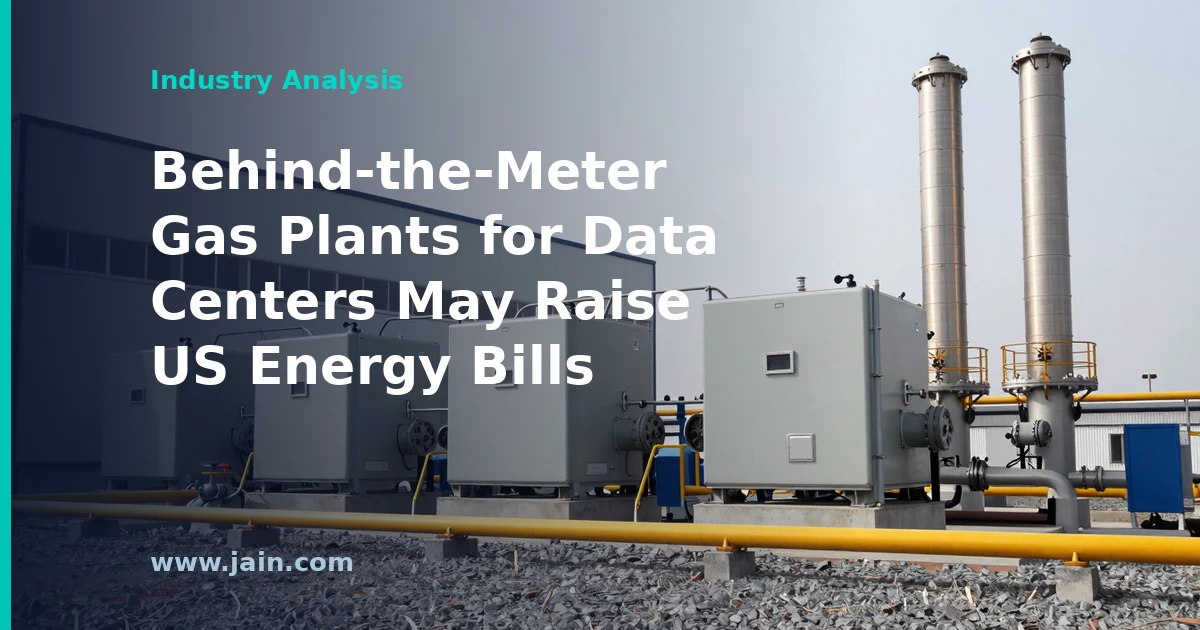
Utility Dive reported on June 7, 2026 that behind-the-meter gas plants — power generation built on a data center’s own site, outside the utility’s meter — will raise US energy bills. The finding lands as AI data center developers increasingly turn to on-site gas turbines to sidestep multi-year grid interconnection queues, raising the question of who ultimately pays for the workaround.
Executive Summary
The report’s headline claim is direct: the wave of behind-the-meter (BTM) gas generation being planned for US data centers will not insulate ordinary consumers from AI’s power demand — it will add to their bills. “Behind the meter” means the plant serves the facility directly, bypassing the utility grid for most or all of its supply, and often bypassing the retail rates, transmission charges, and regulatory review that grid-served customers face.
Why it matters: BTM gas has been marketed as the pressure-release valve for the AI boom — a way for hyperscalers to get hundreds of megawatts energized in two or three years instead of waiting five or more for grid interconnection, without burdening other customers. If independent analysis concludes the opposite — that these plants raise systemwide costs anyway — it undercuts a central argument utilities, developers, and some policymakers have used to wave the projects through, and it strengthens the hand of regulators pushing for special large-load tariffs and cost-allocation rules.
Why Data Centers Are Building Their Own Power Plants
The context for this report is the collision between AI-driven load growth and a grid that cannot connect large customers quickly. Interconnection queues in major US markets stretch years, and transmission upgrades longer still. For a hyperscaler racing to deploy GPUs, a gas turbine on-site — behind the meter — converts an electricity problem into a procurement problem: buy the turbine, permit the plant, burn the fuel, skip the queue. That speed premium is why BTM gas has moved from a niche arrangement to a defining feature of the current data center buildout.
The pitch to regulators has been that this is self-contained: the data center pays for its own generation, so other ratepayers are held harmless. The Utility Dive report’s conclusion — that these plants will raise US energy bills — challenges that framing at its core.
How a Private Power Plant Can Raise Everyone Else’s Bill
With only the headline finding available, the report’s specific modeling cannot be evaluated here, but the mechanisms by which BTM generation can raise systemwide costs are well understood in utility economics. First, natural gas markets are shared: a fleet of new gas plants competing for fuel, pipeline capacity, and turbines can push up gas prices, and because gas units set the marginal price of electricity in much of the country, higher gas costs flow into wholesale power prices for everyone. Second, BTM facilities typically still rely on the grid for backup and startup power while contributing little to the fixed costs of the wires — costs that get spread across remaining customers. Third, if BTM load later converts to grid service, the system must absorb a large customer it never planned for.
Each of these is a cost-shifting channel, not a conspiracy: individually rational decisions by data center developers can still produce a collectively expensive outcome. That is precisely the kind of externality utility regulation exists to police.
Winners, Losers, and the Regulatory Stakes
The near-term winners of the BTM boom are clear regardless of the report’s conclusion: gas turbine manufacturers with multi-year order books, gas producers and pipeline owners, and developers who can monetize speed-to-power. The contested question is who bears the residual cost. If the report’s finding holds, the losers include residential and small-business ratepayers — and, notably, utilities’ own political capital, since public backlash over rising bills tends to land on the regulated utility whether or not it caused the increase.
For the data center industry, the strategic risk is regulatory: findings like this one give state commissions ammunition to impose standby charges, minimum-take tariffs, exit fees, or cost-allocation rules on large loads. Several states were already moving in that direction before this report. Operators that get ahead of the issue — structuring deals that demonstrably cover their grid costs — will face less friction than those that treat BTM as a permanent regulatory bypass.
Background
The US data center industry entered a period of unprecedented power demand growth in the mid-2020s, driven by AI training and inference workloads. After two decades of roughly flat US electricity consumption, utilities began forecasting sustained load growth, with data centers the largest single driver. Grid interconnection processes designed for a slower era became the bottleneck, and “speed to power” replaced land and fiber as the industry’s scarcest resource.
Behind-the-meter generation — long a niche arrangement for industrial plants with steam needs or reliability concerns — was repurposed as the fast lane: developers began pairing data center campuses with dedicated on-site gas turbines, sometimes at gigawatt scale. Utility Dive, a trade publication covering the US electric power sector, has tracked the resulting policy fight over who pays for AI’s power appetite; this report is part of that running debate.
Apple’s Security Research team published a post titled “Expanding Private Cloud Compute” on June 7, 2026, signaling growth of the company’s purpose-built cloud platform for AI inference. Private Cloud Compute (PCC) is the system that handles Apple Intelligence requests too demanding for on-device processing, running them on Apple-designed servers engineered so user data is never stored and never accessible to Apple itself.
The post comes from Apple’s own security engineers rather than its marketing organization — a channel Apple has used since 2024 to document PCC’s architecture in unusual technical depth.
Executive Summary
Apple announced an expansion of Private Cloud Compute, the custom infrastructure it launched in June 2024 to extend its device security model into the data center. PCC’s core promise is that cloud AI requests are processed statelessly on Apple silicon servers, with no persistent storage, no privileged operator access, and cryptographic attestation that lets a user’s device verify the exact software a server is running before sending it anything.
An expansion matters beyond Apple’s ecosystem because PCC is one of the few production systems that treats AI inference privacy as a hardware-enforced property rather than a contractual promise. As enterprises weigh where to run sensitive AI workloads, Apple’s approach has become a reference point that pressures cloud providers, chipmakers, and data center operators to raise the bar on verifiable, confidential inference.
The syndicated item we reviewed carries the headline and publication date only, so the scope of the expansion — capacity, regions, hardware, or new capabilities — is analyzed here in the context of what Apple has previously disclosed, with open specifics noted below.
Why Verifiable AI Inference Is Hard
Conventional cloud privacy rests on policy: contracts, audits, and access controls that customers must ultimately take on trust. PCC was designed to replace that trust with verification. Servers run a hardened operating system with no remote shell or administrative access, computation is stateless — meaning a request is processed in memory and discarded, never written to disk — and every production software image is published to a public transparency log. An iPhone or Mac will refuse to send a request to any server whose cryptographic measurements do not match a logged, inspectable build.
That last mechanism is the genuinely novel part. It means Apple cannot quietly deploy a modified server build to a subset of machines without either publishing it for researcher scrutiny or cutting those machines off from all client traffic. For an industry accustomed to “we don’t look at your data” assurances, an architecture where the client enforces the promise is a meaningful shift.
Custom Silicon as a Security Strategy
PCC runs on Apple-designed silicon in Apple-operated data centers, carrying over device-grade protections such as Secure Boot and the Secure Enclave, a dedicated coprocessor that guards encryption keys. Vertical integration is what makes the attestation story coherent: when one company controls the chip, the boot chain, the operating system, and the model runtime, there are far fewer seams where a component from another vendor must simply be trusted.
The trade-off is cost and scale. Hyperscalers pursue related goals with confidential-computing technologies — trusted execution environments from Intel, AMD, and Nvidia that encrypt data even during processing — which work across heterogeneous fleets but involve more parties in the trust chain. Apple’s approach is cleaner but only Apple can run it, which is precisely why its expansion is watched as a benchmark rather than adopted as a template.
What Expansion Signals for the Infrastructure Market
Growing PCC means growing a fleet of custom inference servers, and that carries familiar data center consequences: more capacity, more power, and continued momentum behind purpose-built AI silicon as an alternative to general-purpose GPU clusters. It also confirms that private, server-side inference — not just on-device AI — is central to Apple’s long-term Apple Intelligence roadmap.
For enterprises and infrastructure buyers, the competitive effect may matter most. Every vendor now selling “private AI” will increasingly be asked the questions PCC was built to answer: Can I verify what software processed my data? Who holds the keys? What happens to the request after the response is returned? Providers that can answer with attestation rather than assurances stand to win the most sensitive workloads.
Background
Apple introduced Private Cloud Compute in June 2024 alongside Apple Intelligence, positioning it as an extension of the iPhone’s security model into the data center: custom Apple silicon servers, a hardened operating system, stateless processing, and a public transparency log that lets devices verify server software before use. In October 2024 Apple opened the system to outside scrutiny, publishing a detailed security guide, releasing a Virtual Research Environment for researchers, open-sourcing portions of the code, and offering bounties up to $1 million for critical PCC exploits.
The Security Research blog has since served as Apple’s channel for documenting PCC’s evolution — an unusually technical window into production AI infrastructure from a company historically known for secrecy, and one of the few public accounts of securing large-scale AI inference end to end.