
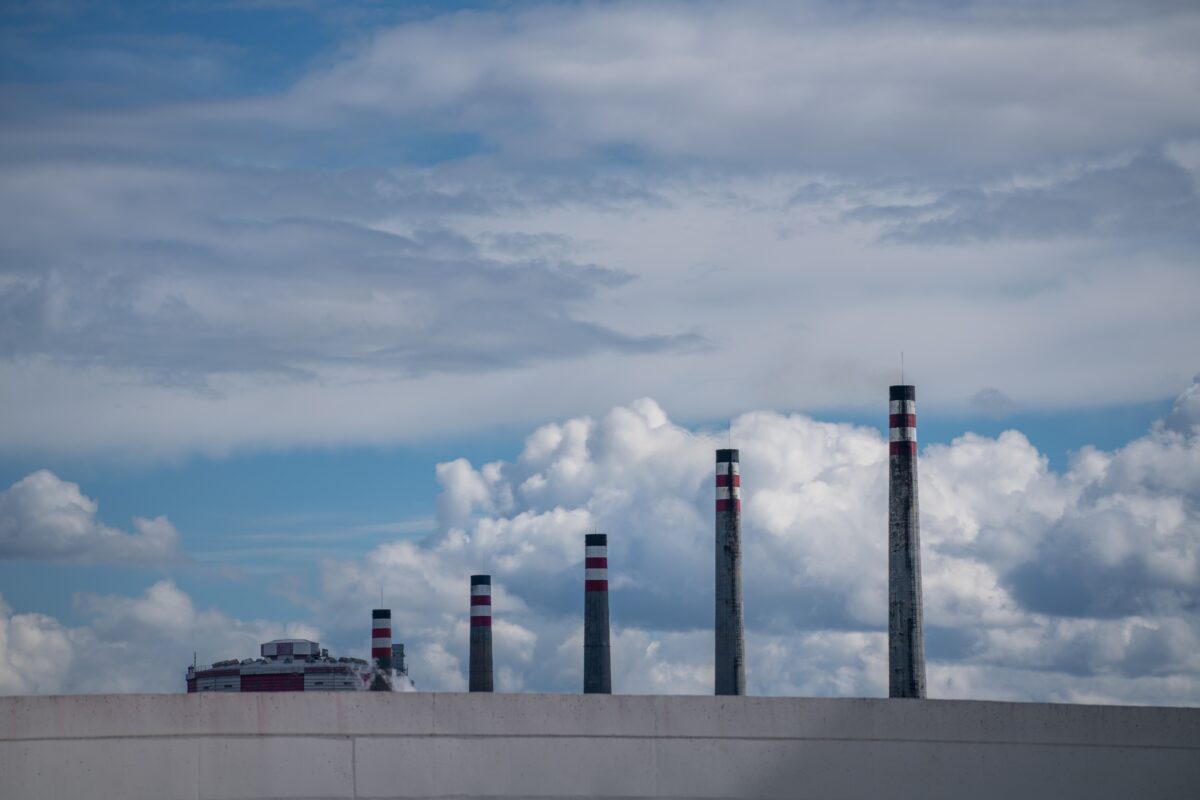
Federal regulators approved the controversial sale of a Maryland power plant to data center infrastructure company TeraWulf.
The Easton-based company plans to pivot the former coal plant to natural gas, eventually supporting 1,000 megawatts of capacity to power a potential data center campus.
The Easton-based company plans to pivot the former coal plant in Charles County to natural gas, eventually supporting 1,000 megawatts of capacity to power a potential data center campus. The deal marks TeraWulf’s first purchase in Maryland, adding to data center sites it already owns in New York and Texas.
The Federal Energy Regulatory Commission (FERC) found TeraWulf’s purchase of the Morgantown Generating Station “consistent with the public interest,” it wrote in an order issued today.
The decision, however, defers the project’s most contentious issues — future data center construction and changes to the plant’s role in the regional PJM energy market.
Proposals involving a data center, behind-the-meter power sales or changes to the plant’s grid interconnection require separate regulatory review, the filing stated.
As of now, the acquisition kicks off TeraWulf’s data center aspirations in Maryland.
Rate hike fears and Google links rebuffed
The approval follows months of opposition from environmental groups, consumer advocates, and energy market watchdogs.
Key opponents, including PJM’s Independent Market Monitor and Maryland’s Office of People’s Counsel, argued that TeraWulf could remove the plant’s generating capacity from the PJM market, potentially raising electricity rates.
FERC rejected those arguments, ruling that the acquisition itself creates no competitive concerns and that future operational changes belong in separate proceedings.
Opponents also attempted to block the application on procedural grounds. In April, Public Citizen, the NAACP, and the Port Tobacco River Conservancy asked FERC to dismiss the filing for failing to disclose Google’s relationship with TeraWulf, citing Google’s roughly 14% equity stake.
FERC dismissed that challenge as well, agreeing with TeraWulf that Google’s stake does not grant the company ownership or control.
TeraWulf’s pivot from crypto to data centers
TeraWulf’s latest purchase reflects its shift away from its roots in bitcoin mining.
Once focused on hosting data centers that power cryptocurrency validation, the company is now repurposing parts of its infrastructure to meet growing demand for AI data centers — a trend across the industry as mining revenue becomes more volatile.
“Development and reinvestment at the Morgantown site are expected to occur incrementally and in close coordination with state and local stakeholders,” Kerri Langlais, chief strategy officer at Terawulf, told Technical.ly in February, “with a focus on modernizing infrastructure, incorporating appropriate environmental mitigation and remediation, and preserving the site’s role as a productive and reliable energy asset.”