TeraWulf's $31 Price Target Clashes With DCF Model Showing 28% Overvaluation
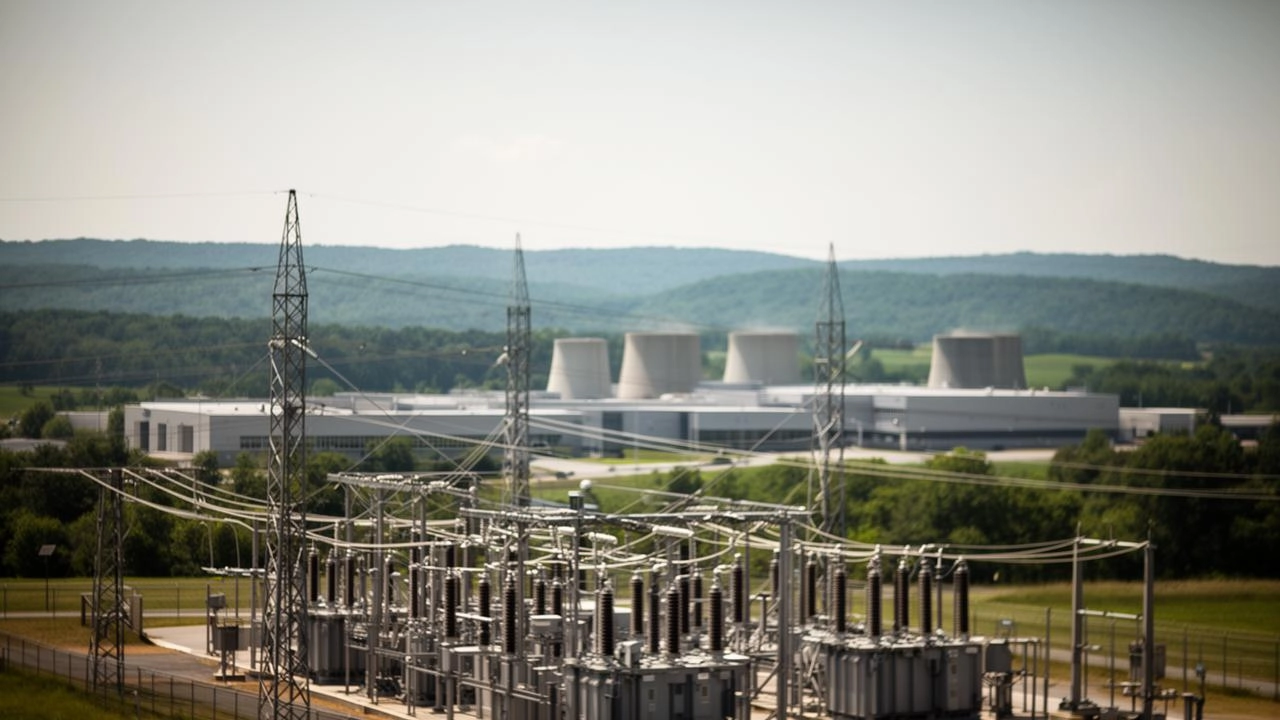
Wall Street is split on TeraWulf Inc. (WULF) after William Blair initiated coverage with an Outperform rating and a $31 price target, while a separate discounted cash flow analysis suggests the AI infrastructure play is trading at a steep premium to its modeled intrinsic value.
William Blair launched coverage on Friday, arguing that the stock's three-month slide has created a favorable entry point. The $31 target implies roughly 102% upside from the last closing price, a striking call for a company that has already delivered approximately 7x returns over the past three years.
The firm's thesis rests on TeraWulf's transformation from bitcoin miner to power-focused infrastructure provider serving hyperscale customers. The company now supplies critical IT capacity to Anthropic and Google, among other major technology firms. As additional capacity comes online and more contracts are secured, William Blair expects investors to assign a higher valuation multiple, creating upside beyond underlying business growth.
Yet a separate valuation framework paints a less rosy picture. A discounted cash flow model that projects TeraWulf's future cash generation and discounts it back to present value arrives at an estimated intrinsic value of about $12 per share. At current levels, that implies the stock trades at roughly a 28.4% premium to the DCF estimate, earning a value score of 0 out of 6.
Two frameworks, one stock
| William Blair (Outperform) | DCF model | |
|---|---|---|
| Price target / estimated value | $31 | About $12 |
| Implied vs. last close | +102% upside | -28.4% premium (overvalued) |
| Value score | -- | 0 out of 6 |
| Core driver | Hyperscale contracts with Anthropic and Google support a higher valuation multiple as capacity comes online | Trailing twelve-month free cash flow loss of about $1.43 billion, with an uncertain path back to positive free cash flow |
The chasm between the two views stems largely from the company's heavy spending plans. TeraWulf reported a free cash flow loss of approximately $1.43 billion over the trailing twelve months, reflecting aggressive investment in data center infrastructure. The DCF model assumes cash flows eventually recover from these outlays, but the path to positive free cash flow remains uncertain.
Last week, the Kentucky Public Service Commission approved TeraWulf's electricity agreement for up to 482 MW at its Justified Data Campus in Hancock County. The company expects to spend between $4 billion and $4.5 billion on the site and its first data halls, excluding customer spending on computing equipment. Under the agreement, TeraWulf will cover transmission, delivery, and other power-related costs, along with customer-specific infrastructure expenses and credit requirements.
That approved power deal helps explain why the market is willing to pay up today. The 482 MW renewable energy agreement supports expectations for future cash flows, but the scale and timing of the planned investment introduce meaningful execution and capital allocation risk for current shareholders.
Retail sentiment on Stocktwits remained in bearish territory as of Monday. One user flagged the Ratepayer Protection Act as a potential catalyst, noting that if hyperscalers are required to pay for incremental grid infrastructure, existing sites with substantial power capacity could become more valuable. Another pointed to projections that data centers will grow from roughly 6% to 20% of U.S. electricity consumption by 2035.
How TeraWulf's AI pivot compares with other former bitcoin miners
| Company | AI/HPC hosting partner | Capacity / term | Contracted revenue |
|---|---|---|---|
| TeraWulf (Lake Mariner, NY) | Fluidstack | 200+ MW, 10 years | Up to $8.7 billion with extensions |
| TeraWulf (Justified, KY) | Anthropic | 482 MW approved, 20-year lease | About $19 billion |
| Cipher Mining (Barber Lake) | Fluidstack | 300 MW, 10 years | About $3.8 billion |
| Hut 8 (River Bend, LA) | Fluidstack | 245 MW, 15 years | About $7 billion |
| IREN | Multiple AI cloud customers | -- | Targeting $4 billion+ annualized run-rate by year-end 2026 |
| Core Scientific | AI data center build-out | 400 MW under construction | LTM revenue of about $511 million |
These figures span different contract structures -- total contracted revenue over a fixed term, annualized run-rate targets, and trailing revenue -- so they are not directly comparable dollar-for-dollar. They do, however, show TeraWulf's Kentucky and New York commitments rank among the largest disclosed AI-hosting deals in the sector.
TeraWulf shares inched 0.2% lower in Monday's premarket trading, extending a decline that has now stretched across three consecutive months. The stock remains up more than 33% year-to-date.
The central question for investors is whether TeraWulf's current share price already reflects the potential from its data center growth plans, or whether there is enough room relative to intrinsic value estimates to compensate for the execution risks ahead. William Blair clearly sees the pullback as an opportunity; the DCF framework suggests the stock is not a bargain at current levels.
The divergent views underscore the broader debate around AI infrastructure valuations. With 56 AI infrastructure stocks now tracked by some research providers, investors are increasingly scrutinizing whether power-focused names like TeraWulf can convert ambitious expansion plans into sustained free cash flow.
Once added, BigGo Finance appears first in Google Search Top Stories, so you get the broadest, most up-to-the-minute, and most comprehensive global financial news first.