IREN Targets Up to $30 Billion in AI Infrastructure Spending for Fiscal 2027
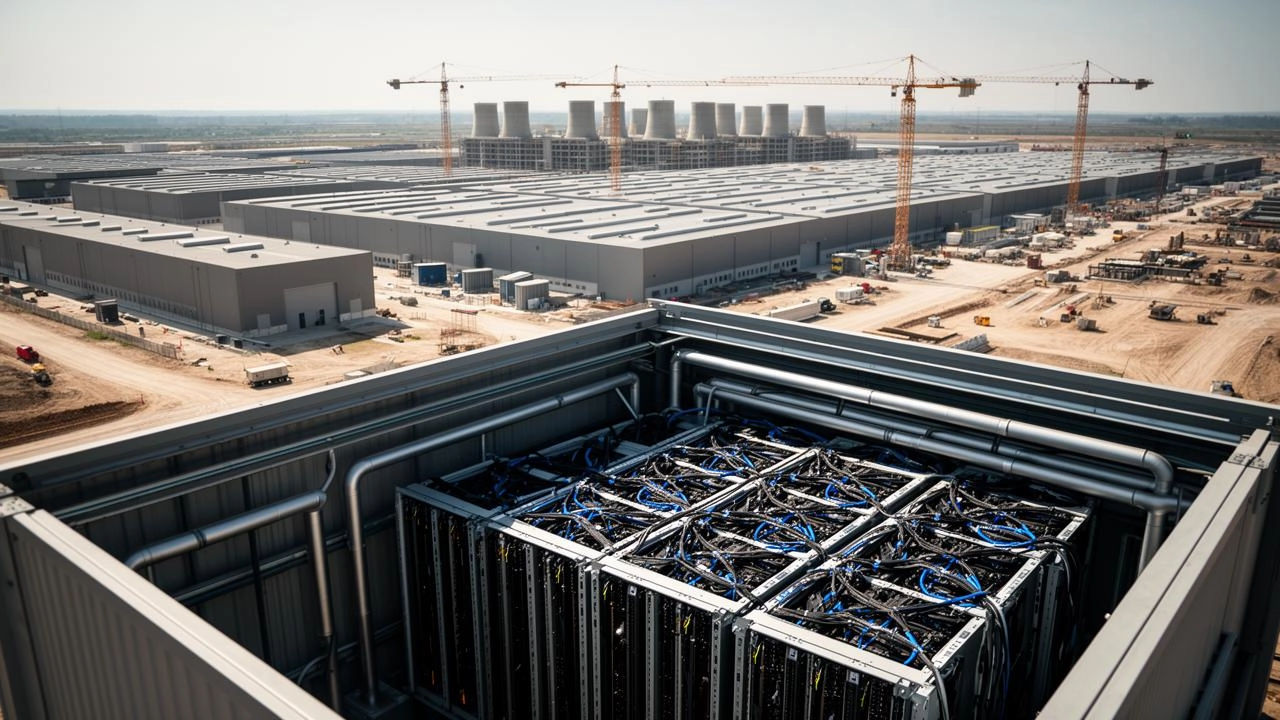
IREN Ltd. (IREN) is embarking on one of the most aggressive capital spending programs in the AI infrastructure sector, with plans to deploy between $25 billion and $30 billion in fiscal 2027 as it pivots away from bitcoin mining and toward large-scale cloud computing capacity.
The Sydney-based company, which reported full-year revenue of $707.0 million and a net loss of $702.6 million in August 2026, disclosed that it has already secured roughly $4 billion in contracted annualized recurring revenue tied to its 2026 AI capacity. That figure includes a substantial commitment from Microsoft and a new multi-year agreement with a leading AI lab, leaving most of the company's near-term data center capacity already allocated.
The scale of the transition is striking. IREN is targeting approximately 1.2 gigawatts of AI-focused data center capacity, backed by about $19 billion in recent financing. The company is simultaneously decommissioning bitcoin mining equipment as resources shift toward larger cloud deployments, effectively repositioning itself from a cryptocurrency miner into a major supplier of computing power for AI workloads.
Financing the expansion will be the central challenge. IREN said its funding plan includes roughly $14 billion in cash, existing GPU financing, and customer prepayments. It is also pursuing an additional $8 billion of financing tied to GPUs and data center infrastructure.
The contrast between two numbers defines the investment debate. On one side, the $4 billion in contracted recurring revenue demonstrates that demand for AI computing capacity is genuine and immediate. On the other, a capital spending program of up to $30 billion means execution and financing risks are escalating just as quickly.
Investors are being asked to weigh whether the company can convert enormous capital outlays into recurring AI revenue efficiently enough to justify the pivot. The latest disclosures sharpen both sides of that equation: the near-term catalyst is revenue from largely contracted AI capacity, while the biggest risk remains that massive spending and current net losses outstrip cash generation.
Some analysts have expressed caution. Before the August update, the most conservative projections assumed roughly $4.6 billion of revenue and only $205 million of earnings by 2029, reflecting concerns about tighter margins and supply chain risk. That stands in contrast to a more bullish consensus narrative that projects $8.7 billion in revenue and $504.8 million in earnings by 2029, built on the expectation of rapid scaling and sustained AI demand.
IREN's move represents one of the largest transitions in the AI infrastructure space, with the company betting that its vertically integrated approach to data center construction and cloud services can win share in a market defined by hyperscaler demand and constrained power availability. Whether that bet pays off will increasingly depend on delivery timelines, cost discipline, and the company's ability to secure additional financing without overextending its balance sheet.
Once added, BigGo Finance appears first in Google Search Top Stories, so you get the broadest, most up-to-the-minute, and most comprehensive global financial news first.