CleanSpark's August Bitcoin Sales Exceed Production by 228 Coins
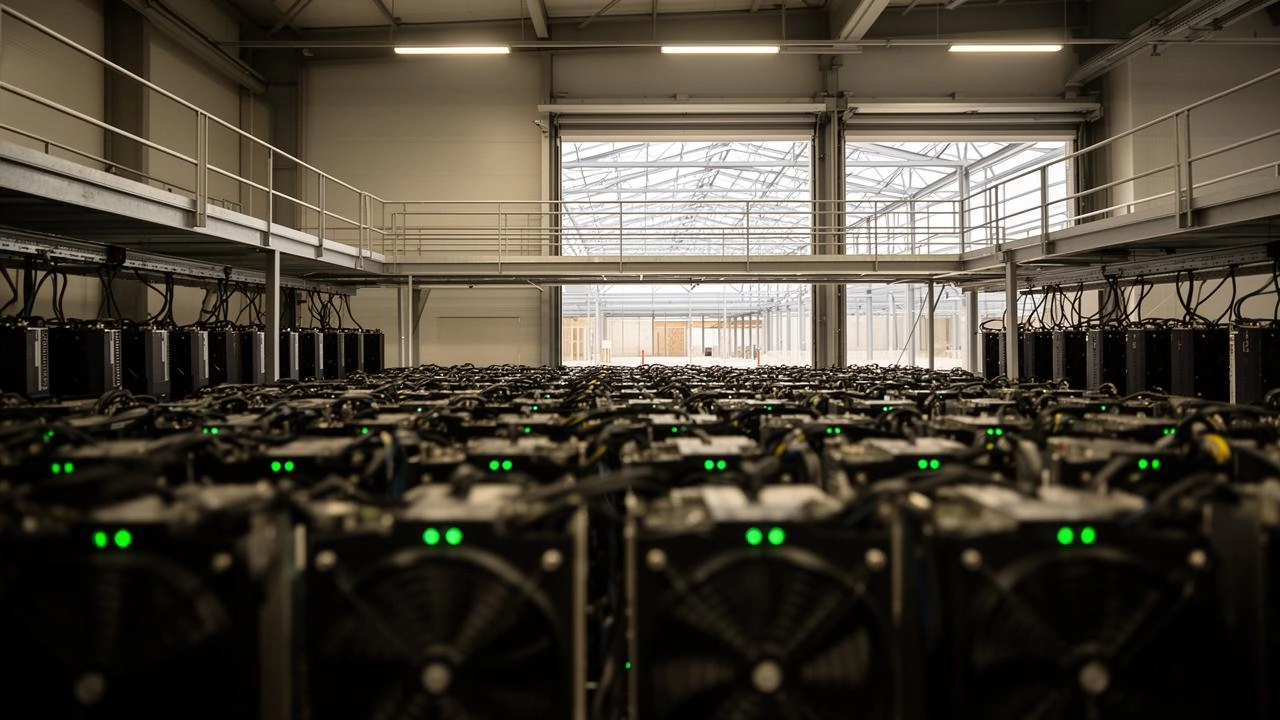
CleanSpark Inc. (CLSK) mined more Bitcoin in August than it did in July, but the company's treasury still shrank because it sold substantially more coins than it produced. The Las Vegas-based miner reported on September 8 that it generated 593 BTC during the month, a modest increase from 586 BTC in July, while selling 821 BTC across spot transactions, call exercises, and a delta-neutral basis trade.
Average daily production came in at 19.12 BTC, with the strongest single day reaching 20.40 BTC. Year-to-date output now stands at 4,903 BTC. The company's average operating hashrate slipped slightly to 38.3 exahashes per second from July's 38.6 EH/s, even as its deployed fleet expanded to 201,269 machines as of August 31. CleanSpark maintained its operational hashrate at 50 EH/s, a figure the company defines as the highest concurrent computing power achieved by installed, energized, and functional miners rather than an average across the month.
The 821 BTC in August sales broke down into three components: 77 coins sold at spot prices, 500 coins sold through call exercises, and 244 coins tied to a delta-neutral basis trade. CleanSpark reported an average sale price of $65,420 per Bitcoin, a figure that includes net proceeds and premiums rather than reflecting a simple spot-market price. Because sales outpaced production by 228 coins, the company's holdings fell from 13,931 BTC at the end of July to 13,703 BTC at the end of August. Of that total, 3,951 BTC, or roughly 29%, was posted as collateral or recorded as receivables linked to derivative transactions. The monthly update did not disclose profits, losses, counterparties, or maturity dates associated with those positions.
Mining Economics Improved
Bitcoin mining profitability strengthened during August, particularly in the final third of the month as cryptocurrency prices rallied. Hashprice, a metric that measures miner revenue per unit of computing power, opened the month at $31.63 per petahash per day and closed at $39.33. The August average of $34.63 marked the highest monthly level since May 2026, according to data from Luxor.
CleanSpark reported a peak fleet efficiency of 16.07 joules per terahash. At that efficiency level, the electricity-only breakeven price works out to approximately nine cents per kilowatt-hour, based on dividing daily revenue of $34.63 per petahash by roughly 385.7 kilowatt-hours of daily electricity consumption. That threshold excludes employee costs, maintenance, property expenses, pool fees, depreciation, financing, and corporate overhead.
Luxor estimated that fleets operating between 14 and 19 joules per terahash generated average energy revenue of about $87 per megawatt-hour during August, against estimated industry average power costs near $48 per megawatt-hour. That spread suggests efficient fleets could clear their direct electricity costs with room to spare. However, CleanSpark did not disclose its own average electricity price or fleet-wide average efficiency, making it impossible to determine the company's exact profit margin for the month from available data.
The broader industry remained split between profitable modern fleets and older machines operating below breakeven. Efficient miners continued to generate positive margins, while operators using aging equipment and expensive electricity faced ongoing pressure.
| August 2026 Metrics | Value |
|---|---|
| Bitcoin mined | 593 BTC |
| Bitcoin sold | 821 BTC |
| Average daily production | 19.12 BTC |
| Peak daily production | 20.40 BTC |
| Average operating hashrate | 38.3 EH/s |
| Deployed machines | 201,269 |
| Ending Bitcoin holdings | 13,703 BTC |
| BTC tied to derivatives | 3,951 BTC |
| Average hashprice | $34.63/PH/day |
| Average sale price | $65,420/BTC |
Note: All figures are as reported by CleanSpark in its September 8 operational update. Average sale price includes net proceeds and premiums, not just spot market prices.
Data Center Expansion Continues
Beyond mining operations, CleanSpark provided updates on its data center projects. Construction continues at the company's Sandersville, Georgia campus, which is tied to $6.6 billion in contracted revenue over the term of the agreement. That figure represents expected revenue that has not yet been fully recognized.
In Texas, ERCOT issued conditional batch-zero classifications covering 585 megawatts of contracted baseload capacity and 300 megawatts of studied load capacity. Conditional classification does not mean the sites have received every approval needed to operate at full capacity, and CleanSpark said it will keep working with ERCOT and the Public Utility Commission of Texas to advance the projects.
Quarterly Results Provide Context, Not Answers
CleanSpark's most recent quarterly filing, covering the period ending June 30, offers context but cannot settle the question of August profitability. The company reported $138 million in Bitcoin mining revenue and $85.5 million in cost of revenue for that quarter, excluding depreciation and amortization. Those figures show a positive margin between mining revenue and direct cost of revenue before other expenses.
However, the company recorded a company-wide net loss of $239 million, driven partly by a $116.3 million Bitcoin fair-value loss. Payroll, professional fees, and corporate expenses added further costs. Quarterly revenue fell 30.5% from the prior year. The accounting loss should not be interpreted as evidence that every Bitcoin mined generated a negative direct margin.
The September production report, expected in early October, will provide the next reading on hashrate, Bitcoin sales, and treasury holdings. A subsequent financial filing will be necessary to assess actual operating margins after electricity and other expenses. The operational release arrived at 4:15 p.m. Eastern Time on September 8, after the regular U.S. trading session had closed, meaning the available closing price does not provide a clean market reaction to the announcement.
Once added, BigGo Finance appears first in Google Search Top Stories, so you get the broadest, most up-to-the-minute, and most comprehensive global financial news first.